Connect with us

News

APC’s Ojudu decries backlash over alarm on abandoned project

info

Published

on

Babafemi Ojudu.jpg

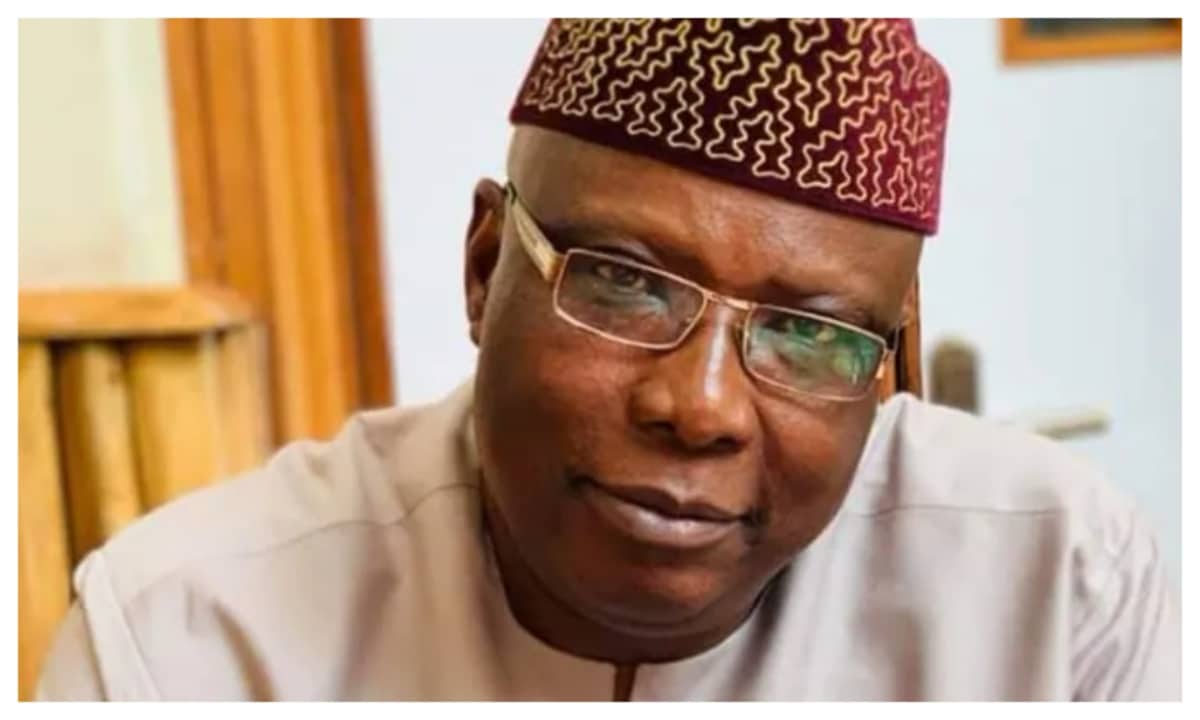
An All Progressives Congress, APC chieftain, Babafemi Ojudu, has responded to recent criticism from party members over his comment on the alleged abandonment of construction work on the Akure–Ado-Ekiti road.

Ojudu, a former presidential media aide, had drawn the attention of the government to the state of the road, which he said leads to the city where he lives.

However, his post reportedly attracted backlash from some members of the ruling party, who viewed Ojudu’s comments as an attack on President Bola Tinubu’s administration.

Reacting to the criticism in another Facebook post, Ojudu questioned why he was being attacked for drawing attention to an abandoned public project.

He argued that demanding accountability from the government is a citizen’s right and should not be interpreted as disloyalty to a political party.

“What manner of citizens are we becoming? Does belonging to a political party require surrendering one’s conscience, citizenship and right to demand accountability? Must party loyalty mean applauding everything and questioning nothing?” he asked.

Ojudu said drawing attention to abandoned public infrastructure that affects citizens and communities should be regarded as a patriotic responsibility.

“My membership of the APC does not deprive me of my rights and responsibilities as a Nigerian. I can commend the government when it performs well and question it when something appears to have gone wrong.

Continue Reading
Click to comment

Leave a Reply

Your email address will not be published. Required fields are marked *

News

2027: Don’t weaponize religion, ethnicity, regional sentiments – CAN charges politicians 

info

Published

on

CAN.jpg

Ahead of the 2027 general elections, the Christian Association of Nigeria, CAN, has called on political actors to place Nigeria above their personal interest.

CAN made the call when its President, Archbishop Daniel Okoh addressed the press as part of the activities to mark its 50th anniversary.

“We expect political campaigns to be issue-based and focused on competing ideas about how to improve the lives of Nigerians.

Political parties and candidates must resist the temptation to weaponize religion, ethnicity and regional sentiments,” Archbishop Okoh said.

Recommended

The apex Christian body noted that Nigerians have witnessed enough bloodshed and division during election periods, adding, “We do not want another generation of Nigerian youths sacrificed on the altar of political ambition.”

CAN called on political leaders to take responsibility for the conduct of their supporters and discourage incitement, hate speech, violence and intimidation.

“Every Nigerian must be free to vote according to his or her conscience, without coercion, intimidation or manipulation,” Okoh added.

CAN said it will continue to support credible democratic processes, civic education, peaceful elections and electoral integrity.

“Our message to politicians is clear: Elections should be a contest of ideas, not a contest of violence; a competition for public service, not a licence for personal destruction,” he stated.

Speaking further, CAN said it is deeply concerned about the economic hardship confronting ordinary Nigerians.

“The rising cost of living has placed enormous pressure on families. Young people are struggling to find meaningful employment. Small businesses are struggling to survive. Parents are finding it increasingly difficult to provide food, healthcare, education and housing for their families,” CAN noted.

“The Church sees these realities every day.

People come into our churches not only with spiritual needs but with hunger, unemployment, medical bills, school fees, housing challenges and uncertainty about the future.

“We, therefore, encourage government to continue pursuing policies that stimulate productive economic activity, create meaningful employment, support small and medium-sized enterprises and protect the most vulnerable members of society.

“Every economic policy must ultimately be judged by its impact on the people. Economic reform cannot become an abstract exercise divorced from the realities of ordinary families. 

“We must also learn as a nation to raise and place in public office leaders who understand that public office is a trust and not an opportunity for personal enrichment,” Okoh said.

Continue Reading

News

State Police Faces Setback as Only 4 States Approve Bill

info

Published

on

Incollage 20260804 1056024114176596403068873719 1200x675.jpg

The proposed establishment of state police is facing a major test as only four state Houses of Assembly have so far approved the constitutional amendment needed to make the reform possible.

Edo, Osun, Oyo and Rivers are the only states confirmed to have given their concurrence to the proposal, according to checks across the country.

The development comes barely three weeks after the National Assembly transmitted the Constitution of the Federal Republic of Nigeria, 1999 (Sixth Alteration) Bill, 2026, to the 36 state Houses of Assembly.

Politics Nigeria gathered that the bill was transmitted on September 16 for consideration and approval by the state legislatures.

The National Assembly had set a 30-day administrative timeframe for the assemblies to communicate their decisions.

However, the Constitution does not prescribe 30 days as a mandatory deadline for the states.

The major hurdle is the constitutional requirement for at least 24 of the 36 state Houses of Assembly to approve the proposed alteration.

With only four states having so far approved the bill, another 20 state legislatures must still back the proposal before the constitutional threshold can be reached.

The slow pace has therefore raised fresh questions over whether the reform can secure the required number of state approvals within the period being targeted by the National Assembly.

The National Assembly had earlier clarified that the State Police Services Bill was the only constitutional alteration bill transmitted to the 36 state assemblies at this stage.

It said the decision to prioritise the bill followed widespread concerns over insecurity and the need to provide a constitutional framework for decentralised policing.

South-West divided over proposal

In the South-West, Osun and Oyo have already approved the bill, while other states are still at different stages of consideration.

The Osun State House of Assembly approved the proposed constitutional amendment after considering the provisions clause by clause.

Oyo lawmakers also approved the bill after going through its provisions during plenary.

Ondo and Ekiti have confirmed receipt of the proposal but have yet to conclude consideration.

In Ondo, the draft was read on the floor and distributed to lawmakers for study.

Ekiti is also expected to begin formal consideration after the completion of its internal legislative procedures.

Lagos State had earlier endorsed the idea of state police and called for an accelerated process.

However, its position on the specific constitutional amendment transmitted by the National Assembly remains unclear.

The Lagos Assembly had backed the establishment of state police during plenary in July, but there has been no clear public confirmation that it has formally approved the full constitutional amendment and transmitted its resolution to the National Assembly.

Ogun State has also received the proposal. The House has constituted a committee to examine the bill before it is presented for full consideration.

Rivers, Edo approve as others wait

In the South-South, Rivers and Edo have approved the amendment.

The Rivers State House of Assembly unanimously endorsed the proposal after considering the constitutional provisions before the lawmakers.

File: Rivers State Assembly

The Speaker, Martin Amaewhule, said the proposal was designed to strengthen Nigeria’s security architecture and bring policing closer to the people.

The House recorded 25 votes in favour, with no opposition or abstention.

The Rivers Assembly also noted that the proposal would retain the Federal Police while creating a constitutional framework for state police services.

Edo lawmakers similarly granted concurrence to the amendment.

Cross River has commenced consideration after the bill received its first reading.

Delta State has confirmed receipt of the document but is consulting stakeholders before taking a final position.

Bayelsa, meanwhile, had yet to formally debate or vote on the proposal.

Northern states yet to catch up

The process is also moving slowly across much of Northern Nigeria.

Several assemblies have received the bill but are yet to debate it, while others have complained that they are still waiting for formal transmission.

Kano, Kwara, Kebbi, Taraba and Gombe are among the states where lawmakers have said the proposal had not been formally received or scheduled for consideration.

In Kogi, the bill has been received but no decision has been taken.

Yobe, Borno, Nasarawa, Zamfara and Sokoto have also received the proposal but have yet to approve it.

In Yobe, the Assembly confirmed that the bill had been received but was yet to appear on the Order Paper.

“The bill has been received by the House, but it has not yet been listed in the proceedings or Order Paper for consideration,” Legal Secretary to the Assembly, Ibrahim Madaki, said.

Nasarawa has also acknowledged receipt of the bill.

Speaker Danladi Jatau said lawmakers would study the proposal before taking the necessary legislative steps.

In Sokoto, Deputy Speaker Kabiru Ibrahim Kware confirmed that lawmakers had received the bill but had not started debate.

“We have received the bill from the National Assembly, but we have not commenced deliberation on it yet,” he said.

Bauchi has taken a step further by setting up a committee to examine the proposal and submit its report to the House.

Plateau is currently among the Northern states that have begun the formal legislative process.

The bill has been read in the House and consideration has commenced.

South-East yet to produce approval

The South-East is also yet to record a formal approval among the states covered in the latest checks.

Anambra, Enugu and Imo have not completed consideration of the proposal.

Abia is expected to take a position after lawmakers resume from recess on October 6.

The Acting Clerk of the Abia House of Assembly, Pastor Promise Onwukwe, said lawmakers must consider the matter collectively on the floor.

“The House is currently on recess and will resume on Tuesday, October 6. Members cannot vote in isolation; it must be done in the hallowed chambers. So, when they resume, I believe they will do the needful,” he said.

Ebonyi, however, has confirmed receipt of the bill and promised to give it accelerated consideration.

Nonetheless, the proposed amendment is intended to create a constitutional basis for state police while retaining the Nigeria Police Force at the federal level.

It also provides for safeguards and national standards governing the operation of state police services.

The reform has remained one of the most prominent issues in Nigeria’s security, particularly as the country continues to grapple with kidnapping, banditry, terrorism and other forms of violent crime.


Continue Reading

Trending