Connect with us

Business

Sanwo-Olu Sets Fresh Agenda to End Blackouts, as Lagos Targets 3,500MW Power Supply

info

Published

on

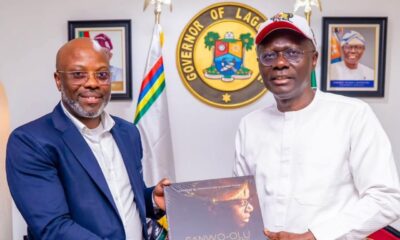
The Governor of Lagos State, Mr. Babajide Sanwo-Olu, has reaffirmed his administration’s commitment to ending the persistent blackout and aim for a twenty four hours electricity in the state.

He said the Lagos State Government is ready to work with the critical stakeholders to actualise the targeted increase in available electricity supply to about 3,500 megawatts (MW) through coordinated action on generation, transmission, distribution and metering.

Governor Sanwo-Olu made the commitment on Thursday at the Lagos State High-Level Strategic Power Town Hall, held at Lagos House, Marina, to critically assess the state’s electricity situation and develop practical solutions to the challenges affecting generation, transmission and distribution.

The high-level engagement was attended by stakeholders across the electricity value chain, including regulators, power distributors, transmission operators, asset managers, investors and representatives of the Federal Government and Lagos State Government.

The town hall meeting focused on how Lagos can leverage its enormous electricity demand, existing infrastructure and emerging state electricity market to attract investment and deliver more reliable power to homes, businesses and industries.

Speaking at the town hall meeting, Governor Sanwo-Olu called for stronger coordination, smart metering, better data management, enforcement and revenue assurance as panacea to the perennial challenges facing the sector. He said stakeholders must work together to build consumer confidence and attract investment.

Also speaking, the Minister of Power, Mr. Joseph Tegbe, who was represented by the Director of Distribution Services in the Federal Ministry of Power, Engr. Baba Mustapha, said Lagos requires more than 6,000MW, but currently receives far less from the national grid.

He stressed that increased generation would have limited impact without adequate transmission and distribution infrastructure, identifying gas supply, generation, transmission capacity, distribution bottlenecks and metering as key priorities.

The Special Adviser to the President on Power and Chairman of the Presidential Taskforce on Power Sector Reset and Restoration, Dr. Rilwan Lanre Babalola, said the challenge before Lagos and Nigeria was no longer simply about generating more electricity, but about building a functional and sustainable electricity market.

He said the country must move away from a system where government continuously acts as buyer, guarantor and absorber of losses across the electricity value chain.

Babalola explained that the proposed Clean Lagos Electricity Market (CLEM) could provide a practical model for transforming Lagos’ huge electricity demand into a structured and investable market through demand aggregation, bilateral contracting, open access, payment assurance and transparent settlement.

He said stakeholders must be able to establish where the demand and customers are, where electricity and gas will come from, whether the network can deliver the power, the efficient tariff and how payments will move transparently to generators, network operators and gas suppliers.

Babalola also highlighted the importance of decentralisation following constitutional amendments and the Electricity Act, which have opened the way for states to establish and regulate their electricity markets.

Also speaking, the Lagos State Commissioner for Energy and Mineral Resources, Mr. Abiodun Ogunleye, said the town hall meeting was convened to bring an end to what he described as the culture of blackout in Lagos.

He said Lagos State would develop clear action points and establish a baseline for measuring progress at the proposed six-month review.

On tariffs, Ogunleye stressed that improved electricity supply must accompany payment, insisting that consumers should not be made to pay for darkness

He explained that achieving the target would allow more feeders to operate and provide increased electricity to homes and industries that require reliable power for productive activities.

Ogunleye also disclosed that newly commissioned substations would contribute to the state’s power infrastructure, while the government would work with distribution companies to monitor selected feeders and measure improvements in electricity supply.

The Chief Executive Officer of the Lagos State Electricity Regulatory Commission, Temitope George, identified constraints in generation and transmission, energy theft, vandalism and non-payment of electricity bills as major challenges affecting the sector.

George urged electricity consumers to pay for the power they consume, warning that non-payment distorts the electricity market and ultimately affects the ability of other consumers to receive adequate supply.

She said Lagos State is also exploring embedded power generation to complement electricity from the national grid and reduce overdependence on the national system.

The town hall ended with a commitment by stakeholders to translate the discussions into concrete action points, establish measurable baselines and periodically assess progress.

The post Sanwo-Olu Sets Fresh Agenda to End Blackouts, as Lagos Targets 3,500MW Power Supply appeared first on Business Today NG.

Continue Reading
Click to comment

Leave a Reply

Your email address will not be published. Required fields are marked *

Business

AI could help Nigeria, other developing economies achieve century of progress in decade

info

Published

on

By

World Bank.jpg

MTN ADVERT

Artificial intelligence (AI) could help developing countries achieve in a decade what might otherwise take a century, according to the World Bank’s report.

The lender said governments must act swiftly to address gaps in electricity, connectivity, skills and institutional quality that could leave them behind.

The World Bank disclosed this in its latest World Development Report 2026, titled ‘The Promise of Artificial Intelligence’.

The report surveyed enterprises’ AI adoption in developing economies, sampling 777 firms in Nigeria.

The World Bank, in its report, urged developing economies to adopt an optimistic mindset, noting that AI could help governments reach billions of underserved people with medical, legal, educational, and agricultural services more quickly.

PT WHATSAPP CHANNEL

“AI could help extend otherwise costly medical, legal, educational, and agricultural services to the underserved billions—doing in a decade what might otherwise take a century,” the report stated.

It noted that jobs in high-income countries are more than three times as likely to be at risk of automation by generative AI as those in low- and middle-income countries, where 4.5 per cent of existing jobs are at risk, compared with 14.2 per cent in high-income countries.

At the same time, 16.2 per cent of jobs in developing economies could see their productivity meaningfully boosted by AI, close to the 18.7 per cent expected in high-income countries.
The greatest promise for developing countries lies not in replacing workers, but in amplifying what they can do, the report said.

“AI has thrown developing economies a lifeline, and they should seize it,” Indermit Gill, Senior Vice President and Chief Economist of the World Bank Group, added in the report.

He explained that developing economies do not need large models or big data centres to reap the benefits of AI adoption.

By adapting small, low-cost AI tools to local conditions, they can bring better medical care, education, judicial services and agricultural extension within reach of millions, the World Bank chief stated.

The report is the first comprehensive assessment of AI’s implications for developing countries, revealing how businesses and governments there have begun to use AI.

It revealed that AI is already helping people, businesses, and governments solve problems, analyse information, improve forecasts and deliver services on a larger scale.

These capabilities are especially valuable in countries where trained professionals, reliable records and public capacity are often limited.

According to the World Bank, AI tools can make it easier for doctors to diagnose patients, farmers to make better crop decisions, and businesses to become more productive.

Governments, too, could use AI to improve tax collection, social programmes, disaster response, healthcare, and education, it added.

The lender said AI could significantly boost the weak growth performance of developing countries before the end of the 2020s while delivering tangible benefits to people.

READ ALSO: Engaging the blackbox-glassbox paradox: Media imperatives in the era of artificial intelligence, By Omoniyi Ibietan

The report added that the opportunity is limited, noting that most developing economies still lack the power, internet access, data, skills and institutions needed to use AI effectively.

The report stated that, without deliberate action, AI could widen disparities between countries, increase inequality within them, concentrate market power, weaken trust in public institutions, and create new risks to safety, rights, and social cohesion.

The report outlines a clear three-stage approach: adopt available tools, tailor them to local circumstances, and gradually progress towards frontier AI development.


Discover more from Premium Times Nigeria

Subscribe to get the latest posts sent to your email.

Continue Reading

Business

AXA Mansard Health Int’l Health Plan Covers Cancer, Other Chronic Health Conditions

info

Published

on

By

AXA Mansard Health’s International Healthcare Plan, iMED, offers Nigerians access to comprehensive medical coverage for cancer, as well as critical medical procedures such as organ and bone marrow transplants, and international emergency medical assistance at leading healthcare facilities in Nigeria, the United States, the United Kingdom and Dubai.

According to estimates by the Global Cancer Observatory (GLOBOCAN), more than 150,000 new cancer cases are diagnosed annually in Nigeria, with over 90,000 deaths recorded each year. Among men, prostate, colorectal and liver cancers remain the most commonly diagnosed, while breast, cervical and colorectal cancers account for the highest incidence among women.
In response to these evolving healthcare needs, AXA Mansard was designed to provide its eligible enrolees with access to premium international health insurance coverage that supports access to advanced medical care for eligible medical conditions through a network of accredited healthcare local and international providers. This product offers comprehensive cover for a broad range of medical services, including chronic condition management, chemotherapy and radiotherapy where medically necessary, helping individuals prepare for unexpected health events and associated medical expenses.
Speaking on the rationale behind the introduction of the plan, Chief Executive Officer, AXA Mansard Health, Tope Adeniyi, said the company remains committed to developing solutions that address evolving healthcare needs while reducing barriers to specialized treatment.
“It’s heartbreaking to see the growing impact cancer continues to have on families and communities, not only in Nigeria but across the world. As a company committed to acting for human progress by protecting what matters, we recognise the need to continually develop healthcare solutions that respond to the realities our customers face.”
“Through iMED, we are bringing world-class healthcare closer to Nigerians by providing access to specialised treatment options across local and international medical facilities. This solution helps bridge critical gaps in healthcare access and gives our customers greater confidence that they can receive quality care when they need it most, regardless of where they are in the world,” Adeniyi said.
With access to an extensive network of leading healthcare providers across key medical destinations, including the United States, the United Kingdom and Dubai, iMED is designed to provide individuals, families and corporate clients with enhanced protection against the financial and emotional burden often associated with serious illnesses.
Beyond cancer care, the plan also provides access to treatment for a range of chronic and complex medical conditions, reinforcing AXA Mansard Health’s commitment to improving health outcomes and ensuring Nigerians have access to quality healthcare without geographical limitations.
As healthcare needs continue to evolve and demand for specialized treatments also increases, AXA Mansard Health remains focused on delivering innovative solutions that empower customers to navigate complex medical journeys with greater peace of mind while supporting broader efforts to improve health and well-being across Nigeria.

The post AXA Mansard Health Int’l Health Plan Covers Cancer, Other Chronic Health Conditions appeared first on Business Today NG.

Continue Reading

Trending