News
TechCrunch Mobility: The AI skills arms race is coming for automotive

Welcome back to TechCrunch Mobility — your central hub for news and insights on the future of transportation. To get this in your inbox, sign up here for free — just click TechCrunch Mobility!
There is a bit of a theme emerging in transportation — and really every industry: AI is creating jobs for some at the loss of others.
General Motors, for instance, laid off more than 10% of its IT department, or about 600 salaried employees — in a deliberate skills swap. This won’t translate into a one-to-one exchange, which means there will likely be a net-negative job loss. But GM insists it is hiring and those layoffs have made room for it to recruit IT people with AI-focused backgrounds.
The most sought-after capabilities are AI-native development, data engineering and analytics, cloud-based engineering, agent and model development, prompt engineering, and new AI workflows. In practical terms, GM is looking for people who know how to build with AI from the ground up — designing the systems, training the models, and engineering the pipelines — not just use AI as a productivity tool.
Those AI job losses are mounting in the automotive sector. CNBC calculated that Ford, GM, and Stellantis have cut a combined total of more than 20,000 U.S. salaried jobs, or 19% of their combined workforces, from recent employment peaks this decade. While there are a variety of reasons for these cuts, they are generally connected to technological changes, including AI.
Companies are leaning heavily into AI, although anecdotes from some engineers and founders suggests not all of these businesses know quite what they’re doing with it yet.
Samsara is one company that seems to have figured out a revenue-generating use case. The company has spent the last decade giving its customers cameras to mount inside millions of trucks for driver monitoring, theft prevention, and helping with liability claims. The company took that mountain of data and trained its own model that can detect potholes and determine how quickly they are deteriorating. The company is pitching this product to cities and announced it has several under contract, including Chicago.
A little bird

Nothing this week, although I am working on a fun one! Reach out anytime with insights, tips, or just because. You can reach us via email or Signal.
Email Kirsten Korosec at kirsten.korosec@techcrunch.com or my Signal at kkorosec.07, or email Sean O’Kane at sean.okane@techcrunch.com.
Deals!

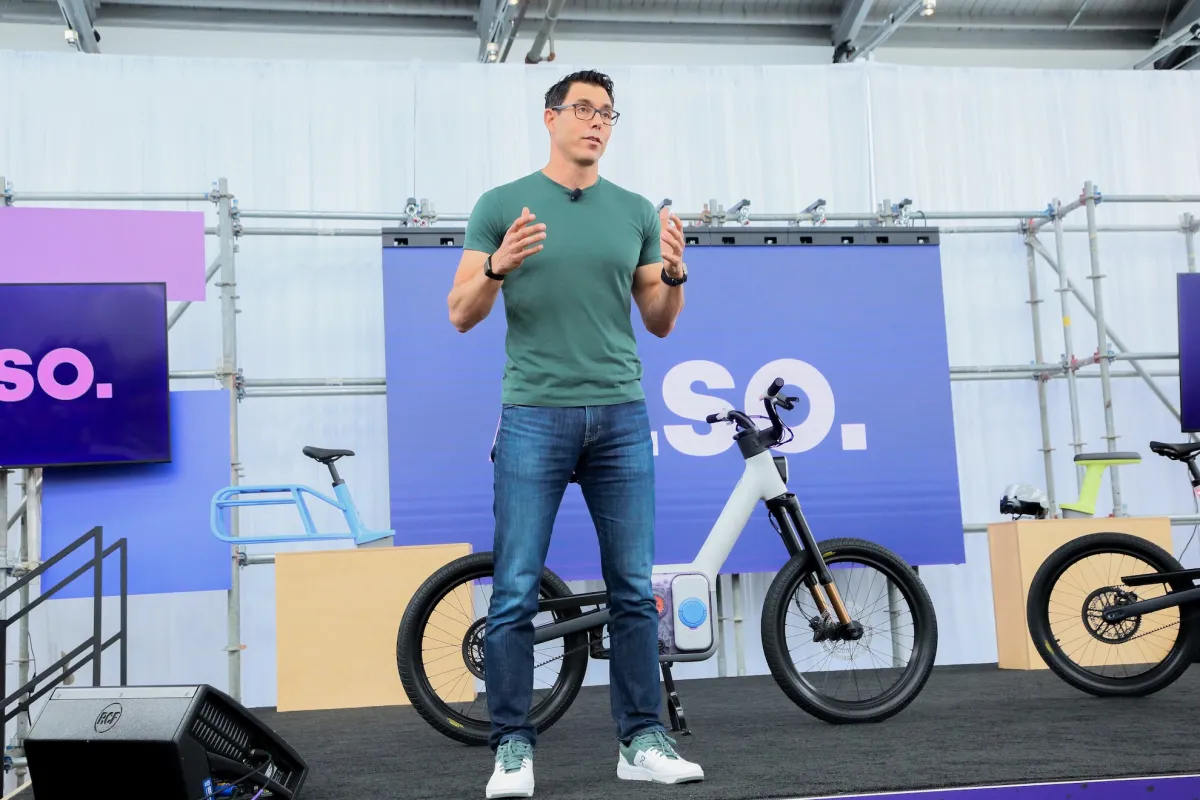
You might have noticed that Rivian’s spinoff company Mind Robotics raised another $400 million, just two months after raising $500 million. And that pace got me thinking about its founder RJ Scaringe and his innate ability to get VC and institutional backers to invest in his ideas and projects.
I calculated that investors have poured $12.3 billion into Scaringe’s three startups — Also, Mind Robotics, and Rivian. That figure doesn’t include the close to $12 billion in gross proceeds raised in Rivian’s IPO, nor did I count the more recent strategic deals with Volkswagen Group and Uber — which together could add nearly $7 billion to Rivian’s coffers.
You can read my whole riff on the topic here. But if you don’t feel like clicking, here is one item that stood out. I spoke to a number of insiders and investors and they all mentioned Scaringe’s ability to give undivided attention to whoever he’s talking to — whether it’s an investor, supplier, or exec — and make them feel like the most important person in the room.
It’s yet another piece of evidence in my long-standing case against multitasking. Debate me!
Other deals that got my attention …
Arkeus, an Australian startup that developed perception software for autonomous drones and aircraft, raised $18 million in a Series A round led by QIC Ventures. Other investors include R+VC, Folklore Ventures, DYNE Ventures, Main Sequence Ventures, Salus Ventures, and Beaten Zone.
Aseon Labs, a Redwood City, California, startup that has developed a depot in a box for charging, cleaning, and inspecting autonomous fleets, came out of stealth with undisclosed backing by Y Combinator.
Rapido raised $240 million in a round led by Prosus, and that values the Indian ride-hailing company at $3 billion. Existing investors, including WestBridge Capital and Accel, participated. The round was part of a larger $730 million primary and secondary financing.
Quantum Systems, a Germany-based drone startup backed by Peter Thiel, is in talks to raise around €600 million ($703 million) with companies like Airbus and Blackstone as investors, Bloomberg reported.
Notable reads and other tidbits

Is Redwood Materials ready for an IPO? Senior reporter Sean O’Kane interviewed the company’s new CFO, Deepak Ahuja, whose name will be familiar to anyone who follows Tesla. Ahuja was Tesla’s former finance chief and most recently held a similar position at drone company Zipline.
Tesla Robotaxis have crashed at least twice since July 2025 while a teleoperator was remotely driving the vehicles, according to newly unredacted information submitted to the National Highway Traffic Safety Administration.
Uber is expanding in India with two new engineering campuses that can fit about 9,600 people and a data center partnership aimed at supporting its overall product development and infrastructure operations.
Waymo issued a software update to its fleet of nearly 4,000 vehicles to help them avoid flooded roads as part of a recall announced by the NHTSA. Important note: The company hasn’t fully solved the problem of how its vehicles behave in these conditions.
One more thing …
Disrupt, our flagship annual tech conference in San Francisco, will be held in October. And while that is a ways off, I wanted to share one bit of news. We will have six stages this year, which you can read about in more detail here. One worth noting for this crowd is our AI in the Real World Stage.It will be here that we’ll dig into robotics, autonomous systems, manufacturing, defense, and industrial operations.
When you purchase through links in our articles, we may earn a small commission. This doesn’t affect our editorial independence.








Gavi, the Vaccine Alliance, says 9.5 million children in 57 supported countries received no routine vaccine in 2025, despite gains in global immunisation.
The figure, described as the number of “zero-dose” children, was contained in Gavi’s 2025 Annual Progress Report, which reviewed the alliance’s 2021-2025 strategic period.
Gavi defines zero-dose children as infants who have not received the first dose of a diphtheria, tetanus and pertussis-containing vaccine by the end of their first year.
Number falls from 2021 peak
According to the report, the number of zero-dose children in 2025 was 600,000 lower than in 2024 and 25 per cent lower than the peak recorded in 2021 following disruptions to routine immunisation caused by the COVID-19 pandemic.
However, the figure remained four per cent above the 2019 baseline, partly because of continued growth in the number of children being born.
Gavi said children living in fragile, conflict-affected and humanitarian settings remain among those most likely to be missed by immunisation programmes.


Nigeria remains one of the countries with the highest number of zero-dose children. UNICEF estimated that about 2.2 million Nigerian children had never received a routine vaccine in 2025, the highest number in Africa.
Nigeria records gains in targeted areas
The report highlighted Nigeria, Ethiopia and Pakistan among countries where emerging data showed stronger immunisation coverage gains in sub-national areas that received greater Gavi focus and investment during the 2021-2025 period.
Gavi said the findings underscored the value of targeted, equity-focused investments in reaching communities that are being missed by routine immunisation.
The report also identified Nigeria among countries covered by Gavi’s Zero-Dose Learning Hubs, which examined what works and what does not in identifying and reaching zero-dose and under-immunised children.
The findings from Nigeria, Bangladesh, Mali and Uganda highlighted several issues, including gender-related barriers to immunisation.
73m children immunised in 2025
Despite the number of zero-dose children, Gavi said more than 73 million children were immunised through routine programmes with its support in 2025.
More than 351 million children were immunised during the 2021-2025 strategic period, “exceeding Gavi’s target of 300 million children.”
“By end 2025, Gavi-supported countries had immunised more than 1.3 billion unique children with Gavi support since 2000, exceeding our Investment Opportunity 2021-2025 commitment of more than 1.1 billion children immunised by 2025,” it noted.
Gavi said vaccination averted more than 2.2 million future deaths in 2025, bringing the total number of future deaths averted through its supported vaccination programmes to more than 7.8 million during the 2021-2025 period.
Generated economic benefits
The report said immunisation programmes generated more than $30 billion in economic benefits for Gavi-supported countries in 2025, the highest amount recorded in a single year.
The benefits were calculated from the costs of illness averted, including medical and associated costs, caretaker wages and productivity losses resulting from disability or death.
Gavi said the programmes generated more than $104 billion in economic benefits between 2021 and 2025 and more than $308 billion between 2000 and 2025.
Countries also contributed a record $301 million towards the co-financing of Gavi-supported vaccines in 2025, an 18 per cent increase from 2024.
About 80 per cent of the contribution came from domestic resources, while “approximately 20 per cent from low-interest loans from the World Bank.”
Gavi said countries had contributed a total of $2.2 billion towards vaccine co-financing since the policy was introduced in 2008.
More children
For its 2026 to 2030 strategic period, Gavi said it aims to protect another 500 million children through immunisation and avert between eight million and nine million future deaths.
READ ALSO:New TB vaccines could save 7.3m lives by 2050 – Gavi
The Alliance also targets more than $100 billion in economic benefits during the period. Gavi said it would place greater emphasis on reaching zero-dose and under-immunised children while strengthening the sustainability of national immunisation programmes.
In her comments, Gavi Chief Executive Officer, Sania Nishtar, said the results showed that immunisation generates benefits beyond preventing disease. “However, when it comes to immunisation we know that the return on investment extends far beyond health to supporting sustainable, inclusive economic growth,” Ms Nishtar said.
WHO Director-General, Tedros Ghebreyesus, also said immunisation delivers massive gains in lives saved and diseases prevented, but also in terms of economic benefits.
“Countries understand that the cost of failing to vaccinate is far too great, while the benefits extend across families, communities, economies and future generations,” Mr Ghebreyesus was quoted to have said.
Discover more from Premium Times Nigeria
Subscribe to get the latest posts sent to your email.
-

 News3 days ago
2027: El-Rufai’s detention could hurt APC, generate sympathy – SEDSAC director, other analysts express views
-
News3 days ago
Lucid Motors’ EV output falls to lowest level in almost 2 years
-
News4 days ago
Nigerians warned as AI creates new sextortion threat – Technology Times
-
Business3 days ago
NAIPE 11th Annual Conference Moves to 12 Noon as 28 Stakeholders Back Event