News
Neil Rimer thinks the AI money is coming back out









News
EuroMatch NPFL: Ikorodu City Return to Winning Ways as Salami, Ikechukwu Sink Kwara United in Lagos

Ikorodu City returned to winning ways in the EuroMatch Nigeria Premier Football League (NPFL) after securing a convincing 2-0 victory over Kwara United in their Matchday 8 encounter at the Mobolaji Johnson Arena, Onikan, Lagos.
Sports247 reports that the Oga Boys made an explosive start, taking the lead just two minutes into the contest through Salami Farouk, who rose highest to head home following a well-delivered throw-in by Ujunwa Elijah.
The early breakthrough gave Ikorodu City the momentum they needed, putting Kwara United under immediate pressure as the visitors struggled to contain the hosts’ attacking threat.
Ikorodu City continued to push forward and doubled their advantage in the 36th minute when Ikechukwu Junior found the back of the net with another well-taken header.
The forward connected with a delivery from Olumide Akinwande to beat the Kwara United defence and give the hosts a comfortable 2-0 lead before the interval.
The goal was particularly significant for Ikechukwu, who has now registered three goals in the league this season, further underlining his growing importance to the Ikorodu City attack.
With two goals separating the sides at half-time, Kwara United faced the task of mounting a second-half comeback against a determined home team eager to secure maximum points.
The Harmony Boys, however, were unable to find a way back into the contest as Ikorodu City maintained their advantage and protected their clean sheet.
Kwara United’s difficult afternoon was compounded in the 86th minute when Saheed Olaniyi was sent off after receiving a second yellow card for a reckless challenge. The dismissal left the visitors with 10 men during the closing stages and further reduced their chances of salvaging a result.
The final whistle confirmed a 2-0 victory for Ikorodu City, providing a timely response after their Matchday 7 defeat to Rivers United, when they lost 2-0.
For the Lagos-based side, the result represents an important return to winning form as they continue their campaign in the NPFL.
Meanwhile, Kwara United will need to regroup and address their shortcomings as they look to bounce back in their next league fixture.
Ikorodu City will take confidence from their clinical first-half display, with Salami and Ikechukwu’s headed goals proving decisive in securing all three points at the Mobolaji Johnson Arena.
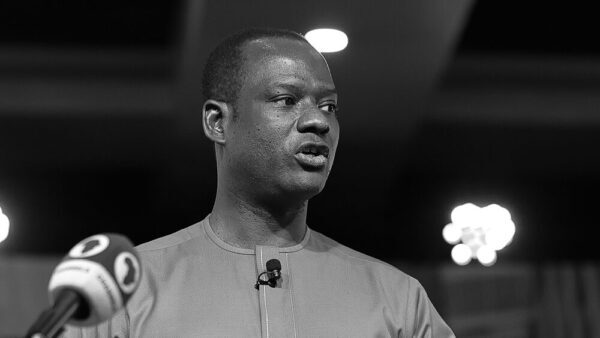
The Federal Government says Fitch Ratings’ decision to revise Nigeria’s credit rating outlook from Stable to Positive reflects progress in economic reforms, foreign exchange market adjustments and efforts to strengthen the country’s external position.
Fitch announced the revision on 9 October, retaining Nigeria’s long-term foreign-currency issuer default rating at ‘B’.
In a statement issued on Saturday, the Minister of Finance and Coordinating Minister of the Economy, Taiwo Oyedele, said Fitch cited increased foreign exchange reserves, easing inflation and improved economic prospects among the factors supporting the outlook revision.
According to the minister, Nigeria’s gross foreign exchange reserves rose to $54.9 billion as of 25 September 2026, from $32 billion in mid-April 2024.
He attributed the increase to more formalised foreign exchange transactions, portfolio inflows, higher exports and remittances.
Fitch also projected that Nigeria would record a current account surplus equivalent to 6.4 per cent of gross domestic product in 2026.


Economic growth and inflation
The ratings agency projected that Nigeria’s real gross domestic product would grow by 4.3 per cent in 2026, compared with 4 per cent in 2025, with growth remaining above 4 per cent in 2027 and 2028.
Fitch expects non-oil activities to remain the main driver of economic expansion.
The projection comes as Nigeria’s economy recorded growth of 4.43 per cent year-on-year in the second quarter of 2026, according to the National Bureau of Statistics (NBS).
The figure was higher than the 3.89 per cent recorded in the first quarter of 2026 and the 4.23 per cent recorded in the corresponding quarter of 2025.
The World Bank’s October 2026 Nigeria Development Update projected average annual economic growth of 4.4 per cent between 2026 and 2028, identifying services and agriculture among the contributors to economic activity.
On inflation, Fitch projected an average rate of 15.4 per cent in 2026, less than half the level recorded in 2024.
The NBS reported that Nigeria’s headline inflation rate eased marginally to 15.39 per cent in August 2026, from 15.43 per cent in July.
The figures provide recent context for Fitch’s assessment of inflation, although the agency’s annual average forecast is different from the monthly inflation rate reported by the NBS.
Reserves, oil production and public debt
Fitch also noted developments in Nigeria’s oil sector, including crude oil production meeting the country’s OPEC target of 1.5 million barrels per day from May 2026.
Mr Oyedele said increased domestic refining was helping to reduce fuel imports and foreign exchange demand.
On public finances, Fitch expects Nigeria’s tax reforms to increase non-oil revenue relative to the size of the economy.
The agency projected that general government debt would average 32 per cent of GDP between 2026 and 2028, below the median of 56 per cent for countries with a ‘B’ rating.
Fitch also highlighted Nigeria’s domestic debt market and the banking sector recapitalisation exercise, noting that many banks had capital adequacy ratios above 20 per cent.
However, the agency identified persistent challenges, including inflation remaining above levels in peer countries, government revenue being low relative to the size of the economy, and interest payments accounting for a high proportion of government revenue.
The minister said the federal government would continue implementing reforms aimed at increasing revenue, improving spending efficiency, strengthening debt management and supporting non-oil economic growth.
Other rating developments
The Fitch decision follows other developments in Nigeria’s international credit assessments.
READ ALSO: FG to negotiate ₦1,350 petrol price ceiling as global oil shock drives pump prices
In May 2026, S&P Global Ratings upgraded Nigeria’s credit rating from ‘B-’ to ‘B’. In August, Moody’s revised its outlook on Nigeria to Positive while retaining its ‘B3’ rating.
Mr Oyedele noted that the government’s medium-term objective remained to improve Nigeria’s credit standing and work towards investment-grade status.
He said the administration would continue to focus on foreign exchange market reforms, tax revenue mobilisation, fiscal governance, more efficient public spending and growth in non-oil sectors.
The minister said its broader objective was to “translate economic reforms into jobs, food security, support for small businesses and improved living standards”.
Discover more from Premium Times Nigeria
Subscribe to get the latest posts sent to your email.
-
News4 days ago
FCCPC reviews rules for Nigeria’s online sales promotions, giveaways – Technology Times
-

 News3 days ago
Robot data startup Mecka AI nabs $60M from Sequoia
-
Business4 days ago
Nigeria has reduced reliance on oil revenue
-
Business2 days ago
Fuel subsidy would cost Nigeria over N20trn yearly — Minister