News
NIS refutes claims on passport payment system, warns against fake portals – Technology Times


The Nigeria Immigration Service has dismissed as false and misleading claims circulating online about its passport application and payment system, reaffirming that its digital infrastructure remains secure and accessible only through its official portal.
The clarification follows viral online allegations suggesting that a religious organisation appeared within the payment workflow of the passport system. The Service rejects the claim, stating that “allegations suggesting that the name of a religious organisation appears in the Service’s payment process are entirely false and do not reflect the structure, integrity, or processes of the NIS.”
The agency reiterates that its portal, passport.immigration.gov.ng, remains the only authorised platform for all passport-related payments and processing activities.


“Any third-party payment links or platforms purporting to process passport payments on behalf of the NIS are fraudulent and should be avoided at all costs,” NIS says.
“The NIS operates a secure, transparent, and government-approved passport application system, which is accessible exclusively through its official portal,” the Service states in the statement seen by Technology Times, adding that at no time has it “partnered with or authorized any religious organization, private entity, or individual to act as an intermediary or receiving account on its behalf.”
NIS warns over fake payment platforms
The issue is a digital misinformation and cybersecurity concern, the NIS says cautioning Nigerians against engaging with unofficial platforms and intermediaries.
“Any third-party payment links or platforms purporting to process passport payments on behalf of the NIS are fraudulent and should be avoided at all costs,” NIS says.
The warning comes amid rising attempts by fraudsters to exploit demand for digital government services, particularly in high-volume areas such as passport applications.
The Service confirms that it has launched an investigation into the origin of the allegations, describing them as potentially malicious.
According to the NIS, “preliminary investigations suggest the involvement of a mischief-maker seeking to tarnish the reputation of the Service or mislead the public for ulterior motives.”
The agency adds that it will take appropriate action against any individuals or groups found responsible.
The NIS emphasises that its payment system is integrated only with licensed providers embedded within its official platform, maintaining strict control over transaction processing.
“Payments made outside the official channels provided by the NIS are made at the owner’s sole risk,” the Service warns. “The Service does not recognise or provide any third-party payment alternatives for passport applications or related services.”
NIS calls for vigilance as digital services expand
The agency urges Nigerians to rely solely on verified digital channels and avoid unauthorised agents.
“The public is strongly urged to exercise caution, access our services only via the official portal, and avoid any dealings with unauthorized agents, websites, or third-party platforms,” the NIS states.
Reaffirming its commitment to system integrity, the Service says it is continuing to strengthen its infrastructure and monitoring processes to prevent fraud and misuse.
The development highlights growing cybersecurity and misinformation risks facing Nigeria’s expanding e-government ecosystem.
As more public services move online, including passport applications, digital platforms are becoming targets for impersonation and fraud attempts.
The NIS has been advancing its digital transformation strategy, including the rollout of contactless passport services for Nigerians in the diaspora, where it reports processing over 15,000 passports through its remote system.
The passport platform supports end-to-end digital service delivery, enabling users to apply, track applications, and complete payments online.
Against this backdrop, the NIS maintains that safeguarding public trust in its systems remains a priority, particularly as demand for digital government services continues to grow.
Stay ahead with real-time reports, breaking news, and exclusive insights delivered directly to your phone. Don’t settle for outdated information. Join TECHNOLOGYTIMES NEWS on WhatsApp for 24/7 updates.
Join Our Whatsapp Channel


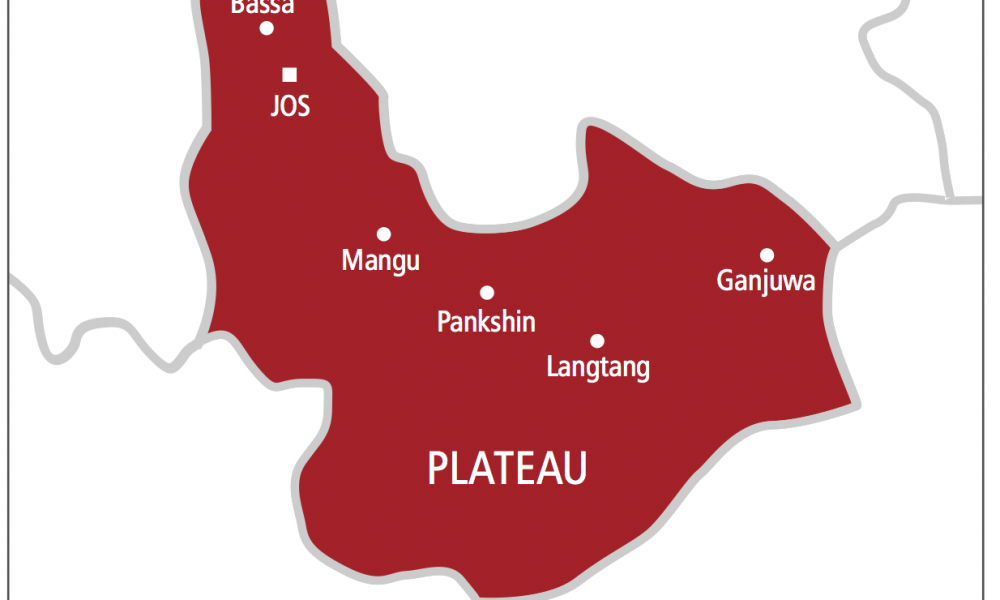
Plateau State has an estimated 11,000 tuberculosis (TB) cases in 2026, with 2,047 patients identified between July and September, according to a state health official.
The cases were disclosed by Yohanna Bot, the monitoring and evaluation officer of the Plateau State Tuberculosis and Leprosy Control Programme, at a media advocacy meeting on community-led monitoring of health services in Jos.
Mr Bot said the estimated burden was based on a TB prevalence rate of 219 cases per 100,000 people, warning that the disease remained a major public health challenge in the state.
“From our quarterly survey, we discovered that between July and September, 2,047 patients were identified and placed on treatment,” he said.
He added that the identified patients were receiving treatment at health facilities across the state.
Tuberculosis is an infectious disease that primarily affects the lungs and spreads through the air when an infected person coughs, sneezes or speaks.


Mr Bot identified malnutrition, advanced age, weakened immunity, overcrowding and HIV infection as factors that could increase the risk of contracting the disease or developing severe illness.
He also expressed concern over stigma and misconceptions surrounding TB, saying some residents attributed the disease to spiritual or ritual causes rather than seeking medical attention.
According to him, such beliefs discourage people from undergoing early diagnosis and starting treatment promptly.
Insecurity, displacement worsen TB risks
Mr Bot said insecurity and displacement were complicating efforts to detect and manage tuberculosis, particularly in Mangu, Jos South and Barkin Ladi local government areas.
He said displacement had led to the establishment of camps for internally displaced persons (IDPs), where overcrowded living conditions could facilitate the spread of the disease.
To address the challenge, he said the state programme was prioritising community outreach and active screening in IDP camps and correctional centres to identify people with TB and link them to treatment.
Mr Bot said patients who received effective treatment could become much less infectious after starting therapy, although the timing depended on their clinical condition and response to treatment.
He, however, raised concerns about shortages of anti-TB medicines, attributing the gaps in availability partly to disruptions in the supply chain and the programme’s dependence on international support, particularly funding from the Global Fund.
He called for increased public awareness to address stigma and misconceptions and urged residents with symptoms suggestive of TB to seek medical evaluation at health facilities.
Community monitoring targets healthcare gaps
Peter Ezekiel, the Plateau State programme officer of the Global Fund AIDS, Tuberculosis and Malaria Integrated Community-Led Monitoring Project, said Nigeria continued to face a significant burden of tuberculosis, HIV and malaria.
He said community-led monitoring was designed to involve residents and other stakeholders in identifying gaps in healthcare delivery and supporting interventions to improve access to essential services.
According to him, the approach helps communities identify barriers such as discrimination, stigma and gender-related challenges while advocating better infrastructure and increased domestic funding for healthcare.
Mr Ezekiel said the initiative had supported infrastructure rehabilitation, service improvements and stronger community participation in Plateau State.
He listed the rehabilitation and re-piping of toilet facilities at the Primary Health Centre in Rantya, Jos South, among the interventions carried out since June.
He said community stakeholders had also donated a scanning machine and 10 iron-framed chairs to the Primary Health Centre in Gangare, Jos North, as well as a blood pressure monitoring device to the facility in Dogon Agogo.
Other interventions included the provision of hospital bed mattresses to the Primary Health Centre in Pushit, Mangu, and tuberculosis sputum collection cups to the COCIN Rehabilitation Centre in Mangu.
Mr Ezekiel said community members had also provided 500 copies of patient enrolment forms to support healthcare delivery.
In Lamingo, he said residents mobilised resources to engage security personnel to protect night-shift workers and property at the local primary healthcare centre, with an agreed monthly payment of N15,000.
He said the interventions had improved infection prevention, patients’ experiences and healthcare delivery.
Mr Ezekiel called for stronger collaboration among communities, government agencies and health partners, alongside adequate funding for primary healthcare and greater accountability in the management of health resources.
READ ALSO: PT Health Watch: What you should know about Tuberculosis, why it persists
He also urged the expansion of national and state health insurance programmes to cover vulnerable people, particularly low-income earners.
Official highlights role of community monitoring
Yakubu Izang, the director of disease control and immunisation at the Plateau State Primary Health Care Board, said community-led monitoring was important for identifying healthcare delivery problems that might otherwise go unnoticed by government agencies.
He said the approach enabled communities and public officials to work together to identify challenges and develop solutions to improve access to healthcare services.
Discover more from Premium Times Nigeria
Subscribe to get the latest posts sent to your email.

Segun Showunmi, a member of the All Progressives Congress, APC, Presidential Campaign Council, PCC, has defended his wife’s redeployment to head the Electoral Operations Department of the Independent National Electoral Commission, INEC.
Showunmi said his role in Tinubu’s 2027 re-election campaign had nothing to do with his wife, Oluyemi Adeyemi-Showunmi, securing the position.
According to him, the posting was purely an internal administrative decision by the commission, urging those questioning it to examine her track record.
He made the remarks on Channels Television, where he became agitated after the presenter asked whether his wife’s new role was compensation for his political activities.
The controversy began after INEC redeployed Oluyemi, who was the commission’s administrative secretary in Lagos State, to its national headquarters to head Electoral Operations ahead of the 2027 elections.
In the reshuffle, Isah Magaji Gummi, who previously headed Electoral Operations, was moved to the Voter Registry Department, while Oluyemi took over his former position.
Reacting to insinuations linking his political activities to his wife’s elevation, Showunmi described her as a career INEC officer who had spent her entire working life with the commission.
He said she joined INEC immediately after completing her National Youth Service Corps, NYSC, programme in Maiduguri and had remained with the commission ever since, adding that her redeployment was an internal arrangement unrelated to him.
“That’s a civil servant you are talking about there. She’s a level 17 officer. Up till this posting, which comes within their own organisation and has nothing to do with anybody, I’m not even sure the President knows,” Showunmi said.
2027: Tinubu’s campaigner, Showunmi defends wife’s new INEC role
-
News2 days ago
NUCAP: Nigeria targets 20 million people with 3,700 telecom towers – Technology Times
-

 News2 days ago
Gunmen storm Plateau mining site, kill two persons
-
Business2 days ago
NCC Launches Internet Governance Working Group to Sustain Stakeholder Dialogue
-
News2 days ago
Nigeria needs stronger collaboration ‘to shape internet governance’ – Technology Times