Connect with us

News

“No Elections Were Conducted, Yet Results Appeared” — Diket Plang Leads APC Aspirants in Petition Over Plateau Primaries

editor

Published

on

IMG

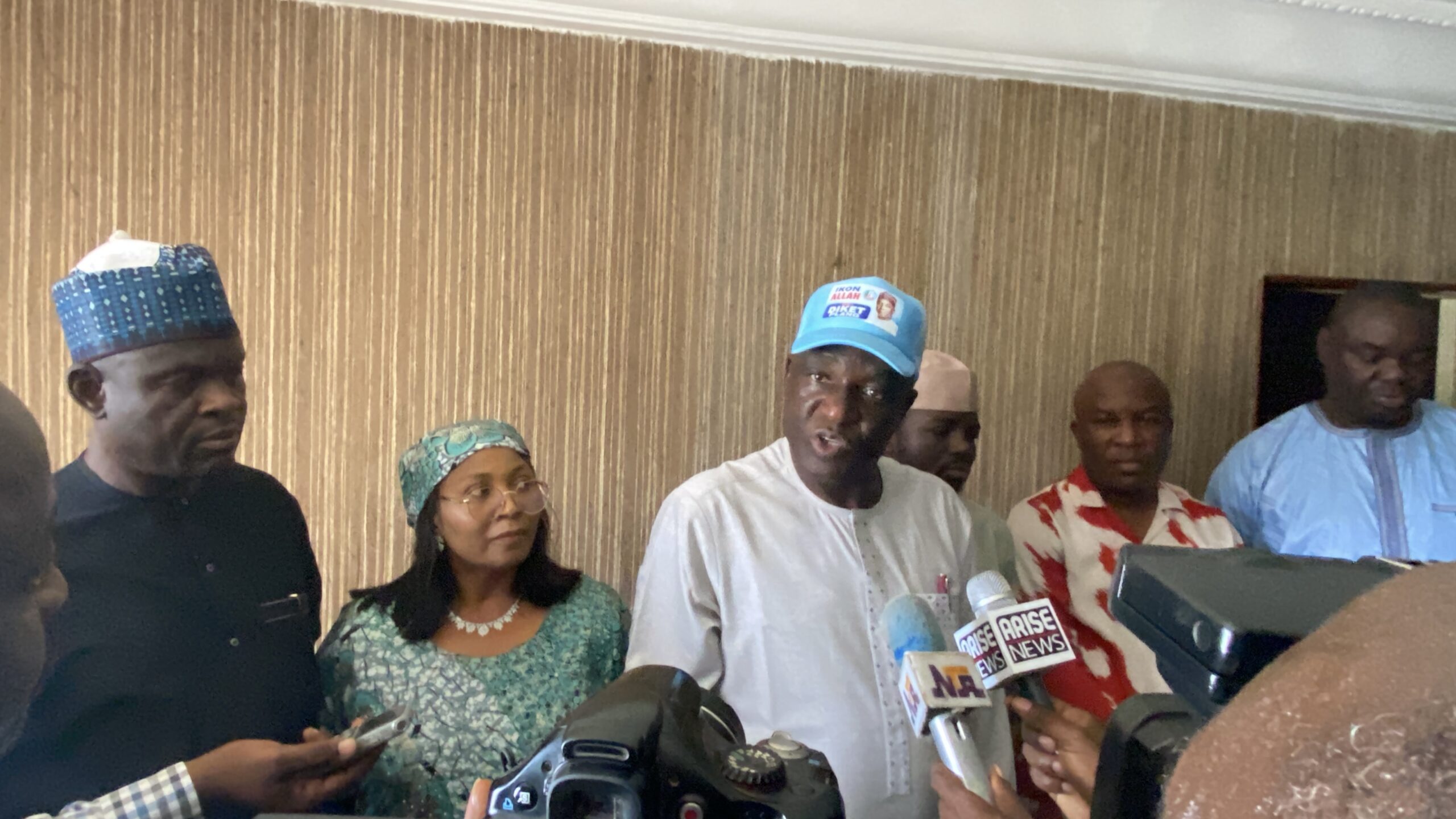
Incumbent Senator representing Plateau Central, Diket Plang, on Thursday led a delegation of aggrieved aspirants of the All Progressives Congress to the party secretariat in Jos, Plateau State, where they formally submitted petitions challenging the conduct and outcome of the recently concluded APC primaries.

The group, which included senatorial, House of Representatives and State Assembly aspirants, called for the nullification of the exercise, describing it as flawed, non-transparent and inconsistent with the party’s electoral guidelines.

IMG

Among those who accompanied the senator were Chris Giwa, aspirant for Plateau North Senatorial District; Ephraim Usman Gar; John Tongshinen; Beatrice C.J Dakas; and Komsol Alphonsus Longgap, all of whom are contesting various positions in the 2027 general elections.

Speaking on behalf of the delegation, Senator Plang expressed strong dissatisfaction with the primaries, insisting that what transpired fell far below acceptable democratic standards within the party.

“I am a serving senator… we are here in loyalty and obedience to the guidelines of our great party, APC… but for us on this platform, today’s election is the worst,” Plang said.

He alleged widespread irregularities in the conduct of the primaries, including lack of accreditation, absence of party agents during voting, and manipulation of results.

IMG

Plang also accused some unnamed party officials of allocating votes rather than conducting credible elections, citing his own case where he claimed 1,423 votes were assigned to him without a proper electoral process.

“That is a total blackmail. That is unacceptable. And this cannot be tolerated,” he said.

According to him, in several constituencies across Plateau State, elections were either not conducted or were abruptly discontinued, yet results later surfaced from unclear sources.

The senator further argued that direct primaries, as provided for in the party’s guidelines, were meant to ensure broad participation of registered members, but alleged that the process was instead compromised by administrative irregularities.

He maintained that the aggrieved aspirants remain loyal to the APC and its leadership but insisted that justice must be served through the party’s appeal mechanism.

“We remain loyal to the party, but whatever has been done should be nullified and proper guidelines must be followed,” he added.

Other aspirants who submitted petitions at the secretariat echoed similar concerns, calling for a review of the exercise and fresh primaries in affected areas.

IMG

The petitioners also urged the party’s appeal committee to intervene and restore confidence in the internal democratic process of the APC in Plateau State.

IMG

Continue Reading
Click to comment

Leave a Reply

Your email address will not be published. Required fields are marked *

News

2027: Opposition too divided to threaten APC – Agbakahi

info

Published

on

By

A chieftain of the All Progressives Congress, APC, Dr George Agbakahi has said the opposition parties in Nigeria are too fragmented and disunited to pose a serious challenge to the ruling party ahead of the 2027 general elections.

Agbakahi made the remarks during a current affairs programme on News Central Television on Tuesday.

He expressed confidence that the APC would secure a decisive victory in the next presidential election.

According to him, the outcome of elections in democratic societies is determined by several factors, including party structure, internal cohesion, candidates’ appeal, track record, and prevailing political and socio-economic realities.

“Politics is dynamic in every democratic election. Globally, there are variables that determine election outcomes, such as party structure, party unity, political dynamics in individual states, candidates’ appeal and their records of accomplishment,” he said.

The APC stalwart, who is also the Leader of the Tinubu Support Organisation (TSO) in the South-East, argued that party unity remained a major factor in electoral success, describing the APC as one of the most united political parties in Africa.

He said the party’s National Chairman, National Working Committee, NWC, governors and other stakeholders were working in harmony, unlike the opposition parties, which he described as divided and disintegrated.

“The APC leadership is working together with the governors and other party organs. 

“On the other hand, the opposition parties are divided, fragmented and disintegrated,” he stated.

Agbakahi dismissed claims that the APC was responsible for the internal crises rocking opposition parties, insisting that they were self-inflicted.

“It’s not true that APC is behind their problems. They are the architects of their own challenges,” he said.

He questioned why opposition figures opted to join existing political parties instead of building new platforms, arguing that the APC itself emerged in 2015 through the merger of political parties.

Speaking on the prospects of the opposition in 2027, Agbakahi maintained that the political landscape had changed significantly since the 2023 elections, adding that the APC had expanded its support base across the country, including in the South-East and South-South.

“It’s no longer like it was in the past. APC has made tremendous inroads across different regions. As long as the election is free, fair and credible, APC will win,” he said.

He said the ruling party would campaign on the achievements of President Bola Tinubu rather than engage in personal attacks against opponents.

According to him, Tinubu would seek re-election based on his record in office, including economic reforms, foreign reserves, foreign capital inflows, trade surplus and infrastructure development across the country.

He said, “I want to let you know that microeconomic fundamentals of the economy of this country are very strong. 

“The President, like I said, will run on $52 bn foreign reserves, $20 bn foreign capital inflow, a record of $50.8 foreign direct investment, a record of $18.67 bn trade surplus.”

He also referenced Tinubu’s record as former governor of Lagos State, saying it would further strengthen the President’s campaign.

Agbakahi further argued that the leading opposition figures were familiar faces in Nigerian politics and lacked fresh ideas capable of convincing the electorate.

“The opposition has no clear agenda or policy alternatives to present to Nigerians beyond constant criticism of the current administration. 

“Nigerians know them, and they are like old wine in a new bottle and no amount of rehabilitation would change Nigerians’ perception towards these opposition candidates,” he said.

He added that the Federal Government had demonstrated commitment to addressing insecurity through increased funding for the defence sector, noting that the Ministry of Defence received a record budgetary allocation of about N5.41 trillion under the current administration.

The APC chieftain expressed optimism that the party would retain power in 2027, insisting that its achievements in governance and internal cohesion would give it a significant advantage over its political rivals.

Continue Reading

Health

WHO urges Africa to expand access to hepatitis care

info

Published

on

By

Dsc 0302.tmb 1024v.jpg

MTN ADVERT

The World Health Organisation (WHO) has urged African governments to strengthen national hepatitis programmes and expand access to vaccination, testing, and treatment, warning that millions of people across the continent continue to miss out on life-saving services despite the availability of effective interventions.

In a statement issued ahead of World Hepatitis Day, the WHO Regional Director for Africa, Mohamed Janabi, said viral hepatitis remains a major public health challenge across the region, even though new hepatitis B infections declined by 25 per cent between 2015 and 2024.

Mr Janabi noted that while effective vaccines, diagnostics, and treatments are available, many people are still diagnosed too late or cannot access care, leading to preventable deaths.

“No one should die from a disease that can be prevented, diagnosed and, in many cases, treated,” he said.

He called on governments, development partners, health workers, and communities to remove barriers preventing people from accessing hepatitis services.

PT WHATSAPP CHANNEL

“Eliminating viral hepatitis is within our reach, but only if proven interventions are available to everyone who needs them,” he said.

Bringing services closer to communities

Mr Janabi said the region already has the tools needed to eliminate viral hepatitis as a public health threat.

According to him, the hepatitis B vaccine, introduced in the early 1990s, provides up to 95 per cent protection against infection, while reliable diagnostic tools enable early detection. He added that hepatitis C can be cured, and lifelong treatment for hepatitis B can prevent complications such as liver cirrhosis and liver cancer.

He stressed that integrating hepatitis prevention, testing, and treatment into primary healthcare would make services more accessible and affordable, while also reducing pressure on health systems.

Mr Janabi said the challenge is no longer scientific but one of political commitment, financing, and equitable access.

He noted that countries in the WHO African Region have recorded progress by expanding the universal hepatitis B birth dose vaccine, advancing the elimination of mother-to-child transmission of HIV, syphilis, and hepatitis B, and pioneering hepatitis C elimination pathways.

However, he said these gains must be sustained and expanded across all 47 WHO African member states.

Late diagnosis

Mr Janabi warned that many people living with viral hepatitis remain unaware of their infection until serious liver damage has occurred.

He attributed the problem to inadequate access to testing and treatment, particularly in underserved communities, as well as stigma and limited public awareness.

To close these gaps, Mr Janabi urged countries to integrate hepatitis services into routine healthcare throughout a person’s life while investing in research and innovation to improve access to new diagnostic tools and treatments, including for hepatitis B and hepatitis D co-infection.

He also called on development partners to sustain technical and financial support to help countries achieve the global target of eliminating viral hepatitis as a public health threat by 2030.

World Hepatitis Day

Observed annually on 28 July, World Hepatitis Day raises awareness about viral hepatitis and promotes actions to prevent, diagnose, and treat the disease.

This year’s theme, “Hepatitis: Let’s break it down,” calls for breaking down financial, social, and systemic barriers that prevent people from accessing hepatitis services and accelerating progress towards eliminating the disease.

According to the WHO, viral hepatitis causes inflammation of the liver and can lead to severe complications, including liver cirrhosis, liver failure, and liver cancer if left untreated.

Nigeria’s burden

According to the WHO, Nigeria remains one of the countries most affected by viral hepatitis globally. The organisation estimates that more than 20 million Nigerians are living with hepatitis B, hepatitis C or both, yet over 80 per cent do not know their status. Data from the 2018 Nigeria HIV/AIDS Indicator and Impact Survey (NAIIS) also showed a hepatitis B prevalence of 8.1 per cent and a hepatitis C prevalence of 1.1 per cent among adults aged 15 to 64 years.

The burden extends beyond Nigeria. WHO estimates that more than 90 million people across the African Region are living with viral hepatitis, accounting for about 26 per cent of the global burden. Despite ongoing efforts to strengthen hepatitis control programmes, PREMIUM TIMES has previously reported persistent challenges, including low testing rates, limited access to treatment, and gaps in the uptake of the hepatitis B birth dose vaccine, leaving many infections undetected until serious liver complications develop.

Against the backdrop of the region’s high hepatitis burden, Mr Janabi reaffirmed WHO’s commitment to supporting African countries in strengthening health systems and expanding equitable access to hepatitis services.

“Together, we can prevent new infections, save lives and ensure that viral hepatitis is no longer a barrier to healthier lives for the people of Africa,” he said.


Continue Reading

Trending