News
Road To 2027 : ADC Presidential Primaries Holds Today (Meet The Aspirants)

(1) Atiku Abubakar
Among those contesting for the presidential ticket of the ADC, Atiku stands tall as the most experienced. Atiku’s quest to be president of Nigeria started in 1993, with the Social Democratic Party (SDP).
The SDP primaries was won by the late Moshood Abiola who took Baba Gana Kingibe as his running mate.

However, Atiku was said to have stepped down from the race under pressure from Shehu Musa Yar’adua.
At the dawn of democracy in 1999, Atiku was chosen by Olusegun Obasanjo as his running mate. However, after falling out with Obasanjo at the end of their tenure, in 2007 he defected and contested for the presidency on the platform of the Action Congress (AC). He was defeated by the late Umaru Musa Yar’adua of the PDP.
The former Vice President returned to the Peoples Democratic Party, in 2011 and challenged the former President Goodluck Jonathan for the PDP ticket. Atiku lost the party’s primary election to Jonathan. In 2015, Atiku led some PDP governors to the newly formed All Progressives Congress (APC) and challenged the late President Muhammadu Buhari and others for the presidential ticket, but lost the contest.
In 2019, Atiku returned to the PDP, won the primary, but lost the main election to the then President Muhammadu Buhari. In 2023, Atiku was also the PDP’s candidate, but lost to the incumbent President Bola Ahmed Tinubu.
In a widely publicised interview on television, Atiku recently disclosed that the 2027 election will be his last, fueling speculation that he will do everything humanly possible to clinch the ticket of the party.
(2) Rotimi Amaechi
Rotimi Amaechi, one of the top contenders for the ticket of the ADC, is a former Speaker of the Rivers State and a governor in the same Rivers. In 2023, after the tenure of the late President Muhammadu Buhari, Amaechi contested for the presidential ticket of the APC with President Tinubu and lost.
Ahead of the coming election in 2027, Amaechi joined forces with the opposition coalition in the ADC and is now battling with others to clinch the presidential ticket.
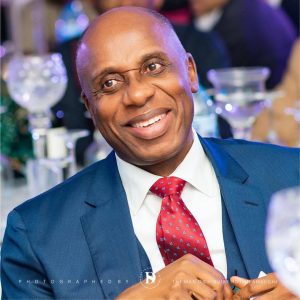
As the battle for the ticket hots up, Amaechi was recently quoted in an interview with Trust TV, as saying that he did not purchase the nomination form of the ADC to step down or become a vice presidential candidate to anyone.
After his screening last week, Amaechi told journalists that he is a bonafide member of the ADC and will only accept the outcome of any consensus where he is part of and involved.
(3) Muhammed Hayatu-Deen
Muhammed Hayatu-Deen is another presidential aspirant that has been making waves ahead of the ADC presidential primary.
In 2023, Hayatu-Deen was one of the top presidential aspirants for the ticket of the party. He lost to Atiku.
Ahead of the primaries, Hayatu-Deen has urged delegates and stakeholders to use the primary to demonstrate the party’s readiness to offer Nigerians what he described as a credible alternative to failed governance and “recycled politics.”
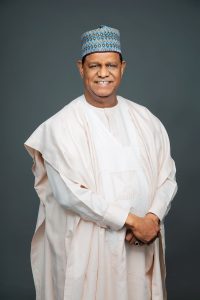
Speaking in Abuja at the weekend, Hayatu-Deen described the forthcoming primary election as a defining moment not only for the party but also for Nigeria’s political future ahead of the 2027 general elections.
He said. “Monday is not merely about selecting a candidate. Monday is about determining whether the ADC is truly serious about rescuing Nigeria and offering Nigerians a credible alternative to the failed politics they have endured for too long.”
Positioning himself as a unifying candidate capable of bridging regional, religious and generational divides, Hayatu-Deen argued that his candidacy represents a departure from established political figures.
“I am not on the carousel of the same old faces that Nigerians have seen for decades,” he stated. “I carry no political baggage. I owe no godfathers. What I bring is experience, credibility, integrity, calm leadership, and a practical recovery plan for Nigeria.”
The aspirant highlighted insecurity, unemployment, displacement and economic decline across North Central states, including Benue State, Plateau State, Niger State, Nasarawa State and Kogi State, describing persistent attacks on farming communities as both an economic and humanitarian crisis.
“A nation cannot prosper when the region that feeds it is bleeding,” he said.
The winner of the anticipated ADC presidential primary is expected to lead the party into the January 2027 presidential election and mount a challenge against incumbent President Bola Ahmed Tinubu of the APC and probably Mr Peter Obi of the Nigerian Democratic Congress (NDC).







The Aliko Dangote Foundation (ADF) has said 777,907 vulnerable women across 15 Nigerian states are on track to benefit from 15.56 million shares in Dangote Petroleum Refinery and Petrochemicals under its Women Share Subscription Grant Initiative.
In a statement issued on Sunday by Zouera Youssofou, its managing director/CEO, the foundation said the programme aims to promote financial inclusion and empower women through equity ownership in one of Africa’s largest industrial investments.
“A total of 777,907 underprivileged Nigerian women across 15 states are set to benefit from 15.56 million shares in Dangote Petroleum Refinery and Petrochemicals IPO under the Aliko Dangote Foundation’s (ADF) Women Share Subscription Grant Initiative,” the statement said.
The initiative forms part of the foundation’s broader target of empowering two million vulnerable women across Nigeria’s 36 states and the Federal Capital Territory (FCT), it stated further.
The foundation said 15 state governments have committed to participating in the programme, under which each state’s financial contribution will be matched by the foundation to provide beneficiaries with shares at no cost to the beneficiaries.
The participating states include Abia, Anambra, Borno, Ebonyi, Enugu, Gombe, Imo, Kebbi, Kwara, Lagos, Nasarawa, Niger, Plateau, Yobe and Zamfara.


Last week, PREMIUM TIMES reported that the Dangote Petroleum Refinery and Petrochemicals extended its ongoing $1.6 billion IPO, originally scheduled to end on 13 October, by two weeks to enable broader participation across Africa, following robust, continent-wide interest.
Since its launch, the IPO has been heralded as the biggest-ever on the continent. It is offering 4.1 billion shares at N525 per unit, with a minimum subscription of 10 shares. Its green shoe option allows an additional 30 per cent of the shares on offer to be sold if it is oversubscribed.
In July, a private placement ahead of the IPO was 270 per cent oversubscribed, even though the original plan was to raise $2.5 billion.
The IPO attracted billions of naira within minutes of opening, with a couple of trading platforms, including Bamboo and Cowrywise, experiencing downtime on the first day on account of unprecedented subscription traffic.
Shares allocation
The foundation noted that Gombe State has emerged as the first participating state to make full payment towards the initiative, marking a milestone in its implementation.
Under the arrangement, each beneficiary is eligible to receive 20 shares at an indicative allocation price of N525 per share, giving each recipient an allocation valued at N10,500.
The state government will finance 10 shares per beneficiary, while the foundation will provide a matching contribution for the remaining 10 shares.
The initiative, according to the statement, seeks to extend the benefits of the IPO beyond institutional and high net-worth individuals to vulnerable women, many of whom may be participating in the capital market for the first time.
Rather than relying solely on conventional financial assistance, the programme intends to give beneficiaries ownership of productive assets and an opportunity to participate in long-term wealth creation.
The foundation’s target of reaching two million women across all 774 local government areas underscores its ambition to expand financial inclusion and broaden individual participation in Nigeria’s capital market.
ADF acknowledged the support of the Nigerian Exchange and the Securities and Exchange Commission in advancing the initiative’s financial inclusion objectives.
The programme runs simultaneously with the foundation’s Tertiary Students Share Subscription Grant Initiative, which is designed to support eligible students looking to participate in the IPO.
Under the students’ initiative, the foundation supports applications for 10 shares on behalf of each participating eligible student at no cost.
Discover more from Premium Times Nigeria
Subscribe to get the latest posts sent to your email.

Nigeria is not participating sufficiently in decisions governing Africa’s internet resources, raising concerns about the country’s influence over critical infrastructure and policies that support digital connectivity, Muhammed Rudman, MD/CEO IXPN, has warned.
Rudman made the observation at the Internet Governance 2026 Symposium, where he urged Nigerian internet service providers, businesses and technical professionals to become more involved in the management of internet protocol (IP) addresses, domain names and other resources that underpin global internet operations.
The CEO of Nigeria’s local internet registry identified the African Network Information Centre (AFRINIC), the regional internet registry responsible for distributing internet number resources across Africa and the Indian Ocean region, as a key platform through which Nigerian stakeholders can participate in decisions affecting the continent’s internet infrastructure.

IP addresses are numerical identifiers that enable devices and networks to communicate over the internet. They are allocated through a coordinated system involving regional internet registries, making participation in the organisations responsible for managing these resources important to internet service providers and network operators. Rudman said Nigeria was among the significant holders of internet resources in Africa but was not making sufficient contributions to the processes through which those resources are managed.
Rudman made the observation at the Internet Governance 2026 Symposium, where he urged Nigerian internet service providers, businesses and technical professionals to become more involved in the management of internet protocol (IP) addresses, domain names and other resources that underpin global internet operations.
He identified the African Network Information Centre (AFRINIC), the regional internet registry responsible for distributing internet number resources across Africa and the Indian Ocean region, as a key platform through which Nigerian stakeholders can participate in decisions affecting the continent’s internet infrastructure.
“But unfortunately, we are not really participating when it comes to management of the IP resources in AfriNIC,” Rudman said.
IP addresses are numerical identifiers that enable devices and networks to communicate over the internet. They are allocated through a coordinated system involving regional internet registries, making participation in the organisations responsible for managing these resources important to internet service providers and network operators.
Rudman said Nigeria was among the significant holders of internet resources in Africa but was not making sufficient contributions to the processes through which those resources are managed.
He also encouraged Nigerian stakeholders to participate in the Internet Corporation for Assigned Names and Numbers (ICANN), which coordinates the global domain-name system and helps ensure the stable operation of the internet’s unique identifiers.
IXPN CEO flags Nigeria’s limited participation in policy decisions
Rudman said the problem extended beyond internet infrastructure to the broader process of developing policies that affect the internet industry.
He recalled attending discussions on IP resource allocation in Angola in 2019, where he encountered young Nigerians contributing to policy discussions despite being unfamiliar to him as a participant in Nigeria’s internet industry.
“I run the Internet Exchange Point of Nigeria, and I know all the major ISPs, and I happen to be part of NIRA, I know everybody that is related. And Nigerians were not there,” he said, referring to his experience at the meeting.
The experience prompted him to question the representation of Nigerian participants at the discussions and how their participation was being supported.
Rudman said Nigerian organisations needed to recognise that decisions taken within regional and global internet governance institutions could affect how resources were allocated, technical standards were developed and internet services were operated.
“I run the Internet Exchange Point of Nigeria, and I know all the major ISPs, and I happen to be part of NIRA, I know everybody that is related. And Nigerians were not there,” he said, referring to his experience at the meeting.
He warned that organisations that failed to participate risked being left out of decisions they would eventually have to implement.
“If you participate in the policy process, you don’t get shock. You don’t get surprises,” he said.
The warning highlights the importance of sustained engagement by Nigerian internet service providers, network operators and other businesses in institutions responsible for the development and management of internet resources.
Awareness gap keeps businesses away
Rudman attributed the low level of participation partly to limited awareness of internet governance and its relevance to businesses.
He cited a survey conducted by the Nigerian Communications Commission (NCC), which found that 66% of respondents identified lack of awareness as a barrier to participation.
He also said 40% of surveyed organisations had never participated in internet governance processes, while 20% had participated during the preceding two to three years.
According to Rudman, other obstacles included the absence of internal mandates, limited executive support, unclear business benefits, technical complexity, time commitments and the cost of participation.
He argued that companies often prioritised short-term business objectives without adequately considering the long-term implications of policies developed through internet governance processes.
Rudman urged organisations to identify the relevant internet governance bodies for their sectors and participate consistently rather than attending only occasional conferences.
He specifically encouraged internet service providers to engage with AFRINIC and called on stakeholders to contribute to the Nigerian Internet Governance Forum and the Internet Governance Working Group.
He also noted that participation in international internet governance meetings was not necessarily limited to physical attendance, as some events provide opportunities for virtual participation.
IXPN CEO on building Nigeria’s influence
Rudman explained that internet governance involves several interconnected institutions and stakeholder groups responsible for different aspects of the internet.
While AFRINIC manages the allocation of internet number resources within its service region, ICANN coordinates the global domain-name system and related unique identifiers. Technical organisations, including the Internet Engineering Task Force, develop and maintain internet standards.
He said stakeholders could contribute to these processes through national, regional and global platforms, allowing concerns raised in Nigeria to inform wider discussions.
Under the approach he described, issues can be discussed through the Nigerian Internet Governance Forum before being taken to the West African Internet Governance Forum and the African Internet Governance Forum, where relevant concerns can feed into global discussions.
Rudman urged Nigerian businesses to identify the forums most relevant to their operations and contribute to the development of policies affecting their sectors.
He also pointed to the potential benefits of stronger collaboration between regulators and industry stakeholders, citing Brazil’s internet governance model as an example of how coordinated engagement can support the development of an internet ecosystem.
For Nigeria, greater participation in internet governance would give businesses and technical professionals more opportunities to contribute their expertise, understand emerging policy changes and engage with organisations responsible for critical internet resources.
Rudman’s call comes amid continuing efforts to broaden stakeholder participation in internet governance, with awareness, sustained engagement and a clearer understanding of business interests identified as important factors in strengthening Nigeria’s role in the management of Africa’s internet resources.
-
News4 days ago
Miners Association Seeks Support To Unlock $3bn Gemstone Export Potential
-

 Health4 days ago
Katsina health professionals declare 7-day warning strike
-
News1 day ago
NUCAP: Nigeria targets 20 million people with 3,700 telecom towers – Technology Times
-
News2 days ago
Gunmen storm Plateau mining site, kill two persons