Business
Budget office DG defends Tinubu’s foreign engagements, faults Peter Obi’s claims

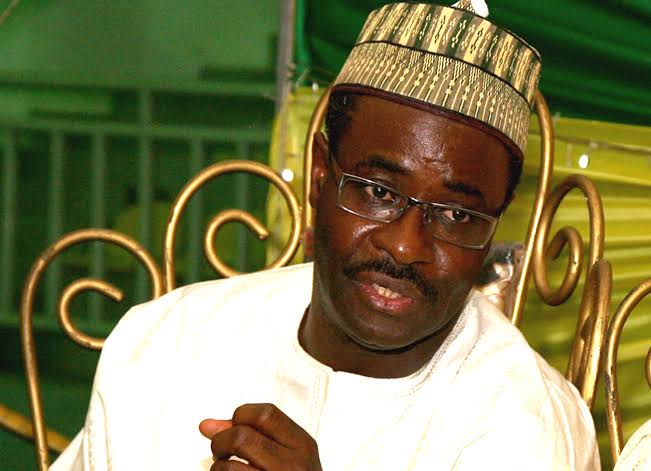
The Director General of the Budget Office of the Federation, Tanimu Yakubu, has defended the foreign engagement strategy of President Bola Tinubu, describing recent criticisms by the former Anambra State Governor, Peter Obi, as a “populist simplification” of Nigeria’s economic realities.
Mr Yakubu, in an article titled “Foreign Engagements and the Dangers of Populist Simplification: Peter Obi’s Ignorance,” argued that Mr Obi failed to appreciate the complexities involved in rebuilding investor confidence and restoring economic stability in a country emerging from fiscal and monetary challenges.
On 16 May, Mr Obi criticised the value of recent foreign state visits by Nigerian leaders, arguing that such engagements must translate into measurable economic benefits for citizens, rather than ceremonial visits.
“State visits by leaders are not tourism, and diplomacy is not a fashion parade,” Mr Obi said.
According to Mr Yakubu, the Tinubu-led administration inherited an economy burdened by structural weaknesses, including fuel subsidy costs, exchange-rate distortions, mounting debt-service obligations, dwindling investor confidence, and heavy reliance on the Central Bank of Nigeria (CBN) financing to sustain government operations.

The Budget Office DG said under such conditions, international engagements should not be viewed as ceremonial trips but as strategic efforts aimed at rebuilding sovereign credibility, strengthening diplomatic relations, restoring investor confidence, and attracting long-term capital.
Mr Yakubu said the former Anambra state governor oversimplifies economic realities, which has a tendency to reduce complex questions of economic recovery.
“No serious analyst disputes that foreign engagements should ultimately produce measurable economic outcomes. The real issue, however, is whether Mr. Obi properly understands the sequence through which nations emerging from fiscal and monetary instability rebuild investor confidence, restore credibility, and reposition themselves within global capital markets.
“President Tinubu inherited an economy facing severe structural stress: an unsustainable fuel subsidy regime, multiple exchange-rate distortions, collapsing fiscal buffers, mounting debt-service pressures, dwindling investor confidence, and unprecedented dependence on Ways and Means financing simply to sustain government operations.
“Under such circumstances, international engagements are not mere ceremonial excursions; they become instruments for rebuilding sovereign credibility, restoring policy confidence, reassuring investors, strengthening diplomatic alignments, attracting long-term capital, and repositioning the country within regional and global economic networks,” Mr Yakubu said.
Economic comparison
He also faulted Mr Obi’s comparison of Nigeria’s economic situation with that of the United States under former President Donald Trump, saying the two countries operate under entirely different economic realities.
According to him, the United States engages China from the position of the world’s dominant reserve currency issuer, also as the largest consumer market on earth, and a mature industrial economy with deep capital markets and global technological dominance.
In contrast, the director general said Nigeria is a reforming emerging economy attempting to stabilize itself after years of fiscal distortion and policy disequilibrium.
Mr Yakubu further argued that the benefits of international engagements often take time to materialise, stressing that major investments, infrastructure partnerships, and sovereign financing commitments usually emerge gradually after sustained diplomatic and economic engagement.
ALSO READ: Ex-foreign affairs minister criticises Tinubu’s ambassadorial appointments
He described it as contradictory for critics to oppose reforms such as fuel subsidy removal and exchange-rate unification while simultaneously demanding immediate foreign investment inflows.
Mr Yakubu said its is inconsistent to oppose stabilization reforms on one hand while simultaneously demanding the investment confidence that only such reforms can eventually produce.
“More importantly, many of the benefits of state engagements do not materialize instantly in the form of dramatic headline announcements. Serious investments, infrastructure partnerships, manufacturing relocations, energy financing arrangements, and sovereign investment commitments often emerge gradually after sustained diplomatic engagement, policy stabilization, and investor confidence-building.
“Ironically, many of the same critics now demanding immediate investment inflows were among those who opposed the difficult stabilization reforms, including fuel subsidy removal and exchange-rate unification, that were necessary to restore the macroeconomic credibility investors require before committing long-term capital,” he said.
He extolled the administration and CBN’s achievements in stabilising the economy with reforms, and that Nigeria was approaching a dangerous fiscal cliff before the administration’s intervention.
“Diplomacy should indeed generate economic value. But rebuilding a damaged economy requires more than slogans, photo comparisons, or selective foreign analogies.
“It requires difficult decisions, international re-engagement, policy credibility, institutional stabilization, and the patience necessary for long-term economic restructuring to take root,” Mr Yakubu said.




Minister of Aviation and Aerospace Development Festus Keyamo has approved the design of a proposed monorail to link Ikeja Railway Station in Lagos to Murtala Muhammed International Airport (MMIA) in the state.
The project is expected to connect the airport to the Lagos Red Line rail network, providing passengers and other airport users with an alternative to road transport.
Mr Keyamo announced the approval on Tuesday after a meeting with the managing director of the Federal Airports Authority of Nigeria (FAAN), the permanent secretary of the Federal Ministry of Aviation and engineering teams from the ministry and FAAN.
In a post on X, the minister said the proposed line will have five stations, running from Ikeja Railway Station to the international airport’s Terminal 1, which is currently undergoing reconstruction.
He listed the proposed stations/stops as Ikeja Station, Domestic Airport Station, Beesam Station, Toll Gate Station and MMIA Airport Station.
“The monorail is an integral part of the reconstruction of the nation’s major gateway at the MMIA in Lagos,” Mr Keyamo said.

The design approval follows earlier announcements by the Federal Government about plans to extend rail services from Ikeja to the airport’s domestic and international terminals.
In June, PREMIUM TIMES reported that the government was working with the Lagos State Government to extend the existing rail network to the airport and to expand connectivity.
Recently, Olubunmi Onabanjo-KukuFAAN’she managing directAN, said talks on financing the planned airport rail lint had reached an advanced stage.
Speaking at the World Aviation Festival in Lisbon, Portugal, on 18 October, Ms Onabanjo-Kuku stated that efforts were ongoing to finalise the project’s financing structure.
The planned link is expected to connect the airport’s three terminals to the Red Line as part of its wider modernisation programme.
The proposed rail connection forms part of broader efforts to upgrade facilities at the Lagos airport and improve passenger movement.
Terminal 1 of the international airport is undergoing reconstruction, while other infrastructure upgrades are intended to boost airport operations and the passenger experience.
The airport serves as a major gateway for international travel to and from Nigeria, making access to its terminals crucial for passengers and other users.
Discover more from Premium Times Nigeria
Subscribe to get the latest posts sent to your email.
-

 News2 days ago
Euromatch NPFL: Matchday 9 results
-
News3 days ago
NUCAP: Nigeria targets 20 million people with 3,700 telecom towers – Technology Times
-
News4 days ago
Gunmen storm Plateau mining site, kill two persons
-
News4 days ago
Nigeria needs stronger collaboration ‘to shape internet governance’ – Technology Times