Connect with us

Education

FG Approves N250bn For Student Hostel Construction Nationwide – Alausa

info

Published

on

Ed005a95 5531 48c7 a547 e446e7ff6a2e.jpeg

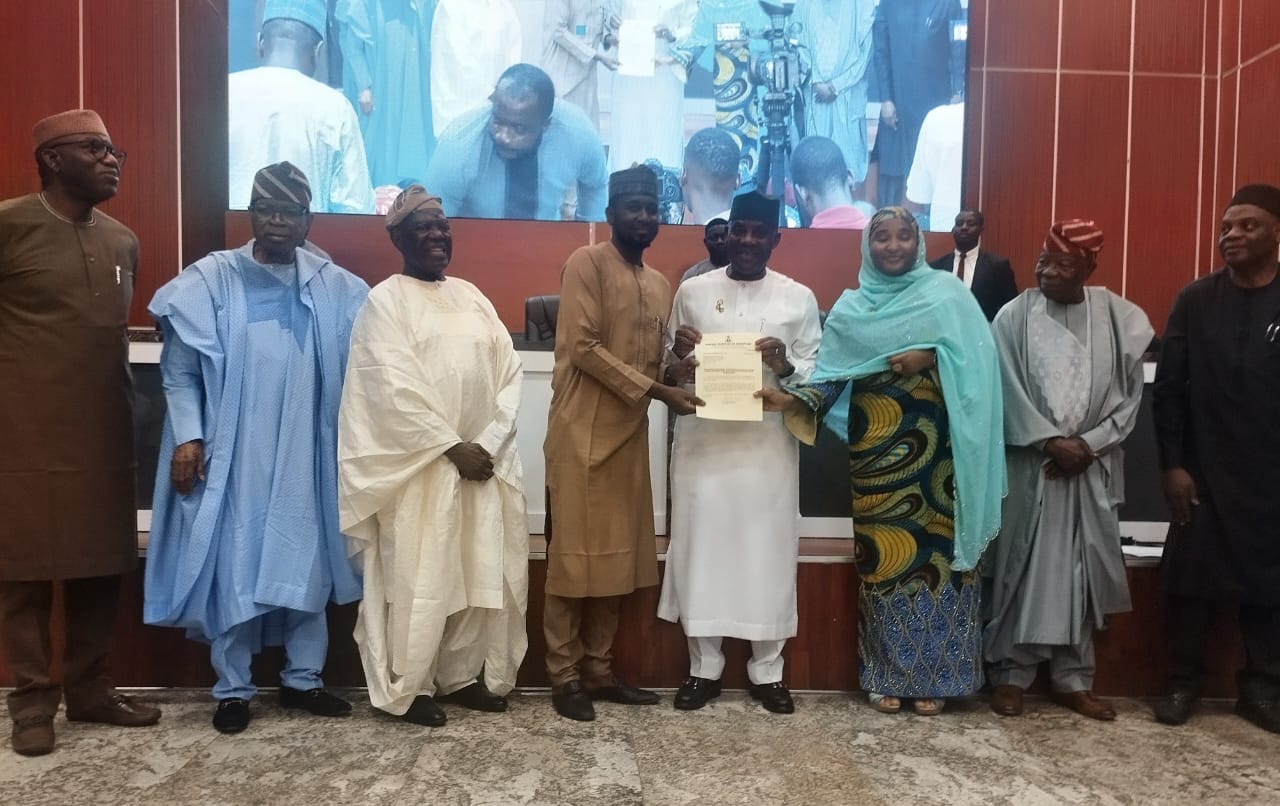
The Minister of Education, Dr Tunji Alausa, says President Bola Tinubu has approved N250 billion for the construction of student hostels across tertiary institutions nationwide.

Alausa said this on Wednesday in Abuja during the inauguration of governing boards, principal officers and chief executives of agencies under the Federal Ministry of Education.

He said the intervention marked the first major dedicated investment aimed at addressing acute accommodation shortages in Nigeria’s universities, polytechnics and colleges of education.

According to him, the fund will support hostel construction in at least 50 tertiary institutions, with each expected to receive about N2 billion for at least 500 bed spaces.

He added that an additional N90 billion would be deployed through Public-Private Partnership arrangements to provide hostels in 24 federal institutions with 1,200 to 1,500 bed spaces each.

“We have several of those schools whose constructions have already started cumulatively, N250 billion in 2026 to provide student accommodation alone,” he said.

Alausa explained that the Tertiary Education Trust Fund (TETFund) would provide N1 billion counterpart funding per institution, while private investors would contribute about N4 billion each.

He expressed appreciation to President Tinubu, describing his leadership as “missionary” and key to driving reforms in the education sector under the Renewed Hope Agenda.

The minister said the president’s investment and policy direction had strengthened human capital development and positioned education as a central tool for national transformation.

He said that the ministry had received the highest budgetary allocation in the country for two consecutive years, reflecting the administration’s focus on education reform.

Alausa said the hostel initiative was a direct response to long-standing accommodation deficits in institutions such as Lagos State University and Yaba College of Technology.

He added that government was prioritising implementation-driven reforms guided by measurable outcomes rather than policy formulation alone.

The minister charged newly inaugurated board members to ensure accountability, strengthen oversight and improve institutional performance across agencies.

He also announced additional investments, including N130 billion for engineering and technology workshops and N120 billion for upgrading medical schools nationwide.

Chairman of the NBTE Governing Board, Prof. Babatunde Salako, pledged commitment to transparency, institutional strengthening and alignment of education with Nigeria’s economic needs.

The list of inaugurated members are: Prof. Babatunde Salako, Chairman, Governing Board, NBTE; Prof. Modupe Adelabu, Chairman, Governing Board, National Examinations Council (NECO) and David Shofoyeke, Executive Secretary, National Institute for Educational Planning and Administration (NIEPA).

Others are Prof. Garba Shuaib, Member, Governing Council, Federal University Dutsin-Ma, Katsina State; Abdulrahman, Ahmad, Member, Governing Council, Federal College of Agriculture and Technology, Nabanje Kafur, Katsina State and Prof. Kabiru Dungurawa, Member, Governing Council, Federal College of Education (Technical) Potiskum, Yobe State.

Also in the list are Dr Bongfa Bonfa, Rector, Federal Polytechnic N’ Yak-Shendam Plateau State; Prof. Tijani Kalli, Vice Chancellor, Federal University of Agriculture and Entrepreneurship, Bama and Mr Abba Goni, Registrar, Federal University of Agriculture and Entrepreneurship, Bama, Borno state.

Others are Mrs Aisha Halilu, Librarian, Federal University of Agriculture and Entrepreneurship, Bama; Mr Bashir Zubairu, Bursar, Federal University of Agriculture and Entrepreneurship, Bama.

Members of the Federal Unuversity of Techbology, Minna, Bosso campus co-sharing committee are: Prof. Idris Ali, Senior Special Adviser to the Minister of State for Education as Chairman; Dr Ayuba Mohammed, Deputy Director, Academic Planning, National University Commussion (NUC) and Pastor Timothy Ademola as External Member of Council.

Others are Dr Oyeleke Olarinoye, Heda of Department, Nuclear Science, FUT Minna; Prof. A.A. Aliyu, Provost, College of Health Sciences, Ibrahim Badamosi University  (IBBU) Lapai, among others.(NAN)

Continue Reading
Click to comment

Leave a Reply

Your email address will not be published. Required fields are marked *

Education

Tinubu Urges Inclusive Policies, Active Child Participation at 2026 Children’s Day Celebration

info

Published

on

By

Bola Tinubu 1.jpg

Bola Ahmed Tinubu has called on governments at all levels, families and communities to move beyond symbolic gestures and build a society where children are genuinely listened to and actively involved in decisions affecting their lives.

The President made the call during the 2026 National Children’s Day celebration held at Eagle Square in Abuja.

Represented by the Minister of Women Affairs and Social Development, Imaan Sulaiman-Ibrahim, Tinubu told pupils and students from primary and secondary schools that their voices, ideas and well-being are central to Nigeria’s future.

According to the President, the assurance that “your opinion matters, your ideas matter, your well-being matters” should not be treated as mere rhetoric but as a guiding principle for democratic renewal and national development.

The event, themed “Future Now: Promoting Inclusion for Every Nigerian Child,” focused on the need to ensure that no child is excluded from opportunities because of social status, physical condition or geographical location.

Tinubu stressed that every Nigerian child, whether from rural or urban communities, deserves equal access to quality education, healthcare, nutrition, protection, digital opportunities and a sense of belonging.

The President highlighted several programmes under the Renewed Hope Agenda aimed at improving child welfare and development, including the Renewed Hope Social Impact Intervention–774, Nutrition 774, ANRiN 2.0 and the Nigerian Education Loan Fund (NELFUND).

He also pointed to investments in Science, Technology, Engineering and Mathematics (STEM) education as well as the Ministry of Education’s NEDI platform as part of efforts to equip children with digital and technological skills for the future.

On child protection, Tinubu noted that although the Child Rights Act has been domesticated across the country, the federal government is currently reviewing both the Act and the National Child Policy to strengthen their effectiveness.

He added that through the 2025 Costed Action Plan, the government is providing financial backing to tackle violence against children, child marriage and female genital mutilation.

The President further encouraged state governments to strengthen the Nigerian Children’s Parliament, describing it as an important platform for nurturing leadership, civic responsibility and democratic participation among children.

Tinubu also advised children to avoid violence, cultism, substance abuse, cybercrime and bullying, warning that such vices destroy destinies and undermine national development.

He urged them to embrace discipline, honesty, patriotism and responsible use of technology.

In her welcome address, the Minister of State for the Federal Capital Territory, Mariya Mahmoud, represented by the Acting Mandate Secretary of the Women Affairs Secretariat, Hajiya Mukhtar, said the FCT Administration, with support from UNICEF, is strengthening community-based child protection systems, training social workers and improving oversight of orphanages and care homes.

One of the highlights of the event was an address delivered by Jessica Nufi, a student of Government Secondary School, Garki, Abuja, who spoke on behalf of children across the country.

Jessica appealed to the government to make quality education free and accessible, strengthen protection against insecurity and violence, and address early marriage, cultism, drug abuse and environmental hazards.

She lamented that poverty, insecurity and harmful social practices continue to deny many Nigerian children, especially girls, access to education and a safe future.

The student also called for improved healthcare services for children with special needs and safer school and community environments.

She urged leaders to build a Nigeria free from drugs, cultism and environmental dangers — a country the younger generation could proudly inherit.

Ending her speech with a pledge on behalf of Nigerian children, Jessica promised that children would continue to obey their parents and teachers, study hard, reject harmful behaviours and grow into responsible leaders if adults fulfilled their responsibilities toward them.

Her remarks received applause from children, parents and dignitaries at the event.

Continue Reading

Education

FG Partners with Coursera to Fund 36,000 Youth Tech Licences

lamaqgodoz

Published

on

20260523

The Federal Government of Nigeria has launched a massive digital empowerment drive by securing and fully funding 36,000 learning licences across Coursera and Pluralsight.

Unveiled as part of the newly established Digital Training Academy (DTA), this landmark initiative aims to eliminate financial barriers and equip young Nigerians with globally competitive tech skills.

The Minister of Education, Dr. Tunji Alausa, formalised and signed the strategic partnership on the sidelines of the Education World Forum (EWF) in London. Operating under President Bola Ahmed Tinubu’s Renewed Hope Agenda, the DTA is being hailed as one of the largest government-funded investments in digital education in Nigeria’s history.

20260523

Addressing the High-Demand Tech Gap

The first year of the programme targets core fields shaping the future global workforce. Beneficiaries will undergo rigorous training to earn certifications highly valued by local and international employers in; Artificial Intelligence (AI), Cybersecurity, Data Science, Cloud Computing, and Software Engineering.

“Digital competency is no longer optional. It is foundational,” Dr. Alausa stated via an official release. He added that the administration is focused on building a generation of young Nigerians capable of leading and thriving within a rapidly evolving digital economy.


The Hybrid Implementation Strategy

Recognising that access to online tools is only half the battle, the Federal Ministry of Education has structured a hybrid model to ensure high completion rates:

1. Geographical Inclusion: The National Open University of Nigeria (NOUN) will leverage its vast nationwide network of study centres to ensure equitable slot distribution across all geopolitical zones.

2. On-the-Ground Mentorship: Yaba College of Technology (YABATECH) will provide technical facilitators, industry-focused expertise, and accountability structures to guide learners through their courses.


Why This Matters: The Economic Stakes

Nigeria’s youth demographic is expanding rapidly, yet a substantial digital skills gap persists. Economic analysts estimate that the lack of formal digital education among local graduates costs the national economy billions of dollars in lost potential productivity annually.

By partnering directly with elite, multinational platforms like Coursera and Pluralsight, the government is bypassing traditional infrastructure constraints. This model gives Nigerian youth direct access to the exact same training resources utilized by top tech professionals across the US, Europe, and Asia.

Continue Reading

Trending