Connect with us

Events

Iwopin Kingdom seals historic pact to take Okosi festival global through digital transformation – Technology Times

info

Published

on

1779264336 admin ajax.png

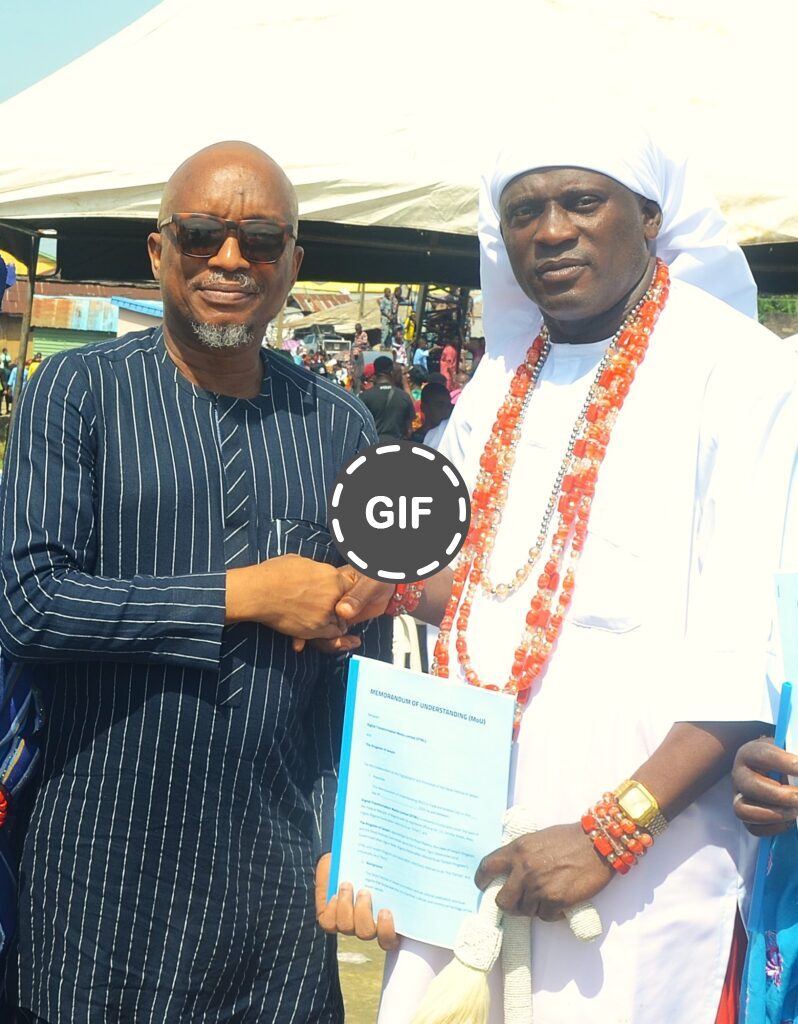
In a historic move set to redefine the preservation and global promotion of Nigeria’s cultural heritage, the Kingdom of Iwopin has entered into a landmark strategic partnership with Digital Transformation Media Limited (DTML) for the digitalisation and international promotion of the revered Okosi Festival.

The agreement, signed May 9, 2026 on the sidelines of the colourful Okosi Iwopin Ajidagan 2026 Festival, marks a defining moment in the cultural and economic trajectory of Iwopin, as the Kingdom embarks on a journey to elevate the annual Okosi boat regatta from a celebrated local heritage event into a globally recognised cultural tourism spectacle.

Speaking on the significance of the agreement, His Royal Majesty, Oba Sunday Adeniyi Agbojo, the Liken of Iwopin Kingdom, delivered a profound and visionary address that underscored the cultural, historical, and transformational importance of the landmark partnership.

Okosi Iwopin: A heritage reawakened for the world

His Royal Majesty described the Okosi Festival as more than a celebration, but a living testament to the identity, resilience, and maritime heritage of the Iwopin people.

“This is not merely the signing of an agreement; it is the opening of a new chapter in the history of our Kingdom,” the monarch declared. “For generations, the Okosi Festival has been the heartbeat of our people, a sacred convergence of culture, history, and communal pride expressed through the rhythms of the waters, the splendour of our regatta, and the unity of our people.”

The Royal Father emphasised that the partnership with DTML represents a deliberate and strategic effort to ensure that this heritage is not only preserved but amplified across Nigeria, Africa and beyond.

“In an age where the world is increasingly interconnected through technology, it is imperative that our heritage is not confined to our shores alone. Through this collaboration, the sights, sounds, and spirit of Okosi will travel beyond Iwopin, beyond Ogun State, and beyond Nigeria, to reach audiences across Africa and the global community.”

Drawing a powerful historical parallel, Oba Agbojo positioned the Okosi Festival within the broader narrative of African cultural renaissance.

“We recall with pride the great cultural convergence that took place during FESTAC ‘77 in Lagos, where the richness of Black heritage was displayed before the world. The Okosi Festival, which was proudly showcased at this historic event, stands in that same lineage of cultural excellence, a showcase of identity, heritage, and tradition that deserves its rightful place on the global stage.”

He further noted that the digital transformation initiative would ensure that the festival evolves while retaining its authenticity.

“This partnership guarantees that while we embrace modern technology, we do not lose the essence of who we are. Our traditions will remain sacred, our stories will remain authentic, and our people will remain at the centre of this transformation.”

“This is not merely the signing of an agreement; it is the opening of a new chapter in the history of our Kingdom,” the monarch declared. “For generations, the Okosi Festival has been the heartbeat of our people, a sacred convergence of culture, history, and communal pride expressed through the rhythms of the waters, the splendour of our regatta, and the unity of our people.”


A cultural and economic transformation agenda

The monarch highlighted the broader implications of the agreement, particularly its potential to drive economic growth and youth empowerment within the Kingdom.

“This initiative is not only about culture; it is about prosperity. It is about creating opportunities for our youth, empowering our artisans, and positioning Iwopin as a destination of choice for cultural tourism. Through digital innovation, we will unlock new economic pathways for our people.”

He expressed confidence in DTML’s capacity to deliver on the ambitious vision outlined in the the landmark partnership agreement.

“We have found in DTML a partner that understands both the power of storytelling and the importance of technology in shaping the future. Together, we will ensure that Okosi becomes a beacon of cultural pride and a driver of economic advancement.”

Edi Lawani: Bridging heritage and global entertainment

Entertainment legend and Advisory Board Member at DTML, Mr. Edi Lawani, brought a unique perspective to the partnership, positioning it within the global evolution of cultural festivals as platforms of influence and economic value.

“This is a defining moment, not just for Iwopin, but for Nigeria’s cultural landscape,” he stated. “Across the world, cultural festivals have evolved into powerful global brands, platforms that attract tourism, investment, and international recognition. What we are witnessing here is the birth of such a transformation for the Okosi Festival.”

Mr. Lawani emphasised that the fusion of tradition and modern media would unlock unprecedented opportunities.

“The richness of the Okosi Festival lies in its authenticity: the regatta, the cultural expressions, the communal energy. What DTML brings to the table is the ability to package and project this authenticity in a way that resonates globally, without diluting its essence.”

He noted that the initiative aligns with global trends in cultural consumption.

“Today’s audience is digital. They experience culture through screens, through immersive content, through storytelling that transcends geography. By digitising Okosi Iwopin, we are not just preserving it; we are making it accessible to the world.”

Mr. Lawani also highlighted the importance of positioning the festival within the international tourism ecosystem.

“With the right execution, Okosi Iwopin can become a destination event, something people plan their calendars around, just as they do with major festivals across Africa and beyond. This partnership lays the foundation for that reality.”

Technology, catalyst for cultural transformation

Providing the strategic and operational perspective, Mr. Shina Badaru, Founder and Chairman of DTML, described the agreement as a bold step in redefining how culture is preserved and promoted in the digital age.

“At DTML, we believe that culture and technology are not opposing forces; they are complementary drivers of progress,” he stated. “This partnership embodies that philosophy by leveraging digital tools to amplify one of Nigeria’s most unique cultural assets.”

Mr. Badaru explained that the Okosi Iwopin programme aligns with the technology group’s “Nigeria Heritage Initiative” which includes the development of a digital ecosystem for the festival.

Under the plan, DTML said it has success acquired the premium Nigerian internet domain, www.okosiiwopin.ng, to serve as the digital home of the annual Okosi Ajidagan Festival on the internet.

“The platform,” according to Mr. Badaru, “will drive strategic storytelling, tourism promotion, partnerships, media engagement and innovative digital experiences that will elevate the festival onto the global tourism map.”

He added that, “we are deploying a multi-layered strategy that includes a dedicated digital platform, immersive multimedia content, live streaming capabilities, and the creation of a digital cultural archive. This ensures that the Okosi Iwopin Festival is not only experienced physically but also digitally, by audiences anywhere in the world.”

He stressed that the initiative goes beyond visibility to deliver measurable impact.

“This is about building a sustainable cultural economy. Through strategic partnerships, sponsorships, and global media engagement, we will create value that benefits the community, supports local enterprises, and attracts investment.”

Mr. Badaru also underscored the importance of capacity building within the community.

“A key component of this initiative is empowering local youth with skills in digital media, content creation, and event technology. This ensures that the transformation is inclusive and that the benefits are felt across the community.”

Positioning Okosi Iwopin on the global stage

The agreement establishes a long-term framework for collaboration, spanning a diverse array of sustained effort to build the Okosi Iwopin Festival into a globally recognised brand.

Under the agreement, DTML assumes the role of Exclusive Strategic Partner for the digitalisation and promotion of the festival, while the Iwopin Kingdom preserves cultural stewardship and institutional support.

At its core, the partnership is about repositioning the Okosi Iwopin Festival as a flagship cultural event that reflects the richness of Nigeria’s heritage while embracing the possibilities of the digital future.

From the vibrant boat regatta that defines the festival to the intricate cultural expressions that accompany it, every element is set to be documented, preserved, and showcased to a global audience.

The initiative will leverage advanced media production, strategic marketing, and international partnerships to ensure that the festival gains visibility across key markets.

New era for cultural heritage in Nigeria

The agreement between the Kingdom of Iwopin and DTML signals a broader shift in how cultural heritage is approached in Nigeria, moving from preservation in isolation to promotion through innovation.

It represents a model that can be replicated across other cultural assets in the country, demonstrating how technology can be harnessed to unlock value while safeguarding tradition.

With the combined strength of traditional authority, creative expertise, and technological innovation, the festival is poised to become a symbol of cultural pride, economic opportunity, and international recognition.

In the words of His Royal Majesty: “The world will hear our story. The world will see our culture. And the world will know Iwopin.”


Continue Reading
Click to comment

Leave a Reply

Your email address will not be published. Required fields are marked *

Events

Plateau Media Professionals Explore AI, Fact-Checking and Peacebuilding at GIZ Workshop

info

Published

on

By

IMG 20260507 WA0074.jpg

Journalists and media professionals from across Plateau State have concluded a three-day intensive Media for Peace workshop organized under the Peacecore Project implemented by GIZ Nigeria at Crispan Suites and Hotel, Jos.

The workshop, which marked the Second Cohort of the Media for Peace training, focused on conflict-sensitive reporting, communication development and peacebuilding, artificial intelligence, and the use of fact-checking tools in journalism practice.

Speaking during the training, Susan Gopuk of GIZ Nigeria highlighted the organization’s long-standing commitment to peacebuilding, conflict transformation, and livelihoods support in Nigeria. She explained that GIZ, a German agency for international cooperation funded mainly by the German Ministry for Economic Cooperation and Development, operates in over 120 countries and has maintained a presence in Nigeria for 51 years with more than 30 projects nationwide.

According to her, the Peacecore Project currently operates in Kaduna, Plateau, and Taraba states in collaboration with governments, civil society organizations, media practitioners, and international partners. She noted that while the project’s first phase focused on strengthening peacebuilding and conflict resolution between farmers and herders, the second phase now emphasizes conflict transformation and sustainable livelihoods for vulnerable groups including women, youth, children, internally displaced persons, farmers, herders, and persons living with disabilities.

Susan stressed that gender equality remains central to the project, with deliberate efforts aimed at improving women’s access to rights, representation, and resources. She also highlighted interventions in dialogue, mental health support, youth engagement, climate-smart livelihoods, and infrastructure development.

She further emphasized the role of the media in promoting peace and countering hate speech, misinformation, and divisive narratives, especially in fragile communities like Plateau State.

One of the resource persons, Lady Irene David-Irene, delivered a presentation on Communication Development and Peace Building, where she underscored the influence journalists and media professionals wield in shaping public perception and social cohesion.

She warned that every action or inaction by journalists carries consequences, particularly in conflict-prone societies where reports can either promote peace or escalate tensions. She identified misinformation, sensationalism, hate speech, and biased reporting as key issues threatening peace and stability.

Lady Irene urged participants to embrace ethical, balanced, and conflict-sensitive journalism capable of fostering dialogue, unity, and mutual understanding within communities.

Thaddeus Yilmen said the sessions refreshed journalists on the ethics, responsibilities, and expectations of the profession, particularly the “do’s and don’ts” of responsible reporting. He called for more regular trainings to enable more media practitioners to benefit and contribute to peace-focused journalism.

Similarly, Tongnaan Bawa appreciated the organizers and facilitators for what she described as a valuable and enlightening experience. She assured that participants would apply the knowledge gained and continue promoting responsible journalism and peaceful narratives in their respective platforms.

The workshop forms part of ongoing efforts by GIZ through the Peacecore Project to strengthen peace-focused communication, counter misinformation, and build the capacity of journalists and young people as advocates for peaceful coexistence and conflict prevention in Nigeria.

Continue Reading

Events

Stakeholders Meet in Jos to Drive Implementation of Nigeria’s Human Rights Action Plan

info

Published

on

By

FB IMG

Stakeholders from government ministries, agencies, civil society organizations, and the media converged in Jos for the Plateau State Consultative Meeting on the National Action Plan (NAP) for the Promotion and Protection of Human Rights in Nigeria (2024–2028), aimed at strengthening human rights implementation and coordination across the state.

The consultative meeting, organized by the National Human Rights Commission, was held on Wednesday, May 6, 2026, at the Community and Social Development Agency Hall.

The National Action Plan represents Nigeria’s second national human rights framework developed in line with the Vienna Declaration and Programme of Action adopted at the 1993 World Conference on Human Rights in Vienna, Austria. The framework seeks to promote and protect human rights while aligning with constitutional, regional, and international human rights obligations.

Dr. Kiyenpiya Mafuyai, State Coordinator of the National Human Rights Commission

Speaking during the meeting, Dr. Kiyenpiya Mafuyai, State Coordinator of the National Human Rights Commission, said the new five-year action plan was developed after identifying gaps in the previous 2009 framework.

According to her, the Commission spent nearly a decade engaging ministries, departments, agencies, civil society organizations, and development partners to produce a more comprehensive and actionable framework capable of addressing emerging human rights concerns.

She explained that the plan covers civil and political rights such as the right to life, freedom of expression and movement, as well as economic, social, and collective rights including access to health, education, peace, and a healthy environment.

Dr. Mafuyai noted that the framework also prioritizes vulnerable groups including women, children, internally displaced persons, and persons living with disabilities.

“The Human Rights Commission can only monitor implementation, but ministries, departments, agencies, the media, and civil society organizations are critical in ensuring citizens enjoy their rights,” she said.

She further explained that the document clearly assigns responsibilities to relevant institutions, using sectors such as health and education as examples where lead agencies would be identified and monitored through measurable performance indicators.

Using education as an example, Dr. Mafuyai said the framework could measure implementation through the establishment of human rights clubs in schools across the country within the five-year cycle.

On public understanding of human rights, she emphasized that rights are not privileges but legal entitlements guaranteed under the Nigerian Constitution and international treaties.

She urged citizens to report rights violations to the National Human Rights Commission, assuring that its services remain free and accessible across state capitals nationwide.

Fb img 1778138505335

Also speaking, Samuel Davou, Chief Administrative Officer in the Office of the Head of Civil Service, Plateau State, described the meeting as an opportunity to study and domesticate the National Action Plan at the state level.

He said the Office of the Head of Service would work to ensure the provisions of the NAP are implemented across ministries, departments, and agencies in Plateau State.

Executive Director of Youth Initiative Against Violence and Human Rights Abuse, Jacob Choji Pwakim, said the initiative signaled Nigeria’s growing commitment toward coordinated human rights protection.

He stressed the importance of collaboration between government and civil society actors, noting that isolated interventions would not adequately address human rights challenges.

Pwakim, however, cautioned that previous national action plans had suffered poor implementation due to lack of budgetary allocation and weak accountability mechanisms.

“We want to see what lessons are being learned from the previous NAP and what will be done differently in this current one,” he stated.

Fb img 1778138514584

Director of News and Current Affairs at the Plateau Radio Television Corporation, John Shailong, said the framework was particularly relevant in addressing workplace ethics and protecting professional rights.

He expressed optimism that with the right enabling environment, the policy would be effectively implemented.

Also contributing, Taddy Chollom, Chief Investigation Officer with the National Human Rights Commission, highlighted the role of civil society organizations in ensuring accountability and influencing human rights-compliant legislation.

He said the consultative process was designed to enable stakeholders to collectively monitor and strengthen the protection and promotion of citizens’ rights in Plateau State.

Chollom added that civil society organizations have continued to serve as the “voice of the voiceless” by shaping governance processes and holding institutions accountable.

The event concluded with further deliberations on the roles of ministries, departments and agencies (MDAs), as well as civil society organizations (CSOs), in the implementation of the National Action Plan going forward. Desk officers and representatives from various institutions engaged in general discussions focused on implementation strategies, coordination mechanisms, accountability measures, and the way forward for effective human rights protection and promotion in Plateau State and across Nigeria.

Fb img 1778138527621  Fb img 1778138510575 Fb img 1778138507939   Fb img 1778138497715

Continue Reading

Trending