Connect with us

News

Xreal, Google’s smartglasses partner, thinks it has finally mastered this notoriously tricky industry

info

Published

on

Screenshot 2026 05 22 at 9.02.36 AM.png

The smart glasses industry has long been a tortured dream of Silicon Valley. The premise is appealing enough: What if, to enjoy the benefits of mobile computing, people didn’t have to stare at their phones all day long and could, instead, simply wear a lightweight computing device on their face? Science fiction fans (a demographic that is strong in the tech industry) can see this vision perfectly.

However, the industry has — for much of the last decade — resembled a financial black hole into which gargantuan investments have been sunk and from which little to no profit has ever emerged.

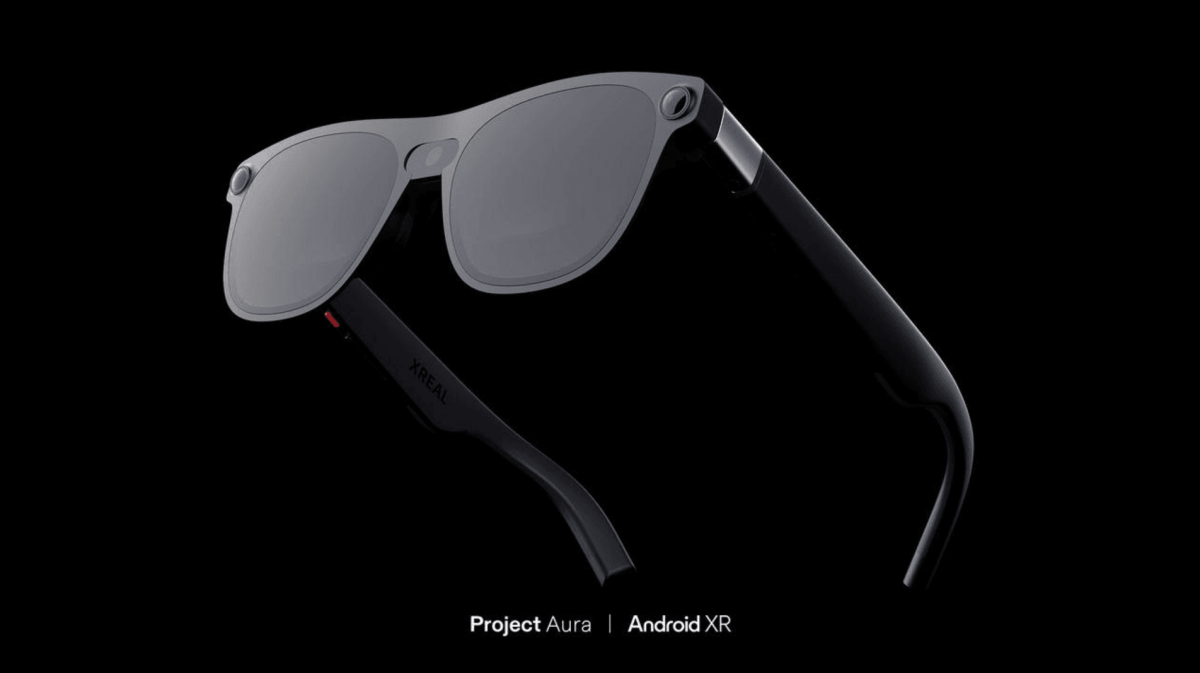
“Everybody’s losing money,” said Chi Xu, the founder and CEO of the smart glasses company Xreal, which is a longtime partner of Google. I met Xu at Google’s I/O conference in Mountain View last week, where he was promoting Xreal’s Project Aura. That’s its latest effort to create a set of functional XR glasses that people actually want to use.

“That’s because it’s very hard, what we’re doing,” he said.

For much of the industry’s existence, the problems of smart glasses have seemed somewhat obvious: bulky, uncomfortable, and socially awkward form factor, paired with negligibly beneficial software. Now, however, industry insiders — including Xu — feel like their business has turned a corner and may be reaching an inflection point.

That supposed inflection point has something to do with Meta, whose 2023 partnership with Ray-Ban launched one of the first lines of models that has actually managed to sell a lot of units. (It’s worth noting, however, that the division responsible for the glasses, Reality Labs, still operates at a massive loss.)

Now, as form factors shrink and software improves, Xu feels that Xreal can finally become a leader in the space. “You need all the key pieces ready — you need the hardware ready, the operating system needs to be ready, and then you need a great user interface,” Xu said.

Xreal’s newest model Aura is wired smart glasses that have OLED displays embedded within them, meaning that you can watch high-resolution videos within the frames themselves. Somewhat awkwardly, Aura comes tethered to a “puck” — essentially a phone-shaped mini-computer that powers the experience behind the glasses. When using it, you can ostensibly just slip it into your pocket.

But in exchange for the awkwardness of the puck, the user gets a wider variety of fun experiences with the glasses, including an immersive Google Maps app, VR YouTube videos, and a “painting app” that lets you — via the powers of hand tracking — create holographic imagery that only you can see. There are also reportedly games, playable (again) via hand tracking, and basic web surfing functionality.

“Whether you are following a floating recipe while cooking, setting up a private workspace at a coffee shop or on a flight, or watching a movie on a virtual big screen at home, the experience is seamless,” the company promises.

Xu also says that he imagines the device being used not just by the casual consumer but by professionals as well. “It’s not just about watching the NBA game in a hologram type of format, you could also go to a coffee shop and do some work,” he said.

Currently, the glasses are only available for developers, but the plan is for them to launch commercially later this year. Xreal is also working on an IPO that is expected to take place before 2026 is over, although Xu declined to say much about it.

In the meantime, the company is working on that whole turning-a-profit thing. Xu notes that his company has been raising its gross margin while lowering its costs for marketing and sales. “Next year is the year when we could actually break even,” he says.

When you purchase through links in our articles, we may earn a small commission. This doesn’t affect our editorial independence.

Continue Reading
Click to comment

Leave a Reply

Your email address will not be published. Required fields are marked *

News

Police assure residents of security ahead Bauchi LG elections

info

Published

on

By

Nigerian Police.jpeg.jpg

The Bauchi State Police Command has assured residents that adequate security will be provided before, during and after the local government elections scheduled for Monday, August 17, 2026.

The Commissioner of Police, Sani-Omolori Aliyu, gave the assurance in a statement signed by the command’s spokesperson, SP Nafiu Habib, and made available to journalists on Saturday.

📱 Continue reading on the Daily Post app →
Free • No sign-up • Read the full story in the app

Continue Reading

News

FIFA IS NOT A SHIELD AGAINST ACCOUNTABILITY: GOVERNMENT CAN REFORM SPORTS WITHOUT TAKING OVER FOOTBALL

info

Published

on

By

Screen Shot 2023 08 20 at 12.19.06 PM.png

There is a dangerous narrative beginning to circulate around Nigerian football.

It tells Nigerians that the moment the government questions the administration of football, FIFA will immediately suspend Nigeria.

That argument sounds frightening.

But it is also far too simplistic.

FIFA rules protect football associations from undue interference. They do not place football above the laws, financial regulations and accountability mechanisms of the country in which it operates.

That distinction matters.

The Nigeria Football Federation is a FIFA member association and must enjoy operational independence. FIFA’s statutes require member associations to manage their affairs independently and without undue influence from third parties.

But independence does not mean immunity.

The government can fund football.

The government can build stadiums.

The government can finance national-team programmes.

The government can support grassroots development.

The government can demand accountability for public money.

The government can investigate allegations of financial misconduct through the appropriate institutions.

The government can regulate the broader sporting environment.

What it cannot legitimately do under FIFA’s rules is take over the NFF’s football administration, dictate its elections or install its own football leadership.

That is the line.

And the world has already shown us that this line can be managed without turning every disagreement into a FIFA war.

Look at Sri Lanka.

FIFA suspended the country’s football federation in January 2023 because it determined that government interference had affected the federation’s affairs. But FIFA did not leave the country permanently suspended. By August 2023, the suspension had been lifted after the necessary steps were taken to restore the federation’s autonomy.

Pakistan provides another example.

FIFA suspended the Pakistan Football Federation in February 2025. Less than a month later, FIFA lifted the suspension after the PFF Congress unanimously approved constitutional amendments that FIFA and the Asian Football Confederation had validated.

Zimbabwe went through an even longer crisis.

FIFA suspended the Zimbabwe Football Association for 18 months. Eventually, FIFA lifted the suspension and appointed a normalisation committee with a defined mandate to run the daily affairs of the federation, restructure its administration and prepare the ground for a new leadership process.

Kenya has also experienced FIFA intervention and eventually had its suspension lifted after the required conditions were addressed.

So what is the lesson?

The lesson is not “never question football.”

The lesson is:

“If football governance is broken, fix it through a process that respects football’s autonomy.”

That is very different.

Nigeria does not have to choose between two extremes:

Do absolutely nothing because FIFA might complain.

Or:

Take over the NFF and risk a confrontation with FIFA.

There is a third option.

Accountability.

If public money is being spent on football, Nigerians have the right to know how that money is being used.

If there are allegations of financial misconduct, they should be investigated.

If national teams are repeatedly failing, there should be a proper technical and administrative review.

If the domestic leagues are struggling, the structures should be examined.

If the NFF’s governance needs improvement, its statutes and electoral system can be reformed through the appropriate football processes.

And if the people running football have failed, the democratic process should provide the mechanism for replacing them.

That is not a FIFA violation.

That is governance.

And there is an important development Nigerians should not overlook.

The NFF itself has already established a process for its next elective Congress. The federation’s 2026 Extraordinary General Assembly approved amendments to its statutes and electoral framework, while the Elective Congress has been scheduled for September 27, 2026.

So if the argument is that Nigerian football needs change, the question should be:

How do we make that election more credible, transparent and representative?

Not:

How do we secretly control the election?

And not:

How do we frighten Nigerians with the word FIFA?

There is another reason this conversation matters.

The NFF itself has now established a fact-finding committee following Nigeria’s recent poor run of results, including the Super Falcons’ failure to qualify for the 2027 Women’s World Cup.

That is precisely the kind of process we should be demanding.

Investigate.

Publish the findings.

Identify the failures.

Recommend reforms.

Implement them.

Measure the results.

If government provides the money, government should be able to ask what happened to the money.

If FIFA provides development funds, FIFA should be able to demand proper reporting.

If sponsors provide money, sponsors should demand commercial accountability.

If Nigerians provide public funds, Nigerians deserve transparency.

None of that requires government to run the NFF.

In fact, the argument that government cannot demand accountability because of FIFA could become dangerous in itself.

Because what happens if an organisation receives public money but nobody is allowed to ask questions about it?

That is not autonomy.

That is impunity.

And Nigeria should reject both extremes.

We should not support political control of football.

But we should also not allow the word FIFA to become a magic word that stops every legitimate conversation about accountability.

The examples from Sri Lanka, Pakistan, Zimbabwe and Kenya show something else: even when FIFA does intervene, the process is not necessarily permanent. Suspensions can be lifted when the underlying governance problem is addressed and the federation’s autonomy is restored.

Therefore, Nigerians need to stop being frightened by hypothetical FIFA bans and start asking concrete questions.

What exactly has the government alleged?

What evidence exists?

What public money is involved?

Which institution is responsible for investigating it?

What does Nigerian law provide?

What does the NFF constitution provide?

What does FIFA require?

Where is the boundary between legitimate oversight and prohibited interference?

Those are intelligent questions.

Not propaganda.

Not panic.

Not political slogans.

NIGERIAN FOOTBALL DOES NOT NEED A GOVERNMENT TAKEOVER.

But it also does not need a football federation that believes autonomy means nobody can question it.

The solution is much simpler:

Government should govern government money.

Football people should govern football.

Auditors should audit.

Investigators should investigate.

The NFF Congress should elect.

FIFA should enforce its statutes.

And Nigerians should demand that every institution does the job it was created to do.

FIFA AUTONOMY MUST NOT BECOME A SHIELD AGAINST ACCOUNTABILITY.

And accountability must never become an excuse for political capture.

Nigeria is capable of doing both things correctly.

Protect football from political control.

And protect Nigerian football from institutional impunity.

Continue Reading

Trending