Connect with us

Education

Former Edo Governor Obaseki Appointed Visiting Scholar at Boston University

info

Published

on

Godwin Obaseki
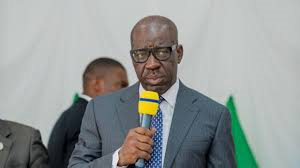
Former Edo State governor Godwin Obaseki has been appointed as a visiting scholar and researcher at the African Studies Center in the United States.

The appointment was announced on Wednesday by the center, which operates under the Frederick S. Pardee School of Global Studies.

According to the institution, Obaseki will use the opportunity to examine the achievements, challenges, and policy strategies implemented during his eight-year administration in Edo State.

The research, the center noted, is expected to generate valuable insights that could guide public officials and policymakers involved in economic reforms and transformative leadership across Africa.

Director of the African Studies Center, Nimi Wariboko, welcomed the former governor into the institution’s academic community, describing his appointment as beneficial to both the university and the broader scholarly community.

Wariboko explained that Obaseki’s engagement with academics and researchers would help strengthen his research framework while allowing him to compare his governance models with global policy approaches.

He added that the former governor’s final research output, expected to take the form of a book manuscript, would contribute significantly to the center’s academic publications.

“His presence will also revive the historic practice of the African Studies Center hosting distinguished African public leaders willing to share their experience and insights with the Boston University community,” Wariboko stated.

Reacting to the appointment, Obaseki described it as an opportunity to reflect on his years in office and document the strategies adopted during his administration.

“I am excited about this appointment and the privilege of being part of this world-class university,” he said.

The former governor added that the intellectual environment at Boston University would provide an ideal space for reflection, collaboration, and the exchange of ideas on governance and development.

Also commenting, Scott Taylor, Dean of the Pardee School of Global Studies, said the institution was honoured to welcome Obaseki and support his reflections on African political economy and public policy.

Founded in 1953, the African Studies Center is regarded as one of the oldest institutions in the United States dedicated to African studies and remains a major hub for Africa-focused research and scholarship.

Continue Reading
Click to comment

Leave a Reply

Your email address will not be published. Required fields are marked *

Education

FG Approves N250bn For Student Hostel Construction Nationwide – Alausa

info

Published

on

By

Ed005a95 5531 48c7 a547 e446e7ff6a2e.jpeg

The Minister of Education, Dr Tunji Alausa, says President Bola Tinubu has approved N250 billion for the construction of student hostels across tertiary institutions nationwide.

Alausa said this on Wednesday in Abuja during the inauguration of governing boards, principal officers and chief executives of agencies under the Federal Ministry of Education.

He said the intervention marked the first major dedicated investment aimed at addressing acute accommodation shortages in Nigeria’s universities, polytechnics and colleges of education.

According to him, the fund will support hostel construction in at least 50 tertiary institutions, with each expected to receive about N2 billion for at least 500 bed spaces.

He added that an additional N90 billion would be deployed through Public-Private Partnership arrangements to provide hostels in 24 federal institutions with 1,200 to 1,500 bed spaces each.

“We have several of those schools whose constructions have already started cumulatively, N250 billion in 2026 to provide student accommodation alone,” he said.

Alausa explained that the Tertiary Education Trust Fund (TETFund) would provide N1 billion counterpart funding per institution, while private investors would contribute about N4 billion each.

He expressed appreciation to President Tinubu, describing his leadership as “missionary” and key to driving reforms in the education sector under the Renewed Hope Agenda.

The minister said the president’s investment and policy direction had strengthened human capital development and positioned education as a central tool for national transformation.

He said that the ministry had received the highest budgetary allocation in the country for two consecutive years, reflecting the administration’s focus on education reform.

Alausa said the hostel initiative was a direct response to long-standing accommodation deficits in institutions such as Lagos State University and Yaba College of Technology.

He added that government was prioritising implementation-driven reforms guided by measurable outcomes rather than policy formulation alone.

The minister charged newly inaugurated board members to ensure accountability, strengthen oversight and improve institutional performance across agencies.

He also announced additional investments, including N130 billion for engineering and technology workshops and N120 billion for upgrading medical schools nationwide.

Chairman of the NBTE Governing Board, Prof. Babatunde Salako, pledged commitment to transparency, institutional strengthening and alignment of education with Nigeria’s economic needs.

The list of inaugurated members are: Prof. Babatunde Salako, Chairman, Governing Board, NBTE; Prof. Modupe Adelabu, Chairman, Governing Board, National Examinations Council (NECO) and David Shofoyeke, Executive Secretary, National Institute for Educational Planning and Administration (NIEPA).

Others are Prof. Garba Shuaib, Member, Governing Council, Federal University Dutsin-Ma, Katsina State; Abdulrahman, Ahmad, Member, Governing Council, Federal College of Agriculture and Technology, Nabanje Kafur, Katsina State and Prof. Kabiru Dungurawa, Member, Governing Council, Federal College of Education (Technical) Potiskum, Yobe State.

Also in the list are Dr Bongfa Bonfa, Rector, Federal Polytechnic N’ Yak-Shendam Plateau State; Prof. Tijani Kalli, Vice Chancellor, Federal University of Agriculture and Entrepreneurship, Bama and Mr Abba Goni, Registrar, Federal University of Agriculture and Entrepreneurship, Bama, Borno state.

Others are Mrs Aisha Halilu, Librarian, Federal University of Agriculture and Entrepreneurship, Bama; Mr Bashir Zubairu, Bursar, Federal University of Agriculture and Entrepreneurship, Bama.

Members of the Federal Unuversity of Techbology, Minna, Bosso campus co-sharing committee are: Prof. Idris Ali, Senior Special Adviser to the Minister of State for Education as Chairman; Dr Ayuba Mohammed, Deputy Director, Academic Planning, National University Commussion (NUC) and Pastor Timothy Ademola as External Member of Council.

Others are Dr Oyeleke Olarinoye, Heda of Department, Nuclear Science, FUT Minna; Prof. A.A. Aliyu, Provost, College of Health Sciences, Ibrahim Badamosi University  (IBBU) Lapai, among others.(NAN)

Continue Reading

Education

Senator Daduut Donates JAMB CBT Centre in Plateau, Trains over 100 Students in ICT

info

Published

on

By

IMG 20260501 WA0042.jpg


Ambassador-designate to South Korea, Senator Nora Daduut, who represented Plateau South in the 9th National Assembly, has donated a Joint Admissions and Matriculation Board, JAMB, Computer-Based Test, CBT, centre to her constituency to enhance access to examination facilities and address low digital literacy among rural students.

She also ordered the immediate training of students drawn from several secondary schools in the community in Information and Communication Technology, ICT, as part of efforts to equip young people with practical digital skills.

Senator Daduut said the initiative was aimed at empowering children in rural communities with basic computer knowledge, noting that many students still lack the digital competence required to thrive in today’s education system and computer-based examinations.

She explained that the intervention was informed by challenges observed during the last Unified Tertiary Matriculation Examination, UTME, where several candidates struggled to use computer-based facilities due to fear and limited exposure to ICT tools.

According to her, the development underscores the urgent need to expose young people, particularly those in rural areas, to computer education at an early stage, stressing that digital literacy has become essential for modern learning and examinations.

She disclosed that the CBT centre, built in her honour and donated by her grandchildren, is located in Kwala community of Quan’pan Local Government Area of Plateau State.

The senator said the facility would serve not only as a JAMB examination centre but also as a training hub where students and community members can acquire essential digital skills ahead of future examinations.

“It will help students overcome their fear of computers and build confidence in using digital tools, which are now central to modern learning and assessment,” she said.

Senator Daduut added that she had previously facilitated a similar ICT centre in Namu community, which was equipped with computers and learning tools to support digital education for young people.

She noted that the latest project is a continuation of her commitment to grassroots educational development and youth empowerment through ICT.

She further said the initiative aligns with the Renewed Hope Agenda of President Bola Ahmed Tinubu’s administration, which she noted is focused on expanding opportunities for young Nigerians and preparing them for a technology-driven global economy.

According to her, the administration’s emphasis on innovation and digital inclusion informed her resolve to deepen ICT access at the grassroots level.

Daduut also said the project is designed to bridge the gap between rural and urban students, giving them equal opportunity to compete favourably with their peers in a rapidly evolving digital world.

Speaking while commissioning the centre, the traditional ruler of Kwala Moeda District, Hon. Paul Donglong, commended the senator for what he described as a significant contribution to community development.

He urged youths and residents to take ownership of the facility and maximise its benefits.

Beneficiaries of the project also applauded the initiative, describing it as timely and impactful, especially for rural students who often lack access to ICT infrastructure.

One of the beneficiaries, Fabian Shalong, said the centre would significantly improve digital awareness and better prepare candidates for computer-based examinations.

Boemfu Timothy another beneficiary said the ICT centre would serve as a catalyst for educational advancement and long-term digital empowerment in the area, while encouraging sustained investment in rural education infrastructure.

Img 20260501 wa0042 Img 20260501 wa0041 Img 20260501 wa0036 Img 20260501 wa0029 Img 20260501 wa0033

Continue Reading

Trending