Business
NEM Insurance Staff Oduh Sunday Clinches 2026/2027 CIIN Ambassador Title

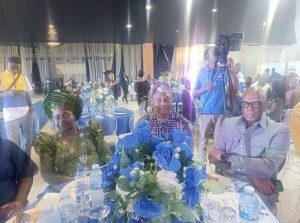
From right: Winner and New 2026 CIIN Ambassador, Mr. Oduh Sunday; 2nd Runners-up, Ms. Odeniyan Oluwatosin Comfort and 1st Runners-up of the Ambassador Contest, Mr. Okunnu Abdulrasheed Adekunle at the Year 2026 CIIN Insurance Week Grand Finale in Lagos yesterday.
BY NKECHI NAECHE-ESEZOBOR—Oduh Sunday of NEM Insurance Plc, yesterday emerged victorious in the 2026/2027 Chartered Insurance Institute of Nigeria Ambassador Competition, receiving a cash reward of N1.5 million and earning the title of the insurance industry’s newest ambassador.
The competition formed part of the major attractions at the grand finale of the CIIN Insurance Week and also represented one of the final official engagements of the institute’s current president, Yetunde Ilori.
Mr. Eddie Efekoha; Mr. Edwin Igbiti and Mrs. Yetunde Ilori.
Held from Friday, May 15 to Friday, May 22, 2026, the CIIN Insurance Week 2026 featured an extensive eight-day schedule focused on public interaction, professional discussions, learning activities, and celebrations within the insurance sector.
The Ambassador Competition evaluated contestants based on their understanding of the insurance profession as well as their capacity to carry out awareness initiatives.
Noor Takaful Insurance Limited staff, Okunnu Abdulrasheed Adekunle secured the first runner-up position and received N1 million, while another staff member of the same company, Ms. Odeniyan Oluwatosin Comfort, claimed the second runner-up spot with a cash award of N750,000.
In additional award categories presented during the event, the Police Service Commission was recognised as the Best Ministry, Department and Agency (MDA). Akunyili Samuel Chukwukadibia was honoured as the Best Insurance Student in the WAEC examination.
The award-winning student’s teacher, Mr. Awotoruvie Randy Kemi, also received recognition, while six secondary schools with outstanding student enrollment in insurance studies were celebrated.
The schools honoured included Ijaiye Ojokoro Senior High School, Badagry Senior Grammar School, Saint Peter’s College, Egba High School, Methodist Comprehensive College, and Ebenezer Grammar School.
Ogun State also received recognition as the state with the highest number of students enrolled for insurance studies in WAEC examinations.
Earlier in the programme, the InsurScenario Team emerged as champions of the 2026 CIIN InsurQuest Hackathon, defeating other competing teams including CoverBot, Mediclaim AI, Team Topsborg, Team Nexus, and The Risk Architects.
Now in its second edition, the hackathon attracted a broader mix of young innovators from across Nigeria and was designed to strengthen youth participation in the insurance sector while encouraging future insurance innovators.
The initiative exposed participants to practical industry problems and demonstrated how insurance can drive innovation, technology, entrepreneurship, and social impact. Over several weeks, contestants participated in masterclasses, hands-on workshops, and mentoring sessions aimed at building technology-based solutions for challenges affecting Nigeria’s insurance industry.
Supported by experienced professionals, the teams explored areas such as Inclusive Insurance, Data and Artificial Intelligence, Customer Experience, as well as ESG and Sustainability, while developing working prototypes suitable for pilot implementation.
All teams presented their projects during the InsurQuest Demo Day held on May 21, 2026, at the College of Insurance and Financial Management, where the InsurScenario Team finished in first place.
Speaking during the grand finale and award presentation, CIIN president Yetunde Ilori described the programme as her final appearance at the event in her capacity as president. She explained that the Insurance Week was created to bring together all segments of the insurance industry, improve public participation, encourage professional conversations, and promote insurance education and awareness.
According to her, the event, now in its second year, has become one of the strongest collective initiatives by Nigeria’s insurance industry to improve public understanding, boost insurance adoption, and recognise excellence within the sector.
She urged her successor to sustain and build upon the initiative, expressing confidence that the annual programme could further strengthen insurance acceptance and operations in Nigeria, with the aim of increasing industry penetration beyond one percent in the near future.
The post NEM Insurance Staff Oduh Sunday Clinches 2026/2027 CIIN Ambassador Title appeared first on Business Today NG.

The Federal Airports Authority of Nigeria (FAAN) has begun earning revenue from the Murtala Muhammed Airport Terminal Two (MMA2) in Lagos following a settlement between the Federal Government and Bi-Courtney Aviation Services Limited over a dispute that lasted nearly two decades.
The Minister of Aviation and Aerospace Development, Festus Keyamo, disclosed this on Tuesday during the formalisation of the settlement involving the Federal Government, FAAN, Bi-Courtney and Stabilini Visinoni Limited.
“FAAN had not earned a kobo from MMA2 for the last 20 years because of disputes. Today, FAAN begins to earn its money from MMA2,” Mr Keyamo said.
The agreement provides for the resumption of concession fee payments to FAAN and the reciprocal waiver of specified historical financial and other claims by the parties.
Mr Keyamo said the Federal Executive Council (FEC) approved the framework for the negotiated settlement on 30 April 2026, following discussions aimed at resolving the long-running dispute.
What the settlement changes
Under the revised agreement, Bi-Courtney has agreed to waive its outstanding claims against the Federal Government, while the government and FAAN will relinquish specified historical claims against the concessionaire, including accumulated concession fees and related payments arising before the agreement.


The minister said the arrangement was intended to resolve past disagreements and establish clearer contractual obligations for the parties going forward.
The settlement also addresses a dispute over the General Aviation Terminal (GAT), commonly known as the Old Domestic Airport.
According to Mr Keyamo, the revised agreement recognises the terminal as the property of the Federal Government, to be operated by FAAN.
The minister said the government had agreed to allow Bi-Courtney to expand its apron and accommodate regional flights within Africa at MMA2, subject to the terminal’s capacity.
The agreement also restores rights and provides for separate lease arrangements covering a four-star hotel and conference centre near the airport. The facilities have remained unfinished for years.
Mr Keyamo said the government would retain regulatory oversight over security, access, emergencies and maintenance standards, while the parties would work together to implement the revised arrangements.
Background to the dispute
In April, PREMIUM TIMES had reported that the Federal Government had reached a settlement with Bi-Courtney to resolve the long-running dispute over MMA2 after years of litigation and disagreements over the airport concession.
Mr Keyamo at the time said the Federal Executive Council (FEC) had approved the negotiated settlement, which included concessions by both parties, revised operational arrangements and plans to restore government revenue from the terminal.
The dispute originated from a concession agreement signed on 24 April 2003 involving the Federal Government, Bi-Courtney and Stabilini Visinoni Limited for the design, construction, operation and eventual transfer of the domestic terminal.
The agreement initially covered 12 years from 7 May 2007 but was subsequently extended to 36 years.
Disagreements over contractual obligations, financial claims and the scope of the concession led to multiple court cases across successive administrations.
Bi-Courtney maintained that it had been denied benefits under the concession, while FAAN asserted its own financial entitlements and responsibility to protect public airport assets.
READ ALSO: FAAN steps up airport surveillance as Nigeria confirms Ebola case in Abuja
The dispute also involved the ownership of the General Aviation Terminal and financial claims connected to the Asset Management Corporation of Nigeria.
Mr Keyamo said the latest settlement followed negotiations between the government and the chairman of the Bi-Courtney Group, Wale Babalakin, with legal, commercial and technical teams involved in the process.
He added that the agreement would give Bi-Courtney greater certainty to invest in the terminal while allowing the government to resume revenue collection and plan airport development under the revised framework.
He urged FAAN and Bi-Courtney to ensure that the settlement resulted in completed facilities, reliable services and improved airport operations.
“The travelling public should see the result in functioning facilities and dependable service. That is how the value of this settlement will be measured,” he said.
Discover more from Premium Times Nigeria
Subscribe to get the latest posts sent to your email.
-

 News3 days ago
Euromatch NPFL: Matchday 9 results
-
News4 days ago
NUCAP: Nigeria targets 20 million people with 3,700 telecom towers – Technology Times
-
News3 days ago
Meta removes language that raised scraping and AI training concerns
-
News3 days ago
No agenda, no rush, no leaving San Francisco: Benchmark’s partners on investing in a frenzied market