Health
Advocacy group urges govt to establish spinal cord injury rehabilitation facility

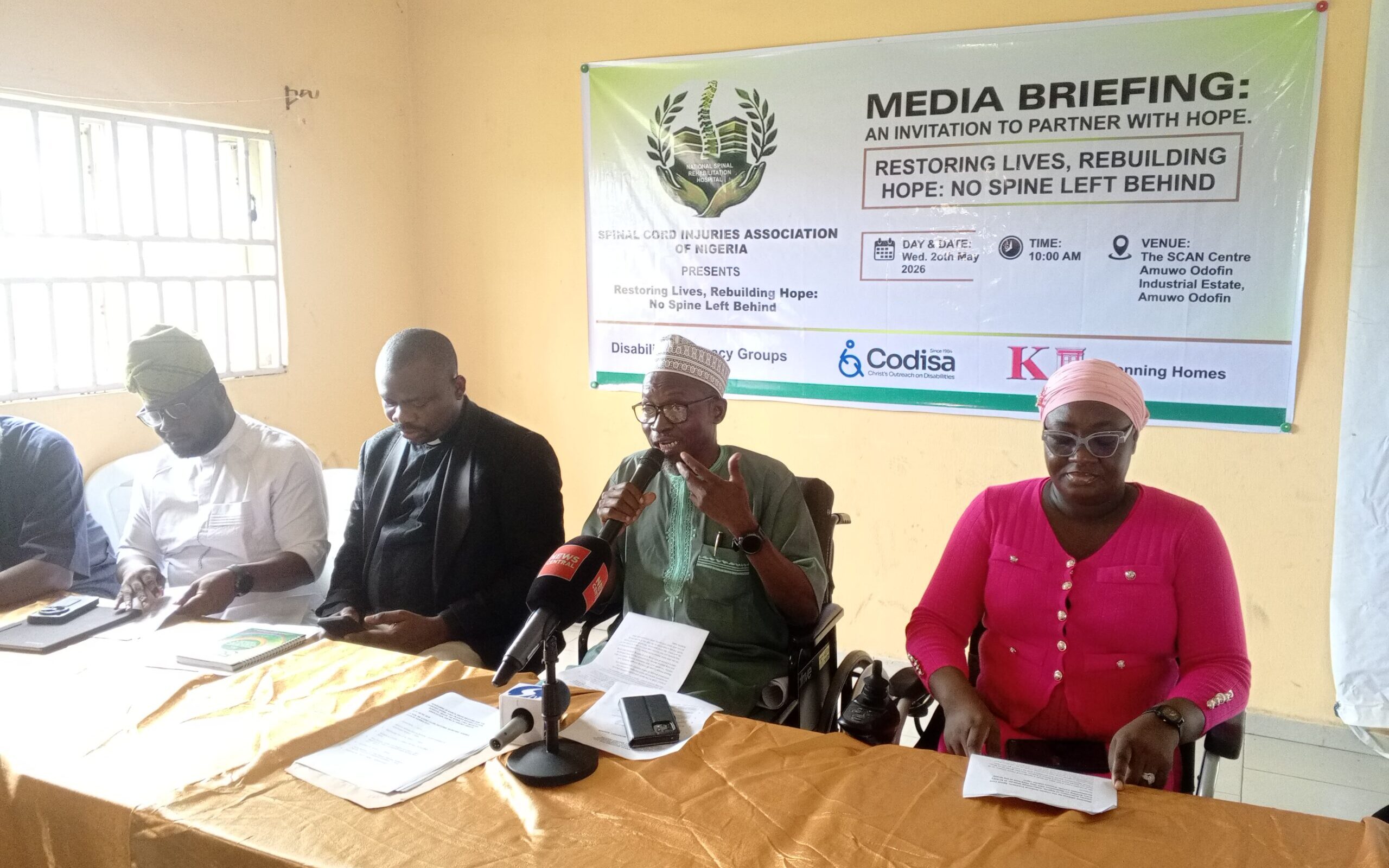
The Spinal Cord Injuries Association Centre (SCIAN) has appealed to the Nigerian government to establish a dedicated hospital for the rehabilitation of those with spinal cord injuries.
Abdulwahab Matepo, the group’s president, spoke at a press conference on Wednesday in Amuwo-Odofin, Lagos.
Mr Matepo highlighted the neglect and lack of attention to rehabilitation issues in Nigeria despite the high incidence of spinal cord injuries due to road crashes, violence and other causes.
“I did my own (rehabilitation) in Germany. She (secretary) did hers in India. You have people like that. If you ask anybody who has done rehab, it’s either India, Germany, the UK, the US, or South Africa,” the disability rights advocate said.
“ There’s no simple rehab work facility for us in Nigeria.”
He noted that disability is a universal possibility that can impact any individual at any moment, highlighting the critical necessity for accessible rehabilitation services.
Spinal cord injury occurs when the spinal cord is damaged, disrupting communication between the body and the brain. It damages the nerves in the spinal column, leading to varying degrees of permanent motor, sensory, and functional impairment.
To help survivors of violence, falls, and road traffic accidents in Nigeria regain their quality of life, comprehensive rehabilitation is essential. Such services are urgently needed to foster independence and prevent potentially life-threatening complications.
Government support
Mr Matepo noted that the government allocated some hectares of land to the group for the construction of a rehabilitation centre, but their involvement seems to end there.
He, however, noted that the Lagos State government has contributed by fencing the premises and landscaping, but the purpose of the land has yet to be achieved.

According to Mr Matepo, adjusting to life after a spinal cord injury is difficult.
He noted that the absence of mental health resources and societal barriers to embracing this new reality exacerbate the risks of suicide and depression among survivors.
He explained that at the rehabilitation hospital, the spinal cord injury patients would undergo mental health, physical, occupational and vocational therapy, amongst others.
He said the physical therapy includes training in using wheelchairs and other assistive devices, which is often necessary but not always provided, while occupational therapy helps individuals learn new skills to maintain economic independence and community integration.
Mr Matepo added that mental health therapy is crucial for coping with the psychological impact of the injury, including depression, which is a significant issue amongst spinal cord injury survivors.
He also shared a personal experience of being advised to find ground-floor accommodation after he was discharged from the hospital, six months after the accident that left him wheelchair-bound.
Rehabilitation 20230 initiative, policy gap
The group’s president said that in 2017, the World Health Organisation (WHO) launched a programme called ‘Rehabilitation 2030,’ and developed a tool to assess how each country is performing.
The initiative aims to recognise rehabilitation as an essential service and integrate it into the healthcare system.
“Recently, they were in Nigeria to deploy the tool, and what they found was far below expectations,” Mr Matepo said.
He noted that Nigeria lacks a rehabilitation policy and that rehabilitation is not mentioned in its health policy.
Rehabilitation centre overview
On his part, David Majekodunmi, an architect and consultant, emphasised the role of a rehabilitation centre in restoring dignity, rebuilding independence and creating hope for individuals with spinal cord injuries.

Mr Majekodunmi noted that the proposed centre would feature a comprehensive range of facilities, including specialised spinal rehabilitation boards, physiotherapy and occupational therapy units, hydrotherapy and mobility training facilities, and vocational and skills-acquisition facilities.






The Lagos State government has disputed claims that only one dialysis machine is functional at the Alimosho General Hospital, Igando.
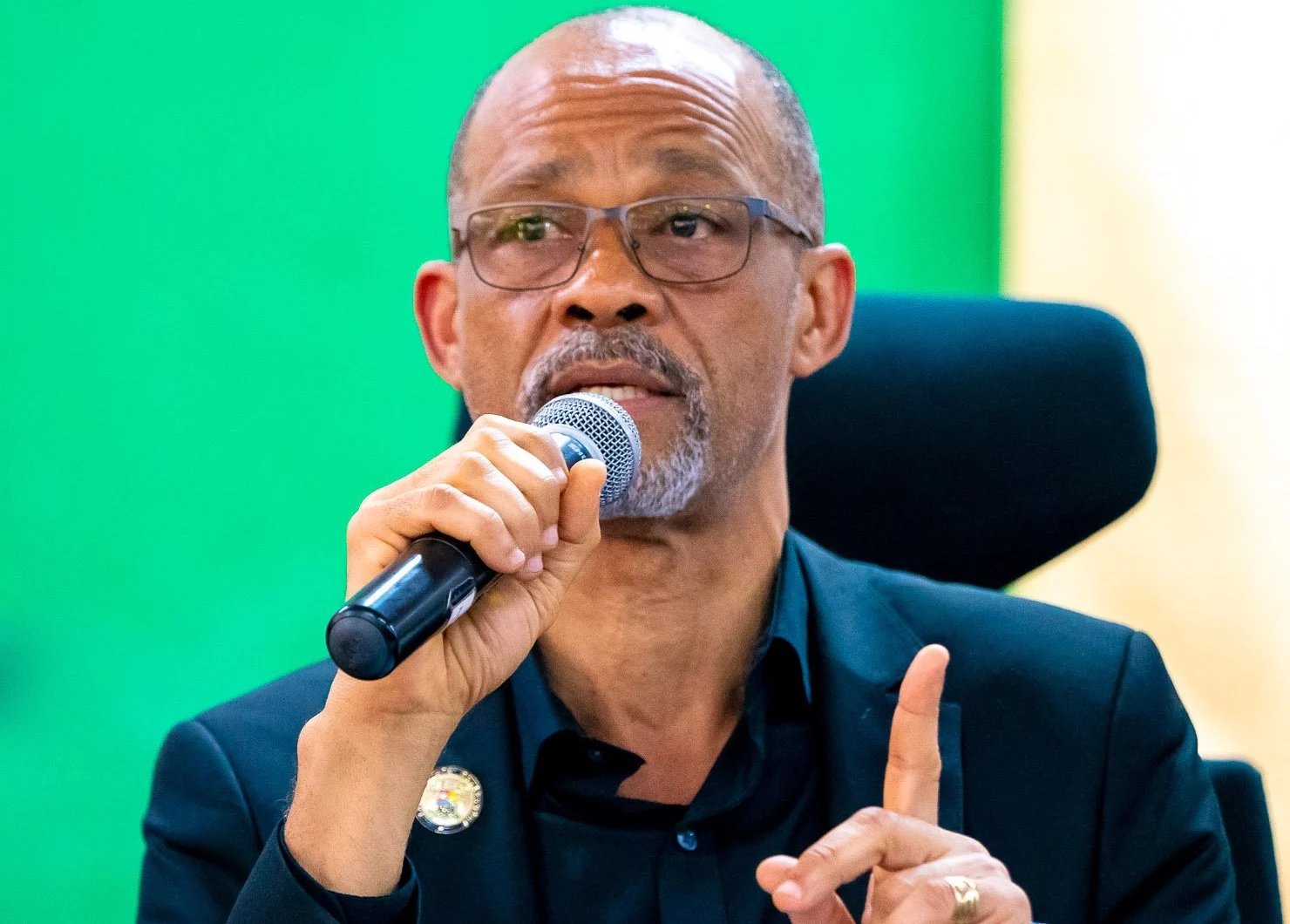
Lagos State Commissioner for Health, Akin Abayomi, made the clarification in a post on X on Sunday, saying all eight dialysis machines at the hospital’s dialysis centre are functional.
PREMIUM TIMES traced the claim to a video posted by Nigerian skit maker and social media influencer Akewusola Oladipupo, popularly known as MC Always, on 17 September.
In the video posted on his Facebook and Instagram accounts, Mr Oladipupo raised concerns about the condition of the dialysis centre, describing it as “in shambles” and “in a state of comatose”.
He said only one dialysis machine was working at the facility and questioned how patients could be adequately attended to with the limited equipment.
Mr Oladipupo also said the hospital’s generator operates from 9 a.m. to 4 p.m., while a dialysis session takes at least four hours. He questioned how the centre could serve patients if only one machine was functioning out of what he estimated to be 10 to 15 machines.


“So all the people that have kidney problems in Lagos are in serious problem,” he said. What does it take to fix these machines?” Mr Oladipupo asked, adding that the centre was not accepting new patients and was only attending to existing ones.
Government responds
In his post, Mr Abayomi said the claim that the hospital had only one functional dialysis machine was false.
The post was accompanied by a video showing different sections of the dialysis centre and its machines. Mr Abayomi said the centre has eight dialysis machines and that all eight are working.
According to him, six of the machines serve general dialysis patients, while two are dedicated to patients living with HIV or hepatitis, in line with infection prevention and control measures.
He said dialysis sessions begin as early as 6 a.m. and continue until the last patient is attended to, sometimes until midnight.
READ ALSO: Lagos APC orders candidates to stay in Nigeria until 2027 polls
“We run up to 200 dialysis sessions every month,” Mr Abayomi said, adding that the centre has a dedicated standby generator.
The commissioner also listed other public hospitals offering dialysis services in Lagos, including Lagos State University Teaching Hospital (LASUTH), General Hospital Lagos, General Hospital Gbagada, Infectious Diseases Hospital (IDH), Yaba, and Federal Medical Centre (FMC), Ebute Metta.
Healthcare advocacy
Mr Oladipupo has continued to use his social media platforms to speak about challenges in Nigeria’s healthcare system following the death of his wife from Stage 4 cancer.
During an appearance on TVC in August, he spoke about his wife’s illness and the difficulties his family encountered while seeking care for her.
Since her death, he has used his platform to raise concerns about access to healthcare, the availability of functional medical equipment and the financial burden on patients and their families.
He urged patients and caregivers to speak about their experiences and called for improvements in the country’s healthcare system.
Discover more from Premium Times Nigeria
Subscribe to get the latest posts sent to your email.
-

 Business2 days ago
Lingzhi Global, NACOFTAN Announce 2026 Coffee Festival in Cross River
-
Events2 days ago
Peace Walk: WOPPI Urges Plateau Citizens to Invest in Peace Every Day
-
Business4 days ago
Tinubu reacts as Nigeria wins arbitration against Sunrise Power
-
News4 days ago
Why I refused to join APC – Seriake Dickson