News
APC primaries: Plateau Rep, Gagdi loses third term bid

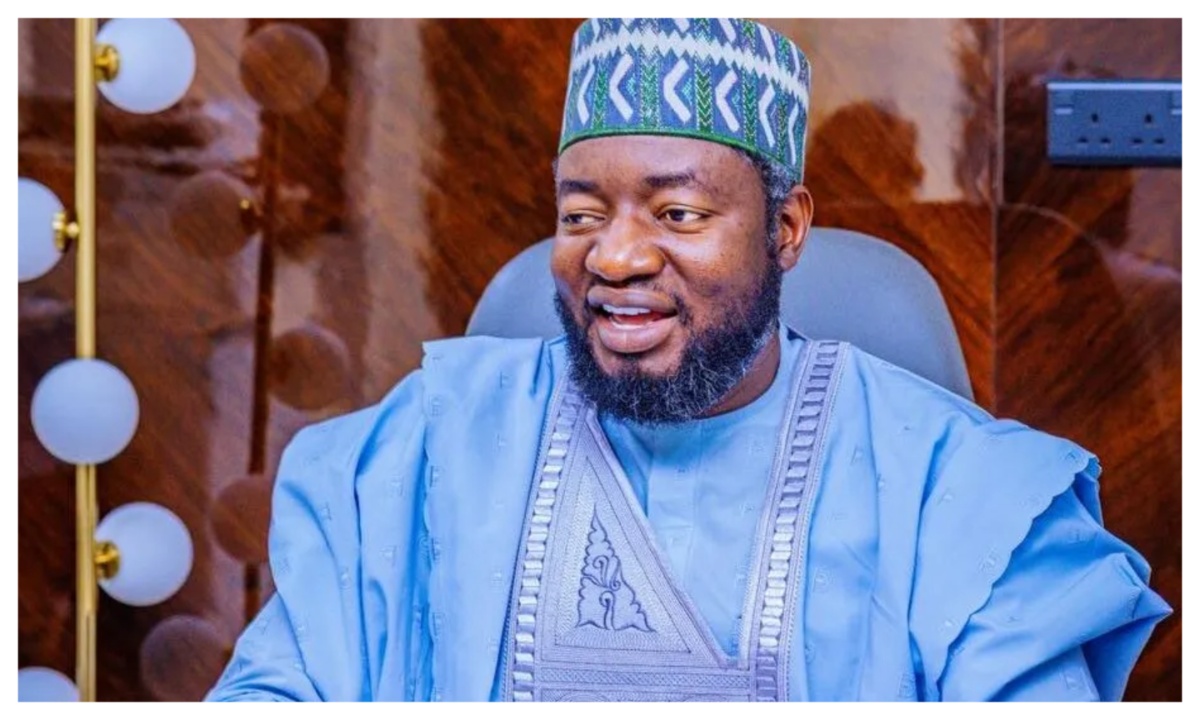





Enugu State Government has alleged that some opposition elements are plotting to bring armed thugs and bandits into the state to create panic and insecurity ahead of the 2027 general elections.
The government also blamed the Nigeria Democratic Congress, NDC, for the crisis at the Akanu Ibiam International Airport and the party’s state secretariat in Enugu on Saturday, October 10, 2026.
Secretary to the State Government, Prof Chidiebere Onyia, made the allegations on Sunday during a press conference at the Government House, Enugu.
Onyia, who addressed reports linking the state government to the incidents, said the airport confrontation arose after the NDC allegedly attempted to hold a statewide campaign flag-off at the facility without obtaining approval from the Federal Airports Authority of Nigeria (FAAN).
According to him, the state government’s findings showed that the NDC had publicised its “Grand Statewide Campaign Flag-off 2026” at the airport through the party’s state chapter and the social media page of its governorship candidate.
He said the police had advised the party to obtain FAAN’s approval before deploying officers to the airport for the event.
The SSG, however, alleged that the party proceeded to mobilise its members to the facility despite failing to secure the necessary authorisation.
“The attempt to forcibly gain entry into the facility resulted in a faceoff between them and the airport authorities,” he said.
Onyia added that security agencies subsequently intervened and dispersed the party members to restore order around the airport, describing the incident as consistent with the statement issued by the Enugu State Police Command on Sunday.
The government also addressed the violence reported at the NDC state secretariat in the GRA area of Enugu, saying the police were investigating the incident.
According to Onyia, one Ifeanyi Nworie, 43, sustained a gunshot wound during the clash and was taken to the Enugu State University Teaching Hospital, Park Lane, before being transferred to the National Orthopaedic Hospital, Enugu, for further examination.
He insisted that no death was recorded during the incident, dismissing reports and claims by NDC leaders that people had died.
The SSG also denied allegations that the governor’s Chief Security Officer was present at the party secretariat and supervised the shooting.
He claimed that the security officer was with Governor Peter Mbah at the Teachers Grassroots Movement mega rally at Okpara Square, Enugu, at the time of the incident.
Onyia further criticised the party for allegedly observing a minute’s silence for a person he claimed was still alive, describing the action as an attempt to mislead the public and gain political sympathy.
The government condemned political violence and said it remained committed to protecting the lives and property of residents, irrespective of their political affiliations.
It also accused opposition parties in the state of repeatedly portraying Enugu as unsafe and the Mbah administration as intolerant of dissent.
The SSG cited the September 12, 2026 incident at Obuofia in Nkanu West Local Government Area as an example of what he described as attempts by opposition factions to blame the All Progressives Congress (APC) for internal disputes.
He claimed that investigations had identified the perpetrators of the incident and that they were being prosecuted by the police.
Onyia further alleged that the state government had uncovered plans by some opposition elements to engage armed thugs and bandits to create insecurity ahead of the 2027 elections, although he did not provide specific details of the alleged plot during the press conference.
He maintained that the government would not allow the peace and security recorded in the state over the past three years to be undermined.
2027: Enugu alleges opposition plot to import armed thugs, bandits

Bendel Insurance have confirmed the return of goalkeeper Joshua Baba ahead of their Nigeria Premier Football League, NPFL, Matchday 8 fixture against Sporting Lagos.
The return comes after the club declared Baba absent without official leave (AWOL) for failing to report for duty after an approved recovery period.
The shot-stopper’s absence followed an injury he sustained on Matchday 1 against Warri Wolves at the Samuel Ogbemudia Stadium in Benin City.
The former Enyimba goalkeeper was granted a two-week recovery period and subsequently travelled to Plateau State to visit his family.
He, however, failed to return to Benin City within the stipulated period.
According to Bendel Insurance, Baba resurfaced in Lagos on Saturday night and joined the team at its hotel as the Benin Arsenal prepared for their clash against Sporting Lagos.
Euromatch NPFL: Bendel Insurance confirm Baba’s return ahead Sporting Lagos clash
-

 News4 days ago
Robot data startup Mecka AI nabs $60M from Sequoia
-
Business2 days ago
Communications Ministry made ₦345.5 million duplicate payment for Abuja ICT Park project
-
Business3 days ago
Fuel subsidy would cost Nigeria over N20trn yearly — Minister
-
News2 days ago
LumenUs helps automate tedious paperwork in times of grief