Connect with us

Health

UCTH CMD says relocation of medical professionals gradually reducing

info

Published

on

473550122 1547914766152557 4310665199470058027 n scaled.jpg

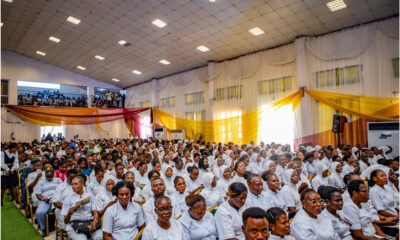
The Chief Medical Director (CMD) of the University of Calabar Teaching Hospital (UCTH), Ikpeme Ikpeme, says the relocation of Nigerian medical professionals abroad is gradually declining.

Mr Ikpeme said this at a press conference in Calabar on Tuesday, attributing the development to steps taken by the federal government to improve workers’ welfare and upgrade healthcare facilities.

He said the development had begun to reduce the urge for medical professionals to abandon their jobs to travel abroad.

The CMD explained that the government’s effort is also encouraging medical professionals abroad to return to the country.

“With what we have done so far, some colleagues who travelled abroad have returned, and are now with us here,” he said.

“Health professionals prefer environments that offer good salaries, modern equipment and conducive workplaces.

“The federal government has given priority attention to the provision of advanced medical equipment to discourage professionals from leaving the country.

“An example of such facility is the installation of a 1.5-Tesla MRI Machine, this is a deliberate effort to meet global medical standards,” he said.

Mr Ikpeme stated that UCTH currently enjoys uninterrupted electricity supply in critical departments, including the Intensive Care Unit, theatre, labour ward, and radiology unit.

“Stable power supply has significantly improved healthcare delivery and staff morale within the facility,” he said.

Mr Ikpeme further said that the institution had embarked on major drainage projects to address flooding challenges.

He said that the management is taking steps to protect the environment through fumigation and planting of trees with mosquito-repellent and pesticidal properties. (NAN)

Continue Reading
Click to comment

Leave a Reply

Your email address will not be published. Required fields are marked *

Health

Kano Renews Commitment to Eliminating Mother-to-Child Transmission of HIV, Hepatitis B, Syphilis
info

Published

on

By

Teenage Pregnancy.jpg

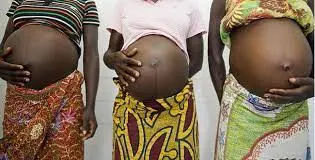
The Kano State Government has reaffirmed its commitment to eliminating the mother-to-child transmission of HIV, Hepatitis B and Syphilis through improved antenatal care, early diagnosis and prompt treatment.

The Commissioner for Health, Dr Abubakar Yusuf, made the commitment on Thursday during a summit on the prevention of mother-to-child transmission of the three infections held in Kano.

Yusuf said the infections are largely preventable, noting that syphilis can be completely cured if detected early and treated appropriately. He urged pregnant women and their partners to register for antenatal care as early as possible to enable health workers identify and manage any health complications affecting the mother or unborn child.

The commissioner disclosed that Kano is among the few states implementing the national **Triple Elimination Strategy**, aimed at ending the vertical transmission of HIV, Hepatitis B and Syphilis from mothers to their babies.

He expressed confidence that resolutions reached at the summit would strengthen the state’s response to the diseases and further improve maternal and child healthcare services.

Also speaking, the Director-General of the Kano State Agency for the Control of HIV/AIDS (KSACA), Usman Bashir, said the summit was organised to showcase the state’s progress in tackling the three infections.

According to him, the initiative aligns with both national and global efforts to eliminate mother-to-child transmission of HIV, Hepatitis B and Syphilis.

Bashir noted that while considerable progress has been made in preventing the transmission of HIV from mothers to their babies, greater attention is still needed to address Hepatitis B and Syphilis.

He explained that Kano has expanded its interventions beyond routine testing by providing treatment and vaccination for Hepatitis B, as well as treatment for Syphilis.

According to him, pregnant women diagnosed with Hepatitis B are placed on **Tenofovir** where necessary, while newborns receive the Hepatitis B vaccine immediately after birth to reduce the risk of infection.

The KSACA director-general called on other states to adopt similar measures to accelerate Nigeria’s efforts to eliminate mother-to-child transmission of the three diseases.

He added that the North-West region has one of the highest Hepatitis B prevalence rates in the country, underscoring the need for sustained preventive interventions.

The summit brought together policymakers, development partners, healthcare professionals and other stakeholders to assess progress and strengthen collaboration toward achieving the elimination of mother-to-child transmission of HIV, Hepatitis B and Syphilis in Nigeria.

Continue Reading

Health

WHO launches seven-point strategy to curb global drowning deaths

info

Published

on

By

WHOGeneva021.jpg

MTN ADVERT

The World Health Organisation (WHO) has launched a new technical package containing seven proven strategies to help governments and communities prevent drowning, one of the leading causes of death among children globally.

The initiative, known by the acronym PROTECT, was unveiled ahead of World Drowning Prevention Day, observed annually on 25 July.

In a statement issued on Thursday, WHO said nearly 300,000 people die from drowning every year, making it one of the 10 leading causes of death among children aged five to 14 years worldwide.

WHO Director-General Tedros Ghebreyesus described every drowning as a preventable tragedy and urged governments to adopt practical, evidence-based measures to save lives.

Mr Ghebreyesus said preventing drowning requires coordinated action across sectors rather than the efforts of a single ministry.

PT WHATSAPP CHANNEL

“The seven measures are packaged under the acronym, PROTECT, translating the Global Strategy for Drowning Prevention into practical policy guidance for countries,” he said.

According to him, the package focuses on safer physical infrastructure around water, improved rescue and resuscitation services, occupational safety for water-related work and stronger safety standards for water transport.

It also promotes swimming and water safety education, stronger childcare and safeguarding systems, and better preparedness for floods and other emergencies.

Mr Ghebreyesus said WHO launched the PROTECT package in Ghana in recognition of the country’s growing commitment to drowning prevention and efforts to improve water safety.

He said it estimated that more than 1,100 people died from drowning annually in Ghana, equivalent to approximately three deaths every day.

READ ALSO: Nearly 2.7 billion people cannot have healthy diet – WHO

Mr Ghebreyesus said that children and young adults accounted for the highest burden.

WHO boss said that Ghana’s leadership demonstrated how evidence-based policies could reduce drowning deaths and encouraged other governments to adopt similar preventive measures.

Kelly Henning, who leads the public health programme at Bloomberg Philanthropies, said the framework would save lives, while strengthening global efforts to reduce drowning through proven interventions.

Mr Henning said that since 2014, Bloomberg Philanthropies had partnered with WHO on drowning prevention.

World Drowning Prevention Day theme, “Unite to Turn the Tide,” calls for coordinated action by governments, partners and communities to prevent drowning and save lives.

(NAN)


Continue Reading

Trending