News
Startup Battlefield 200 applications close May 27

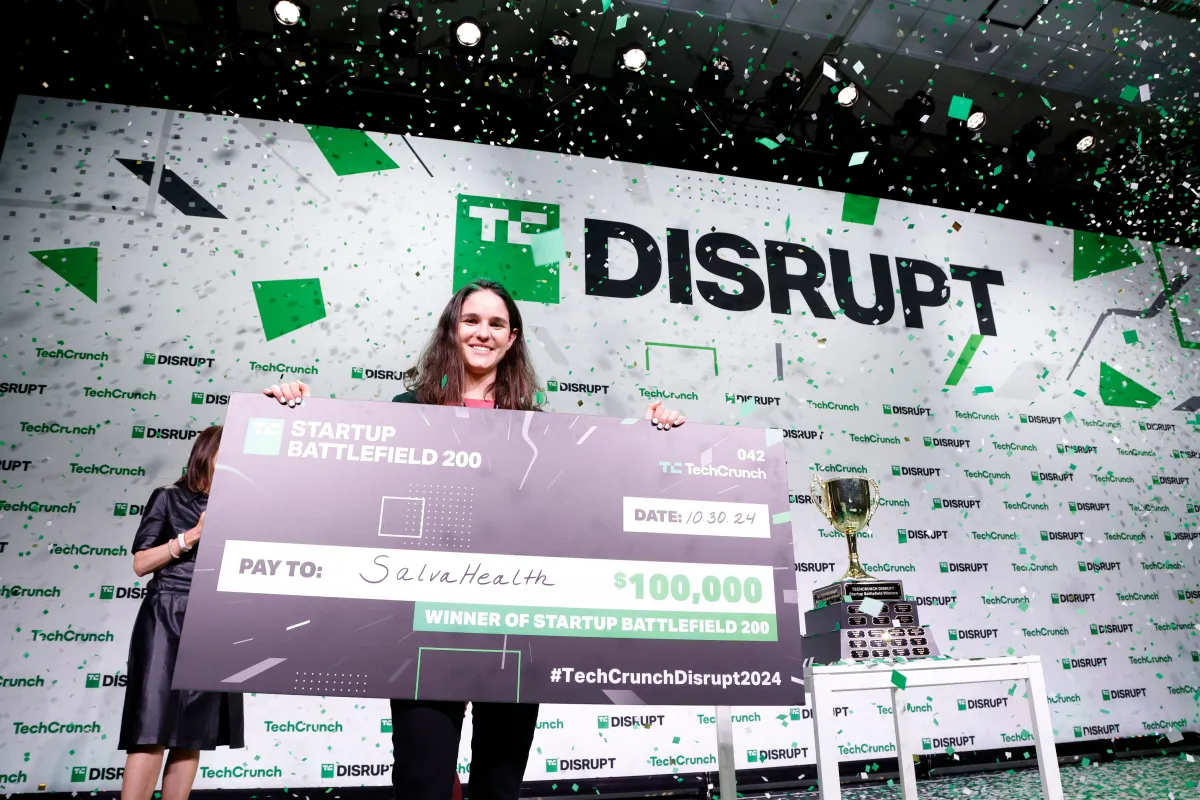
Your shot at VC access, global visibility, TechCrunch coverage, and $100,000 in equity-free funding is gone in a week.
Startup Battlefield 200 applications close May 27. If you’re building a breakout startup — or know a founder who is — this is the moment to act.
Apply today for the opportunity to take the stage at TechCrunch Disrupt 2026, October 13-15, alongside 200 of the world’s most promising early-stage startups.

The clock is ticking for early-stage founders
Pre-Series A founders, consider this your final countdown reminder: the strongest startups are already entering the arena, and the application window is closing fast.
If your startup has already been nominated, don’t wait to complete your application. This final week moves quickly, and last-minute submissions risk getting buried as applications surge ahead of the deadline.
Know a startup that deserves the spotlight? Nominate them now so they still have time to apply before May 27.
The companies that define categories rarely start polished
Some of the most consequential companies in tech history didn’t launch with splashy fundraising announcements. They started with a pitch.
Dropbox demoed to a room full of skeptics. Cloudflare took the stage before most people understood what edge networking meant. Discord was still a scrappy gaming startup called Hammer & Chisel.

They all passed through the same crucible: Startup Battlefield 200. That’s not a coincidence — it’s a pattern. And it starts with an application.
Startup Battlefield 200 has never been a competition for the most polished companies. It’s a competition for the most promising ones. Pre-launch is fine. No revenue is fine. What matters is whether what you’re building genuinely changes something — not incrementally, but meaningfully.
If you or a founder you know is building something impactful, then the application itself becomes the first pitch. Apply before May 27.
More than a pitch competition
Startup Battlefield 200 is where breakout companies get discovered.
Selected startups will showcase live on the Disrupt Stage in front of 10,000+ attendees, leading VCs, global media, and the broader TechCrunch audience. This is your opportunity to gain investor exposure, receive direct VC feedback, and prove your company belongs among the next generation of category-defining startups.
Every one of the 200 selected companies receives:
- A fully funded three-day exhibition booth at Disrupt
- Founder masterclasses with world-class VCs and operators
- A featured startup profile in the event app
- Press list access and lead-generation opportunities
- Opportunities for TechCrunch editorial coverage, podcasts, and speaking appearances as the company grows
And every selected company pitches, whether on the Disrupt Stage or the Pitch Showcase Stage. Both put founders in front of the investors, media, and partners who attend Disrupt specifically to find what’s next.
You don’t need to make the top 20 for this experience to change your trajectory. Get started by nominating and applying here.
The Startup Battlefield 200 track record speaks for itself
More than 1,700 companies have competed in Startup Battlefield 200. Together, they’ve raised over $32 billion and generated more than 250 exits, including acquisitions by Microsoft, Google, Salesforce, Uber, and Amazon.
The network runs so deep that alumni have even acquired each other: Dropbox acquired fellow Battlefield 200 alum DocSend in 2021.
This is also the same launchpad that helped accelerate companies like Fitbit, Trello, and Mint.
Behind every one of those outcomes was a founder willing to make a bet on themselves publicly, in front of people who were paying attention. Apply and learn more here.
Who should apply?
We’re looking for ambitious early-stage startups building innovative, potentially category-defining products.
Applications are open globally across all industries. Most selected companies are pre-Series A, though select Series A startups may qualify on a case-by-case basis.
To apply, startups should have:
- Founders with vision, execution, and real traction
Thousands apply every year. Only 200 are selected. Just 20 finalists pitch live on the Disrupt Stage. One startup takes the crown and wins $100,000 in equity-free funding.
One week left to make your move
The founders who wait until they feel ready often wait too long. You do not need to be polished. You need to be promising.
If you’ve been sitting on this, here’s the reality: the worst outcome is you don’t get selected this cycle — and you come back next year with a stronger application because you went through the process.
The stage matters. The community lasts. The milestone is real. But the deadline is now one week away.
If you’re building something category-defining — or know a startup that deserves the spotlight — submit your nomination and complete your application before May 27.

When you purchase through links in our articles, we may earn a small commission. This doesn’t affect our editorial independence.







Former Vice President Atiku Abubakar has criticised President Bola Tinubu over his reported absence from campaign rallies in some states, saying he cannot seek another four-year term while relying on governors, ministers and defectors to defend the hardship Nigerians have endured over the past three and a half years.
Atiku’s position was contained in a statement issued on Thursday by Phrank Shaibu, Director of Strategic Communication of the African Democratic Congress (ADC) Presidential Campaign Council.
Atiku said Tinubu should account for his first term before asking Nigerians to renew his mandate.
“Tinubu says he may miss campaign rallies because Nigeria needs his attention. Where was that urgency when Nigerians pleaded for relief?
“He has had three and a half years to govern. In that time, families have been forced to cut meals, postpone medical care and watch their earnings lose value before they get home.
“Now he wants another mandate. Before asking Nigerians for one, he must face them and account for the first term.
“Let him look a mother in the eye and explain what his government has done to make food affordable. Let him tell pensioners why they cannot afford their medicines. Let him explain to young Nigerians why years of study and hard work have still not brought them decent jobs.
“Tinubu says American creditors cannot wait. Nigerians cannot wait either. They have bills to pay, children to feed and lives to rebuild. They deserve a president who treats their suffering with the same urgency he gives creditors and investors,” Atiku said.
He accused Tinubu of relying on political allies to defend his administration rather than personally addressing Nigerians’ concerns.
“Instead, he is assembling a crowd of politicians to speak for him. He can fill every campaign stage in Nigeria. He cannot fill an empty pot with surrogates. He cannot send a politician into a market to persuade prices to fall.
“The people on his campaign council did not receive the mandate in 2023. Tinubu did. He made the promises. He took the decisions. He must face the questions.
“Nigerians will hear whatever his surrogates have to say. But when they vote, they will remember what they have lived through. No crowd of politicians can stand between Tinubu and his record,” he said.
2927: ‘You want another term but ashamed to face the people’ – Atiku blasts Tinubu
News
Obafemi Awolowo University’s Conquest Of West African Games Shows Bright Future For Nigerian Sports – Shaibu


The emergence of Obafemi Awolowo University, Ile-Ife, as the overall winner of this year’s regional sports competition among undergraduates of West African institutions has been described as a good sign that ‘shows a bright future for Nigerian sports.’
This assertion was provided by the director-general of Nigeria’s National Institute for Sports (NIS), Comrade Philip Shaibu, who further praised the country’s other representatives for also putting in commendable performances.
Sports247 reports that Shaibu gave the verdict while speaking in the wake of Monday’s closing ceremony for the 15th West African University Games (WAUG) at the citadel of learning fondly called ‘Great Ife.’
Shaibu also praised athletes from OAU for what he referred to as their outstanding performances and dominance throughout the competition, asserting that their conquest came through hard work, discipline and investment in sports development.
His accolades came after the hosts topped 22 other universities to clinch the top spot with a total of 122 medals – 33 gold, 50 silver and 39 bronze – while the University of Ghana placed second with 26 gold, 21 silver and 12 bronze medals.
Shaibu declared gleefully, “The performances of Nigerian universities at the games show that the future of Nigerian sports is bright. We at the NIS will continue to support university sports as a veritable platform for discovering talents for the nation.”
-

 News3 days ago
Meta releases its first frontier model, Muse Wonder
-
Health3 days ago
Kwara public hospitals introduce digital medical records
-
News3 days ago
EuroMatch NPFL: ‘We Never Gave Up!’ — Fidelis Ilechukwu Hails Rangers’ Fighting Spirit, Reacts to Two Penalties Against Barau FC
-
News4 days ago
Will the HomeView be Apple’s first smart home success?