Business
KBL Insurance Settles N5bn Claims in 16 Months, Secures Investor Backing

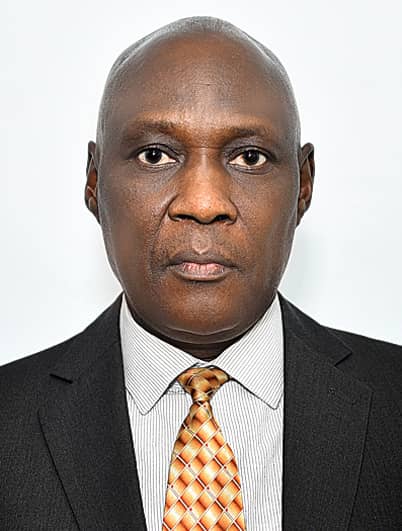
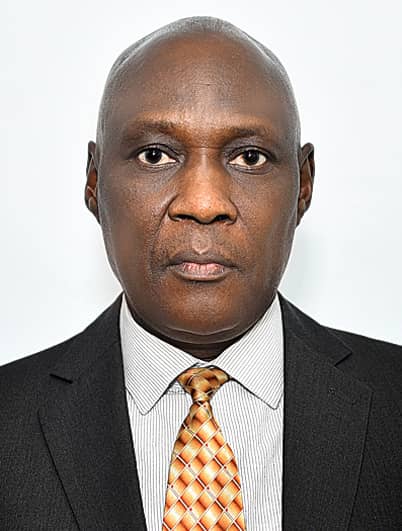
KBL Insurance Limited has reinforced its standing as a dependable and customer-focused underwriting institution with the payment of over N5 billion in claims across multiple insurance categories within the last sixteen months.
The Company disclosed that it paid claims totalingN3,662,293,189.41 during the 2025 financial year, while an additional N1,337,886,316.70 was settled between January and April 2026.
The cumulative payout reflects KBL’s strong financial footing, operational resilience, and unwavering commitment to meeting obligations with efficiency and professionalism.
The settlements, spanning diverse classes of insurance business, further demonstrate the Company’s responsiveness in providing timely financial relief to policyholders during periods of loss and uncertainty.
Speaking on the development, the Managing Director/Chief Executive Officer of KBL Insurance Limited, Lawal Mijinyawa, described prompt claims settlement as one of the most credible indicators of trust and institutional integrity within the insurance industry.
“At KBL, we understand that insurance extends beyond policies and documentation; it is fundamentally about honouring our promises when customers need us most. The true test of an insurance institution lies in its ability to settle genuine claims promptly, fairly, and efficiently,” he stated.
Mijinyawa noted that the Company’s claims record reflects not only financial stability, but also a culture anchored on professionalism, operational excellence, and superior service delivery.
“Our consistent claims settlement culture mirrors the confidence our customers place in us and our determination to exceed expectations. Beyond the statistics are businesses restored, families supported through adversity, and individuals empowered to move forward with renewed assurance,”he added.
The Managing Director further disclosed that KBL is recording a very significant progress with its recapitalisation programme as part of a broader strategic growth and transformation agenda.
According to him, the Company has successfully secured investor commitment towards the initiative, a milestone expected to strengthen its financial capacity, underwriting strength, and competitive position within Nigeria’s insurance landscape.
“As part of our long-term vision for sustainable growth and enhanced service delivery, KBL has secured investor participation towards its recapitalisation programme. This achievement further reinforces our financial stability and positions us to harness emerging opportunities within the industry,” he said.
He explained that the development reflects growing investor confidence in the Company’s governance structure, operational performance, and long-term strategic direction.
“The successful investment commitment is a strong endorsement of the KBL brand and its future prospects. It will enable us to deepen market penetration, strengthen service delivery, expand investment in innovation and technology, and continue creating superior value for customers and stakeholders,” Mijinyawa stated.
He further assured policyholders, brokers, business partners, and stakeholders of the Company’s continued commitment to sound corporate governance, financial discipline, transparency, and customer-oriented operations as it consolidates its market presence.
KBL also reiterated its resolve to leverage innovation, digital transformation, and operational efficiency to enhance customer experience and improve turnaround time across its operations.
Over the years, KBL Insurance Limited has built a strong reputation founded on professionalism, integrity, reliability, and seamless service delivery. The Company noted that its expanding claims portfolio and sustained strategic investments continue to reinforce stakeholder confidence and validate its position as a trusted player within Nigeria’s insurance industry.
As part of its long-term objectives, KBL stated that it would continue investing in human capital development, technology-driven solutions, operational efficiency, and product innovation aimed at delivering greater value to customers and stakeholders.
The Company reaffirmed its dedication to excellence, efficient claims administration, and the provision of quality insurance solutions designed to guarantee peace of mind and enduring financial protection.
KBL Insurance Limited is a trusted general insurance provider committed to delivering innovative and reliable risk management solutions to individuals and businesses across Nigeria. Guided by professionalism, integrity, innovation, and customer satisfaction, the Company continues to provide responsive insurance services tailored to the evolving needs of its customers while contributing meaningfully to the growth of Nigeria’s insurance industry.
The post KBL Insurance Settles N5bn Claims in 16 Months, Secures Investor Backing appeared first on Business Today NG.


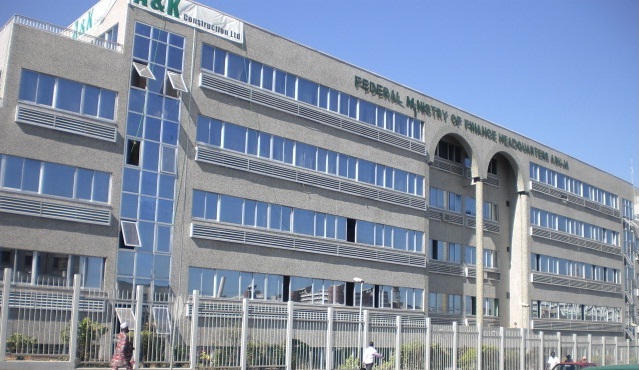
The Federal Ministry of Finance has disputed a claim that the Federal Government’s interest payments reached 124 per cent of its revenue in the first half of 2026, describing the figure as misleading.
The ministry said recent analysis and public commentary, which cited the World Bank’s October 2026 Nigeria Development Update, compared mismatched interest figures against an incomplete revenue base.
In a statement released on Sunday, the ministry said the 124 per cent interest calculation includes the debt serviced by the federal government on behalf of other tiers of government, including external loans to states.
“Measuring this against federal revenue alone overstates the ratio, which is only meaningful when debt and revenue cover the same level of government,” the statement said.
The ministry also asserted that the reported revenue is incomplete as it excludes the independent revenue earned by government agencies and enterprises but not yet remitted to the treasury.
“In addition, more revenue is typically earned in the second half of the year than in the first due to the statutory timing of certain payments. This is why the ratio stood at 156% in H1 2025, while the full-year 2025 debt service-to-revenue ratio was below 60%, down from 97% before the reforms,” it stated.


The ministry explained that federal revenue rose by 72 per cent from ₦3.6 trillion in the first half of 2025 to ₦6.2 trillion in the corresponding period of 2026.
Interest payments, however, rose by 38 per cent, from ₦5.6 trillion to ₦7.7 trillion over the same period, according to the ministry.
“The interest-to-revenue ratio fell by 32 percentage points in a single year, from 156% to 124%, and the gap between interest and revenue narrowed from ₦2.0 trillion to ₦1.5 trillion,” the ministry said.
The ministry attributed the changes to the current administration’s economic reforms, arguing that revenue is growing faster than interest costs.
It argued that a six-month figure alone should not be used to evaluate the sustainability of government debt.
“Debt sustainability is assessed on a full-year basis, not over six months,” the statement said.
READ ALSO: Federal government approves upgrade of four South-South ports
Citing the World Bank report, the ministry said Nigeria’s full-year 2026 debt service, covering both interest and principal, is projected at 46 per cent of revenue, and that this forecast is the appropriate benchmark for assessing the country’s debt-service burden.
The ministry noted that all borrowing falls within the limits approved by the National Assembly under the 2026 Appropriation Act and the approved borrowing plan, in compliance with the Fiscal Responsibility Act 2007 and the Debt Management Office (Establishment) Act 2003.
“We encourage analysts and commentators to apply the same rigour they seek to hold the government to: compare like with like, read figures in context, and seek clarification where the data is unclear,” the ministry said.
Discover more from Premium Times Nigeria
Subscribe to get the latest posts sent to your email.
-
News3 days ago
Miners Association Seeks Support To Unlock $3bn Gemstone Export Potential
-

 Health3 days ago
Katsina health professionals declare 7-day warning strike
-
Health4 days ago
Kenya confirms second Ebola case as contact develops symptoms in quarantine
-
News4 days ago
Ricursive Intelligence is betting on AI-designed chips to help solve the compute crisis