Connect with us

News

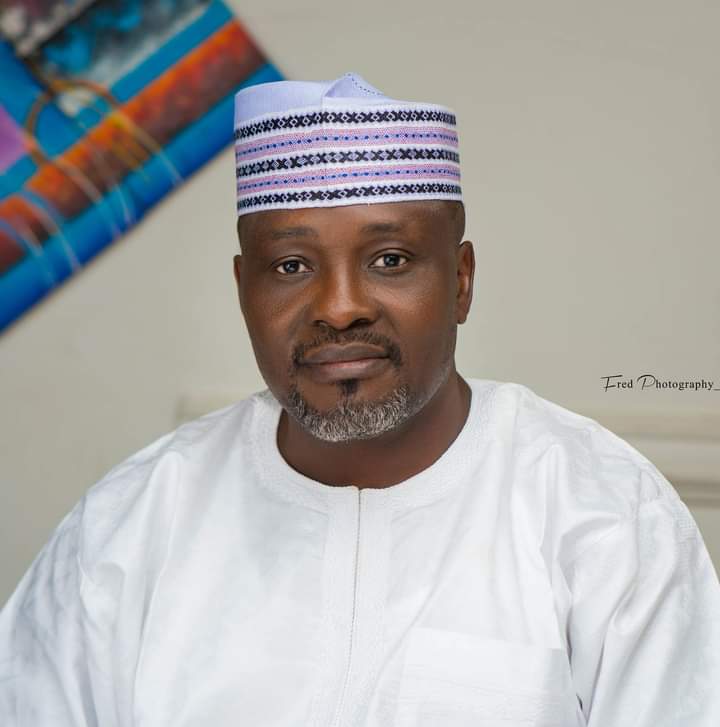
2027: More hurdles for Gov Mutfwang as kinsman Gen Sura picks ADC guber form

info

Published

on

John Sura.jpg

The expected smooth sail for Plateau State Governor, Caleb Mutfwang’s re-election in 2027 has taken a hit as another of his kinsmen, Brigadier General, John Sunday Sura (rtd), has picked the Expression of Interest and Nomination forms to contest the Plateau State governorship election on the platform of the African Democratic Congress, ADC.

Sura who is from the same Mangu Local Government Area as Mutfwang, picked the ADC governorship form on Monday and was presented to the party hierarchy at the national headquarters in Abuja.

While speaking during the presentation, Sura expressed confidence in the electoral process and pledged to introduce fresh ideas aimed at restoring peace and fostering development in the state.

The retired Army General who recently resigned from the All Progressives Congress, APC, said his decision to join the governorship race was driven by an urgent need to address insecurity, promote economic prosperity and rebuild peaceful coexistence.

“I am driven by what matters now on the Plateau, which is the safety of lives and property, prosperity and the conviction to establish Plateau as a haven for mutually beneficial coexistence among the good people of Plateau State and beyond,” Sura said.

While expressing optimism that his political movement would usher in a new phase of collective progress, the retired Army chief turned politician said, “This will be the beginning of the best collective movement for the new Plateau State. My ambition is not centered on personal gains but on what matters now to the people of the state.”

Sura’s entry into the governorship fray is seen by political observers in the state as a litmus test for Mutfwang as they see it as whittling his political base as the votes would be split during the election.

Before Sura’s entry, two other prominent political figures in Mangu, Sunny Garba Biggs and Jude Eli Dakur had also resigned from the APC to pursue their governorship ambitions in other political parties.

While Biggs had since declared his ambition on the platform of the Peoples Democratic Party, PDP, Dakur, a former strong ally of the governor, has pitched his tent with the ADC where he also declared his gubernatorial ambition.

Dakur, a former Commissioner of Education and Mineral Development, defected from the APC in April 2026 and has since launched his campaign which many believe is a big threat to Mutfwang’s second term as he (Dakur) is one of the most popular politicians from Mangu. It is believed that he will definitely split Muftwang’s votes in 2027.

Continue Reading
Click to comment

Leave a Reply

Your email address will not be published. Required fields are marked *

News

Plateau APC Primaries: Stakeholders Raise Alarm, Demand Transparency Ahead of Senate, Assembly and Governorship Contests

info

Published

on

By

IMG 6901.jpeg

Tension is gradually building within the All Progressives Congress (APC) in Plateau State as concerned stakeholders have called on the party’s National Working Committee (NWC) to immediately disclose the names of officials selected to oversee the forthcoming governorship, Senate, and State House of Assembly primaries.

The group, operating under the banner Concerned APC Stakeholders for Electoral Transparency in Plateau State, said the call followed extensive consultations with party members and grassroots leaders across Jos and other parts of the state. According to them, transparency in the process has become necessary, especially following recent controversies surrounding the House of Representatives primaries.

The stakeholders warned that failure to make the identities of the electoral committee members public could fuel suspicion, uncertainty, and mistrust among party faithful ahead of the highly anticipated exercises. They stressed that openness and fairness remain key to preserving unity and confidence within the party.

They further urged the APC national leadership to uphold democratic principles by ensuring a level playing field for all aspirants, noting that growing political activities and heightened interest ahead of the next electoral cycle make credibility in the process more important than ever.

Continue Reading

News

Theo Baker spent four years investigating Stanford. Before he leaves, here’s what he found.

info

Published

on

By

Screenshot 2026 05 18 at 10.39.47 PM.png

Most members of Stanford’s class of 2026 are smart, ambitious, and poised for remarkable careers. Theo Baker already has one. In his first semester of college, Baker broke the story that forced Stanford president Marc Tessier-Lavigne to resign — work that earned him a George Polk Award, one of journalism’s highest honors. Warner Brothers and producer Amy Pascal have optioned the rights to that story. And Tuesday, with graduation less than a month away, Baker publishes How to Rule the World, a sweeping account of his time at Stanford and the school’s often insidious relationship with the venture capital industry. Judging by early interest, it has every chance of becoming a bestseller.

We’ve been anticipating this one (we shared some related thoughts about it just a few weeks ago). We talked with Baker last Friday. This interview has been edited for length and clarity.

You showed up at Stanford as a coder. How did you end up breaking one of the biggest stories in the university’s history before your freshman year was even over?

I arrived thinking tech and entrepreneurship was the path for me. I joined the student hackathon, Tree Hacks, helped run it, skipped ahead to the CS weeder class. But my grandfather, with whom I was very close, had passed away a few weeks before I arrived, and he talked about working on the student paper more than anyone I’d ever known. So I joined the student paper to feel connected to him — it was supposed to be a hobby, a way to meet people and explore campus.

Very quickly things spiraled from there. My first few stories got more reception than we’d imagined, tips started flooding in, and one led me to a pseudonymous website called PubPeer, where scientists dissect published research. There were comments, seven years old at the time, suspecting that papers co-authored by Stanford’s president, Marc Tessier-Lavigne, had images that were duplicated, spliced, or otherwise irregular. I was a month into my time at Stanford when that investigation began, and by the time I was back for sophomore year, the president had resigned.

Were you warned off the story?

Multiple times, before I’d even published my first article. People warned me that Tessier-Lavigne was a person of very high integrity with a sterling reputation — that I didn’t want to do this, that it was going to place me in a very uncomfortable position within the institution. Which, of course, was not wrong. Over the course of the next 10 months, as the story widened, the pushback grew steeper. Within 24 hours of my first story, the board of trustees announced their own investigation. I quickly learned that one of the board members overseeing it had an $18 million investment in Denali Therapeutics, the biotech company Tessier-Lavigne co-founded. And the statement announcing the investigation praised his “integrity and honor”— in an investigation that was theoretically looking into his scientific integrity. So the investigation itself became an object of reporting. Tessier-Lavigne never once directly responded to a request for comment during my freshman year. Eventually he began sending missives to all of the faculty — which included all of my professors — describing my reporting as “breathtakingly outrageous and replete with falsehoods.” And then I began hearing more from his lawyers.

The book is really about something broader, though — what you call the Stanford inside Stanford. What does that mean?

Very soon after I arrived, I realized there was this parallel reality — an inside world — where the kids identified early as the next trillion-dollar startup founders are plucked from the crowd and placed into a world of access and resources. Yacht parties, slush funds, everyone texting the same billionaires for advice on weekends. As Stanford has become more famous as the home of great startups, it has become, according to some people at the university, increasingly difficult to spot actual talent. So many people arrive thinking they can be the next billion-dollar dropout that there’s an entire system of hangers-on whose job is to separate what they call the “wantrepreneurs” — people doing it because it looks good — from the so-called builders who actually have potential. It’s a system designed to sniff out the teenagers you can make a buck off of as early as possible.

The title of the book, it turns out, isn’t just a metaphor.

No. It’s literally the name of a so-called secret class at Stanford, taught by a Silicon Valley CEO. It’s not really a class. It’s more like a Skull and Bones for the aspiring tech elite. People aren’t getting course credit, but there are lectures, discussions, guest speakers, held once a week in the winter quarter on campus. When I arrived, it was a status symbol even to know it existed — that made you “rule-adjacent,” as one person told me. What this guy Justin was trying to do — as the students in the class told me — was what everyone seems to be trying to do: get in and network with the teenagers who can be useful to you, young. Only he figured out how to cloak himself in this mystique and make these talented, promising kids come to him, because he was promising them how to rule the world. He promised that the most brilliant students at Stanford would congregate in this 12-person seminar, and that the only way to learn these secrets was to go through him. It’s a very poignant example of how this system of talent extraction has come to manifest itself in strange ways.

What does that talent-scouting system actually look like on the ground?

There are VCs who employ older Stanford upperclassmen to identify freshmen as soon as they arrive on campus. It’s kept purposefully obscure. I’ve had people tell me it’s seen as an anti-signal to join one of the big entrepreneurship clubs, because that looks like you’re doing it for the title — as opposed to being in one of the secret feeder groups where the true builders supposedly congregate. But as much as there is genuine talent among the kids in this world, the primary qualification is who you know — whether you’re getting tapped on the shoulder. There was a CEO who cold-emailed me freshman year, asked to get to know me. The first time we went to dinner, we went to the Rosewood Hotel, and he’s sitting there spoon-feeding his eight-month-old caviar as he casually mentions that his first-ever contract was for Muammar Gaddafi. That casualness is something I find fascinating. And this whole system goes a long way toward explaining how the big frauds develop. It starts by vesting huge amounts of authority, money, and power in the hands of teenagers without adequate safeguards for when things go wrong.

You arrived right as the FTX collapse was happening and ChatGPT launched. What was that like to observe up close?

The timing was almost absurd. We arrived at the tail end of the crypto craze — the assumption when we showed up was that crypto was how you were going to make your fortune. SBF begins his descent on November 2nd. ChatGPT comes out November 30th. And immediately everything pivots. I remember being at a dinner shortly after ChatGPT’s release, sitting with one of the biggest crypto boosters on campus, and he’s telling me that SBF was “directionally correct” — that was the phrase — but that everyone was trying to figure out how to get around the legality. And quickly, many of those same people realized that AI was the new craze they could jump on. They told me they could reach the same heights as SBF, preferably without the fall, by taking advantage of the newest new thing. Silicon Valley operates in cycles, but this one has been particularly fascinating to observe up close because the scale is just unfathomable.

Do you think your peers are leaning into entrepreneurship partly out of anxiety about the job market?

Absolutely. The AI rush has made talent the resource to mine in this modern-day gold rush — the most valuable researchers and founders are more valuable than ever, but entry-level positions are starting to disappear. There’s a common refrain among people in this world that it’s easier to raise money for a startup right now than to get an internship. Which is remarkable, right? Entrepreneurship, rather than being the non-conformist outsider thing it might once have been associated with, has become an expected path. That changes the nature of it entirely.

What’s one piece of advice you’d give to a 17-year-old heading to Stanford or any elite university today?

You have to be really conscious about whether you’re doing what you’re doing because you believe in it and because it’s the right thing — or because it’s the easy thing. It’s very easy to be buffeted by trends and the tech whirlpool, to find yourself wasting away at a job you don’t actually want because you followed the expected path. Following the expected path is way less interesting than going out and doing something for yourself. I admire the best founders who emerge from this place because they feel genuinely empowered to make a difference. You just have to be careful that you’re doing it for the right reasons — and not just because you want to get rich.

You came here thinking you’d be a founder. Do you still want to start something?

Honestly, I haven’t thought about it that much — it’s been a mad dash to finish the book and get to graduation, which is astonishingly only about a month away. But I think it comes across in the book that I really did fall in love with journalism. It’s a temperament, almost an affliction, more than a career. Whatever I do, it will intersect with that.

When you purchase through links in our articles, we may earn a small commission. This doesn’t affect our editorial independence.

Continue Reading

Trending