Business
NNPC Signs MoU with Chinese Firms to Revive Port Harcourt, Warri Refineries


BY NKECHI NAECHE-ESEZOBOR—NNPC Ltd has signed a Memorandum of Understanding (MoU) with two Chinese companies—Sanjiang Chemical Company Limited and Xingcheng (Fuzhou) Industrial Park Operation and Management Co. Ltd—as part of efforts to complete and fully operationalize the Port Harcourt and Warri refineries.
The agreement, executed in China, was signed by the Group Chief Executive Officer of NNPC Ltd, Bashir Bayo Ojulari, alongside Chairman of Sanjiang Chemical Company, Guan Jianzhong, and Chairman of Xingcheng (Fuzhou) Industrial Park Operation and Management Co. Ltd, Bill Bi.
According to a statement issued by the Chief Corporate Communications Officer of NNPC Ltd, Andy Odeh, the collaboration is structured around a potential Technical Equity Partnership (TEP). The framework is expected to support the completion of outstanding work at both refineries, as well as their operation and maintenance to achieve efficient and sustainable performance.
The partnership also includes plans for expansion and upgrades aimed at improving product quality to meet cleaner and more profitable standards. In addition, the proposed collaboration will explore opportunities to boost petrochemical output and develop gas-based industrial hubs around the refinery locations.
Ojulari described the signing of the MoU as a significant milestone, noting that it followed over six months of engagement between the technical and management teams of NNPC Ltd and its Chinese partners. He added that the agreement marks a critical step toward identifying suitable technical equity partners to restart and expand Nigeria’s refining capacity.
The MoU, he said, also opens the door for further discussions on co-located petrochemical projects and gas-based industries, which are expected to enhance value across the downstream sector.
While the agreement signals strong intent from all parties, NNPC Ltd noted that it represents a preliminary framework, with more detailed and binding arrangements expected to be finalized in due course.
The post NNPC Signs MoU with Chinese Firms to Revive Port Harcourt, Warri Refineries appeared first on Business Today NG.



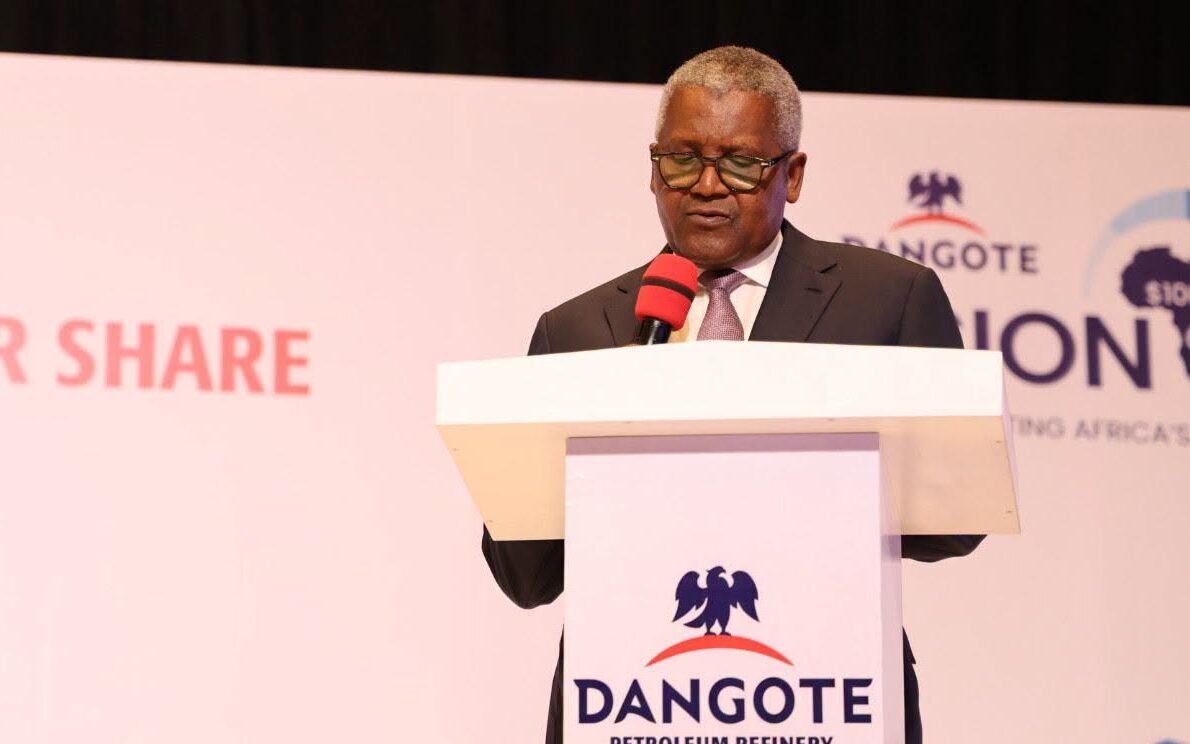
Africa’s richest man and president/CEO of Dangote Industries Limited, Aliko Dangote, and Kenya’s President, William Ruto, are set to break ground on a $16 billion oil refinery in Lamu County, on Kenya’s northern coast.
This is against the backdrop of protests and legal challenges over land acquisition and compensation.
The proposed Dangote East Africa Petroleum Refinery has raised concerns among residents, activists and economic experts over its potential environmental and social impacts, particularly the displacement of communities and the adequacy of compensation for affected landowners.
Ahead of the groundbreaking ceremony, some residents took to the streets to demand better compensation for land earmarked for the project.
Farmers and residents of Chandavai have also filed a lawsuit alleging forced eviction and property destruction without adequate compensation or a proper resettlement plan.
The petitioners argued that the land designated for the refinery is part of their ancestral heritage and provides essential livelihoods for their families.


In response to the legal challenge, the Malindi Environment and Land Court ordered a temporary halt to construction activities pending a hearing.
Environmental activists have also questioned whether the project complied with mandatory public participation requirements and comprehensive environmental impact assessments under Kenyan law.
According to the BBC, Mr Dangote has dismissed the protests as manoeuvres by local marketers and international players, while insisting the refinery would proceed as planned and be ready by 2030.
In an interview with the BBC’s Focus on Africa programme, Mr Dangote disputed claims of inadequate compensation, saying his company had acquired only the portion of land it required from the area made available by the government.
“To come and say some people are demonstrating, demonstrating about what? Have you ever seen people demonstrating against themselves in terms of development?” he asked, indicating that the protests would not derail the project.
Mr Dangote said the refinery would create about 60,000 jobs at the peak of construction, with the benefits extending beyond those directly employed by the project.
“Are we going to bring robots? Of course, the people will benefit,” the BBC quoted him as saying.
The proposed refinery is expected to process 700,000 barrels of crude oil per day, making it one of Africa’s largest refining facilities and the biggest industrial project of its kind in East Africa.
The project is expected to cost between $15 billion and $16 billion and take about three years to construct. It is modelled after Dangote’s 650,000-barrel-per-day refinery in Lagos, Nigeria.
Once completed, the facility is expected to supply refined petroleum products to Kenya, South Sudan, Uganda, Burundi, and the Democratic Republic of the Congo.
The proposed investment has also triggered questions about why Kenya was selected for the refinery, given that it is not an oil-producing country. Some critics have suggested that Tanzania or Uganda would be more suitable locations, particularly as both countries are advancing plans to export crude oil through the East African Crude Oil Pipeline.
However, Kenya’s Energy and Petroleum Minister, Opiyo Wandayi, told the BBC that the refinery would not depend exclusively on crude oil produced within the region.
“Refineries get crude oil from the market. And the market is open,” he said.
Mr Dangote also defended the choice of location, citing Singapore as an example of a country that has developed a substantial refining industry despite having no domestic crude oil production.
“Singapore doesn’t produce a single drop of oil, yet they have a lot of refineries,” he said.
The refinery will also feature a 1,000-megawatt power plant designed to provide electricity for its operations and support other industries expected to emerge in the area.
Mr Dangote has identified unreliable electricity supply as a major obstacle to industrialisation in Africa, particularly in resource-rich countries that export raw materials instead of processing them locally.
READ ALSO: Dangote Refinery a masterpiece of science, engineering, art – Kenyan President
The Nigerian industrialist has about $50 billion worth of projects in the pipeline, including plans to develop 10,000 megawatts of power generation capacity across Africa by 2030, with the possibility of doubling the target depending on demand.
The proposed Lamu power plant is expected to support the refinery’s operations while providing electricity for other industrial activities in the region.
The Lamu project comes as Mr Dangote expands his investments across Africa, following the commissioning of his 650,000-barrel-per-day refinery in Lagos, which can supply petroleum products to domestic and international markets.
The proposed Kenyan refinery is also expected to reduce the region’s dependence on imported petroleum products. East African countries currently rely heavily on fuel imports, much of which comes from the Middle East, exposing them to global supply disruptions and fluctuations in crude oil prices.
The refinery’s development, however, still depends on resolving land acquisition disputes, compensation concerns, and environmental issues raised by affected communities and campaigners.
Discover more from Premium Times Nigeria
Subscribe to get the latest posts sent to your email.
-

 News4 days ago
Cross River Ikan Sports Fight Back To Beat Gateway Horns 25-19 In Showtime Bowl Series XV Flag Football
-
 News2 days ago
TikTok Access Disrupted in Parts of Northern Nigeria as Users Turn to VPNs
-
News4 days ago
Rivers Guber: ALDRAP writes INEC, seeks Chinda’s disqualification after Supreme Court judgment
-
Health4 days ago
PT Health Watch: How Pregnancy-Induced Hypertension puts mother, baby at risk