
Business
Insurance Week 2.0: Stop Selling Obsolete Products, NAICOM Warns Operators

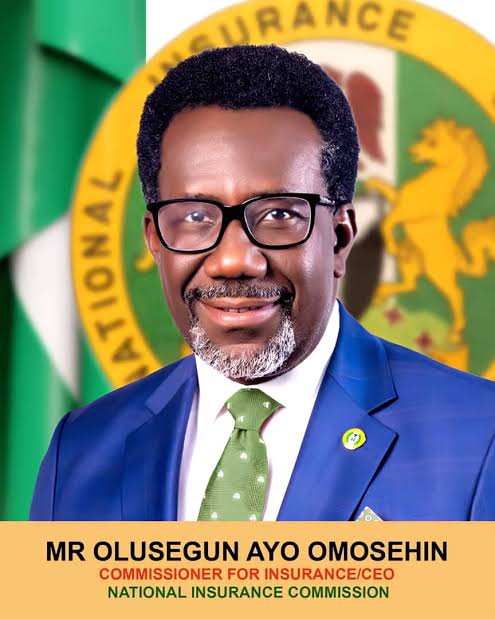
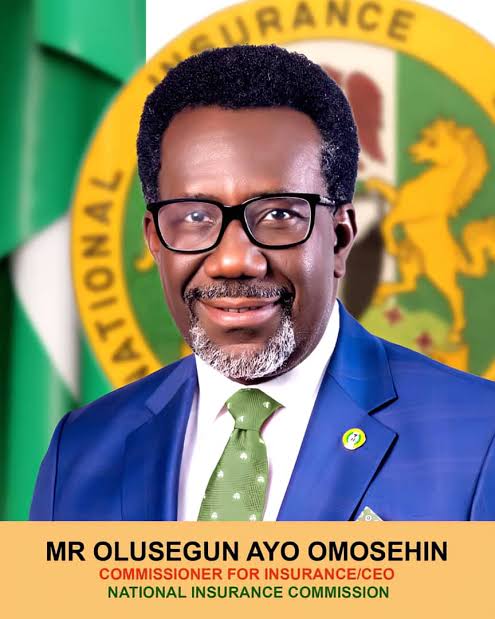
BY NKECHI NAECHE-ESEZOBOR—The National Insurance Commission (NAICOM) has challenged Nigerian insurance operators to radically overhaul their business models by transitioning from product-centric marketing to a customer-centric approach.
The regulator warned that the long-standing industry habit of “selling what has been produced, rather than producing what can be sold” must change if the sector hopes to bridge the persistent public trust gap.
The call was made by the Commissioner for Insurance, Mr. Segun Omosehin, who was represented by the Deputy Commissioner for Insurance (Finance and Administration), Mr. Ekerete Ola Gam-Ikon, during the flag-off of the 2026 Insurance Week.
Omosehin emphasized that public awareness and trust are no longer peripheral regulatory duties but core strategic priorities necessary to unlock sustainable economic growth.
Addressing industry executives, Omosehin noted that despite the critical role insurance plays in risk management, public understanding remains low. He urged operators to move away from generic messaging and embrace localized, highly relatable communication.
“It is not enough for people to simply know that insurance exists,” Omosehin stated. “They must understand how it works, why it matters, and how it can protect their lives, assets, and aspirations. We must communicate in languages people understand and through platforms they trust.”
The Commissioner pointed directly to claims settlement as the ultimate litmus test for the industry’s credibility, describing it as the “moment of truth.”
“Delays, ambiguities, or perceived unfairness in claims settlement do not just erode trust in one company—they weaken confidence in the entire system,” he warned, urging operators to simplify documentation and create transparent timelines for policyholders.
Highlighting recent legislative achievements, the NAICOM chief described the passage of the Nigerian Insurance Industry Reform Act (NIIRA) 2025 as a defining milestone that establishes a robust safety net for consumers.
Key structural transformations introduced under NIIRA 2025 include:
Policyholders’ Protection Fund to safeguard consumers even in cases of insurer insolvency.
• Stronger Capital Requirements: Re-architecting the financial resilience and supervisory frameworks of operating firms.
• Strategic Economic Alignment: Mandating deliberate insurance support for critical national sectors, including infrastructure development, agriculture, and Micro, Small, and Medium Enterprises (MSMEs).
However, Omosehin cautioned that legislation alone cannot guarantee success. “The true impact of NIIRA 2025 will depend on how effectively we implement its provisions. Compliance should be seen not as a burdensome obligation, but as an opportunity to elevate standards.”
Driving Inclusive Insurtech Innovation
Turning to technology, the Commissioner acknowledged that digital platforms, data analytics, and Insurtech innovations offer unprecedented opportunities to streamline onboarding, quicken claims management, and bridge geographical gaps.
He nonetheless urged operators to deploy tech responsibly, ensuring that cybersecurity and data privacy remain paramount. He stressed that innovation must be inclusive, intentionally drawing in rural communities and informal sector participants rather than isolating them.
Concluding his address, Omosehin declared that the Nigerian insurance sector stands at a historic crossroads, requiring practitioners to break the silence that has historically hindered industry penetration.
“Trust is not built overnight; it is earned through consistent actions, dependable service, and unwavering integrity,” Omosehin said.
“Let us seize the opportunities presented by ongoing reforms, sustain the momentum, and work together to create an insurance sector that is inclusive, innovative, and globally competitive.”
The post Insurance Week 2.0: Stop Selling Obsolete Products, NAICOM Warns Operators appeared first on Business Today NG.


Airtel Mobile Commerce N.V. (Airtel Money), the mobile money business of Airtel Africa, has set the offer price for its planned initial public offering (IPO) at £1.96 per share, implying an estimated market capitalisation of £5.3 billion ($7.0 billion) at admission.
Airtel Africa disclosed this in a statement on Thursday, saying Airtel Money intends to list its ordinary shares on the London Stock Exchange, with admission currently expected on 14 October.
The planned listing followed Airtel Africa’s announcement on 23 September of its intention to undertake an IPO for Airtel Money, which operates mobile money services across several African markets.
Listing offer
Under the offer, certain existing shareholders of Airtel Money are expected to sell 270 million existing shares. Also, an additional 27 million shares may be sold if the over-allotment option is fully exercised.
Airtel Africa said it does not expect to sell its existing Airtel Money shares in the offer, except pursuant to the over-allotment option.
The telco said it would remain a “long-term strategic shareholder” in Airtel Money and support the business as it moves into its next phase as an independently listed company.


Based on current indications from existing shareholders, approximately 16.5 per cent of Airtel Money’s issued ordinary share capital is expected to be held in public hands if the over-allotment option is not exercised.
This could rise to approximately 17.5 per cent if the maximum additional shares are sold, according to Airtel Africa.
Airtel Money expects the level of public ownership to make it eligible for inclusion in the FTSE UK indices.
The company said it intends to apply for admission of its ordinary shares to the equity shares category of the Official List of the UK Financial Conduct Authority and for trading on the London Stock Exchange’s Main Market.
Airtel Money said further details of the offer would be contained in its prospectus, which it said would be made available on Airtel Money’s IPO website, subject to applicable access restrictions, on Thursday.
READ ALSO: What Dangote IPO signals – NGX Chairman
Airtel Africa has been planning to spin off its mobile money business from its core telecoms operations following the financial subsidiary’s performance in previous years.
Its mobile money unit, Airtel Money, logged a strong performance in 2025, recording $1.4 billion in turnover, more than one-third higher than what it reported a year before.
Airtel Africa is a leading provider of telecommunications and mobile money services, with operations in 14 countries in sub-Saharan Africa.
Airtel Africa provides an integrated offer to its subscribers, including mobile voice and data services, as well as mobile money services, both nationally and internationally.
Discover more from Premium Times Nigeria
Subscribe to get the latest posts sent to your email.
-

 News1 day ago
PLASU Opens Doors to Global Investors at 2nd Inaugural Lecture
-
News1 day ago
Plateau Specialist Hospital Celebrates Nigeria at 66, Salutes Mutfwang’s Health Initiatives
-
News1 day ago
Nigeria At 66: Rotjimwa Yilyok Salutes President Tinubu, APC Leadership and Plateau Government
-
News2 days ago
Nigeria’s data protection agency’s revenue surges over ₦12b as compliance expands – Technology Times


