News
Inside TSEMA’s Lifeline Operations: How Taraba’s Emergency Agency Is Saving Lives Across Communities

Taraba State, located in Nigeria’s North-East and bordered by Bauchi, Gombe, Plateau, Nasarawa, Benue, Adamawa, and the Republic of Cameroon, is widely regarded as one of the country’s most geographically diverse regions. Spanning about 54,000 square kilometres, its landscape stretches from the high-altitude Mambilla Plateau to vast river valleys and low-lying floodplains.
But this natural richness comes with risks.
Seasonal flooding—driven by the overflow of the Taraba and Donga rivers, as well as periodic water releases from the Lagdo Dam in neighbouring Cameroon—frequently submerges communities and displaces thousands. Beyond environmental challenges, Taraba’s complex social structure adds another layer of vulnerability. With over 80 ethnic groups, the state experiences periodic communal tensions often linked to land ownership, identity, and political representation.
Against this backdrop of recurring crises, a quiet but decisive force continues to stand between disaster and survival for many residents.
Backed by the leadership and support of Governor Dr. Agbu Kefas, the Taraba State Emergency Management Agency (TSEMA) has emerged as a critical pillar in the state’s emergency response—coordinating rescue efforts, delivering relief, and restoring hope across affected communities.
From Jalingo to Lau, Yorro to Takum Local Government Areas, the agency’s interventions have become a lifeline for families grappling with the effects of flooding and conflict.


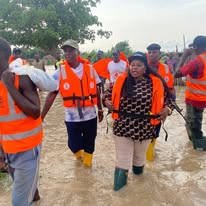
On March 28, 2026, TSEMA carried out one of its largest humanitarian operations, distributing relief materials to over 50,000 internally displaced persons and flood victims across the state. The exercise, supported by the Taraba State Government under Governor Kefas’ directive, targeted communities hardest hit by seasonal flooding and displacement.
Speaking during the exercise, the agency’s Executive Secretary, Dr. Audu Echuseh, reaffirmed TSEMA’s commitment to timely and transparent service delivery, noting that sustained government support has significantly strengthened its capacity to respond swiftly to emergencies.
Across Taraba, TSEMA’s presence is most visible in its response to vulnerable communities.
In Lau and Jalingo LGAs, where flooding has repeatedly displaced residents, the agency has coordinated evacuations and distributed food items, mattresses, and other essential supplies. In Takum LGA, it has extended relief to victims of farmer-herder clashes, providing urgent support to families displaced by violence.
Meanwhile, in Yorro LGA, joint operations between TSEMA and the National Emergency Management Agency (NEMA) have ensured both immediate relief and sustained support for affected communities—reflecting a coordinated response strengthened by state government backing.
Observers say Governor Kefas’ emphasis on responsive governance has played a crucial role in enabling such interventions and ensuring that assistance reaches those who need it most.


Behind the numbers are stories of survival.
“We lost almost everything to the flood,” a resident of Jalingo recalled. “But the assistance we received helped us survive. It gave us hope again.”
Across affected communities, similar testimonies highlight the life-saving impact of TSEMA’s interventions, particularly in remote areas where access to aid can be limited.
As it expands its operations, the agency has also maintained a strong focus on transparency and accountability—principles that align with the broader governance priorities of the state.
Today, TSEMA has evolved beyond a reactive institution into a strategic agency serving as:
- The first line of defence during disasters
- A coordinator of humanitarian interventions
- A bridge between the government, donors, and local communities
It not only safeguards lives in Taraba but also contributes to Nigeria’s wider disaster management framework.
As climate change pressures intensify and security challenges persist, the need for strong and responsive institutions has never been greater.
For the people of Taraba, TSEMA remains a dependable lifeline—supported by a government that continues to prioritise humanitarian response and citizen welfare.
Under the leadership of Dr. Audu Echuseh, and with the backing of Governor Kefas, the agency reflects a powerful blend of institutional commitment and political will—one that is helping Taraba respond more effectively to crises.
And as emergencies continue to test communities, one thing is clear: TSEMA is not just responding to disasters—it is helping to build resilience, restore dignity, and save lives across Taraba State.

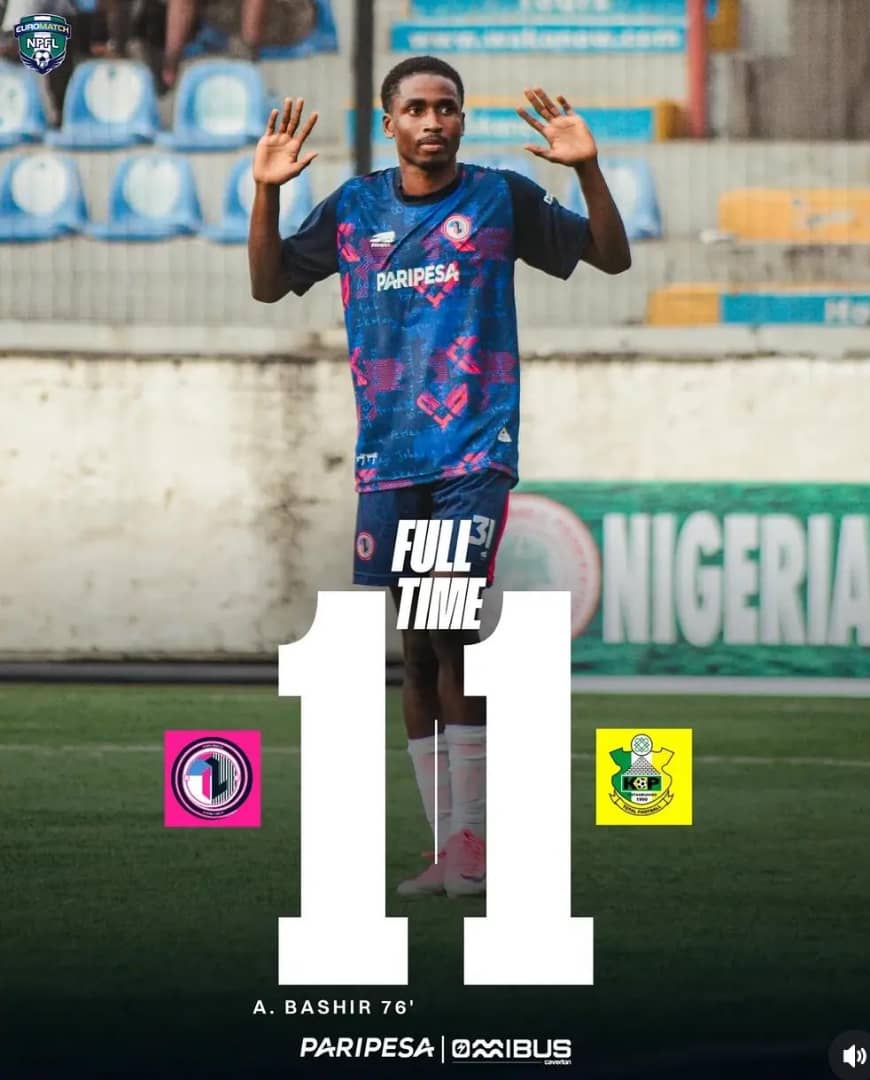
Inter Lagos fought back in the closing minutes to secure a 1–1 draw against Kano Pillars in an entertaining Nigeria Premier Football League (NPFL) clash at the Onikan Stadium, Lagos, on Wednesday.
READ ALSO: EuroMatch NPFL Matchday 5: Sporting Lagos Shock Enyimba as Rangers, Barau FC Pick Up Vital Wins
The visitors appeared set to claim all three points after taking a first-half lead and stubbornly defending their advantage for most of the contest.
However, Inter Lagos maintained intense pressure through the second half, mounting attack after attack in search of a route back into the game.
Their relentless persistence paid off late in the match when Bashir Abdulkarim capitalized on a defensive opening to slot home the equalizer.
The drama triggered wild celebrations among the home fans as Inter Lagos snatched a hard-earned point from the jaws of defeat.
While Inter Lagos can draw confidence from their resilience, Kano Pillars will be frustrated by their failure to manage the game and secure the victory.
The result leaves both teams with a point each, further reflecting the tight, unpredictable nature of this season’s NPFL campaign.
-

 Featured10 hours ago
PLATEAU STATE: IS THERE PEACE, OR ONLY THE ABSENCE OF VIOLENCE?
-
Business4 days ago
Lingzhi Global, NACOFTAN Announce 2026 Coffee Festival in Cross River
-
News16 hours ago
Plateau Killings: Rotjimwa Yilyok Urges Security Agencies to Intensify Action
-
Events4 days ago
Peace Walk: WOPPI Urges Plateau Citizens to Invest in Peace Every Day