
News
Operation Enduring Peace Intensifies Security Measures in Jos, Arrests Two Suspects

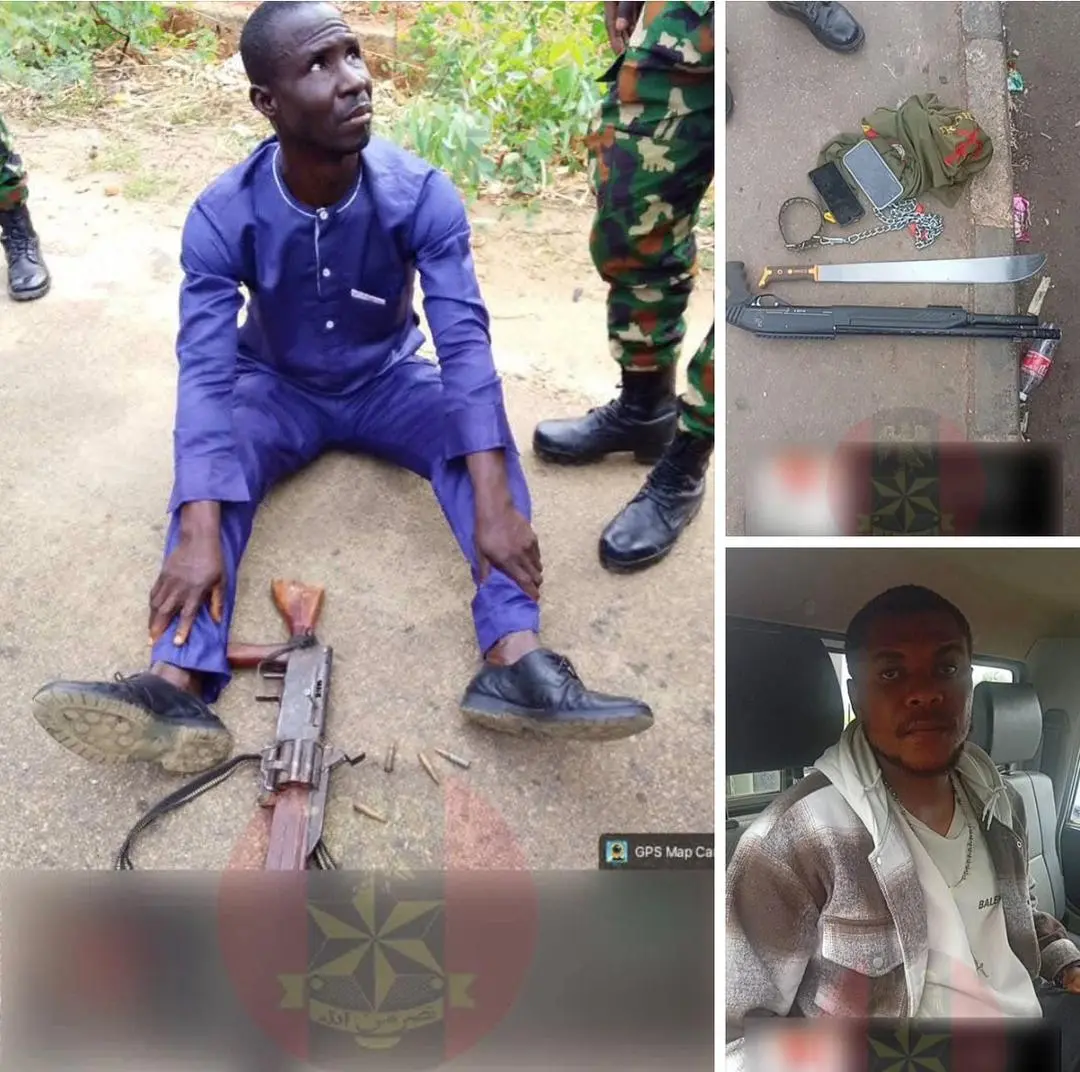
Troops of Operation Enduring Peace have intensified security operations across the Jos metropolis in a bid to curb the escalation of tensions and restore normalcy in Plateau State.
The security initiative, which involved a comprehensive stop-and-search exercise conducted on Friday, was part of proactive efforts to safeguard lives and property, particularly in areas affected by recent unrest in Jos North.
According to a statement issued by the Joint Task Force, the heightened security presence led to the arrest of two suspects and the recovery of a fabricated AK-47 rifle, four rounds of 7.62mm special ammunition, a pump-action firearm, and a cutlass.
The arrests and recoveries were made during targeted operations carried out in key flashpoints and transit routes, including Jos North and Jos South, with specific activities recorded around Dadinkowa, Old Airport Junction, Tudun Wada, and the State Low-Cost Housing Estate.

In a related development, troops responded to a distress call over sporadic gunfire in the Yelwa Cattle Market area of Shendam Local Government Area. On arrival, the attackers reportedly fled into nearby bushes following the deployment of troops.
A subsequent sweep of the area led to the discovery of two local residents who had sustained gunshot wounds. The victims were immediately evacuated to a medical facility for urgent treatment.
The Joint Task Force reaffirmed its commitment to maintaining a strong security presence across Plateau State, noting that operations would continue with increased intensity until all threats are neutralized and lasting peace is restored in affected communities.
The statement, signed by Captain Chinonso Polycarp Oteh, Media Information Officer of the task force, emphasized the resolve of security forces to ensure stability and protect residents amid ongoing security challenges.

A video has surfaced online showing some members of the Agaji volunteer group of Jama’atu Izalatil Bid’ah Wa Iqamatus Sunnah, JIBWIS, popularly known as Izala, chanting lyrics that appear to call for armed attacks on citizens in Enugu and Jos.
The footage, which gained attention on social media, particularly X on Sunday, shows a group of uniformed young men wearing brown attire and blue berets, reportedly associated with the Agaji volunteer wing of the Islamic organization.
In the video, one of the men leads a morale song containing references to obtaining an AK-47 rifle to attack people described as “infidels” in Enugu and Jos.
The chant includes the lyrics: “He should be given AK47. He would then go to Enugu, the land of the infidels. On Sunday when they are worshiping and clapping, he would then open fire, so that he can kill the infidels.”
The singer subsequently repeats the call for an AK-47, this time referencing Jos, and chants about killing more people he describes as infidels, before referring to the act as “the training.”
“He asked to be given AK-47 again. So that he can go to Jos and kill more infidels. That is the training.”
The exact date and location where the video was recorded have not been verified.
The footage, which has sparked reactions online, raised concerns over the possibility of attacks on Christians in Nigeria.
Video of JIBWIS members threatening Christians in Nigeria emerges

Arise News Political Editor, Sumner Sambo, has told opposition parties, including the African Democratic Congress, ADC, and the Nigeria Democratic Congress, NDC, that they cannot defeat the ruling All Progressives Congress, APC, with only press statements.
Sambo spoke during the Arise TV Morning Show, on Monday, while reacting to political developments ahead of the 2027 general elections.
He said that the opposition parties are not doing enough on the ground to convince Nigerians that they are serious about taking power from APC.
According to him, the APC is already in campaign mode and President Bola Tinubu has flagged off his re-election bid in Kaduna, while opposition parties are still issuing statements from Abuja.
"You can't beat APC with press statements. You have to be proactive. You have to go to the grassroots," Sambo said.
He said Nigerians want to see the opposition in their villages, wards and local governments, not just on television.
Sambo added that ADC and NDC must show unity, structure and a clear alternative message if they want to defeat Tinubu and APC in 2027.
He said if they continue with press conferences without grassroots mobilisation, APC will easily retain power.
He advised the opposition to learn from APC's strategy of early mobilisation and massive rallies.
2027: You can’t defeat APC with press statements – Sambo tells ADC, NDC
-

 News3 days ago
Obi, Kwankwaso to hold Middle Belt Youth, Village Hall Meeting in Jos
-
News4 days ago
Handball President Jibril Saidu Ojih Explains Reasons Behind Introduction Of Transfer Fees For Nigerian Players
-
Entertainment4 days ago
FOGMMON PLATEAU CONGRATULATES EJIDIKE UGOCHUKWU (𝙈𝙞𝙣𝙨𝙩𝙧𝙚𝙡 𝙅𝙞𝙙) ON HIS APPOINTMENT AS NATIONAL PRESIDENT
-
Featured3 days ago
Dachung Musa Bagos Foundation Becomes First Nigerian Partner of Manchester Global Foundation


