News
Farmer-Herder Conflict: Plateau Commissioner Calls for Grassroots Peacebuilding Approach in Plateau


Jos, Plateau State – April 21, 2026
The Plateau State Commissioner for Livestock Development, Veterinary and Fisheries, Dr. Sunday Akpa, has called for increased community-driven approaches to resolving farmer-herder conflicts, emphasizing dialogue, mutual understanding, and peaceful coexistence as key to lasting peace.
Dr. Akpa made this known while speaking at a multi-level and multi-sectoral roundtable on sustainable peace infrastructure held at Novel Suites in Jos. The event, themed “Addressing Farmer-Herder Conflicts in the Context of Criminality and Land Disputes,” was organized by the Centre for Humanitarian Dialogue (HD) in collaboration with the Plateau State Peace Building Agency (PSPBA), with support from GIZ under the Peacecore II Project.

The Commissioner downplayed the widespread perception of farmer-herder conflicts, describing many of the incidents as localized disputes that have traditionally been resolved within communities.
According to him, “These issues are often exaggerated. In many cases, they are local misunderstandings that can be addressed through dialogue at the community level. We must return to those traditional mechanisms of resolving conflicts.”
He stressed that sustainable peace can only be achieved when communities take ownership of conflict resolution processes and embrace reconciliation.
Dr. Akpa further highlighted the importance of public enlightenment, noting that the government is intensifying efforts through town hall engagements and awareness campaigns to educate citizens on peaceful coexistence and the economic opportunities within the livestock sector.
“There is a lot of wealth to be created in the livestock industry. People need to understand the value chains and find areas where they can participate productively rather than engage in conflict,” he added.
Stakeholders Emphasize Collaboration
The roundtable brought together key stakeholders, including government officials, traditional rulers, civil society organizations, and security agencies, to explore practical solutions to the persistent conflicts affecting communities in Plateau State.
In his welcome address, Country Manager of HD, Dr. Chris Agoha, underscored the complexity of farmer-herder conflicts, linking them to broader issues such as land disputes, climate change, banditry, and political interference.

He warned that the growing involvement of criminal elements—including kidnapping, cattle rustling, and illegal arms proliferation—has deepened insecurity across the Middle Belt region.
Peacecore II Project Records Gains
Also speaking, National Expert Adviser of HD Nigeria, Sam Godongs, outlined key achievements of the Peacecore II Project, noting that it has strengthened coordination among peace actors across Plateau State.
He disclosed that the project has facilitated 18 local-level agreements, 10 zonal agreements, and two frameworks with local government chairmen, while also promoting inclusive participation, particularly among women.
Godongs added that the project has helped institutionalize peacebuilding efforts by aligning stakeholders under the Plateau State Peace Building Agency, enhancing early warning systems and coordinated responses to conflict.
He also identified political activities, especially during election periods, as triggers for violence, citing youth manipulation, drug abuse, and intense political rivalry as contributing factors.
PSPBA Reaffirms Commitment
Representing the Director-General of the Plateau State Peace Building Agency, Dr. Julie Sanda, Kyenmun Bulus reiterated the agency’s commitment to promoting sustainable peace through inclusive and coordinated approaches.
She described the roundtable as a critical platform for stakeholders to share experiences and develop actionable solutions to conflicts rooted in land access, identity, and livelihoods.
Interactive Panels Explore Solutions
The event featured two highly interactive panel discussions. The first examined stakeholder contributions toward enhancing peace and social cohesion across the state, while the second focused on community-led actions and structures for resolving conflicts and addressing insecurity.
Hope for Lasting Peace
Participants expressed optimism that strengthened collaboration, improved coordination, and sustained dialogue would help build a more peaceful and resilient Plateau State.
The roundtable forms part of ongoing efforts under the Peacecore II Project to develop sustainable peace infrastructure and promote long-term stability in conflict-affected communities.


The Director-General of the Africa Centres for Disease Control and Prevention (Africa CDC), Jean Kaseya, has warned that Africa is not yet winning the fight against the ongoing Ebola outbreak, as confirmed cases have surpassed 10,000 and deaths approach 5,000.
Mr Kaseya made the remarks on Wednesday at an extraordinary meeting of African health ministers convened to discuss the outbreak and strengthen a coordinated continental response.
“I have worked on Ebola outbreaks for more than 30 years. I have never stopped feeling the weight of each life lost,” Mr Kaseya said.
“Yesterday I stood before more than 40 African Ministers and said what the data tells us: we are not winning so far. 10,172 confirmed cases. 4,932 people are gone.”
He said the ministers agreed to prepare every country for possible Ebola cases, coordinate responses across borders and keep borders open while strengthening surveillance.
“Ebola anywhere in Africa demands preparedness everywhere in Africa. We will get there, together,” he said.


Ebola outbreak
The current outbreak is caused by the Bundibugyo virus, a species of Ebola virus, and was first declared in the Democratic Republic of the Congo (DRC) in May 2026.
According to the latest figures from the World Health Organisation (WHO), the outbreak has recorded 10,172 confirmed cases and 4,932 deaths across five countries: DRC, Uganda, France, Kenya and Nigeria.
The DRC accounts for the majority of the cases, with 10,141 confirmed cases and 4,928 deaths as of 26 October. It has affected eight provinces.
Kenya has recorded nine confirmed cases and two deaths, while Uganda has recorded 20 confirmed cases and two deaths, alongside one probable case and one probable death.
France and Nigeria recorded one imported case each, with no deaths.
The first Nigerian case was confirmed on 20 October after a traveller with a history of travel to Uganda tested positive for the virus. The patient was subsequently medically evacuated to Switzerland, while contacts continue to be monitored.
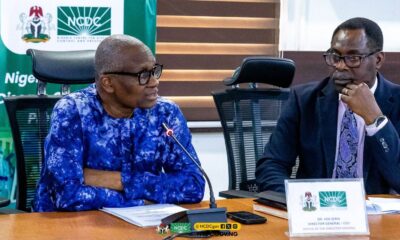
According to the Nigeria Centre for Disease Control and Prevention (NCDC), 54 contacts linked to the Nigerian case had been traced and were under follow-up as of 26 October.
Africa’s response
Mr Kaseya said the scale of the outbreak requires countries across the continent to strengthen preparedness even where no active cases have been detected.
He said the meeting brought together more than 40 African health ministers and that countries agreed to work together on surveillance, preparedness and cross-border coordination.
He also highlighted the economic and social consequences of the 2014-2016 West Africa Ebola outbreak, saying about five million children were kept out of school, about 23,000 children lost their parents and nearly $3 billion in gross domestic product was lost.
“We already know what an uncontrolled Ebola outbreak costs,” he said. “The data is hard to hear, but it is also our best chance to change course.”
READ ALSO: Ebola: Survivors can transmit virus through sex, but not sweat or saliva – WHO
WHO has advised against restrictions on travel to or trade with affected countries, while emphasising continued surveillance and preparedness because of the risk of cross-border transmission.
Nigeria’s case has also raised questions about how the virus is moving across the region. Genomic sequencing showed that the virus detected in Nigeria is closely related to the strain identified in Kenya, with the two samples differing by a single mutation, according to the Coordinating Minister of Health and Social Welfare, Muhammad Pate.
However, Mr Pate said the finding does not establish a direct epidemiological link between Nigeria’s case and Kenya’s first confirmed case. Further investigation is needed to determine how the virus reached Nigeria.
Discover more from Premium Times Nigeria
Subscribe to get the latest posts sent to your email.
The Independent National Electoral Commission, INEC, has dismissed a petition filed by Ladi Adebutu, the Peoples Democratic Party, PDP, governorship hopeful in Ogun State, over his exclusion from the list of candidates for the 2027 elections.
DAILY POST gathered that the commission took the decision at its meeting on Thursday, where it considered complaints from political parties and candidates omitted from the published list.
While Adebutu failed to secure a reprieve, former Minister of Communications and Digital Economy Isa Ali Pantami and Abdulsalam Gwarzo, the Nigeria Democratic Congress, NDC, governorship candidate in Kano State, were cleared to contest, pending the determination of court cases.
A top INEC source said the commission received 69 petitions concerning the omission of governorship and State House of Assembly candidates, with about 36 succeeding.
According to the source, Pantami was cleared outrightly, while Gwarzo’s clearance was conditional on the outcome of litigation instituted over his exclusion.
Adebutu, however, was unsuccessful.
“The Ogun PDP candidate did not succeed,” the source said, confirming that his name would not be restored to the list.
The development is linked to INEC’s enforcement of Section 77(5)–(7) of the Electoral Act 2026, which mandates political parties to submit their membership registers.
The commission’s position was strengthened by a Supreme Court judgement delivered on September 24, 2026, which upheld the provision as constitutional.
It was learnt that Gwarzo, in a suit filed on October 20, 2026, asked the court to declare his exclusion and that of his running mate, Rabiu Mustapha, unlawful and compel INEC to recognise them as the NDC’s governorship candidates in Kano State.
Pantami’s case is also before the court, with a hearing expected on Friday.
Adebutu had argued that he was a bona fide member of the PDP and had complied with all membership registration requirements.
2027: INEC throws out Adebutu’s petition as Pantami, Kano NDC candidate make list
-
News3 days ago
Poor AI data pipelines could fuel cyber exploitation in Nigeria, regulator warns – Technology Times
-

 Health3 days ago
Ebola: ₦100,000 weekly allowance for quarantined contacts was unplanned
-
News2 days ago
Frontier AI labs say their models refuted the Exponential Time Hypothesis. What does that mean?
-
News4 days ago
The best apps for tracking your reading and discovering new books