News
Airtel pushes telecoms as economic pillar, seals IMBIL MVNO Deal in Nigeria – Technology Times


Airtel Africa has called on governments across the continent to elevate telecoms from a supporting industry to a central pillar of economic policy as its Nigerian subsidiary deepens market expansion through a new commercial partnership with IMBIL Telecom Solutions Ltd to accelerate Mobile Virtual Network Operator (MVNO) growth.
The dual developments, policy advocacy at the continental level and market expansion at the national level, underscore a coordinated push by industry stakeholders to reposition telecoms as both a driver of digital inclusion and a catalyst for economic transformation.
At the policy front, Airtel Africa is urging governments to rethink their approach to connectivity, arguing that telecommunications infrastructure must be treated with the same urgency and priority as other critical national assets.


Despite significant progress in network expansion, Mukadi highlighted a persistent and widening usage gap across Africa. While mobile networks now cover approximately 95% of the continent’s population, nearly 75% of Africans remain offline. This paradox, he noted, points to structural barriers that go beyond infrastructure deployment.
Airtel links telecoms policy reform to economic growth
Speaking at the inaugural edition of the États Généraux du Secteur des Postes et Télécommunications in Kinshasa, the Democratic Republic of Congo, Daddy Bujitu Mukadi, Airtel Africa’s Chief Regulatory Officer and GSMA Africa Group Policy Chair, describes telecoms as foundational to Africa’s economic future.
The event, which was attended by President Félix Tshisekedi of Congo, provided a high-level platform for re-evaluating the role of digital infrastructure in national development strategies across the continent.
According to Mukadi, telecommunications should no longer be seen as a secondary enabler of economic activity but rather as the “infrastructure of infrastructures,” with digital technology functioning as the lifeblood of modern economies. His position reflects a growing consensus within the industry that connectivity is now as critical as power, transportation, and financial systems in driving productivity, innovation, and inclusion.
“Telecoms can no longer be treated as a mere support sector,” Mukadi said. “It must be seen as foundational, with digital technology as the blood.”
Despite significant progress in network expansion, Mukadi highlighted a persistent and widening usage gap across Africa. While mobile networks now cover approximately 95% of the continent’s population, nearly 75% of Africans remain offline. This paradox, he noted, points to structural barriers that go beyond infrastructure deployment.
Top among these barriers is device affordability. According to Airtel Africa’s assessment, the high cost of entry-level smartphones continues to exclude millions from participating in the digital economy, even where network coverage exists.
To address this, Mukadi proposed a targeted fiscal intervention: a two-to-three-year exemption on import duties and taxes for entry-level smartphones priced between $40 and $150. He also called for a three-year removal of import duties on telecommunications equipment to reduce the cost of network expansion and improve service reach.
“These measures could reduce handset prices by up to 50% and help bridge the continent’s usage gap,” he said, noting that the proposals have already received backing from six of Africa’s largest mobile operators during industry discussions at Mobile World Congress Kigali 2025.
The policy recommendations reflect a broader industry push for regulatory alignment and government partnership, particularly in addressing the cost structures that continue to limit both access and adoption. By lowering barriers to entry for consumers and operators alike, telecoms companies argue that governments can unlock new waves of digital participation, with downstream effects on education, healthcare, financial inclusion, and entrepreneurship.
While Airtel Africa’s advocacy sets the tone at the continental level, its Nigerian operations are simultaneously advancing market-level innovation through a strategic commercial agreement with IMBIL Telecom, a pioneer Mobile Virtual Network Enabler (MVNE) in Nigeria.


The collaboration has already yielded measurable outcomes. IMBIL Telecom disclosed that it has successfully onboarded five MVNOs onto its platform, with several additional operators currently in advanced stages of technical and commercial integration. These operators are expected to commence services in the coming months, signaling a gradual but steady expansion of Nigeria’s telecom value chain.
Airtel Nigeria-IMBIL Telecom deal onboards five MVNOs in Nigeria
Announced in Lagos, the partnership represents a significant milestone in the evolution of Nigeria’s telecoms market, particularly in the emerging MVNO segment. Under the agreement, IMBIL Telecom will leverage Airtel Nigeria’s network infrastructure to support the rollout and scaling of MVNO services, effectively lowering entry barriers for new telecom service providers.
The collaboration has already yielded measurable outcomes. IMBIL Telecom disclosed that it has successfully onboarded five MVNOs onto its platform, with several additional operators currently in advanced stages of technical and commercial integration. These operators are expected to commence services in the coming months, signaling a gradual but steady expansion of Nigeria’s telecom value chain.
Speaking on the development, Akeem Ogunkoya, Chairman and Chief Executive Officer of IMBIL Telecom, described the agreement as a foundational step in enabling a more competitive and inclusive telecoms market.
“As the pioneer MVNE in the Nigerian telecom market, our mission is to lower the barrier to entry for aspiring telecom operators,” Ogunkoya said in a company statement. “Our partnership with Airtel Nigeria provides a solid foundation for MVNOs to thrive by leveraging world-class infrastructure and scalable technology.”
He added that the onboarding of five MVNOs demonstrates both market readiness and the effectiveness of the MVNE model in supporting new entrants. “We are encouraged by the strong pipeline of operators preparing to enter the market,” he said.
The MVNE framework plays a critical role in this ecosystem by providing the technical backbone required for MVNO operations. IMBIL Telecom’s platform offers end-to-end capabilities, including core network services, subscriber provisioning, billing systems, regulatory compliance support, and value-added services. This allows MVNOs to focus on customer acquisition, branding, and service differentiation, rather than heavy capital investment in infrastructure.
Industry analysts view this model as a key driver of innovation and competition, particularly in markets like Nigeria where telecoms penetration is high but service differentiation remains limited. By enabling niche operators to target specific customer segments, such as underserved communities, enterprise clients, or digital-first consumers, MVNOs can introduce new pricing models, service bundles, and customer experiences.
The partnership also aligns with regulatory efforts by the Nigerian Communications Commission to liberalise the telecoms market and promote competition. The NCC’s MVNO licensing framework, introduced to deepen market participation, has created new opportunities for both local and international players to enter Nigeria’s telecoms space without the need to build extensive infrastructure.
Ogunkoya acknowledged the role of the regulator in enabling this progress, noting that “the Nigerian Communications Commission has created a forward-looking regulatory environment that supports MVNO growth, innovation, and fair competition.”
Beyond market expansion, the Airtel–IMBIL collaboration reflects a shared objective to deepen digital inclusion across Nigeria. By expanding service offerings and improving accessibility, the partnership is expected to contribute to broader national goals around connectivity, financial inclusion, and digital transformation.
This dual-track strategy, policy advocacy and market execution, illustrates how telecoms operators are positioning themselves at the intersection of infrastructure, innovation, and economic development. On one hand, Airtel Africa is engaging governments to reshape policy frameworks in favour of affordability and access. On the other, its Nigerian subsidiary is actively enabling new business models that can extend the reach and impact of telecom services.
The convergence of these efforts is particularly significant at a time when digital economies across Africa are gaining momentum. As governments seek to diversify revenue sources, improve service delivery, and enhance competitiveness, telecommunications infrastructure is increasingly seen as a foundational layer for achieving these objectives.
However, the success of this vision will depend on sustained collaboration between public and private sector stakeholders. Industry leaders argue that without supportive policies, particularly around taxation, spectrum management, and infrastructure protection, the full potential of telecom-driven growth may remain constrained.
Mukadi’s call for tax exemptions on devices and equipment is therefore not just a cost-reduction measure but a strategic intervention aimed at accelerating digital adoption at scale. Similarly, initiatives like the Airtel–IMBIL partnership demonstrate how private sector innovation can complement policy reforms by translating strategic intent into tangible market outcomes.
For Nigeria, the emergence of MVNOs represents a new phase in telecoms market development. While the country has one of the largest telecoms markets in Africa, the introduction of MVNOs is expected to enhance service diversity, improve customer experience, and stimulate competitive pricing.
Stay ahead with real-time reports, breaking news, and exclusive insights delivered directly to your phone. Don’t settle for outdated information. Join TECHNOLOGYTIMES NEWS on WhatsApp for 24/7 updates.
Join Our Whatsapp Channel


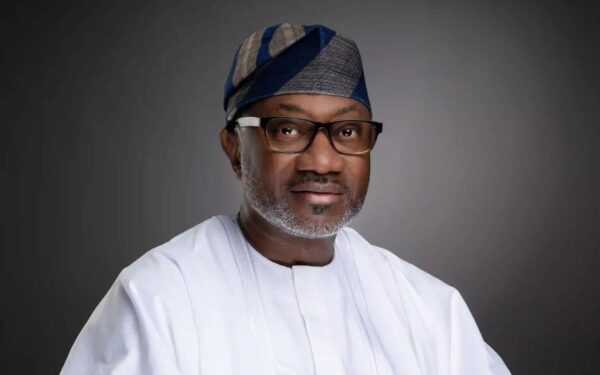
Femi Otedola, the chairman of First HoldCo Plc, has revealed that he shared a bunk bed with Lagos State Deputy Governor Obafemi Hamzat during their boarding school days 49 years ago.
Mr Otedola disclosed this in a post on X after hosting a dinner in honour of his longtime schoolmate, Mr Hamzat, attended by Aliko Dangote, the president of Dangote Group, and Abdulsamad Rabiu, the chairman of BUA Group.
The business tycoon said Mr Hamzat’s character has been defined over the years by honesty, sincerity, fairness, and strong moral principles.
“Yesterday, I hosted dinner in honour of @DrObafemiHamzat, the incoming Governor of Lagos State,” Mr Otedola said.
“A man of the highest integrity, with whom I shared a bunk bed at boarding school 49 years ago,” he added.
Mr Otedola stated that his longstanding relationship with Mr Hamzat has given him insight into the deputy governor’s character and values.


“My experience of his character over the years has been defined by his honesty, sincerity, fairness and strong moral principles,” Mr Otedola said.
READ ALSO: Tinubu’s reforms have put Nigerian economy on path of sustainable growth – Otedola
He, however, did not disclose the name of the boarding school he attended with the Lagos State deputy governor.
The billionaire investor has interests in financial services and oil & gas. He holds about 27.7 per cent of First HoldCo’s shares, following months of steadily increasing his stake in the banking group.
Mr Hamzat is seeking to contest the 2027 governorship election in Lagos State on the platform of the All Progressives Congress (APC), and has served as deputy governor under incumbent Governor Babajide Sanwo-Olu since 2019.
He emerged as the APC governorship candidate in May 2026.
Mr Hamzat served as Lagos State Commissioner for Science and Technology and later as Commissioner for Works and Infrastructure from 2005 to 2015.
Discover more from Premium Times Nigeria
Subscribe to get the latest posts sent to your email.

-
News2 days ago
NUCAP: Nigeria targets 20 million people with 3,700 telecom towers – Technology Times
-

 News3 days ago
Gunmen storm Plateau mining site, kill two persons
-
News3 days ago
Nigeria needs stronger collaboration ‘to shape internet governance’ – Technology Times
-
News1 day ago
Euromatch NPFL: Matchday 9 results