News
Nigeria adopts 112 as national emergency number to unify response system – Technology Times

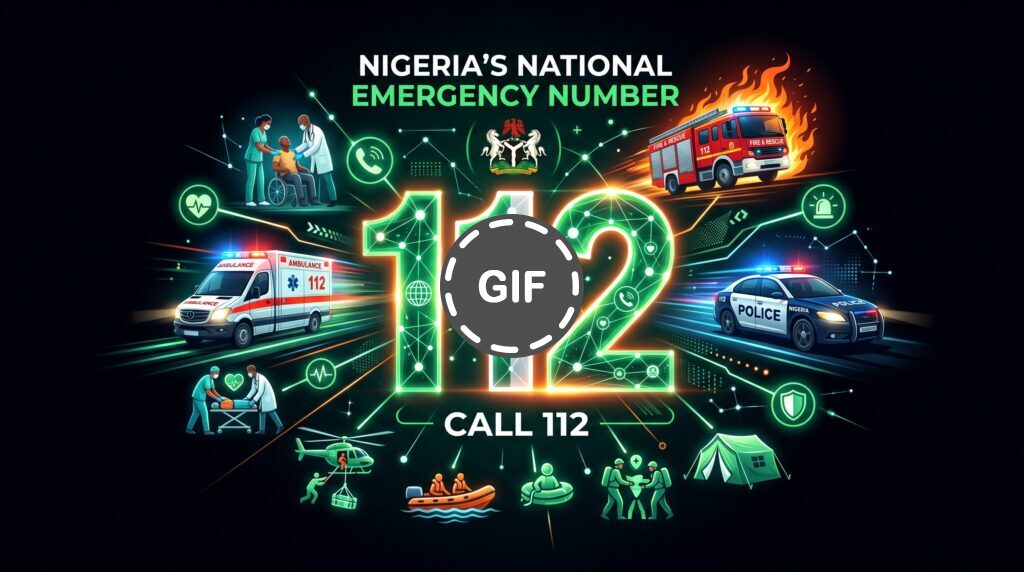
The National Economic Council has approved the adoption of 112 as Nigeria’s national emergency number, marking a major policy shift to establish a unified and coordinated emergency response system nationwide.
The decision was taken at the Council’s 157th meeting, held virtually and chaired by Vice President Kashim Shettima, who says the reform is a critical test of governance and public trust during emergencies.
“This is not only a technical reform. It is a test of the state’s humanity,” Shettima says. “In moments of fire, accident, robbery, medical emergency, flood, violence, or panic, citizens do not need bureaucracy. They need response.”


“This is not only a technical reform. It is a test of the state’s humanity,” Shettima says. “In moments of fire, accident, robbery, medical emergency, flood, violence, or panic, citizens do not need bureaucracy. They need response.”
112 move to eliminate fragmented emergency systems
Under the new framework, 112 will serve as a single, nationwide access point for emergency services, replacing the current patchwork of hotlines that often delay response times.
The Council says the unified system is designed to eliminate inefficiencies caused by fragmented emergency numbers and bureaucratic bottlenecks that hinder timely intervention in life-threatening situations.
To drive implementation, NEC approves the establishment of a multi-agency committee, jointly led by the Office of the Vice President and the Nigerian Communications Commission, to oversee nationwide rollout and coordination.
Nigeria’s adoption of 112 builds on earlier initiatives rather than introducing a completely new system.
The Nigerian Communications Commission first introduced the toll-free emergency number between 2019 and 2020, alongside the deployment of Emergency Communication Centres (ECCs) across several states.
These centres were designed to receive distress calls and route them to relevant agencies, including police, fire services, and medical responders, using a universal short code accessible across mobile networks.
At the time, the NCC describes 112 as a “universal, toll-free emergency telephone short code” intended to connect citizens to the nearest response agency for faster intervention.
The system also forms part of broader efforts to strengthen emergency healthcare coordination, including integration with the National Emergency Medical Service and Ambulance System, which aims to improve emergency medical response and reduce mortality rates.
Despite its initial rollout, the 112 system has faced persistent challenges, including uneven nationwide coverage, limited public awareness, and weak coordination among responding agencies.
Emergency Communication Centres exist in multiple states, but operational effectiveness has varied due to infrastructure gaps and inconsistent standard operating procedures.
NEC acknowledges these limitations, noting that Nigeria’s challenge lies less in the absence of systems and more in the lack of coordination and enforcement.
112 alignment with global standards
The move to standardise 112 aligns Nigeria with global emergency response frameworks, where a single number connects citizens to multiple services.
In the United States, the 911 system provides nationwide emergency access, while 112 serves a similar function across Europe as a GSM-standard emergency number.
The 112 system is designed to function across mobile networks and, in some cases, can be accessed even with limited connectivity, making it suitable for broad national deployment.
NEC’s decision signals a shift in focus from infrastructure deployment to governance, coordination, and accountability.
The Vice President notes that Nigeria is “not beginning from zero,” but must now prioritise institutional ownership, standardisation, and public trust.
The multi-agency framework led by the Nigerian Communications Commission is expected to coordinate federal and state actors, ensuring that emergency calls are properly routed and acted upon without delay.
What 112 emergency system means for Nigerians
If fully implemented, the unified emergency number is expected to deliver several benefits for citizens:
- A single national emergency line replacing multiple numbers
- Faster routing of calls to the nearest response agencies
- Improved coordination across security, health, and disaster management services
- Strengthened nationwide emergency preparedness
NEC emphasises that the success of the system will depend not only on technology, but also on public awareness and inter-agency discipline.
As Nigeria advances its digital public infrastructure, the adoption of 112 signals an effort to build a more responsive and reliable emergency system, where citizens can access help quickly and efficiently in critical moments.
Stay ahead with real-time reports, breaking news, and exclusive insights delivered directly to your phone. Don’t settle for outdated information. Join TECHNOLOGYTIMES NEWS on WhatsApp for 24/7 updates.
Join Our Whatsapp Channel


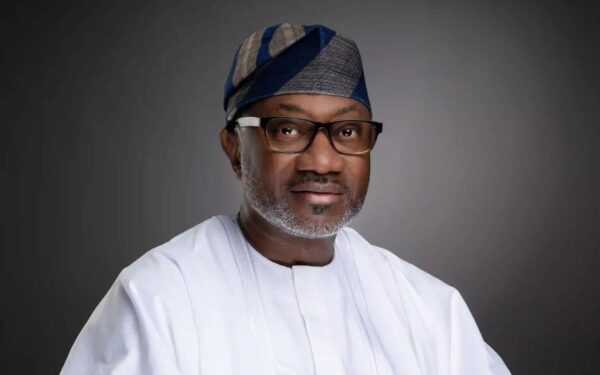
Femi Otedola, the chairman of First HoldCo Plc, has revealed that he shared a bunk bed with Lagos State Deputy Governor Obafemi Hamzat during their boarding school days 49 years ago.
Mr Otedola disclosed this in a post on X after hosting a dinner in honour of his longtime schoolmate, Mr Hamzat, attended by Aliko Dangote, the president of Dangote Group, and Abdulsamad Rabiu, the chairman of BUA Group.
The business tycoon said Mr Hamzat’s character has been defined over the years by honesty, sincerity, fairness, and strong moral principles.
“Yesterday, I hosted dinner in honour of @DrObafemiHamzat, the incoming Governor of Lagos State,” Mr Otedola said.
“A man of the highest integrity, with whom I shared a bunk bed at boarding school 49 years ago,” he added.
Mr Otedola stated that his longstanding relationship with Mr Hamzat has given him insight into the deputy governor’s character and values.


“My experience of his character over the years has been defined by his honesty, sincerity, fairness and strong moral principles,” Mr Otedola said.
READ ALSO: Tinubu’s reforms have put Nigerian economy on path of sustainable growth – Otedola
He, however, did not disclose the name of the boarding school he attended with the Lagos State deputy governor.
The billionaire investor has interests in financial services and oil & gas. He holds about 27.7 per cent of First HoldCo’s shares, following months of steadily increasing his stake in the banking group.
Mr Hamzat is seeking to contest the 2027 governorship election in Lagos State on the platform of the All Progressives Congress (APC), and has served as deputy governor under incumbent Governor Babajide Sanwo-Olu since 2019.
He emerged as the APC governorship candidate in May 2026.
Mr Hamzat served as Lagos State Commissioner for Science and Technology and later as Commissioner for Works and Infrastructure from 2005 to 2015.
Discover more from Premium Times Nigeria
Subscribe to get the latest posts sent to your email.

-
News2 days ago
NUCAP: Nigeria targets 20 million people with 3,700 telecom towers – Technology Times
-

 News3 days ago
Gunmen storm Plateau mining site, kill two persons
-
News3 days ago
Nigeria needs stronger collaboration ‘to shape internet governance’ – Technology Times
-
News1 day ago
Euromatch NPFL: Matchday 9 results