Connect with us

News

Why the PDP in Plateau state may be in danger of losing its seats – Comrade Iliya

editor

Published

on

Plateau PDP

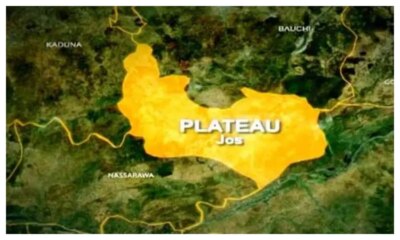
The Chairman of the Rescue Monitoring Team in Plateau state, Comrade Iliya Mark (JP) has insisted that the Peoples Democratic Party in Plateau State may be on the verge of losing all its recently won political seats from the 2023 General Elections.

Comrade Iliya Mark described the scenario in Plateau state as similar to that of Zamfara State where all Candidates that won Elections under the APC were declared ineligible because of the fact that the process that brought them up to contest was said to be faulty. The PDP on that occasion was the major beneficiary.

He stated that in a similar fashion, all PDP Candidates in Plateau state who won Elections and those who lost may be declared ineligible to have contested the 2023 Elections in the first place as such, the APC will then become the major beneficiaries.

He stated that the Plateau PDP’s perpetual disobedience of the Orders of Court may be their undoing as a Political Disaster of monumental proportions looms very large on the Plateau.

The Statement from Comrade Iliya Mark (JP), further reads: 

SUPREME COURT RULING: PLATEAU PDP ON THE VERGE OF LOSING SEATS AS ANOTHER ZAMFARA SCENERIO LOOMS

The just concluded General Elections in Plateau State came with a lot of surprises for both the ruling APC, its main challenger, the opposition Peoples Democratic Party (PDP) and others such as the Labour Party who put up a strong fight for power.

From the Presidential and National Assembly Elections held on the 25th February 2023 to the Governorship and House of Assembly Elections held on March 18th 2023, winners have been announced while jubilations and protests have greeted the pronouncements by INEC.

As expected, those who lost are already heading to the Election Petition Tribunals raising various grievances on the conduct of the Elections. For Candidates of the PDP who were declared winners in the Elections from Governorship, National and State Assembly, their victory appears to be standing on shaky ground owing to the weight of the Petitions being filed by the APC and other Parties at the Tribunals. Apart from the issues of alleged Election malpractices, the question of validity of nominations of Candidates by the PDP for the Election seems to be looming large and may be the Game changer at the Tribunals.

BACKGROUND
What started as a small fire or what politicians will call a “family affair” might be the albatross of the PDP in Plateau State possibly leading to the Zamfara State Scenario where all Candidates that won Elections under the APC were declared ineligible because of the fact that the process that brought them up to contest was said to be faulty. The PDP on that occasion was the major beneficiary.
For the Plateau PDP situation, the trouble started sometime in 2020 when they conducted their disputed State Congress Elections that saw the emergence of the Hon. Chris Hassan-led State Exco. The Exco believed to be supported by former Governor Jonah Jang was rejected by the Jeremiah Useni Camp of the PDP which vehemently cried out that the conduct of the Congress Elections did not follow the Constitution, the Electoral Act and the Guidelines of the Party.
To register their grievances, Hon. Bitrus Kaze and other members of the PDP instituted an action against the Party at the High Court of Plateau State in Jos (Re: SUIT NO: PLD/J304/2020 BETWEEN: BITRUS B. KAZE & 11 ORS V. PEOPLES DEMOCRATIC PARTY & 24 ORS) where they sought the court to order for the proper conduct of another election for the Executive Committee in line with the provisions of the 1999 Constitution, the Electoral Act and the PDP Constitution.

Having listened to the arguments, Hon. Justice S. P. Gang made an order, to wit:
“directing the 1st Defendant to take all steps, actions to conduct election for the PDP Executive Committee Members for Plateau State in accordance with the combined provisions of Section 223 (1) (a) of the Constitution of the Federal Republic of Nigeria, 1999 (as amended) and Section 85 (3) of the Electoral Act (2010) (as amended), Article 49 (1) of the Constitution of the People’s Democratic Party and Paragraphs 5.2 -5.5 of the Guidelines for the conduct of Ward, LGA, State, Zonal Congresses and the National Convention of the People’s Democratic Party.”

EXCLUSION OF PDP FROM PLATEAU LOCAL GOVERNMENT ELECTIONS
Rather than comply with the Order of Hon. Justice S.P Gang, the PDP went back to compose a so-called “Caretaker Committee” which went ahead to nominate Candidates for the Local Government Elections held on 9th October 2021. Again, Hon. Bitrus Kaze & 11 others petitioned the Plateau State Independent Electoral Commission (PLASIEC) asking it not to accept any list of candidates from the so-called Caretaker Committee because the Order of Hon. Justice S.P. Gang was not complied with.

The PDP upon being turned down by PLASIEC, rather than retrace its steps and obey the Court Order, decided to approached another Plateau State High Court to compel PLASIEC to accept their Candidates for the Elections. Hon. Justice Ishaku Kunda who heard the case again affirmed the position of Justice Gang, concluding that the PDP was in contempt of Court by refusing to obey the Order of Justice Gang.

With the Local Government elections fast approaching, the PDP quickly rushed to the Court of Appeal Jos Division seeking orders of Injunction to stop the Elections until their case is heard to enable them participate. The Court of Appeal not only refused the Prayers, but the PDP lost the Appeal as the Court of Appeal affirmed the two High Court judgments by Justice S.P Gang and Hon. Justice Ishaku Kunda. Due to their failure to comply with the initial order, the PDP was excluded from participating in the Local Government Elections in Plateau State which saw the APC clinching all the 17 Local Government Chairmanship and 325 Counsellorship seats.

Dissatisfied with the judgment of the Court of Appeal, the PDP headed to the Supreme Court against PLASIEC seeking to set aside the Judgment of the Court of Appeal.

JOS NORTH/BASSA HOUSE OF REPS BYE –ELECTION
Shortly after the Local Government Elections in Plateau State, INEC set the date for the bye-Election to fill the vacant seat for Jos North/Bassa Federal Constituency after the death of Hon. Haruna Maitala. Again, the PDP under the leadership of its disputed Chairman Hon. Chris Hassan conducted Primary Elections for aspirants where a then serving member of the Plateau State House of Assembly Hon. Musa Avia Agah emerged its flag bearer. This happened without the PDP going back to remedy its problem of not constituting a valid Executive Council in the State. INEC nevertheless went ahead with the Election in which PDP’s Musa Agah was declared Winner.

Not satisfied with the outcome, Adamu Muhammad Alkali of the PRP (popularly known as Dan London) who came second went to the Tribunal and canvassed among other things the fact that based on the Judgments of their Lordships Justice S.P. Gang and Justice I. Kunda, as well as that of the Appeal Court Jos Division, the PDP lacked the capacity to nominate Musa Agah for the Election in the first place. The Tribunal agreed with him and annulled the Election of Musa Agah. Hon. Agah appealed and lost at the Court of Appeal which is the final court to determine post-Election matters of the National Assembly as well as State Houses of Assembly.

PDP NATIONAL HEADQUARTERS & CONDUCT OF PLATEAU PRIMARIES FOR 2023.

For the PDP, the situation continued to deteriorate heading towards the 2023 General Elections. Time was no longer on its side having failed to cure itself of the ills that led to its being shut out of the Local Government Elections and losing the Jos North/Bassa House of Representatives seat they earlier won. Again, rather than go back to conduct proper Elections for its State EXCO, the PDP National Headquarters sent another “Caretaker Committee” under the leadership of the North Central Vice-Chairman Hon.Dakas Shan that came and conducted the Primaries for all the Candidates who contested recent 2023 Elections on the platform of the PDP in the State.

QUESTIONS, QUESTIONS AND MORE QUESTIONS!

But the questions many have asked are: where did the PDP NWC derive such powers to post a delegation not to “supervise” but “conduct” primaries for aspirants in the State? Have they now replaced the State EXCO which the Court Ordered to be properly constituted? Did the coming of the Hon. Dakas Shan delegation change anything on the ground as per the judgments of the High Court and Court of Appeal? Who eventually submitted the list of PDP Plateau State Candidates since only the State Chairman and Secretary are empowered by law to submit list of nominated Candidates to the National Headquarters and INEC? Who submitted the list of Party Agents for the PDP during the last General Elections? Was it Dakas Shan or Chris Hassan? Why did the Plateau PDP not participate at the National Convention which saw the emergence of Senator Iyorchia Ayu-led NWC ? Did they also participate in the Presidential Primaries where Alh. Atiku Abubakar emerged? Were the Court Orders earlier issued against PDP Plateau State Chapter or PDP National Body since there is just one registered PDP in the eyes of the Law? Several renowned Legal Experts agreed that it made no difference that it was a PDP National Delegation that came and conducted the Primary Elections for the Candidates that contested in the recent General Elections. There is a Consensus of Legal opinion that if the PDP National had any role as such, it should have been to come to correct the error by conducting EXCO Elections as ordered by the Court, not to come and conduct Primary Elections for aspirants!

PDP’S APPEAL AT THE SUPREME COURT
The PDP and its Elected Candidates’ last hope was hinged on the slim possibility that the Supreme Court would at least consider their Appeal in SC/CV/1341/2022, PEOPLES’S DEMOCRATIC PARTY VS PLATEAU STATE INDEPENDENT ELECTORAL COMMISSION and reverse the Judgments of the Plateau State High Courts and the one by Court of Appeal Jos Division all of which found and held that the Party not only lacked a competent Exco in Plateau State but was in contempt of Court Orders. However, because they failed to file their Appellant’s Brief within time and were lackadaisical about the prosecution of the Appeal, the Supreme Court, on 7th December 2022 dismissed the Appeal for want of diligent prosecution, pursuant to Order 6 Rule 3 (2) of the Rules of that Court! The Appeal was among the 50 Civil Appeals and 6 Political Appeals that were disposed of.

CONCLUSION

Going by this development, the predicament of the PDP in Plateau State could best be described as self-inflicted and a very bad one because a judgment or order of Court remains valid and subsisting until same is set aside by a Court of competent jurisdiction. In the case at hand, the Order of Hon. Justice S.P. Gang of the High Court of Plateau State remains valid, subsisting and binding on PDP until same is set aside.

Moreover, the affirmation of the same judgment by Hon. Justice I. Kunda and the Court of Appeal Jos Division also remains valid with no hope of being set aside since the PDP’s appeal at the Supreme Court was dismissed in 7th December, 2022 which legally means the matter has been put to rest.

As the Election Petition Tribunals begin sitting to hear Cases brought before them, the Zamfara State scenario may just be loading in Plateau State where all PDP Candidates who won Elections and those who lost may be declared ineligible to have contested the 2023 Elections in the first place. PDP’s perpetual disobedience of the Orders of Court may be their undoing as Political Disaster of monumental proportions looms very large on the Plateau.

Continue Reading
1 Comment

1 Comment

  1. Richard kauna

    Richard kauna

    March 28, 2023 at 1:27 pm

    I pray so

Leave a Reply

Your email address will not be published. Required fields are marked *

Business

Africa records hydropower growth but Nigeria still suffers power shortages — Report

info

Published

on

By

Whats the Difference Between Distribution Transmission Power Lines.png

MTN ADVERT

Africa added more than 4,200 megawatts (MW) of new hydropower capacity in 2025, making it a fast growing region for hydropower development globally, according to a new report released by the International Hydropower Association (IHA).

The report, 2026 World Hydropower Outlook, said the continent commissioned 4,297 MW of new hydropower capacity during the year, the second consecutive year that additions exceeded 4,000 MW.

The growth was driven largely by the completion of mega projects in Ethiopia and Tanzania, even as more than 90 per cent of Africa’s hydropower potential remains untapped.

The findings come as Nigeria continues to grapple with chronic power shortages, frequent grid collapses and one of the world’s largest electricity access deficits despite possessing significant hydropower resources.

Malcolm Turnbull, president of the International Hydropower Association, said countries are increasingly turning to hydropower and energy storage solutions as they seek reliable electricity supplies amid growing dependence on renewable energy and rising geopolitical uncertainties.

PT WHATSAPP CHANNEL

“As electricity systems become more dependent on variable renewables, and geopolitical tensions make reliance on imports more challenging, countries are increasingly recognising the importance of flexibility, long-duration storage and resilient domestic generation. Hydropower and pumped storage are uniquely positioned to provide these services at scale,” he said.

Ethiopia, Tanzania lead Africa’s growth

According to the report, Ethiopia fully inaugurated the 5,000 MW Grand Ethiopian Renaissance Dam (GERD) in 2025, making it the largest power station in Africa.

Tanzania also completed the Julius Nyerere Hydropower Project, a development the report said has substantially reduced the country’s dependence on diesel-powered electricity generation.

The report noted that Africa’s hydropower expansion places the continent at the forefront of global growth in conventional hydropower development.

However, it warned that progress remains far below potential.

“Despite progress, only around 10% of Africa’s hydropower potential has been realised, representing one of the most significant development opportunities in the world, with direct implications for electrification, industrial growth and energy security across a continent growing at twice the global average,” the report stated.

Most projects, it said, remain stalled by financing difficulties, regulatory bottlenecks and delays in securing approvals.

The report also identified weak transmission infrastructure and fragmented electricity networks as major barriers preventing power generated from reaching consumers efficiently.

Nigeria’s modest progress

Nigeria received only a brief mention in the report, which highlighted the rehabilitation of the Kainji Hydroelectric Power Station.

According to the report, the upgrade added 80 MW to the facility, increasing its installed capacity to 600 MW.

The modest increase contrasts sharply with the scale of new investments seen elsewhere on the continent.

Hydropower remains a critical component of Nigeria’s electricity supply. The Kainji, Jebba and Shiroro hydroelectric plants together account for a significant share of power delivered to the national grid.

Yet electricity supply remains inadequate for Africa’s most populous nation.

Data from the Nigerian Electricity Regulatory Commission (NERC) show that while Nigeria’s installed generation capacity exceeds 14,000 MW, actual available generation is significantly lower because of gas constraints, transmission limitations, ageing infrastructure and operational challenges.

The country has also experienced multiple national grid collapses in recent years, highlighting long-standing weaknesses in the electricity value chain.

Energy access challenge

The report arrives at a time when Nigeria is seeking to expand electricity access and reduce dependence on self-generated power.

According to the World Bank, about 86 million Nigerians lack access to electricity, giving the country the largest electricity access deficit in the world.

Businesses and households spend billions of naira annually on diesel and petrol generators to compensate for unreliable grid supply, a situation that raises production costs and constrains economic growth.

Although the 700 MW Zungeru Hydropower Plant has begun contributing electricity to the grid, several proposed hydropower projects across the country have faced delays linked to funding, environmental concerns and implementation challenges.

The IHA report suggests that while Africa is witnessing a resurgence in hydropower development, countries such as Nigeria will require significant investments in generation, transmission and energy storage infrastructure to fully benefit from the continent’s vast renewable energy potential.


Continue Reading

News

Walmart-backed Flipkart expands quick-commerce push as Amazon ramps up in India

info

Published

on

By

Flipkart.jpg

As quick commerce becomes India’s next e-commerce battleground, Walmart-backed Flipkart said Wednesday that its Minutes service has built a network of 1,000 micro-fulfillment centers — small, strategically located warehouses designed to enable deliveries in minutes — less than two years after launch, a milestone Amazon is also targeting as it expands its fast-delivery business in the South Asian nation.

Flipkart said it plans to expand the network to 1,500 micro-fulfillment centers by the end of 2026, a rapid buildout that would further strengthen its position in India’s fiercely competitive quick-commerce sector, where Blinkit, Zepto, Swiggy Instamart, and Amazon are racing to add infrastructure and customers.

Based on current store counts and announced expansion plans, Flipkart could emerge as India’s second-largest quick-commerce network by micro-fulfillment center count, behind Blinkit, which operates 2,243 such centers, according to a recent note by Jefferies. Rivals Zepto and Swiggy Instamart are also expanding their networks.

India has emerged as one of the world’s fastest-growing quick-commerce markets, with companies racing to build networks that can deliver everything from groceries and beauty products to electronics in minutes. Blinkit, owned by food-delivery company Eternal, remains the market leader, while Zepto, Swiggy Instamart, Flipkart, and Amazon are investing heavily to expand their reach and win customers.

The competition has intensified in recent months as Amazon accelerates the rollout of Amazon Now, which is currently available in more than 15 cities and operates over 500 micro-fulfillment centers. The company plans to expand the service to 100 cities with more than 1,000 micro-fulfillment centers while broadening its assortment beyond groceries into categories such as apparel, electronics, and home products.

The shift is also showing up in shopping patterns on Flipkart Minutes, which launched in August 2024. Demand is increasingly coming from categories such as electronics, beauty, and personal care products rather than just groceries, Kunal Gupta, head of Flipkart Minutes, told TechCrunch. Orders on the platform have grown about 400% from a year earlier, while customer retention has increased 20% year-over-year, he said. Both figures come from the company and could not be independently verified.

“What began as a way to fulfill everyday essentials has evolved into a fundamentally new shopping habit for millions of Indians,” Gupta said. “Customers are not just ordering more; they are ordering differently.”

Flipkart said it has expanded Minutes to more than 130 cities and 8,000 postal codes, with growth increasingly coming from smaller cities beyond India’s largest metropolitan areas. Those markets recorded more than 4,000% growth from a year earlier, aided by expansion into 90 new cities, according to the company.

The trend, Gupta said, is visible in the pace at which newly launched markets are maturing. He cited cities such as Patna, Guwahati, and Siliguri as examples of where new stores are ramping up faster than expected, and described Lucknow as one of Flipkart Minutes’ best-performing markets despite the company not yet covering the entire city with its network.

Amazon is also betting on demand outside India’s largest cities. The company told TechCrunch that 70% of new Prime members come from smaller markets and that it remains on track to double its Prime membership base from 2023 levels by year-end. Amazon added that everyday essentials now account for one in every two units shipped on Amazon.in, with Amazon Now increasing shopping frequency among customers.

Gupta told TechCrunch that Flipkart is seeing customers use Minutes alongside its main e-commerce platform rather than as a replacement for it, driving more frequent purchases and helping expand into categories such as fresh produce and daily essentials. The company said average order values for fruits and vegetables rose 30% year-over-year.

Flipkart, Gupta said, plans to continue opening between 75 and 100 micro-fulfillment centers a month while expanding into additional cities across the country.

The rapid expansion by Flipkart and Amazon underscores how India has become a testing ground for the next phase of e-commerce, with companies racing to turn quick commerce from a grocery-delivery service into a broader shopping platform. The country already has more than 5,500 dark stores, according to Bernstein, and industry analysts expect that number to rise to about 7,500 by 2030 as companies expand into smaller cities and widen their product offerings.

“We will continue to expand rapidly, will not slow down after 1,000 stores as well, and we are going all in,” Gupta said.

When you purchase through links in our articles, we may earn a small commission. This doesn’t affect our editorial independence.

Continue Reading

Trending