News
History Made in Mali: Ability Udom Leads Nigeria’s Golden Surge at African Taekwondo Championship


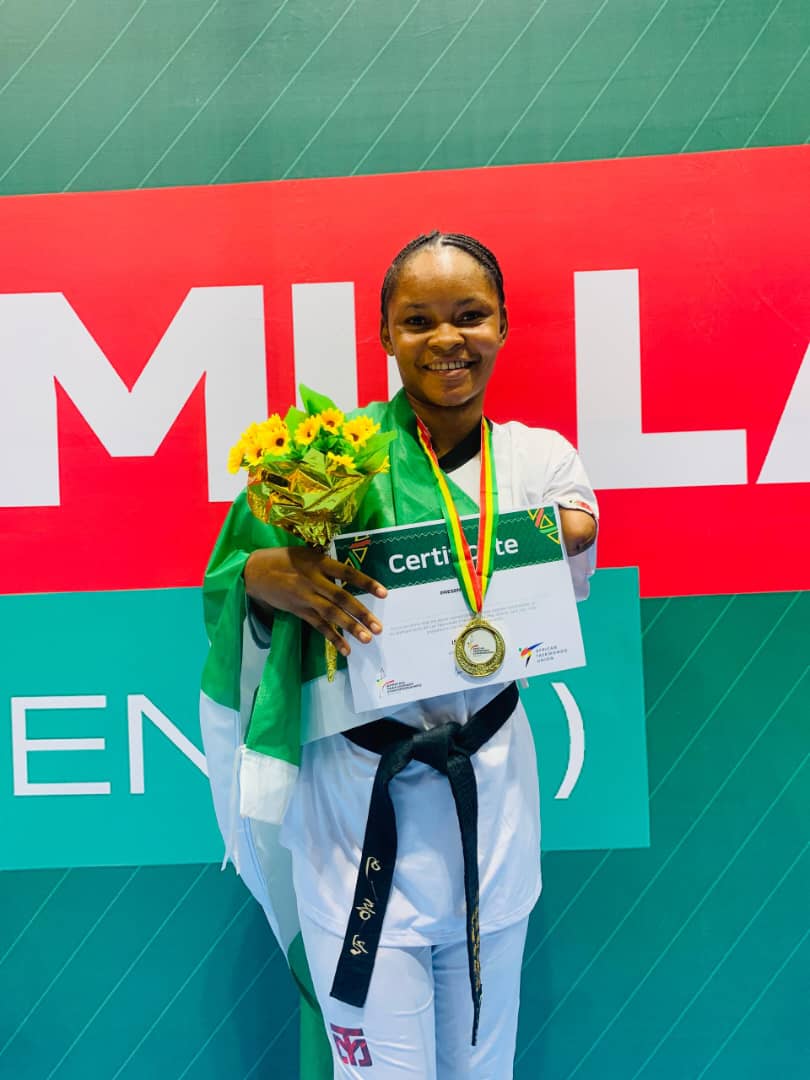
Nigeria’s Ability Udom lived up to her name by proving there is indeed “Ability in Disability” after becoming the country’s first gold medalist at the ongoing African Taekwondo Championships in Mali.
READ ALSO: Seven Countries to Participate as Motherland Heritage Cup Berths
Udom, one of the 11 athletes representing Nigeria at the championship and one of only three para-athletes in the contingent, clinched gold in the women’s K44 -57kg category of the para-taekwondo event.
The Akwa Ibom-born athlete, ranked No. 1 in her category, ensured Nigeria’s place among the championship’s top performers by delivering the country’s first gold medal at the competition, which ran from May 30 to June 2 in Mali.
Nigeria’s gold medal haul was further boosted by Haruna Usman and Faridah Aderibigbe, who emerged champions in the U-40 Male Poomsae and U-30 Female Freestyle Poomsae events respectively.
Speaking after her triumph, Udom expressed delight at her achievement and thanked Nigeria Taekwondo Federation President, Ms. Tayo Popoola, for her unwavering support.
“I am happy with my achievement, especially helping my country, Nigeria, win a gold medal in my event,” she said.
“I am grateful to God because my name is working — Ability. I have shown that there is Ability in Disability.”
Five other Nigerian athletes also secured bronze medals across various events. UK-based Juel Jordan claimed bronze in the men’s heavyweight (+87kg) category, while 2024 African Games bronze medalist Chidinma Okoko added another bronze in the women’s -62kg division.
Salawudeen Abdulafeez earned Nigeria’s third bronze medal after finishing third in the U-30 Male Poomsae event. Abdulafeez and Aderibigbe also combined to win bronze in the Pair Poomsae category.
Reacting to the team’s performance, Nigeria Taekwondo Federation President, Ms. Tayo Popoola, commended the athletes and reaffirmed the federation’s commitment to providing them with more exposure through international competitions.
She also expressed appreciation to the National Sports Commission for supporting the team’s participation in the championship.
Popoola noted that the tournament was highly competitive, featuring athletes from more than 35 countries, including several world and Olympic medalists.
“It was a tough championship,” Popoola said. “We won three gold medals, one silver medal and four bronze medals.
“I am delighted that our athletes gave their best and represented Nigeria with pride. It is encouraging to see that we now have athletes capable of competing with the very best across Africa at major championships.”





News
TCCLeague27: “I Knew That Free-Kick Was Going In” — Valiant’s Ifeanyi Ogbonnanya Inspires First League Victory With Stunning Goal, Claims MD4 MOTM

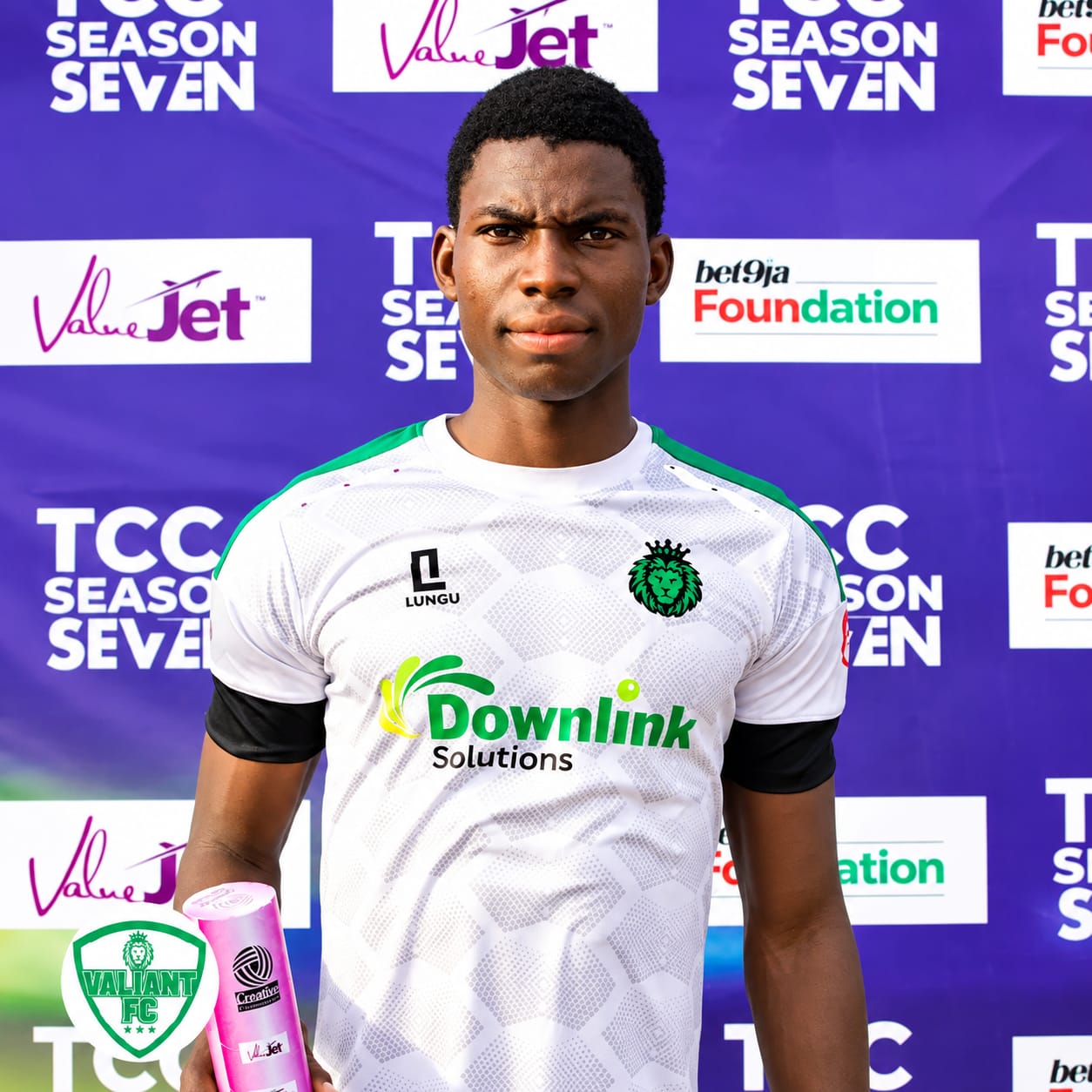
Valiant FC midfielder Ifeanyi Ogbonnanya delivered a moment of brilliance when his club needed it most, producing a sensational free-kick and an energetic midfield performance to inspire the Brave Boys to their first victory of the 2026/27 Creative Championship League season.
The talented midfielder emerged as the Matchday 4 Man of the Match after Valiant defeated VOE Football Academy 2-1, ending their wait for a league victory in a fiercely contested encounter.
Ogbonnanya wasted little time announcing his intentions, breaking the deadlock in the 12th minute with a beautifully curled free-kick from just outside the penalty area.
The early breakthrough gave Valiant renewed confidence, and Abdulkareem Jafar doubled their advantage in the 24th minute with a powerful strike from distance.
Although Samad Olutosin responded almost immediately for VOE, the Brave Boys held firm to secure three valuable points.
Beyond his spectacular goal, Ogbonnanya’s work rate, determination and ability to disrupt opposition attacks made him a commanding presence in midfield.
Proposed player reaction — subject to confirmation:
“I knew that free-kick was going in because I was confident when I stood over the ball. We needed this victory badly, and I wanted to do something special for my teammates. Winning Man of the Match is a great feeling, but helping Valiant get our first league win means even more to me.”
The recognition represents an encouraging moment for Ogbonnanya, whose combination of technical ability and defensive commitment proved decisive in turning a difficult start into a memorable afternoon.
For Valiant, the victory provides a foundation to build upon as they look to climb the TCC League standings.
For The Creative Championship, performances like Ogbonnanya’s underline the value of competitive football in giving emerging Nigerian talents opportunities to demonstrate their creativity, resilience and match-winning qualities.
And for Ifeanyi Ogbonnanya, one expertly executed free-kick has delivered much more than a goal — it has helped change Valiant’s season and added another achievement to his developing football career.
Moove, a global mobility company, on Thursday announced that it will conclude its operations in Nigeria, six years after the company was founded in Lagos.
“The company does so with deep gratitude to the customers, team members, partners and communities who gave Moove its start,” a statement said Thursday.
Moove was founded in 2020 by Ladi Delano and Jide Odunsi after they saw that many gig workers in Nigeria wanted to earn through mobility but could not access the vehicle financing they needed.
The company began with 76 vehicles in Lagos and developed its Rental & Drive-to-Own model to give mobility entrepreneurs access to new vehicles and a pathway to ownership.
What Moove built in Lagos became the foundation for a business that today operates 42,000 vehicles across 29 cities globally.
Since its inception, Moove has served more than 9,000 customers across both its Drive-to-Own and rental products, helping customers generate approximately ₦57 billion in revenue, supporting livelihoods, families and businesses across Nigeria.


As Moove concludes its Nigerian operations, the company said eligible vehicles with an estimated total value of approximately ₦35 billion will pass into full ownership of the customers who currently operate them, with no payment to Moove required for the vehicles themselves from 1 October 2026.
Moove will also reward all staff members with a free car as a sign of appreciation, the statement said.
The ‘Thank You Nigeria’ initiative is Moove’s way of recognising the customers, employees and wider community whose trust, skill and support shaped the company from its earliest days, it added.
Ladi Delano, Co-Founder, Co-CEO and Advisory Board Chairman of Moove, said:
“Nigeria is where Moove began, and everything we have built since carries something of Lagos with it. Jide and I started the company because talented, hardworking mobility entrepreneurs wanted the opportunity to earn, but could not get access to the vehicles and finance they needed. Our first customers trusted us when Moove was still an idea, and that trust made everything that followed possible and for that we “thank you”.
“More than 9,000 customers have used our Drive-to-Own and rental products in Nigeria.
Their work generated approximately ₦57 billion in revenue through Moove-financed
vehicles. Those numbers matter because they represent people earning, supporting their families and building their own futures.
“This is an emotional moment for us. Nigeria gave Moove its beginning, its first customers and many of the people who built the foundations of our company.”
READ ALSO: Moove secures $100 million in series B funding
The cofounder explained that eligible vehicles worth approximately N35 billion will pass into full ownership of the customers who operate them, with no further payment to Moove required for the vehicles themselves.
“To our Nigerian team, thank you. Your commitment, resourcefulness and belief in the mission carried Moove through its earliest and most important years. You turned an idea that began in Lagos into a company that now operates across 29 cities globally. Jide and I will always be grateful for what you have built and for the way you have represented Moove,”he said.
“To our customers, thank you for partnering with us and realising our collective ambitions. To our partners, regulators and the wider community, thank you for supporting a young Nigerian company and helping it grow into a global business.
“Nigeria will always be where Moove started. As we continue to grow internationally, we will do everything we can to make Nigeria proud and to build a lasting global success story that never forgets where it began. Wherever Moove goes next, our story will always start in Lagos.”
Moove will work directly with affected customers and employees as it concludes its Nigerian operations and completes the transfer of eligible vehicles.
Discover more from Premium Times Nigeria
Subscribe to get the latest posts sent to your email.
-

 News3 days ago
2027: El-Rufai’s detention could hurt APC, generate sympathy – SEDSAC director, other analysts express views
-
News3 days ago
Lucid Motors’ EV output falls to lowest level in almost 2 years
-
Business3 days ago
NAIPE 11th Annual Conference Moves to 12 Noon as 28 Stakeholders Back Event
-
News2 days ago
Mirror Particle is building a ‘world model’ of human behavior