Business
Dangote refinery can supply Jet Fuel Globally — Official

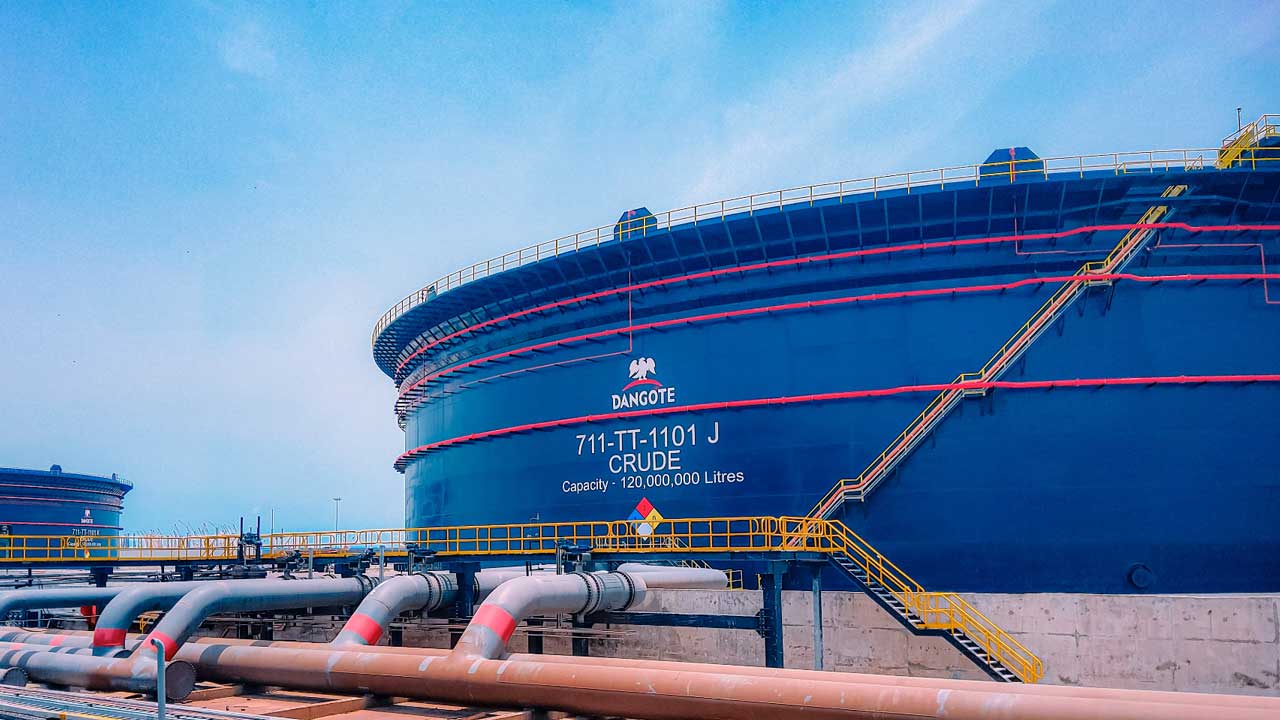

The Chief Executive Officer of the Dangote Petroleum Refinery, David Bird, says the 650,000 barrels-per-day (bpd) refinery has a substantial surplus of jet fuel and is well-positioned to supply global markets.
Mr Bird disclosed this on Tuesday during a speech at the S&P Global Energy Middle East Petroleum and Gas Conference in London.
“We’re very grateful to be seen as a reliable, high-quality and dependable supplier able to land our product competitively all over the world,” Reuters quoted Mr Bird as saying.
According to him, lower demand within Africa compared to other regions has created export opportunities for the refinery.
His comments come at a time when global energy markets remain under pressure following tensions involving the US, Israel and Iran, which heightened concerns over supply disruptions around the Strait of Hormuz and contributed to volatility in fuel markets.

Jet fuel has been among the products significantly affected by these disruptions, with prices remaining elevated in many markets.
Mr Bird’s remarks also come amid persistent concerns within Nigeria’s aviation industry over the rising cost of Jet A1 fuel.
In recent months, PREMIUM TIMES has reported extensively on the pressure facing domestic airlines as aviation fuel prices surged, prompting warnings about possible disruptions and operational challenges.
Several operators, including Air Peace, United Nigeria Airlines and Ibom Air, have repeatedly complained about soaring Jet A1 prices, saying the development has strained operations and disrupted schedules.
The situation prompted government intervention after airline operators warned that sustained increases in aviation fuel costs could threaten the survival of some carriers.
Despite those interventions, airlines continue to report operational difficulties linked to fuel costs, including delays, cancellations and reduced flight frequencies.
However, the situation has also created opportunities for refiners outside the Gulf region, including Dangote Refinery, to expand exports to international markets.
Mr Bird said the refinery is currently operating at full nameplate capacity and is planning what he described as a “ruthless replication” strategy to expand output.
“We will bring 700,000 barrels per day of fully complex refining capacity on stream by the end of 2028,” he said, adding that long-lead equipment has already been procured while construction contracts are being awarded.
He added that the group could eventually increase refining capacity to 2.1 million bpd, supported by plans for another refinery in East Africa, positioning the company as a major player in global crude and refined product markets.
“Nigeria has gone from fuel scarcity to absolute fuel abundance since the Dangote refinery came online,” Mr Bird said.
According to Kpler data cited last month, the Dangote Petroleum Refinery exported an estimated 57 million barrels of jet fuel between April 2024 and April 2026.
The data showed exports rose from about 20,000 barrels per day in April 2024 to around 65,000 barrels per day by the end of that year before peaking at approximately 160,000 barrels per day during the review period.
The figures highlight the growing role of refined petroleum exports in Nigeria’s energy sector, particularly aviation fuel, as the country seeks to strengthen domestic refining capacity and reduce dependence on imported products.



The Nigerian government has identified regional coordination, scientific cooperation, effective enforcement, and sustainable financing as key strategies to establish effective high-seas marine protected areas (MPAs) across West Africa and beyond.
Nigeria outlined the strategies on Monday through Sikeade Egbuwalo, the country’s focal point for the Convention on Biological Diversity (CBD), during a high-level segment organised by the BBNJ First Movers for the 30×30 target.
The BBNJ First Movers is a government collaboration led by Chile to fast-track the creation of the first generation of high seas Marine Protected Areas (MPAs) under the UN High Seas Treaty (BBNJ Agreement).
The BBNJ Agreement, formally known as the Agreement on the Conservation and Sustainable Use of Marine Biological Diversity of Areas Beyond National Jurisdiction, provides an international framework for protecting marine biodiversity in areas beyond national jurisdiction.
Chile led the initiative to lay immediate groundwork for protecting international waters as the treaty moves into implementation, with its first Conference of the Parties scheduled to be held in New York in January next year.
Responding to a question on how regional coordination could drive the creation of effective high-seas MPAs to protect West African waters and achieve the 30×30 target, Mrs Egbuwalo said ocean conservation required countries to work together because marine ecosystems and the livelihoods they support transcend national boundaries.

“For Nigeria, the message is simple: the ocean does not recognise national boundaries, and neither should our conservation ambitions,” she said.
She added that the health of shared marine ecosystems is critical to the livelihoods of millions across West Africa, making regional cooperation essential to effective marine protection and meeting the global biodiversity target.
The 30×30 target, adopted under the Kunming-Montreal Global Biodiversity Framework, seeks to conserve at least 30 per cent of the world’s land and sea areas by 2030.
Meanwhile, over the past two decades, the high seas and maritime areas off West Africa have faced severe environmental, economic, and security challenges, largely due to weak regulation, foreign exploitation, and climate pressures.
While national governments try to control territorial waters and Exclusive Economic Zones (EEZs)/Free Trade Zones, the vast high seas beyond these limits have historically functioned as an under-regulated “Wild West,” leaving them vulnerable to overexploitation and illicit activity.
As a result, the Gulf of Guinea and West African shipping lanes have faced high risks of piracy, armed robbery, and attacks on oil tankers, bulk carriers, and fishing vessels, prompting West African seas to be deemed the “world’s most dangerous seas”.

Regional coordination
In her interventions on Monday, Mrs Egbuwalo said Nigeria was working with six other West African countries through the West Africa BBNJ Coordination Committee to advance a proposal for a highly and fully protected high-seas MPA in the Guinea–Canary Currents Convergence Zone.
She said the initiative showed how regional cooperation can turn shared conservation priorities into concrete action by building political ownership, strengthening consensus, and sustaining commitment throughout the process.
Mrs Egbuwalo said achieving the 30×30 target requires more than designating percentages of the ocean for protection, stressing the need for ecologically representative, connected, and effectively managed MPA networks.
According to her, the Guinea–Canary Currents Convergence Zone supports important biodiversity, migratory species and fish populations that connect the high seas with national waters.
She said regional collaboration would let countries pool scientific expertise, share marine data, and identify areas where protection could deliver the greatest ecological benefits.
Livelihoods and food security
The Nigerian official also stressed the need to align marine conservation with fisheries management, food security and coastal livelihoods.
She said Nigeria’s assessment of the proposed regional MPA had considered marine species of nutritional, economic and cultural importance to coastal communities.
This, she said, underscored the importance of engaging artisanal fishers, women involved in fish processing and trade, and other ocean users in the conservation process.
“Conservation and livelihoods must reinforce each other, rather than be treated as competing priorities,” she said.
Monitoring and enforcement
Mrs Egbuwalo identified effective monitoring, control, and enforcement as another critical requirement, warning that marine protected areas must be genuinely protected, not merely designated on paper.
She said a regional assessment of monitoring, control and surveillance capacities had identified existing mechanisms that could be strengthened.
She added that regional cooperation could facilitate joint monitoring, satellite surveillance, sharing vessel-tracking information and collaborating with regional fisheries bodies.
According to her, management and enforcement arrangements must be incorporated from the earliest stages of MPA development.
Additionally, she noted that establishing and managing high-seas MPAs required substantial scientific, technical and financial resources.
She argued that regional cooperation could help countries pool capacities, identify shared needs and attract international partnerships while maintaining regional ownership of conservation initiatives.
READ ALSO: CBD COP17: Namibian Biosafety Expert Martha Kandawa-Schulz dies in Yerevan
As countries prepare for the first Conference of the Parties to the BBNJ Agreement, she called for developing countries to have meaningful access to finance, technology and capacity-building support to participate effectively in its implementation.
Call for implementation
With less than four years remaining to achieve the 2030 biodiversity target, Ms Egbuwalo urged countries to move from ambition to implementation.
She described the proposed Guinea–Canary Currents high-seas MPA as an opportunity to demonstrate how African regional leadership could deliver meaningful protection for the global ocean.
She also identified the sixth International Marine Protected Areas Congress (IMPAC6), scheduled for Dakar in March 2027, as an opportunity to strengthen political momentum and partnerships for the first generation of high-seas MPAs.
She said Nigeria remained committed to working with West African partners and the international community to advance the initiative.
“30×30 is not simply about how much ocean we protect, but how effectively we protect it,” she said, adding that regional cooperation could help West Africa protect biodiversity, strengthen ocean resilience and secure coastal livelihoods.
Discover more from Premium Times Nigeria
Subscribe to get the latest posts sent to your email.
-

 News3 days ago
Obi, Kwankwaso to hold Middle Belt Youth, Village Hall Meeting in Jos
-
Entertainment4 days ago
FOGMMON PLATEAU CONGRATULATES EJIDIKE UGOCHUKWU (𝙈𝙞𝙣𝙨𝙩𝙧𝙚𝙡 𝙅𝙞𝙙) ON HIS APPOINTMENT AS NATIONAL PRESIDENT
-
News2 days ago
Plateau Activates Ebola Preparedness Measures, Urges Residents to Observe Safety Guidelines
-
 Health4 days ago
France reports first human case of Shamonda virus as patient dies