Connect with us

News

Guber Polls: ‘Stop harassing civil servants’, Governor Lalong Warns PDP

editor

Published

on

Lalong

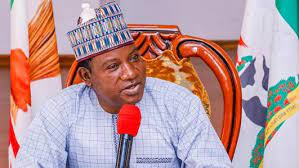
Plateau State Governor, Simon Lalong  has warned the People’s Democratic Party (PDP) to stop harassing civil servants, saying his administration has nothing to hide concerning his stewardship.

Recall that the State chapter of PDP in a statement signed by its Publicity Secretary, Mr John Akans raised an alarm of purported looting and conversion of public assets under the governor’s directives.

In a statement signed by the State Commissioner of Information, Dan Majang, the governor expressed surprise that

the party that has not yet taken over power is already issuing threats and singling out specific government officials for intimidation, harassment, and persecution.

His words: “What will they do if they eventually scale the difficult mountain before them at the Tribunal and the Supreme Court and take over?”

“Let it be on record that the Rescue Administration of Governor Simon Bako Lalong has nothing to hide or fear and can never be involved in any looting, conversion of public assets, or criminal conduct in contract awards as alleged.”

“If anything, the APC Rescue Administration has, in the last eight years, conducted the business of governance with the utmost prudence, accountability, transparency, and diligence. During his tenure, Governor Lalong set up the Efficiency Unit (EU), implemented the Treasury Single Account (TSA), the Liquidity Management Committee (LMC), and the Project Monitoring and Result Delivery Office (PMRDO), among others, to ensure that the business of governance is done according to established rules” he said.

According to him, as a result of the administration’s prudence, the Lalong Rescue Administration applied and was admitted into the Open Government Partnership (OGP), where it got the global award for transparency and accountability in 2021 in Seoul, South Korea.

Under the same administration, Plateau State has adjudged the second-least corrupt state in Nigeria in the 2nd Corruption Survey Report released by the National Bureau of Statistics (NBS).

He pointed out that it is preposterous for the PDP to make wild and unsubstantiated claims of corruption against the government and specific officers without any evidence.


Continue Reading
Click to comment

Leave a Reply

Your email address will not be published. Required fields are marked *

Business

Subsidy Return: International investors, markets have written off Nigerian opposition politicians as unserious, says Oyedele

info

Published

on

761940b4 0e4d 4125 906a 0357cf056b99.jpg

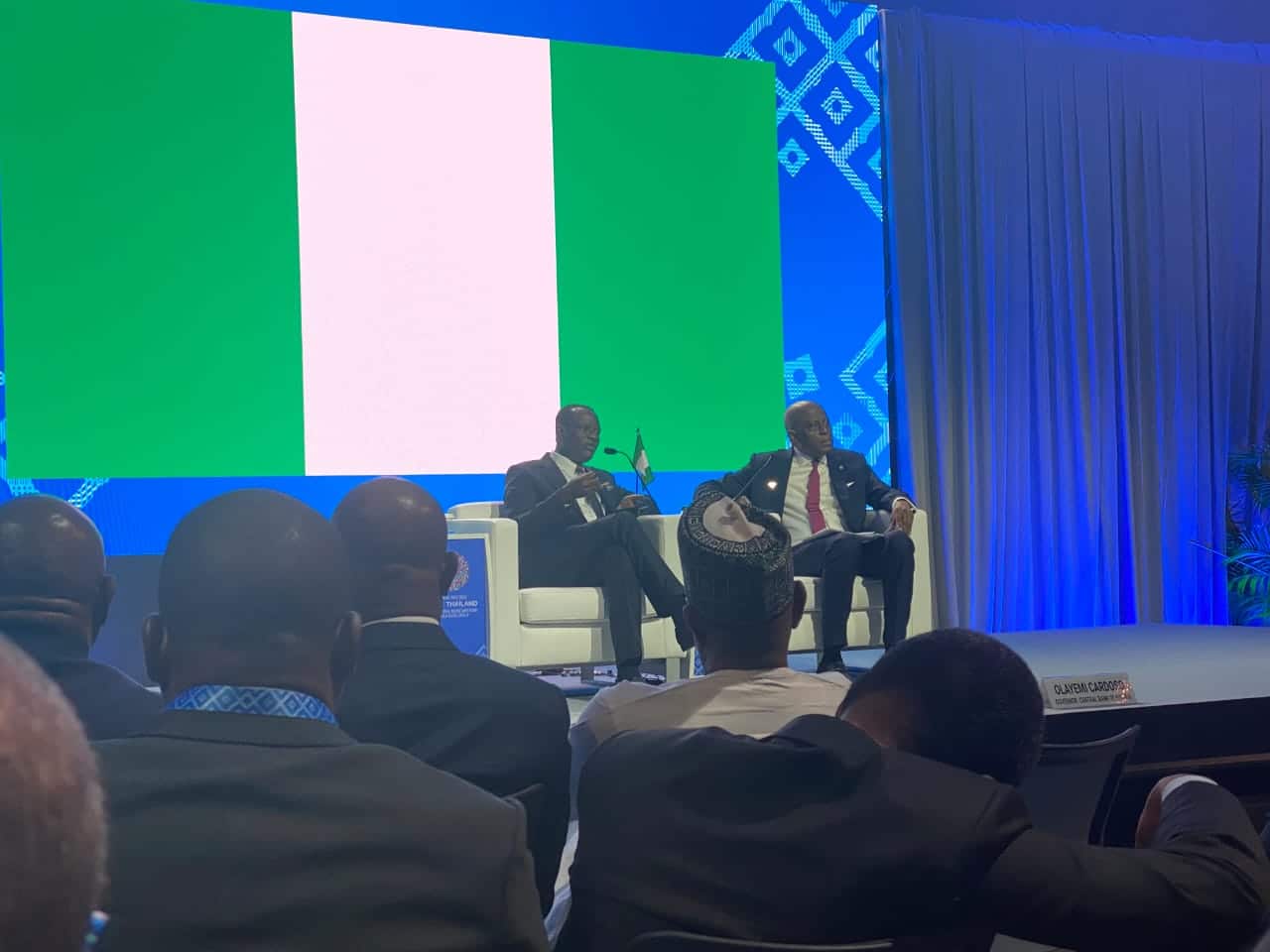
Nigeria’s Minister of Finance and Coordinating Minister of the Economy, Taiwo Oyedele, said on Saturday that international investors and markets have written off Nigerian opposition politicians calling for a return to the subsidy regime.

Mr Oyedele spoke on the sidelines of the World Bank/IMF meetings in Bangkok, Thailand.

The minister responded to questions about how the government hopes to balance the needs of the investment community with domestic concerns among citizens.

“The second point I want to make, and hopefully this will not be misinterpreted, is that, in having all those meetings (with global development and financial organisations, investors and market leaders), I concluded that the markets, including the domestic market—because that you can read from the capital markets—and the international markets, have largely, largely written off the opposition in Nigeria as being unserious. That is why they have not priced in the proposed return of subsidy,” Mr Oyedele said.

“And the reason why you know what I’m saying is right is, God forbid a bad thing, if Mr President says today, ‘we are considering subsidy’, you will see the reflection in price. So maybe it’s good that the international community and the domestic capital markets are aware of who is sincere with Nigerian people and what direction of travel they should take.”

Nigeria has introduced a series of reforms the government said focused on fixing the economy’s structure. However, the impact has been enormous for many Nigerians grappling with the cost-of-living crisis. The government introduced reforms in the foreign exchange market, abolished what it termed a wasteful, corruption-ridden subsidy regime amid fiscal pressures, and institutionalised tax reforms.


PT WHATSAPP CHANNEL
Dangote Refinery AD

While the Nigerian government, led by President Bola Tinubu, has defended its economic policy of subsidy removal as critical to the nation’s fiscal survival, opposition politicians—such as Atiku Abubakar of the ADC and Peter Obi of the NDC—have canvassed for and promised a return to different subsidy arrangements if elected into power.

Opposition

In August, Atiku said he believed a country’s progress and wealth should be measured by citizens’ ability to buy goods and services, not by how much revenue the government collects.

“On the question of subsidy, my position has not changed and will not change: I will restore it! A nation as blessed as ours has no business abandoning its citizens to hardship. Nigeria is rich enough to look after her own,” the former vice president vowed.

Mr Obi, who on his part had earlier warned that subsidy was an “organised crime” that would be removed, made a U-turn in a BBC interview on Tuesday, 6 October, saying he would restore the subsidy if elected president.

He argued that the subsidy regime’s major problem was the corruption surrounding its implementation.

“I’ll remove the corruption and retain the subsidy,” he said.

Mr Obi also explained how he intended to tackle corruption, arguing that his anti-corruption strategy would centre on the president’s conduct and that of his immediate family.

“If you are not stealing, if you are not involved, your wife and family are not involved, you reduce it by 50 per cent,” the presidential candidate said.

READ ALSO: No return to fuel subsidy, multiple exchange rates, Oyedele insists

Messrs Obi and Atiku are the leading opposition figures in Nigeria’s next general elections scheduled for January 2027. Previously, both opposition figures had been unequivocal about removing the petrol subsidy.

PREMIUM TIMES reported earlier on Saturday that Mr Oyedele said there will be no return to subsidy regimes, adding that the 30-day retail margin discount introduced by the government isn’t a subsidy arrangement.

“And let me be clear as well, this was a recurring question almost through all our engagements, but also with the rating agencies, with the investors, and the multilateral institutions. Every time they ask, are you reversing your plans? Are you bringing back subsidies? Let me be clear, there will be no return to fuel subsidies or multiple exchange rates,” he said.


Discover more from Premium Times Nigeria

Subscribe to get the latest posts sent to your email.

Continue Reading

News

NUCAP: Nigeria targets 20 million people with 3,700 telecom towers – Technology Times

info

Published

on

Nigeria is targeting nearly 20 million people in underserved communities with the deployment of 3,700 telecommunications towers under the Nigerian Universal Connectivity Access Project (NUCAP), according to Bosun Tijani, Minister of Communications, Innovation and Digital Economy.

“President Bola Ahmed Tinubu has given us a clear mandate. Bring every Nigerian online,” Tijani says in the statement announcing the deployment.

He describes the launch in Ameike as the first of several planned deployments, adding that further launches are expected in the coming days, weeks and months.

The project is intended to address Nigeria’s digital connectivity gap, which continues to limit access to communication and digital services in communities without adequate network coverage.

Tijani says more than 20 million Nigerians face the consequences of inadequate connectivity, despite living in communities that contribute to the country’s agricultural production and supply raw materials for the economy.

He highlights the difficulties faced by farmers trying to find buyers for their produce, traders waiting to receive payments and families attempting to contact healthcare workers.

“A connection can change what is possible for an entire family,” Tijani says.

The planned deployment of 3,700 telecommunications towers is expected to extend mobile network coverage to communities that have remained underserved or unserved by existing telecommunications infrastructure.

NUCAP forms part of the Federal Government’s broader efforts to bridge Nigeria’s digital divide by expanding connectivity beyond urban centres and other locations with established telecommunications infrastructure.

The project’s wider scope includes plans for rural broadband, public Wi-Fi, digital learning solutions and supporting energy infrastructure, according to an April 2026 investor notice issued by the Federal Ministry of Communications, Innovation and Digital Economy.

The notice also outlined a proposed investment structure involving the Federal Government, through the Ministry of Finance Incorporated, and private-sector investors to support the project.

However, Tijani’s launch statement did not provide a detailed breakdown of the 3,700 towers by state, the project’s implementation schedule, the telecommunications operators involved or the expected completion dates.

The government is also inviting residents to identify communities without network coverage that may have been omitted from the deployment plan.

Tijani directs residents to visit fmcide.gov.ng/NUCAP to view the deployment plan and follow the designated instructions for reporting communities without coverage.

The exercise could help the government identify gaps between planned infrastructure deployment and the connectivity needs of residents in underserved locations.

The project’s impact will depend on how quickly the planned sites become operational, the reliability and affordability of the services provided, and the long-term maintenance of the infrastructure.

For farmers and traders, improved connectivity could make it easier to communicate with customers, coordinate transactions and access digital payment services. Better coverage could also help families contact healthcare workers and seek assistance during emergencies.

The government says the initiative is intended to ensure that geographical location does not prevent Nigerians from accessing opportunities enabled by telecommunications connectivity. “A promise made is a promise kept,” Tijani says.

Continue Reading

Trending