News
TCN extends maintenance on Jos, Bauchi, and Gombe transmission line


The Transmission Company of Nigeria (TCN) has extended maintenance on the Jos-Bauchi-Gombe 330kV single-circuit transmission line to complete the optical ground wire installation.
Ndidi Mbah, the General Manager, Public Affairs at TCN, disclosed this in a statement made available to journalists in Yola on Monday.
Mrs Mbah said the maintenance exercise, which began earlier this year, would now continue until June 30, 2026.
She explained that the extension would enable contractors to complete the OPGW stringing along the 276-kilometre-long Jos-Bauchi-Gombe transmission line corridor.
According to her, customers served by the Yola Electricity Distribution Company (YEDC) and Jos Electricity Distribution Company (JEDC) will experience limited power supply.
The affected areas include Bauchi, Gombe, Damaturu and Maiduguri.
Mrs Mbah said the electricity supply would be reduced between 9 a.m. and 6 p.m., from Thursdays to Sundays, during the maintenance period.
She added that Yola, Jalingo and neighbouring communities would remain without electricity during the outage periods.
The TCN spokesperson, however, assured customers that power supply would be restored at the end of each day’s maintenance work.
Mrs Mbah expressed regret over the inconvenience the outage might cause and appealed for affected customers’ understanding.
She said efforts were being intensified to complete the project within the stipulated timeframe.
According to her, the project will improve grid monitoring, enhance operational efficiency and strengthen the reliability of electricity transmission in the affected areas upon completion.
(NAN)








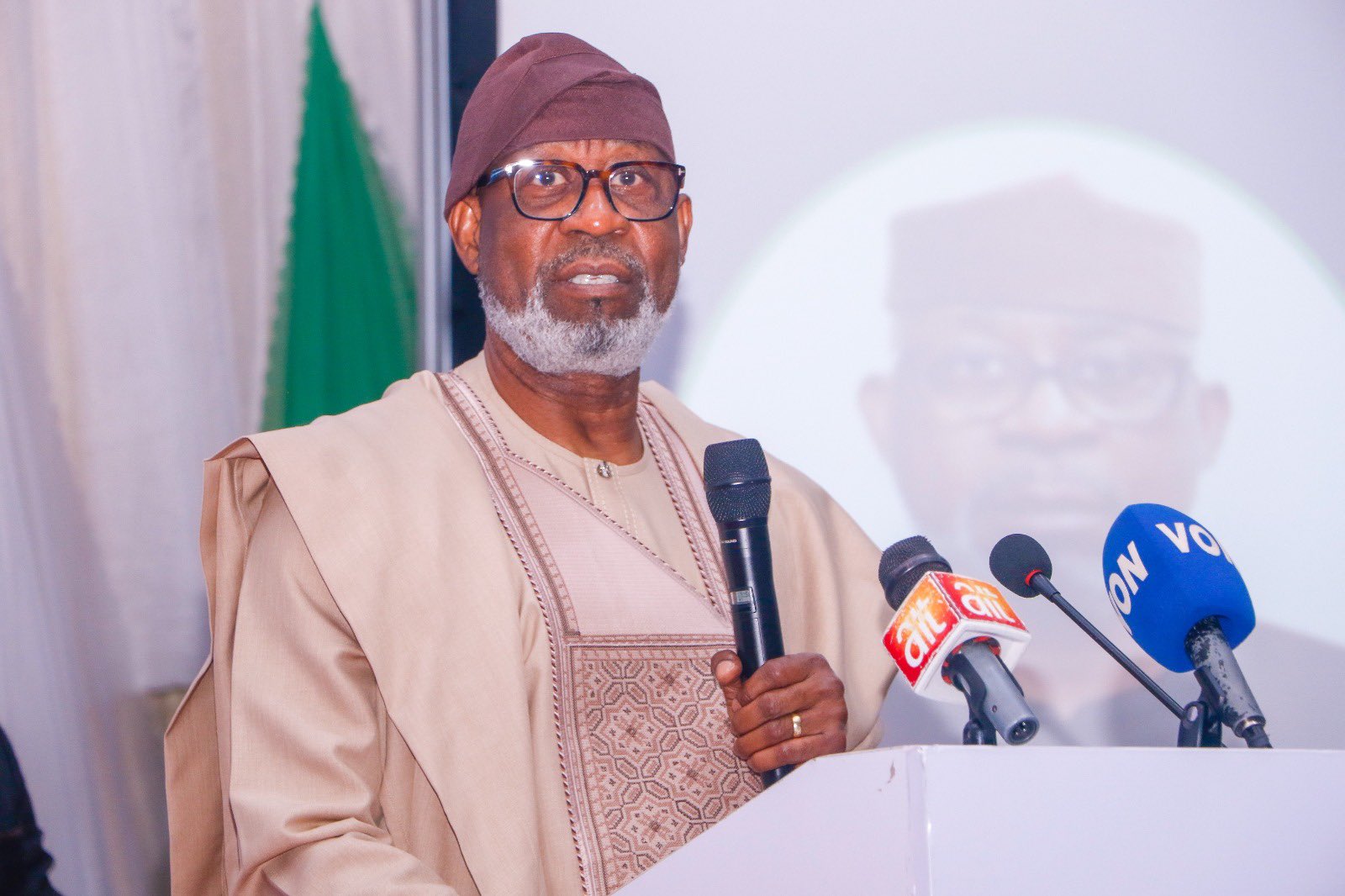
The Minister of Solid Minerals Development, Dele Alake, has dismissed reports that Nigeria sold $700 billion worth of solid minerals to the United States, insisting that the bilateral agreement between both countries does not involve the sale or transfer of Nigeria’s mineral assets.
Mr Alake made the clarification during the inauguration of the Nigeria-United States Committee on Strategic Cooperation in the Solid Minerals Sector in Abuja.
“There is no sale of any Nigerian asset. There’s nothing exchanging hands,” he said.
The minister explained that the agreement signed by Nigeria and the US was a government-to-government framework designed to connect American investors with Nigerian businesses, rather than transfer ownership of the country’s natural resources to foreign interests.
“We created a platform to facilitate mingling of US investment ventures with Nigeria’s local operators,” he added.
Mr Alake said the partnership was intended to attract capital, promote technology transfer, expand local mineral processing and create jobs as the Federal Government seeks to reduce Nigeria’s dependence on crude oil.


The committee’s inauguration followed the signing of a strategic cooperation framework by Nigeria and the US in New York in September, on the sidelines of the 81st United Nations General Assembly.
What the $700bn figure means
The clarification follows the announcement of the agreement, which described Nigeria’s mineral resources as being worth an estimated $700 billion.
The figure refers to the estimated value of Nigeria’s mineral resources, according to the government, not the value of minerals sold to the US or a confirmed investment commitment from the American government.
The framework was signed by Mr Alake and US Deputy Secretary of State Christopher Landau in New York on 23 September. It provides for cooperation in geological data and exploration, mineral development and processing, infrastructure and technical capacity-building.
The agreement is expected to provide a platform for American investors to partner with Nigerian mining companies and other local operators.
Mr Alake said the government wanted to change a pattern in which resource-rich countries export raw materials while other countries capture more of the value through processing and manufacturing.
“We have the resources, the critical elements the world needs to transit to clean energy. So we are creating a new paradigm: you bring your capital, expertise and technology to match with our natural resources and create a win-win situation. The investor gains, Nigeria gains,” he explained.
He added that the government wanted Nigeria to retain more economic value from its mineral resources through local processing and industrial development.
Local processing takes centre stage
Mr Alake said local processing had become a key requirement for investors seeking mineral titles, as the government sought to discourage the extraction and export of raw minerals without sufficient value addition.
Nigeria has deposits of minerals including lithium, gold, iron ore, limestone and tin. However, the sector remains underdeveloped compared with the country’s oil industry, limiting its contribution to exports, industrial growth and government revenue.
The government has increasingly identified solid minerals as an avenue for diversifying the economy, attracting foreign investment and creating employment outside the oil sector.
Mr Alake said the policy was encouraging investment in mineral-processing facilities, including a lithium processing plant in Nasarawa State that the government has described as one of the largest of its kind in West Africa.
He said the Nigeria-US partnership could help match the country’s mineral resources with the capital, technology and expertise needed to develop a stronger mining industry.
The agreement comes amid global competition to secure critical minerals used in electric vehicle batteries, renewable energy systems and other advanced technologies. Countries are seeking to diversify their supply chains as demand for these materials grows.
Mr Alake charged members of the newly inaugurated committee to identify viable investment opportunities and ensure that the agreement produced measurable outcomes.
ALSO READ: Alake warns mining firms over host community agreements, threatens licence revocation
He said the committee’s work was important to President Bola Tinubu’s target of building a $1 trillion economy.
The minister said the government was determined to ensure that mineral wealth translated into tangible economic benefits for Nigerians rather than remain an underutilised resource.
In his remarks, the ministry’s Permanent Secretary, Faruk Yusuf Yabo, said the committee would provide a structured platform for turning bilateral discussions into practical cooperation and investment.
Jonathan Baas, an economic officer at the US Embassy in Nigeria, said Washington was prioritising energy, artificial intelligence and critical minerals in its international economic engagements.
He explained that the US was seeking partnerships that would strengthen critical mineral supply chains while allowing resource-producing countries to benefit from the economic opportunities created.
The Managing Director of the Nigeria Solid Minerals Company, Martins Imonitie, also said the committee would coordinate implementation, facilitate investment and monitor progress towards the objectives of the cooperation framework.
Mr Alake said the government would judge the partnership by its ability to generate investment, strengthen local industries and create jobs, rather than by the estimated value of Nigeria’s mineral resources alone.
Discover more from Premium Times Nigeria
Subscribe to get the latest posts sent to your email.
Nigeria’s telecommunications market is expanding rapidly, but the growth of the industry is taking place alongside a concentration problem that is becoming increasingly difficult to ignore, according to findings presented from a major competition assessment of the sector.
The study, conducted with the Nigerian Communications Commission (NCC) and PwC at the centre of the assessment, found evidence of significant market power (SMP) in six telecommunications subsegments, while identifying two subsegments where SMP was not found and leaving nine others under analysis.
The findings were announced today by Akolawole Odunlami, Associate director of PwC Nigeria, at an event organised by NCC, the nation’s telecommunications regulator, in Lagos.
Among the most striking findings is the position of Nigeria’s retail mobile voice market, where the study puts the Herfindahl-Hirschman Index (HHI), a measure of market concentration, at 5,421.

The operator distribution also shows why concentration remains such a significant issue. MTN held 52.01% of Nigeria’s active telephone subscription market in August, followed by Airtel with 34.19%, Globacom with 11.96% and T2 with 1.83%. MTN and Airtel therefore jointly accounted for approximately 86.2% of active telephone subscriptions.
That national operator picture is not identical to the study’s retail mobile voice market calculation because the study defines and analyses individual subsegments using its own market-definition methodology. Nevertheless, the August figures provide a useful contemporary indication of the scale and structure of Nigeria’s mobile market.
That figure is more than twice the 2,500 level used in the study to classify a market as highly concentrated. The assessment also found that the two largest players collectively accounted for between 89% and 95% of the retail mobile voice market over the period examined. But the concentration measure is only one component of the assessment.
The study also tested customer behaviour, market shares, the ability of competitors to enter or expand, customer bargaining power, pricing and financial information before arriving at its conclusion that a player in the retail mobile voice segment has significant market power.
Only 4% of surveyed customers said they would fully switch operators following a 5% price increase, a result that the study considered supportive of the presence of SMP. Four of five tests applied to the retail mobile voice market supported the evidence of significant market power, while one produced a moderate finding.
The findings matter because Nigeria’s telecoms industry is no longer simply a voice market.
The market has grown into a much larger digital infrastructure and services ecosystem in which mobile voice, mobile data, broadband, towers, fibre, enterprise connectivity, digital services, cloud and data centres increasingly interact.
And the latest NCC figures show just how large the underlying market has become. A market approaching 200 million active telephone subscriptions
As of August 2026, Nigeria had 197.17 million active telephone subscriptions, according to the NCC’s latest industry statistics. The figure is calculated from the operator-level totals published by the regulator: MTN had 102.56 million subscriptions, Airtel 67.42 million, Globacom 23.58 million and T2 3.61 million. The resulting teledensity was about 91.07%, according to the NCC’s August statistics.
This provides a substantially larger market backdrop than the roughly 180 million active subscriptions cited during the presentation. The difference is important because the competition study is based largely on historical data and analysis covering 2022–2025, whereas the August 2026 figures show where the national market has moved since much of that period.
The operator distribution also shows why concentration remains such a significant issue. MTN held 52.01% of Nigeria’s active telephone subscription market in August, followed by Airtel with 34.19%, Globacom with 11.96% and T2 with 1.83%. MTN and Airtel therefore jointly accounted for approximately 86.2% of active telephone subscriptions.
That national operator picture is not identical to the study’s retail mobile voice market calculation because the study defines and analyses individual subsegments using its own market-definition methodology. Nevertheless, the August figures provide a useful contemporary indication of the scale and structure of Nigeria’s mobile market.
They also explain why the study’s concentration findings have implications extending beyond traditional voice calls.
Nigeria’s telecoms market is increasingly a data economy
The competition assessment begins from a recognition that the Nigerian telecommunications sector has become one of the country’s principal engines of economic growth.
The presentation put telecoms-sector growth at 9.72%, compared with 4.43% for the wider economy, describing telecommunications and financial services as critical engines of Nigerian economic growth. It also estimated the sector at about $10 billion in 2025, with an expectation that it could exceed $11 billion by 2029.
The NCC’s more recent figures reinforce the scale of this transformation. Nigeria’s internet subscriptions reached about 158.52 million in August 2026, comprising approximately 158.07 million mobile GSM subscriptions and about 454,676 other internet subscriptions, based on the regulator’s published data.
More importantly, the volume of data being consumed is rising much faster than the number of subscribers. Nigerians consumed 1.756 million terabytes of internet data in August 2026, up from 1.662 million TB in July and 1.532 million TB in June. August therefore represented a new monthly high in the NCC series available on its industry statistics page.
Broadband penetration also reached 58.22% in August, representing about 126.22 million broadband subscriptions, while fixed internet subscriptions rose to approximately 227,910.
The figures reveal an important structural shift: Nigeria’s telecommunications market is still adding subscribers, but its economic importance increasingly comes from what those subscribers do once connected.
The study presentation captures this transition by describing data as the industry’s largest growth engine and, increasingly, an important revenue line. It also notes that consumer behaviour is changing, with consumers demanding self-service, digital bundles, eSIMs and broader technology services rather than simply traditional telecommunications.
This distinction is central to understanding the competition study. A market can have a dominant voice provider while simultaneously experiencing rapid innovation in data, digital services and enterprise connectivity. The competition question is therefore not simply which company has the most subscribers.
It is whether a company with substantial market power can act independently of competitors and customers in a manner that weakens effective competition.
What the study actually set out to determine
The presentation makes an important distinction between market leadership and significant market power. Being the largest operator is not, by itself, evidence of wrongdoing. The study identified several legitimate sources of market leadership, including investment, innovation, strategy and route-to-market, service quality, and the structure of the market itself.
A company can therefore become the largest player because it invests more heavily in infrastructure, introduces innovative products, builds an effective distribution system or provides better service.
Competition economics becomes concerned when market leadership gives an operator the ability to behave independently of competitive constraints, customers or consumers, or when that position is used to suppress competition or obtain an undue advantage.
The study therefore asked a more fundamental question: Can an operator act, to an appreciable extent, independently of its competitors, customers and consumers? That question shaped the methodology.
Six stages of competition analysis
The assessment combined Nigeria’s regulatory framework with competition economics and international practice. Its legal foundation included the Nigerian Communications Act and the Competition Practices Regulation 2007, while the analytical framework incorporated international competition-economics practices and comparisons with Brazil, South Africa, Kenya, Egypt, the UK, the UAE and European Commission guidelines.
The first step was market definition. Rather than assuming that all telecommunications services constitute one market, the study broke the industry into segments and subsegments and tested whether individual services could properly be regarded as distinct markets.
The study used the Small but Significant and Non-transitory Increase in Price (SSNIP) test, referred to in the presentation as the SNP test, alongside substitution analysis and operator data.
The underlying question was straightforward: if prices in a particular service increased by 5%, would customers switch sufficiently to another product or service to make the price increase unsustainable?
If the estimated loss of customers was below the critical loss required to defeat the price increase, the subsegment could be treated as a standalone market. If actual loss exceeded critical loss, the market definition would have to be reconsidered.
The second stage examined concentration.
Here the study used the HHI, CR2 and CR3 measures, alongside individual market shares, covering the period from 2022 to 2025.
The third stage examined market power.
The analysis considered market shares, the size and presence of operators and their financial strength, as well as whether rivals could enter or expand sufficiently to constrain an incumbent.
The fourth component examined customers.
The researchers conducted surveys of individual consumers and enterprises to determine how much bargaining power customers had and how easily they could switch between providers or use multiple alternatives.
The fifth component examined outcomes associated with competition, including pricing, margins and tariffs.
The sixth was the ultimate SMP test: whether a player could operate independently of competitors, customers and consumers to an appreciable extent.
The methodology therefore sought to avoid relying on one number. That distinction is critical.
Why 40% market share does not automatically mean SMP
One of the more important explanations in the presentation concerns the relationship between Nigerian regulation and competition economics. The regulatory framework points towards 40% as an important benchmark for significant market power, but the study stresses that market share at that level is a necessary but not sufficient condition for establishing SMP.
The analysis therefore did not simply ask whether an operator exceeded 40% at a particular point in time. It examined the persistence of market position over several years, alongside market concentration, competitive constraints, switching behaviour, customer power, pricing and other economic evidence.
This is why the study examined data from 2022 to 2025 and used longer historical data where available. The approach recognises that a temporarily high market share does not necessarily establish durable market power.
A competitor could be rapidly gaining ground. Customers could have strong bargaining power. New entrants could be able to scale quickly. Or consumers could easily switch following a price increase.
In such a market, a high market share may not translate into the ability to act independently.
Conversely, a high and persistent market share combined with weak customer switching, strong barriers to expansion and a highly concentrated market can provide a much stronger basis for an SMP finding.
How the study used HHI
The HHI is perhaps the most recognisable number emerging from the assessment, but it needs to be understood correctly. The study calculates HHI by squaring the market share of each player and adding the results.
Its decision bands were:
- Below 1,500: low concentration
- 1,500–2,500: moderate concentration
- Above 2,500: high concentration.
This means the retail mobile voice market’s 5,421 score is not a threshold. It is a market concentration score. The threshold used by the study for a highly concentrated market is 2,500. At 5,421, retail mobile voice sits substantially above that threshold.
But HHI does not itself establish abuse or wrongdoing.
The presentation’s methodology makes that clear: concentration was one part of a broader assessment that also examined market shares, switching behaviour, entry and expansion, buyer power, pricing, margins and other evidence.
The significance of 5,421 is therefore that it provides strong quantitative evidence that the market structure is highly concentrated. The SMP conclusion comes from considering that concentration alongside the other tests.
Retail mobile voice: the strongest warning signal
Retail mobile voice is arguably the most striking finding in the presentation. The study says its HHI has risen to 5,421, after already being highly concentrated in 2022. The top two players held between 89% and 95% of the market during the period considered.
The customer evidence adds another layer. When customers were asked whether they would switch following a 5% price increase, only 4% said they would fully switch. The presentation specifically distinguishes switching from holding multiple SIM cards.
A Nigerian consumer may have two or more SIMs without actually transferring their primary usage from one network to another. The study therefore sought to distinguish multiple-SIM ownership from genuine switching or porting behaviour.
This matters because a market can appear more competitive on paper if consumers maintain several SIMs, while their actual primary usage remains concentrated on one operator.
The study’s five tests produced four results supporting SMP and one moderate result. Its conclusion was therefore that the retail mobile voice segment contains a player with significant market power.
The August 2026 market makes the finding more consequential
The latest NCC statistics show that Nigeria’s mobile market has continued to expand since the study period. By August, the country had almost 197.2 million active telephone subscriptions.
MTN alone accounted for 102.56 million, while Airtel had 67.42 million. Together, the two companies represented approximately 86.2% of active telephone subscriptions. The national market has therefore not evolved into a fragmented four-player structure. Instead, the latest data continue to show a market led decisively by two operators.
That does not, on its own, establish SMP in the precise retail mobile voice market defined by the study. But it demonstrates why the study’s concern about market concentration remains relevant as the industry moves towards 200 million active telephone subscriptions.
The scale also raises a broader regulatory question: as the market grows, does increased connectivity automatically translate into stronger competition? The study suggests that it does not.
Mobile data presents a different competitive picture
The retail mobile data market produced a somewhat different consumer response. The study again applied HHI, market shares and switching behaviour, but found that as many as 11% of customers were willing to switch following the hypothetical price increase. The presentation describes this as a more moderate switching result, while saying that the overall evidence nevertheless supported an SMP finding.
That distinction is important. Customers appear more mobile in the data market than in voice. This may reflect the different nature of data consumption. Consumers can maintain multiple data SIMs, compare bundles, switch data plans and use alternative connectivity platforms more easily than they can replace the underlying voice network relationship.
At the same time, the study still found enough evidence to support SMP. The conclusion is therefore not that Nigerian mobile data is uncompetitive in every respect.
Rather, it is that the evidence, taken together, indicates that at least one operator possesses significant market power within the defined retail mobile data market.
Data is becoming the strategic centre of the industry
This finding has particular significance because the economics of Nigerian telecoms are changing.
The August 2026 NCC statistics show 1.756 million TB of internet traffic in a single month, up from 1.662 million TB in July. Mobile GSM internet subscriptions stood at about 158.07 million in August. Broadband penetration reached 58.22%, while fixed internet subscriptions rose to 227,910.
The market is therefore becoming more dependent on data infrastructure at precisely the time competition authorities are examining concentration in mobile data.
The implications extend well beyond telecoms operators. Higher data consumption requires more spectrum, more fibre, more backhaul capacity, more towers, more data centres and greater investment in international connectivity.
This creates a potentially important intersection between competition policy and infrastructure policy. A highly concentrated market may produce the scale needed for large infrastructure investment, but regulators must also ensure that that scale does not become a barrier that prevents effective competition.
Fixed broadband is becoming more concentrated
The study also identified significant market power in retail fixed broadband. The HHI was already above the 2,500 highly concentrated threshold in 2022, and the presentation says the market became even more concentrated over the following three to four years.
This is significant because fixed broadband serves a different role from mobile connectivity. Businesses, households and institutions increasingly require reliable high-capacity connections for cloud services, remote work, video, enterprise applications and other digital services.
The NCC’s August 2026 figures provide evidence that fixed connectivity, while still small compared with mobile, is beginning to expand. Fixed internet subscriptions rose from 204,082 in July to 227,910 in August, an increase of approximately 11.7% in one month.
The study’s finding of concentration in fixed broadband therefore comes at a time when demand for high-capacity connectivity is increasing.
Towers and passive infrastructure: concentrated, but improving
The study also examined towers and passive telecommunications infrastructure.
Its finding was nuanced. The market remains highly concentrated, but the level of concentration has moderated somewhat.
The presentation attributed part of this improvement to an earlier NCC competition assessment conducted with PwC support and the implementation of recommendations from that exercise. That is an important example of how competition intervention can change market structure without necessarily breaking up existing players.
The lesson from the towers market is that concentration should not always be viewed as static. Regulatory action, new investment, infrastructure sharing, market entry and changes in business models can alter competitive conditions over time.
Enterprise connectivity does not meet the same SMP test
Not every concentrated market was found to have significant market power. The enterprise connectivity segment is one of the clearest examples.
The HHI provided some support for a possible SMP finding, but the gap between the leading players was not considered sufficient. More importantly, the study found that buyers in the enterprise market possessed strong bargaining power.
That finding illustrates why HHI cannot be used in isolation.
Two markets may have similar concentration scores but produce different competition outcomes. In an enterprise market, large customers may have the ability to negotiate prices, demand service-level agreements, procure from multiple providers or shift contracts when conditions deteriorate.
That buyer power can constrain an operator even where the market is relatively concentrated. The study therefore concluded that no significant market power was found in enterprise connectivity.
Hybrid digital services: a growing market without SMP
Hybrid digital services also produced a no-SMP finding. The HHI was below the 2,500 threshold, independent providers were growing, the leading player had less than 40% market share and the next player held about 23%.
The relatively small gap between the leading providers and the growth of independent players suggested that competitive constraints were stronger in this segment.
The combined position of the leading players also did not meet the presentation’s concentration benchmark. This is significant because it demonstrates that the Nigerian digital-services ecosystem is not uniformly dominated by the largest traditional telecommunications operators.
Newer business models can create competitive spaces even within an industry where the legacy mobile market is heavily concentrated.
Wholesale mobile call termination is a special case
One of the most technically interesting parts of the study concerns wholesale mobile call termination. The presenter explained that this market has a structural peculiarity.
When a customer on Network A calls a customer on Network B, Network B terminates the call to its own customer. The originating operator cannot simply decide to terminate that call on another network because the destination customer belongs to Network B. Consequently, each operator effectively has control over termination to its own customers.
This means the HHI calculation for network-specific termination can produce a concentration score of 10,000. The presentation stressed that this should not automatically be interpreted as evidence of wrongdoing because the concentration is inherent in the structure of the transaction.
However, the study does not dismiss competition concerns altogether. The presenter specifically acknowledged the possibility of practices that could prevent or impede calls from terminating properly.
The distinction is therefore between structural concentration and anti-competitive conduct. Wholesale call termination demonstrates why competition analysis cannot simply take an HHI number and declare a market either competitive or uncompetitive.
Nine markets remain under assessment
The study has not finished assessing every telecommunications subsegment.
Nine remain under analysis:
- fixed voice;
- satellite broadband;
- wholesale broadband access;
- leased lines and transmission;
- fixed call termination;
- international capacity and IP transit;
- submarine cable landing;
- satellite ground infrastructure;
- data centres and cloud services.
The unfinished analysis is particularly important because several of these markets are becoming increasingly central to Nigeria’s digital economy.
Data centres and cloud services, for example, are relatively newer components of the telecommunications and digital infrastructure ecosystem.
International capacity and submarine cable landing are fundamental to the country’s ability to connect to global internet infrastructure.
Wholesale broadband access and transmission determine how smaller operators and service providers can obtain capacity from infrastructure owners.
The eventual findings in these markets could therefore add another layer to the understanding of competition in Nigeria’s digital infrastructure.
The study drew on data from 29 players
The assessment was not based exclusively on publicly available statistics. The study team received submissions from 29 players and engaged with 31 players, including organisations that did not submit data.
It also collected customer and enterprise survey data. Where operator submissions conflicted with official NCC statistics, the study gave precedence to the NCC’s official figures.
Where companies supplied management accounts or spreadsheet submissions that conflicted with audited financial statements, the audited revenue figures took precedence.
That hierarchy is important because competition analysis is highly sensitive to market-definition and market-share data. A small difference in subscriber numbers, revenue or market boundaries can materially alter a concentration calculation.
By prioritising regulator data and audited financial information where conflicts arose, the methodology sought to establish a consistent evidentiary base.
What the numbers mean for Nigerian consumers
For consumers, the most important finding may not be the HHI itself. It is the combination of concentration and switching behaviour.
A market can have two or three large players and still deliver strong competition if consumers can switch easily and providers compete aggressively on price, quality and innovation.
The study’s retail mobile voice findings suggest a different dynamic. If the two largest players control between 89% and 95% of the defined market and only 4% of surveyed customers say they would fully switch following a 5% price increase, then competitive pressure from customer switching may be relatively weak.
That does not mean consumers never switch. Nor does it mean prices are necessarily excessive or that an operator has abused its position. It means that the economic constraint imposed by the threat of customers leaving may be weaker than it would be in a more competitive market. That is the significance of the SMP finding.
Why multiple SIMs do not necessarily solve the competition problem
Nigeria’s long-standing culture of multiple-SIM ownership adds another layer to the analysis. A customer may have MTN, Airtel, Globacom or T2 SIMs simultaneously. On the surface, that appears to give consumers choice. But the study makes a distinction between having multiple SIMs and actually switching.
A customer who keeps several SIMs but continues to use one network for most calls is not imposing the same competitive pressure as a customer who transfers the majority of usage to a rival following a price increase.
This distinction matters for policymakers because subscriber counts alone can overstate the degree of competitive mobility in the market.
Competition is moving beyond the traditional telecoms operator
The presentation also points towards a broader transformation of the industry. Consumers increasingly expect telecommunications companies to behave like technology companies.
They want self-service, digital products, eSIMs, partnerships, financial services and broader technology offerings.
The emergence of younger digital-native consumers is accelerating this transformation, while 5G and future 6G networks are expected to expand the range of services that can be delivered through telecom infrastructure.
This creates an important challenge for competition policy. The boundaries between telecommunications, financial technology, digital platforms, cloud computing and other technology services are becoming increasingly blurred.
A company may have significant market power in one telecommunications subsegment while facing intense competition in another digital market.
That is why the study’s decision to examine 17 candidate subsegments rather than treating telecommunications as a single market is significant.
The 2026 market makes the concentration debate bigger
The August 2026 data show a telecommunications market that is substantially larger and more data-intensive than the market described at the beginning of the competition study.
Nigeria now has:
- 197.17 million active telephone subscriptions;
- about 91.07% teledensity;
- approximately 158.52 million internet subscriptions;
- 58.22% broadband penetration;
- about 1.756 million TB of internet traffic in August alone;
- 227,910 fixed internet subscriptions;
- 54.77% of mobile subscriptions on 4G;
- 4.92% on 5G;
- and 2G still accounting for 36.05% of mobile subscriptions.
These figures describe an industry in transition. The traditional voice market remains enormous because hundreds of millions of connections continue to underpin communication across the country.
But the growth engine is increasingly data. The country’s August data consumption of 1.756 million TB illustrates the magnitude of this shift.
The implication is that competition policy can no longer be concerned solely with the price and availability of voice calls. It must increasingly consider access to data, broadband, fibre, spectrum, towers, international capacity, cloud, data centres and other digital infrastructure.
A market can be concentrated without being static
Perhaps the most important broader lesson from the study is that concentration and competition are related but not identical concepts.
The study uses HHI to measure concentration.
It uses market shares to understand competitive structure.
It examines switching behaviour to understand customer constraints.
It examines entry and expansion to understand whether competitors can challenge incumbents.
It examines buyer power to determine whether customers can constrain suppliers.
And it examines pricing, margins and financial data to assess market outcomes.
Only after combining those elements does it reach an SMP conclusion.
This is why the enterprise connectivity finding is as important as the mobile voice finding.
Enterprise connectivity may exhibit concentration, but powerful buyers constrain suppliers.
Hybrid digital services may have large players, but independent providers are growing and the leading company remains below the 40% benchmark.
Wholesale mobile termination may mathematically produce an HHI of 10,000, but the concentration arises from the architecture of a two-party termination transaction.
These examples show why competition policy must look behind the headline number.
What the study could mean for regulation
If the findings are adopted in their final form, the implications could be significant.
An SMP finding does not necessarily mean that the regulator would punish an operator simply for being large. The presentation itself stresses that market leadership can arise legitimately through investment, innovation, strategy and service quality.
The regulatory issue is whether the market leader can use that position to weaken competition or obtain an undue advantage.
That shifts the policy conversation from “Who is the biggest operator?” to “What constraints exist on the biggest operator?”
For consumers, those constraints can include the ability to switch.
For competitors, they can include access to infrastructure and the ability to scale.
For enterprise customers, they can include bargaining power and alternative suppliers.
For the regulator, they include the ability to identify and prevent anti-competitive conduct.
And for investors, they include whether the market structure encourages additional capital and new entrants rather than simply reinforcing incumbent scale.
The bigger question is what happens after the study
The presentation provides a detailed picture of market structure, but it also makes clear that the assessment is not complete.
Six subsegments have been identified as having SMP.
Two have been assessed as having no SMP.
Nine remain under analysis.
That means the final regulatory significance of the exercise will depend on what happens after the analytical work.
The crucial question will be whether the findings result in specific regulatory remedies, changes in market obligations, additional monitoring or other interventions designed to preserve effective competition.
The study’s own methodology suggests that the objective is not to eliminate market leadership. It is to ensure that leadership does not become an instrument for suppressing competition.
Nigeria’s telecoms market faces a paradox
Nigeria therefore enters the next phase of its digital economy with a striking paradox. The country has never had more telecommunications connectivity. It has nearly 200 million active telephone subscriptions. It has more than 158 million internet subscriptions. Broadband penetration has moved above 58%. Monthly data consumption has reached 1.756 million TB. The industry contributed 9.72% to GDP in the latest quarter reported by the NCC.
Yet the same market that is expanding rapidly is also characterised by significant concentration in some of its most important segments.
That does not mean Nigeria’s telecommunications growth is inherently unhealthy. Indeed, the presentation explicitly recognises investment, innovation and service quality as legitimate drivers of market leadership.
The concern is what happens when scale becomes sufficiently entrenched that customers have little incentive or ability to move, competitors cannot expand effectively, and the market leader can act independently of competitive constraints. That is the line the competition assessment is attempting to draw.
From voice dominance to digital infrastructure power
The most consequential aspect of the findings may ultimately be what happens beyond voice.
Retail mobile voice is the clearest concentration story, with an HHI of 5,421 and the top two players controlling 89–95% of the defined market.
But mobile data has also been found to contain evidence supporting SMP.
Fixed broadband has become increasingly concentrated.
Towers and passive infrastructure remain highly concentrated, even though concentration has moderated.
At the same time, enterprise connectivity and hybrid digital services show that competitive markets can emerge where customers have greater bargaining power or where independent providers are expanding.
And the remaining nine markets, including international capacity, submarine cable landing, data centres and cloud, could become increasingly important as Nigeria’s digital economy grows.
This makes the study less a verdict on the past than a framework for understanding the future.
Nigeria’s telecommunications market is moving from a business primarily defined by voice subscriptions towards an interconnected digital economy in which data, infrastructure and technology services determine much of the value.
The competition challenge will consequently move with it.
The central policy question will not simply be whether Nigeria has large telecommunications companies.
It will be whether those companies can continue to invest, innovate and deliver nationwide connectivity while the market remains sufficiently contestable to give consumers, enterprises and new entrants meaningful alternatives.
The 5,421 concentration score in retail mobile voice is therefore more than a statistical curiosity.
It is a signal of how far Nigeria’s telecoms market has evolved, and a warning that the next phase of digital growth will require regulators to pay as much attention to competitive structure and market power as they do to subscriber growth and network expansion.
And with Nigeria’s telecommunications market now approaching 200 million active telephone subscriptions and more than 1.75 million TB of monthly data consumption, the stakes are no longer confined to the telecoms industry itself.
They increasingly concern the competitiveness, affordability and resilience of the wider Nigerian digital economy.
-

 Business4 days ago
CBD COP17: Nigeria, France Push for Faster Action on 30×30 Biodiversity Target
-
News3 days ago
Poor AI data pipelines could fuel cyber exploitation in Nigeria, regulator warns – Technology Times
-
Health2 days ago
Ebola: ₦100,000 weekly allowance for quarantined contacts was unplanned
-
Health4 days ago
UPDATED: Ebola: Nigeria identifies 53 contacts linked to confirmed case