Business
Nigeria records $10.37bn capital importation in Q1 2026, up 83.83% — NBS



Nigeria recorded $10.37 billion in capital importation in the first quarter of 2026, representing an 83.83 per cent increase compared to the $5.64 billion received in the corresponding period of 2025
The development was contained in a report released by the National Bureau of Statistics (NBS) on Wednesday.
The bureau’s latest Capital Importation Report also showed that foreign capital inflows increased by 60.97 per cent from the $6.44 billion recorded in the fourth quarter of 2025.
According to the report, the increase reflects stronger investor participation in Nigeria’s financial markets during the period under review.
Portfolio investment dominates inflows
The report showed that portfolio investment remained the largest component of capital importation, accounting for $9.86 billion or 95.09 per cent of the total inflows recorded during the quarter.

Other investments amounted to $374.48 million, representing 3.61 per cent of total capital imported, while foreign direct investment (FDI) stood at $135.08 million, accounting for 1.30 per cent.
The NBS noted that portfolio investment significantly outperformed other categories of capital inflows during the period.
Within the portfolio investment category, money market instruments attracted the highest inflows at $6.50 billion.
Investments in bonds totalled $3.23 billion, while equity investments totalled $131.81 million.
The figures indicate that investors continued to favour fixed-income instruments over equity investments during the quarter.
Banking sector attracts largest share
Sectoral analysis showed that the banking sector received the highest volume of foreign capital, attracting $7.55 billion, which represents 72.79 per cent of total capital imported during the period.
The financing sector followed with inflows of $2.43 billion, or 23.42 per cent of the total.
The production and manufacturing sector received $152.27 million, accounting for 1.47 per cent of total inflows.
Other sectors that attracted foreign investments included agriculture, telecommunications, information technology services, oil and gas, healthcare, construction, education, consultancy services, transport, trading and shares.
The United Kingdom emerged as the leading source of capital inflows into Nigeria during the first quarter of 2026.
According to the report, investments originating from the UK amounted to $5.08 billion, representing 49.01 per cent of total capital importation.
The United States followed with $3.18 billion, accounting for 30.69 per cent, while South Africa contributed $983.83 million, representing 9.49 per cent of the total.
Among financial institutions, Standard Chartered Bank Nigeria Limited handled the largest share of capital importation during the quarter.
READ ALSO: Average price of petrol rises to ₦1,532.93 per litre in April, up 18.97% — NBS
The bank received $4.41 billion in inflows, representing 42.56 per cent of the total capital imported into the country.
Stanbic IBTC Bank Plc followed with $2.78 billion, or 26.79 per cent, while Rand Merchant Bank facilitated inflows of $930.82 million, accounting for 8.97 per cent.
Other banks that processed foreign capital inflows during the period included Access Bank, Citibank Nigeria, First Bank of Nigeria, Guaranty Trust Bank, Zenith Bank, FCMB, Ecobank, Fidelity Bank and United Bank for Africa.
The NBS stated that the capital importation statistics were compiled using information supplied by the Central Bank of Nigeria and reports submitted by commercial banks on fresh foreign capital brought into the country.
The bureau added that the figures do not capture other components of foreign direct investment, including reinvested earnings.





The Nigerian National Petroleum Company Limited (NNPC Ltd.) has reiterated its commitment to activating multiple pathways to transform Nigeria into a global gas hub.
According to a statement issued by NNPC’s Chief Corporate Communications Officer, Andy Odeh, the company’s Executive Vice President, Gas, Power & New Energy, Olalekan Ogunleye, disclosed this while speaking at the 2026 Gas Technology & Exhibition Conference (GASTECH) in Bangkok, Thailand, on Monday.
Mr Ogunleye spoke during a panel session themed, “The New LNG Order: Leadership Strategies for Energy Security and Growth.”
He said Nigeria was leveraging its more than 215 trillion cubic feet (tcf) of proven gas reserves to drive domestic industrialisation and expand its export market as geopolitical tensions, conflicts and other factors continue to affect global energy supply and demand.
“Gas development and monetisation from Nigeria’s standpoint is a purely commercial play. NNPC Ltd. is implementing a Gas Master Plan (GMP) engineered as a gap-to-potential tool to move Nigeria from a 215tcf reserves position to above 600tcf,” Mr Ogunleye said.
Gas production targets
According to the statement, Mr Ogunleye said NNPC’s strategy is anchored on stronger coordination under the Petroleum Industry Act (PIA), the Decade of Gas Framework and the Gas Master Plan.
He said the near-term targets are to increase Nigeria’s national gas production to 10 billion standard cubic feet per day (Bcf/d) by 2027 and 12 Bcf/d by 2030.
In January, NNPC unveiled its Gas Master Plan (GMP) 2026, aimed at driving industrialisation and strengthening Nigeria’s energy security.
At the launch, NNPC’s Group Chief Executive Officer, Bayo Ojulari, said Nigeria had about 210 trillion cubic feet (Tcf) of proven gas reserves, with an upside potential of up to 600 Tcf.
He described the resource base as one of the world’s most significant hydrocarbon endowments, saying its development was supported by the Petroleum Industry Act 2021 and the Federal Government’s gas-focused energy transition agenda.
Mr Ojulari said the plan was designed to exceed the presidential mandate of raising national gas production to 10 Bcf/d by 2027 and 12 Bcf/d by 2030.
According to him, the plan is expected to catalyse more than $60 billion in investments across the oil and gas value chain by 2030.
He said the plan prioritises cost optimisation, operational excellence and the systematic conversion of gas resources from 3P to bankable 2P reserves.
The plan also seeks to strengthen gas supply to power generation, Compressed Natural Gas (CNG), Liquefied Petroleum Gas (LPG), Mini-LNG and other critical industrial off-takers.
Mr Ojulari said NNPC adopted a collaborative and investor-centric approach in developing the GMP 2026, with input from industry stakeholders, partners and investors.
LNG expansion
At GASTECH, Mr Ogunleye said Nigeria was already a reliable global gas supplier and was pursuing a major expansion of its LNG capacity.
He cited the Nigeria LNG project’s Trains 1-6, which have a combined production capacity of 22 million tonnes per annum (MTPA) and have exported more than 6,000 LNG cargoes since 1999.
He also cited Train 7, which is scheduled for completion in 2027, as part of the country’s ongoing LNG expansion.
READ ALSO: Audit Reports: Reps panel vows to make NNPC, oil marketers account for ₦432bn debt
Mr Ogunleye said Nigeria’s geographical position, which gives it access to both the Atlantic Basin and Asian markets, further strengthens its position as a strategic global gas supplier.
He said this advantage, combined with the country’s substantial gas reserves and renewed national focus on gas development, provides a strong basis for expanding the industry.
According to him, domestic gas utilisation and exports are not mutually exclusive, as Nigeria is pursuing a dual pathway that uses exports to generate foreign exchange while expanding domestic gas use to create jobs, strengthen energy security and improve economic wellbeing.
Mr Ogunleye said Nigeria had also de-risked new LNG projects through a robust legal and regulatory framework backed by attractive fiscal incentives.
“With continued efforts towards stable security, competitive gas pricing and assured gas supply, there is no better time for investors and financiers to participate in the development of Nigeria’s LNG projects confidently,” he said.
GASTECH is a major global conference and exhibition focused on natural gas, LNG, hydrogen and low-carbon solutions.
The 54th edition brings together about 50,000 participants from more than 150 countries, including energy experts, chief executives, policymakers, investors and technology leaders, to discuss energy security, LNG supply, infrastructure investment and decarbonisation.
Discover more from Premium Times Nigeria
Subscribe to get the latest posts sent to your email.
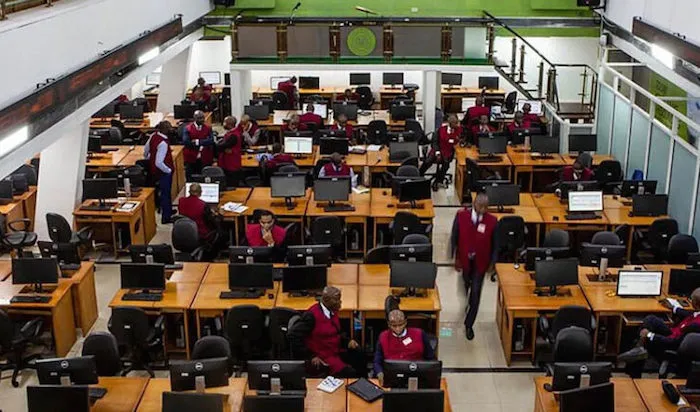
Nigerian stocks slid by 1.6 per cent last week, following profit-taking activities across all sectors except oil & gas.
The Insurance Index was worst hit, declining by 5.5 per cent, and remains the only sector index so far this year with a negative yield.
“Stocks with strong earnings, attractive valuations and consistent dividend payouts should also remain in focus,” investment bank United Capital Plc said in a note to investors ahead of the week.
This week, focus will shift to the primary market, where the landmark $1.6 billion initial public offering of Dangote Refinery will be commencing.
PREMIUM TIMES has assembled some stocks with sound fundamentals, adopting rigorous approaches to save you the risk of picking equities at random for investment.
The pick, a product of an analytical market watch, offers a guide to entering the market and taking strategic positions, with the expectation that selected stocks will record reasonable price appreciation with the passage of time.
This is not a buy, sell or hold recommendation but a stock investment guide. You may need to involve your financial advisor before taking investment decisions.
Transnational Corporation (Transcorp)
Transcorp tops this week’s list for its strong fundamentals and for trading below its intrinsic value. The net profit ratio (NPR) of the conglomerate is 24.7, while the price-to-earnings (PE) ratio is 4.5x. Its 10-day relative strength index (RSI) is 31.5.
AXA Mansard
AXA Mansard appears on the pick on the basis of its attractive fundamentals. The NPR of the insurer is 3.4, while the PE ratio is 29.8x, while the RSI is 47.3.
Guaranty Trust Holding Company (GTCO)
GTCO makes the selection for its strong fundamentals and for trading below its intrinsic value. The banking group’s NPR is 37.4, while the PE ratio is 5.4x. Its RSI is 47.8.
ALSO READ: Stanbic IBTC, Mutual Benefits, Aradel top stock picks this week
NPF Microfinance Bank
NPF Microfinance Bank makes the cut for its sound fundamentals. The PE ratio of the micro-lender is 7.2x, while the RSI is 22.5.
Neimeth
Neimeth makes the cut for its sound fundamentals. The NPR of the pharmaceutical company is 12.2, while the PE ratio is 33.2x. The RSI is 40.8.
Discover more from Premium Times Nigeria
Subscribe to get the latest posts sent to your email.
-

 Featured4 days ago
Children Are Suffering in Silence: Plateau Child Protection Network Rates Abuse Crisis 9/10
-
Business4 days ago
CBN disowns purported $46 billion grant approval
-
News3 days ago
Mecka AI nears $500M valuation in Sequoia-led deal amid rush for robot training data
-
News2 days ago
Revolut confirms customer data breach through fake government requests