Connect with us

Business

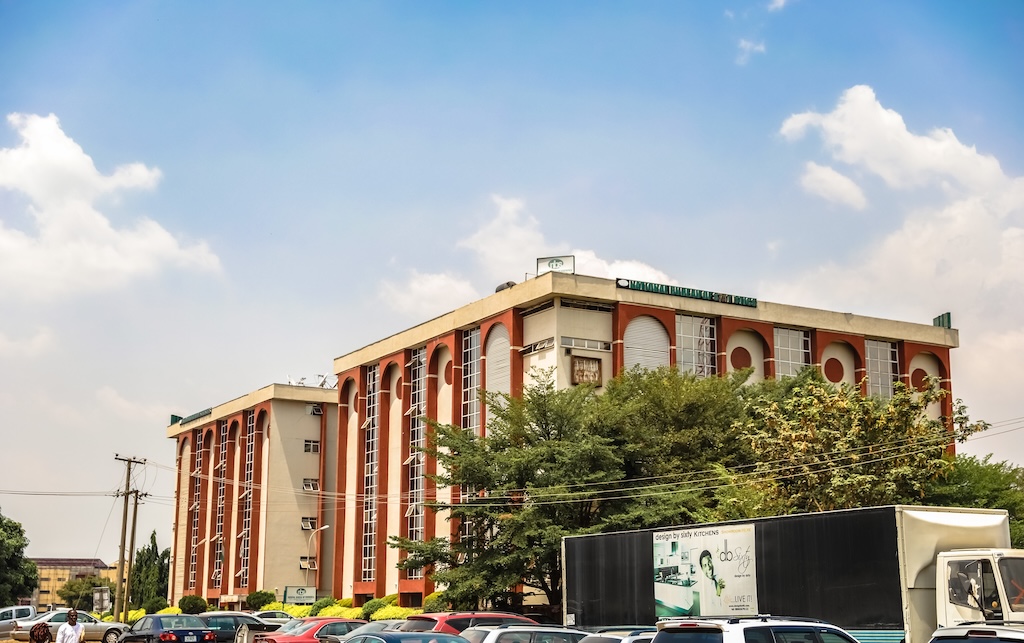
FCMB Group’s annual profit hits record N177 billion

info

Published

on

FCMB.jpg

Mid-tier lender FCMB Group reported on Monday a 147.7 per cent lead in net profit to the highest level on record, supported by a remarkable improvement in interest income, its primary source of revenue.

After-tax profit accelerated to N177.3 billion from N73.3 billion a year ago, according to its audited earnings report filed at the Nigerian Exchange.

Shares in the financial services group had jumped by 7.6 per cent on Lagos’ Customs Street as of 11:30 WAT, following the release of the results.

FCMB Group has operations in asset management, pensions, trusteeship and microfinance in addition to its core commercial banking business.

The board of directors has proposed a cash dividend of N0.35 per unit, translating into a potential payout of N23.1 billion. That compares to the dividend per share of N0.55 paid for the 2024 financial year.

Gross earnings for the period under review rose 42.5 per cent to N1.1 trillion. Net interest income, a profitability metric that measures the difference between the cash lenders generate on interest-bearing assets and what they pay out to deposits, expanded by 124.5 per cent to N505.9 billion.

Boosting revenue, net fee and commission income was up 30.4 per cent at N76.7 billion, driven by higher service fees and commissions as well as account maintenance fees.

The group set aside N81.7 billion to cover impaired assets, largely bad loans, which compares to the N41.2 billion it allocated for that purpose a year ago.

Profit before minimum tax and income tax advanced 80.6 per cent to N200.9 billion from N112.1 billion.

Total assets as of 31 December 2025 stood at N7.6 trillion, up from N7.1 trillion on the back of a sharp rise in investment securities.

FCMB Group also released on Monday its first quarter earnings results, which showed that profit after tax surged to N76.5 billion from N32.2 billion. Gross earnings for the period increased by 26.7 per cent to N320.2 billion.

Continue Reading
Click to comment

Leave a Reply

Your email address will not be published. Required fields are marked *

Business

Nigeria’s inflation eases to 14.63% in September

info

Published

on

National Bureau of Statistics.jpg

Nigeria’s headline inflation rate edged down to 14.63 per cent in September, from 15.39 per cent a month earlier, official data from the National Bureau of Statistics showed on Thursday, as the pace of increase in price levels continues to slow in Africa’s most populous country.

The development extends the downward trend in annual consumer inflation recorded in recent months, with inflation dropping marginally to 15.39 per cent in August from 15.43 per cent in July.

Food inflation stood at 19.59 per cent year-on-year in September, slightly higher than the 19.57 per cent recorded in August, but lower than the 20.16 per cent reported in September 2025.

Food accounts for a substantial share of household expenditure, particularly among lower-income households.

Core inflation, which excludes volatile items like agricultural produce and energy prices, stood at 12.95 per cent year-on-year in September, down from 13.29 per cent in August and 22.11 per cent in September 2025.

The annual figure indicates a continued slowdown in price increases outside the more volatile food and energy components.


PT WHATSAPP CHANNEL
Dangote Refinery AD

The divergence between the annual and monthly figures suggests that, although underlying inflation has moderated considerably over the past year, some price pressures persisted during September.

Despite the slowdown in inflationary pressures, Nigeria continues to face a cost-of-living crisis, principally on account of elevated food prices and energy costs, which have hammered the disposable income of many households.

The drop in living standards has been fuelled by tough economic reforms introduced by the current administration, including the removal of fuel subsidies, devaluation of the naira and a prolonged hawkish monetary policy stance.

The statistics office’s data also reflected differences between inflation in urban and rural areas.

READ ALSO: CBN restates single-digit inflation target as FG woos investors with tax credits

Urban inflation stood at 15.64 per cent year-on-year in September, down from 20.63 per cent in the corresponding month of 2025. Rural inflation was lower at 12.46 per cent year-on-year, compared with 21.06 per cent in September 2025.

What the figures mean

The September data point to a further slowdown in Nigeria’s inflation rate, with annual headline inflation falling for another month.

A fall in annual inflation means that prices are rising more slowly than they did over the corresponding period a year earlier. A negative monthly rate, such as the September food inflation figure, means that average prices in the measured basket declined compared with the previous month.

With annual food inflation still at 19.59 per cent, the September figures show that the pace of food price increases has moderated over the past year, while the average cost of food remains higher than it was a year ago.


Discover more from Premium Times Nigeria

Subscribe to get the latest posts sent to your email.

Continue Reading

Business

Verify Approved Devices Before Buying, NCC Urges Nigerians

info

Published

on

The Nigerian Communications Commission (NCC), apex regular in the communications industry, has called on consumers to confirm that SIM-enabled devices are Type Approved before paying for them.

Speaking recently in Abuja, Engr. Edoyemi Ogoh, Director, Technical Standards and Network Integrity, during a press briefing, on the Commission’s implementation of enhanced Type Approval Compliance.

“When buying a phone, tablet, modem, POS terminal or any device that uses a SIM,” consumers should ask the seller whether it is NCC Type Approved, he said.

He explained that the framework enables electronic verification of the Type Approval status of SIM-enabled devices. It is meant to help identify non-compliant, cloned or fake devices and stop them from connecting to Nigerian networks. Devices already in stock are being onboarded, and future imports will be verified and authenticated.

Under Section 132(2) of the Nigerian Communications Act 2003, service providers, facilities providers, equipment manufacturers and suppliers must obtain Type Approval before equipment is sold or used in Nigeria.

On privacy, Ogoh said the framework is not a surveillance tool. It holds only device identification information, such as IMEI numbers, for regulatory purposes. It gives the Commission no access to the content of communications, photographs, messages, contacts, financial information or other personal data on users’ devices.

He said the Commission developed the approach after the August 2024 Type Approval Business Rules, through consultations with original equipment manufacturers, importers, dealers, service providers, government agencies and industry associations. It continues to work with the Nigeria Customs Service and market associations, and will intensify public awareness activities.

The post Verify Approved Devices Before Buying, NCC Urges Nigerians appeared first on Business Today NG.

Continue Reading

Trending