News
China eyes stake in Nigeria’s plan to connect 20 million unserved citizens


Nigeria’s ambitious drive to connect more than 20 million unserved citizens has attracted renewed interest from China Industrial Bank (CIB), signalling potential Chinese participation in one of the Federal Government’s largest telecoms infrastructure projects aimed at expanding broadband access across underserved communities.
The development emerged following a meeting between Dr Bosun Tijani, Minister of Communications, Innovation and Digital Economy, and a delegation from China Industrial Bank led by Peng Shuang, General Manager of Strategic Emerging Industries Business Headquarters.
The engagement comes as the Federal Government intensifies efforts to attract strategic investors into the Nigeria Universal Communication Access Project (NUCAP), a flagship broadband initiative designed to extend telecommunications services to communities currently lacking access to reliable connectivity, according to the minister.
China’s interest in NUCAP could strengthen investor confidence in the project and potentially position the Chinese financial institution among prospective partners being considered for participation in the project’s Special Purpose Vehicle (SPV).

“Nigeria’s connectivity challenge remains significant. Government estimates indicate that more than 20 million Nigerians still live in locations with little or no access to telecommunications services, limiting opportunities for education, healthcare, financial inclusion, digital services and economic participation. Earlier this year, Tijani disclosed that the Federal Government had secured approval for the deployment of 3,700 telecommunications towers across the country, with a target of delivering at least 1,000 tower sites within the year.”
Nigeria’s government seeks investors for connectivity rollout
The Federal Government has been actively courting private-sector participation in NUCAP as part of efforts to accelerate broadband expansion and bridge Nigeria’s digital divide.
In April, the Ministry of Communications, Innovation and Digital Economy invited investors to acquire a minority equity stake in the project’s SPV, highlighting the initiative’s strategic importance in extending digital infrastructure to underserved and unserved communities nationwide.
Nigeria’s connectivity challenge remains significant. Government estimates indicate that more than 20 million Nigerians still live in locations with little or no access to telecommunications services, limiting opportunities for education, healthcare, financial inclusion, digital services and economic participation.
Earlier this year, Tijani disclosed that the Federal Government had secured approval for the deployment of 3,700 telecommunications towers across the country, with a target of delivering at least 1,000 tower sites within the year.
The project is expected to focus on some of Nigeria’s most difficult-to-reach locations, including rural, remote and riverine communities that have remained outside the commercial coverage footprint of mobile network operators.
“NUCAP is a wholly greenfield network of modern telecommunications towers that will extend connectivity to these previously unconnected communities, many of them in rural and riverine areas of Nigeria,” Tijani said.
China bank backs 1,000-tower target
Expressing optimism about the project’s progress, the minister welcomed the bank’s commitment to supporting the Federal Government’s connectivity ambitions.
According to Tijani, discussions with China Industrial Bank reinforce confidence in achieving the target of deploying at least 1,000 telecommunications towers before the end of the year.
“I am encouraged by the Bank’s commitment to supporting our ambition of delivering a minimum of 1,000 tower sites by the end of this year to help bring connectivity, opportunity and economic inclusion closer to millions of Nigerians,” he said.
The support from China Industrial Bank comes at a critical stage in the project’s implementation as government seeks both funding and strategic expertise to accelerate deployment.
Nigeria’s NUCAP to deliver broadband, Wi-Fi and digital services
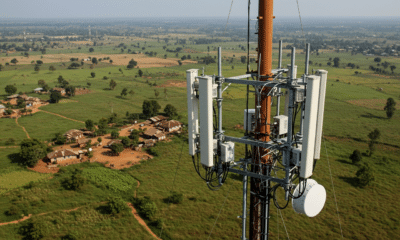
NUCAP is designed as a large-scale digital inclusion initiative that will deploy 3,700 telecommunications towers nationwide to provide broadband connectivity, public Wi-Fi services, digital learning platforms and supporting communications infrastructure in underserved communities.
The project is expected to play a significant role in advancing the Federal Government’s broader digital economy agenda by improving access to online education, digital financial services, e-government platforms and other technology-enabled opportunities.
To facilitate implementation, the initiative is being executed through a Special Purpose Vehicle established to own, manage and commercialise the network infrastructure.
The SPV will oversee project assets and coordinate with contractors, mobile network operators, regulators and other stakeholders involved in the construction, deployment and operation of the network.
Under the ownership structure approved by the government, the Federal Government, acting through the Ministry of Finance Incorporated (MOFI), will hold a 90% equity stake in the SPV, while private-sector investors and strategic partners will collectively own the remaining 10% stake.
Government officials have indicated that prospective investors will be required to commit approximately $35 million to acquire the minority stake, reflecting efforts to attract private capital while ensuring public-sector control of the strategic infrastructure.
Closing Nigeria’s digital divide
The initiative aligns with the mandate of the Universal Service Provision Fund (USPF), which was established to promote universal access to information and communication technologies across rural, unserved and underserved areas of Nigeria.
As Nigeria pursues its target of achieving universal digital access, projects such as NUCAP are increasingly being viewed as critical infrastructure investments capable of extending connectivity beyond commercially viable urban centres and bringing millions of excluded Nigerians into the digital economy.
The growing interest from China Industrial Bank highlights the international investment attention being drawn to Nigeria’s broadband expansion agenda and underscores the scale of opportunities emerging in the country’s quest to bridge the connectivity gap affecting more than 20 million citizens.






News
BREAKING: Super Eagles Camp Grows to 23 as Ndidi, Chukwueze Land in Uyo Ahead of Madagascar Clash
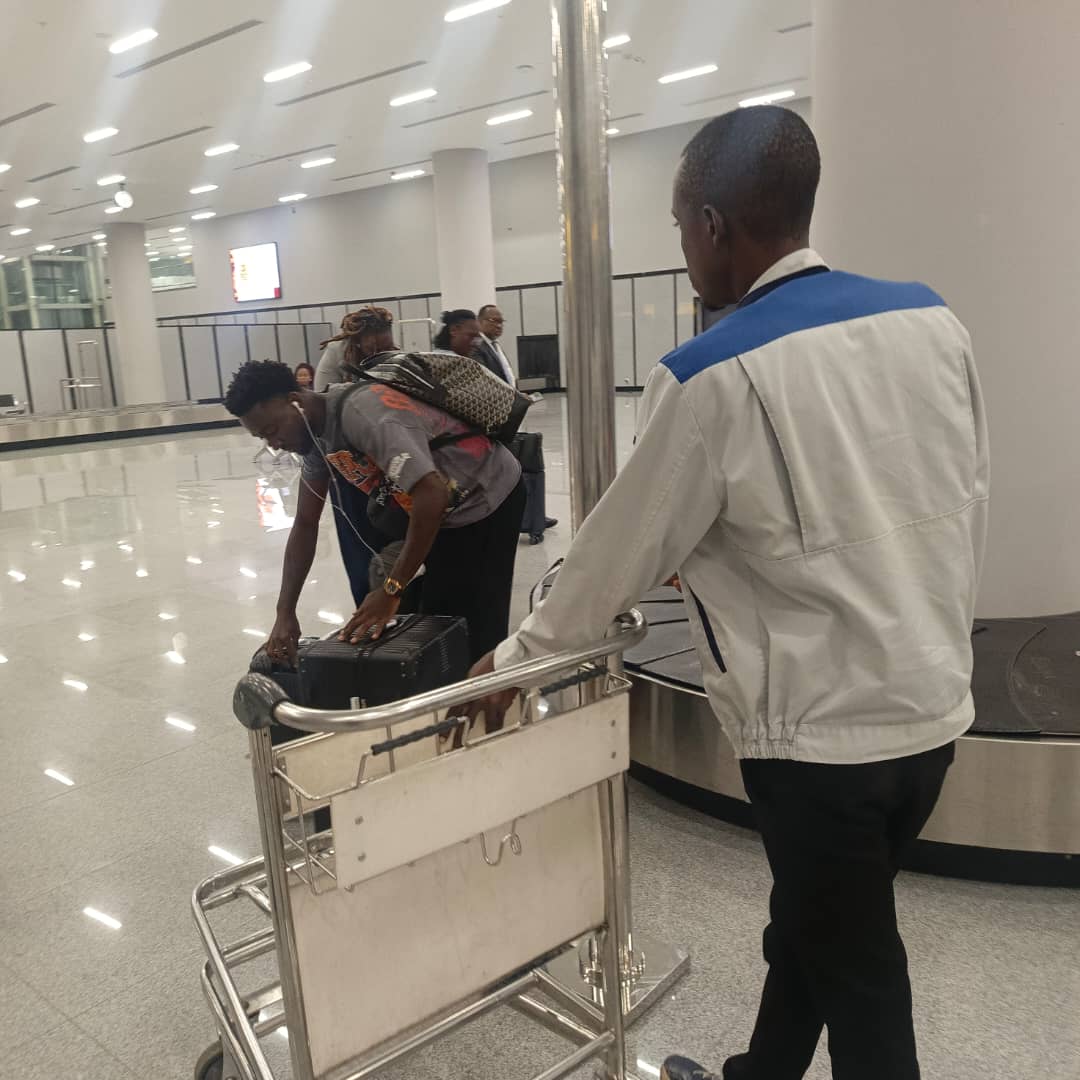
The Super Eagles camp in Uyo has grown to 23 players following the arrival of captain Wilfred Ndidi and winger Samuel Chukwueze as Nigeria intensifies preparations for Friday’s 2027 Africa Cup of Nations qualifier against Madagascar.
Ndidi and Chukwueze landed at the Victor Attah International Airport in Uyo at exactly 5:20 p.m. on Tuesday, arriving from Lagos aboard an Ibom Air flight before linking up with the rest of Éric Chelle’s squad.
Their arrival followed that of goalkeeper Stanley Nwabali, who had earlier increased the number of players in camp from 20 to 21 before the team headed out for its first training session.
The initial 20 arrivals were Moses Simon, Akor Adams, Taiwo Awoniyi, Isaac James, Emmanuel Fernandez, Benjamin Fredrick, Moses Usor, George Ilenikhena, Arthur Okonkwo, Alex Iwobi, Semi Ajayi, Calvin Bassey, Ola Aina, Ademola Lookman, Bright Osayi-Samuel, Chibuike Nwaiwu, Tolu Arokodare, Bruno Onyemaechi, Raphael Onyedika and Frank Onyeka.
With Nwabali, Ndidi and Chukwueze subsequently reporting, Chelle now has 23 players available, giving the coach an almost complete group as preparations gather momentum in Uyo.
Nigeria’s squad underwent a late alteration after Victor Osimhen was ruled out through injury, prompting the recall of Taiwo Awoniyi as his replacement.
The Coventry City striker is already in camp and will compete with Akor Adams, Tolu Arokodare and George Ilenikhena among the centre-forward options.
The Super Eagles will host Madagascar at the Godswill Akpabio International Stadium, Uyo, on Friday, September 25, before travelling to Bissau for their second Group L qualifier against Guinea-Bissau on September 29.
After the disappointment of missing the 2026 FIFA World Cup, Nigeria are under pressure to begin their AFCON campaign positively.
With 23 players now assembled in Uyo and training underway, Chelle can turn his attention to shaping the team he believes can deliver the opening three points against Madagascar.
-

 Business3 days ago
Lingzhi Global, NACOFTAN Announce 2026 Coffee Festival in Cross River
-
Events3 days ago
Peace Walk: WOPPI Urges Plateau Citizens to Invest in Peace Every Day
-
 Health3 days ago
Nigerian hospitals collaborate to perform tele-robotic surgery
-
News3 days ago
INEC declares APM’s Adamu Yakubu winner of Sakwa bye-election in Bauchi