Connect with us

News

NDC primary fallout: What I discussed with Kwankwaso – Seriake Dickson

info

Published

on

1781070146 Seriake Dickson.jpg

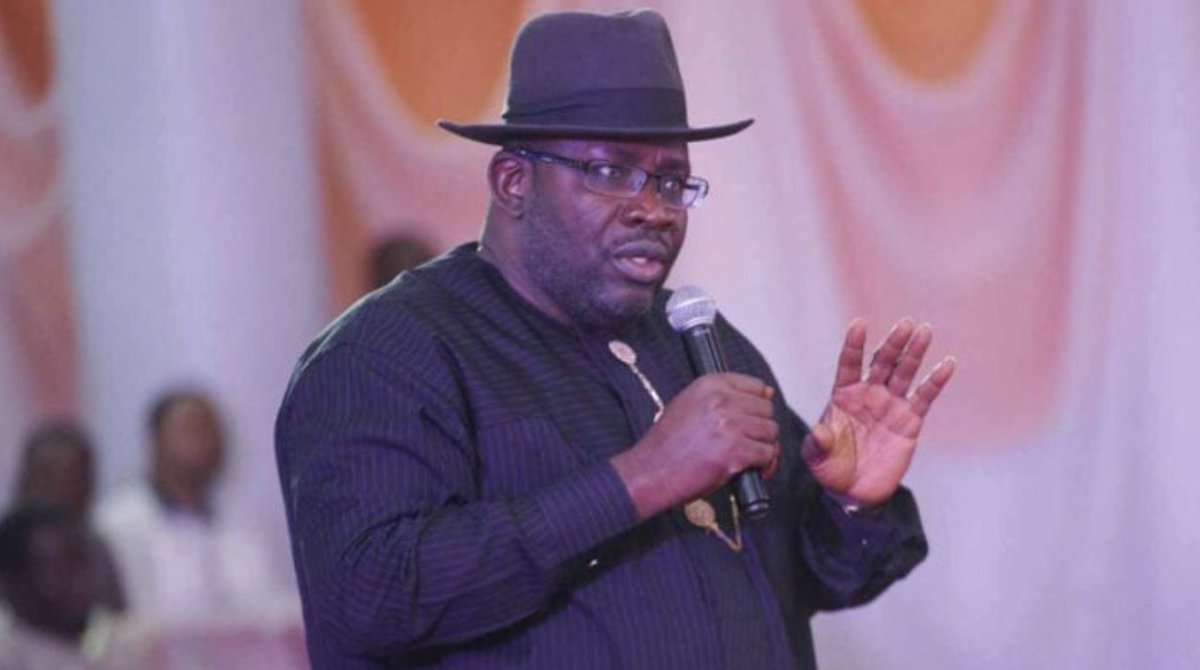
Former Bayelsa State Governor and chieftain of the National Democratic Coalition, NDC, Seriake Dickson, has disclosed details of his meeting with former Kano State Governor, Rabiu Musa Kwankwaso, saying their discussions centred on resolving internal issues within the party in Kano State.

Dickson made this known in a statement shared on his Facebook page on Tuesday following a meeting with Kwankwaso and senior NDC officials at his residence.

According to him, the meeting was part of his ongoing mediation efforts aimed at ensuring unity between party officials in Kano State and Kwankwaso, whom he described as the party’s leader in the state and vice-presidential candidate.

He noted that the NDC was rapidly emerging as a leading opposition platform in Nigeria and that disagreements were inevitable in any growing political movement. However, he stressed that such issues were being addressed through dialogue, consultation and reconciliation.

Dickson expressed confidence that the discussions with Kwankwaso would strengthen cooperation within the party and help members work together towards achieving electoral success.

He further described the Kwankwasiyya Movement and the Obidient Movement as important support groups for the party, revealing that steps were being taken to integrate their members into NDC activities nationwide.

“The Kwankwasiyya Movement, the Obidient Movement and other support groups remain valuable mobilization networks. I had earlier recieved a courtesy delegation some weeks ago by the Obidient Movement and promised to ensure their integration into the activities of our party at various levels across the country; and the same for the Kwankwasiyya movement which I have asked for their list of coordinators to be forwarded to the party for the same purpose. This process will be undertaken in a structured and orderly manner,” Dickson said.

Continue Reading
Click to comment

Leave a Reply

Your email address will not be published. Required fields are marked *

News

Senate Seeks Ban On Textile Imports, Urges Revival Of Local Mills

info

Published

on

By

9 1.jpg

By Nefishetu Yakubu


The Senate on Tuesday urged the federal government to ban importation of textile materials and revive Nigeria’s textile industry to create jobs for the growing unemployed population.


The resolution followed a motion sponsored by Sen. Sunday Katung (Kaduna South) on the urgent need to revive Nigeria’s textile industry and restore its contribution to economic growth.


The motion was co-sponsored by Sen. Suleiman Abdurrahman (Kano South), Sen. Simon Lalong (Plateau South), Sen. Aminu Tambuwal (Sokoto South), Sen. Hussaini Uba (Jigawa Northwest) and Sen. Mohammed Muntari (Katsina South).


Katung, while moving the motion, said that the first large-scale textile manufacturing mill in Nigeria was established in 1957 in Kaduna and later replicated across the regions.


He recalled that Nigeria’s textile industry flourished in the 1960s and 1970s due to strong government intervention, including restrictions on textile imports that attracted investors.


According to him, by the late 1970s and 1980s, Nigeria had about 167 textile mills employing more than 500,000 workers directly.


He said the sector became the country’s second-largest employer of labour after the federal government, contributing significantly to industrialisation, commerce and economic development.


Katung noted that Kaduna earned the title of “Textile City” because it hosted major integrated mills and the headquarters of the Nigerian Textile Manufacturers Association.


“Kaduna once had about 11 textile companies operating optimally, including Arewa Textiles Plc, Finetex Nigeria Ltd., Nortex Nigeria Ltd. and United Nigerian Textiles Ltd.


“By 1997, Kaduna Textile Limited, Arewa Textiles and United Nigerian Textiles Limited were barely functioning due to obsolete equipment and inadequate capital,” he said.


Katung lamented that by 2007, the three major mills had shutdown completely, leaving more than 7,000 workers unemployed and facilities abandoned.


The lawmaker said there were currently no significant new investments in the sector, while Nigeria depended on imports for more than 99 percent of textile needs.


He noted that Nigeria’s textile industry was once the third largest in Africa, generating about 2 billion dollars annually from diverse products.


According to him, the industry produced more than 1.4 billion pieces of textiles annually, including African prints, bed sheets, towels, and furnishing fabrics.


Katung,also identified the influx of foreign textile products into the country as one of the most serious threats confronting local manufacturers.


He further observed that since the lifting of the textile import ban in 2010, about 80 percent of textiles consumed in Nigeria were imported.


Sen. Mohammed Monguno, however, said Nigeria’s textile industry, once vibrant and economically significant, was now struggling due to imported products and rising production costs.


Monguno proposed a ban on textile imports and the establishment of a special intervention fund by the Central Bank to revive the sector, which was adopted by the lawmakers.


Contributing, Sen. Natasha Akpoti-Uduaghan, called for greater attention to cotton cultivation, describing it as the primary raw material required for the revival of Nigeria’s textile industry.


She cited the contributions of cotton to economies such as the United States and Ethiopia, urging strategic collaboration among ministries to restore Nigeria’s competitiveness.


Sen. Adams Oshiomhole blamed the collapse of Nigeria’s textile industry on poorly conceived trade policies and urged the Senate to ensure the motion does not suffer the fate of previous resolutions.


The Senate, thereafter, adopted additional prayers urging the federal government to provide special intervention funds through the Bank of Industry to support textile revival.


The Senate consequently urged the federal government, the Ministry of Agriculture and the Ministry of Industry, Trade and Investment to revive textile industries nationwide.


According to the lawmakers, reviving textile factories in Nigeria would create jobs, reduce youth restiveness and address growing insecurity challenges(NAN)

(www.nannews.ng)

NY//MAM/FEO


Edited by Modupe Adeloye/Francis Onyeukwu


Continue Reading

News

“We Are Not a Small Team” — Chelle Vows to Defend Super Eagles’ Philosophy Against Portugal

info

Published

on

By

IMG 20260609 WA0403.jpg

Super Eagles head coach Éric Chelle has declared that Nigeria will approach Wednesday’s international friendly against Portugal with confidence and a clear football identity, insisting that his side should not be regarded as underdogs.

Nigeria will take on Portugal at the Estádio Dr. Magalhães Pessoa in Leiria in a high-profile clash expected to test the Super Eagles against one of Europe’s top national teams ahead of the 2026 FIFA World Cup.

Speaking before the encounter, Chelle stressed that the focus of his team is not on reputation or status, but on implementing their style of play and football philosophy.

“We are not a small team, we come into the game with our strengths and weaknesses,” Chelle said.

“This is not a question of who is the best team, I’m only thinking about our style and our philosophy. It would be a great game.”

The match represents Portugal’s final warm-up fixture before the start of the FIFA World Cup, while Nigeria continue preparations for future international competitions after narrowly missing out on qualification for the mundial.

Under Chelle, the Super Eagles have shown signs of progress, remaining unbeaten in recent matches and recording victories against Zimbabwe, Jamaica, and Poland, while also successfully retaining the Unity Cup.

Portugal, led by Roberto Martínez, are also enjoying strong form and are expected to parade a star-studded squad as they fine-tune preparations for the World Cup.

Nigeria and Portugal have met only once previously at senior level, with the Portuguese side securing a 4-0 win in an international friendly played in Lisbon in November 2022.

Wednesday’s encounter is scheduled to kick off at 7:45pm Nigerian time.

Continue Reading

Trending