Business
Skyway Aviation Reports Robust Profit Growth, Revenue Up 54% in 2025

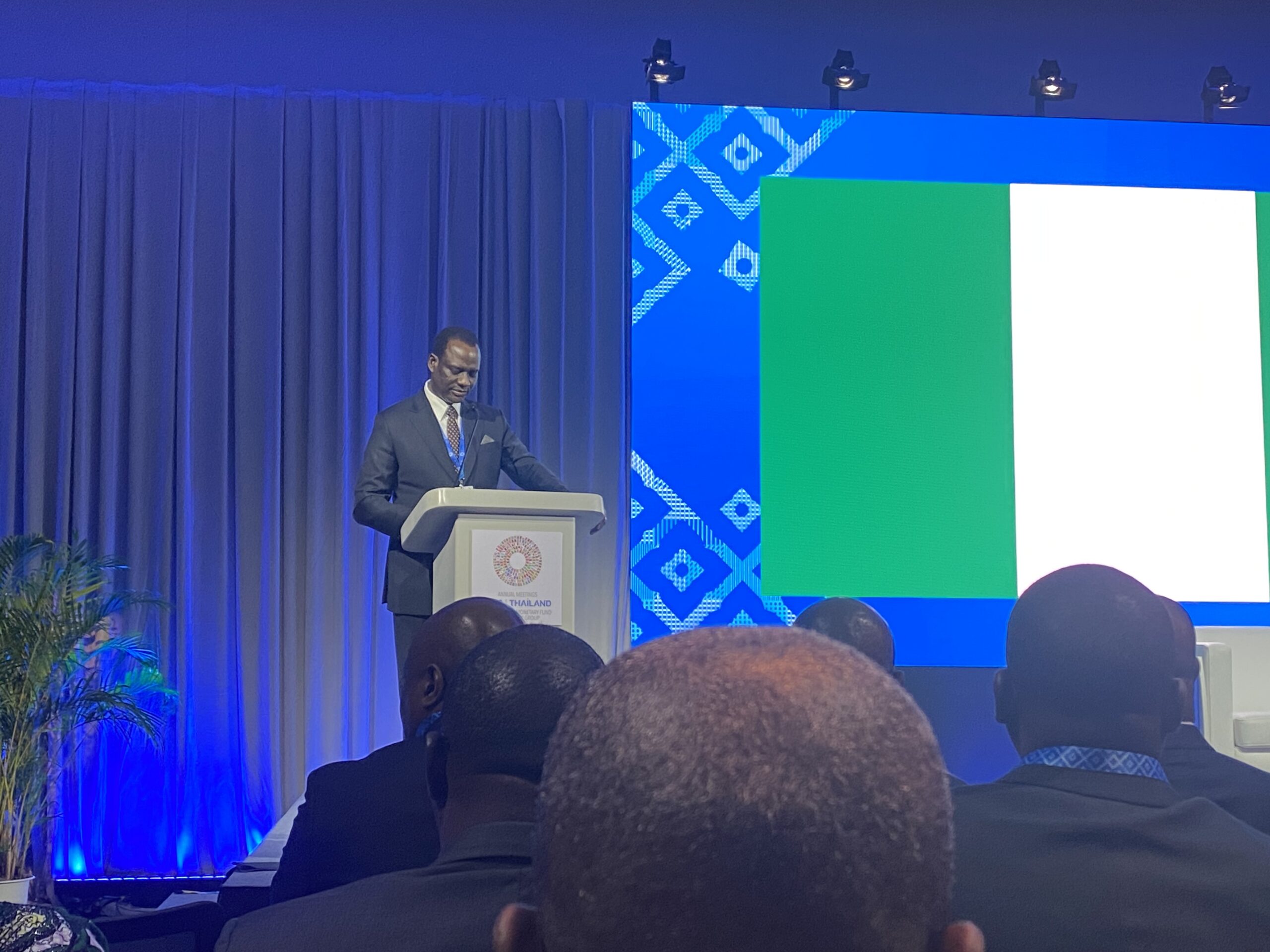
Nigeria’s Minister of Finance and Coordinating Minister of the Economy, Taiwo Oyedele, on Saturday said there will be no reversal of the government’s policies on fuel subsidy removal and foreign exchange market liberalisation.
Mr Oyedele spoke in response to concerns raised in the wake of the debates over subsidy policies ahead of the 2027 elections.
PREMIUM TIMES reports that the minister spoke on the sidelines of the World Bank/IMF meetings in Bangkok, Thailand.

Nigeria has introduced a series of reforms the government said were focused on fixing the structure of the economy, although the impact has been enormous for many Nigerians grappling with the cost-of-living crisis.
The government introduced reforms in the foreign exchange market, abolished what it termed a wasteful, corruption-ridden subsidy regime amid fiscal pressures, and institutionalised tax reforms.

While the Nigerian government, led by President Bola Tinubu, has defended its economic policy of subsidy removal as critical to the nation’s fiscal survival, opposition politicians—such as Atiku Abubakar of the ADC and Peter Obi of the NDC—have canvassed for and promised a return to different subsidy arrangements if elected into power.

Although the reforms have been hailed as positive for the nation’s fiscal health by global development and financial institutions, many Nigerians have expressed frustrations over their impact on the domestic front amid skyrocketed energy prices, high cost of living and sundry inflationary pressures.
Mr Oyedele said on Saturday that there will be no return to subsidy regimes, adding that the 30-day retail margin discount isn’t a subsidy arrangement.
“And let me be clear as well, this was a recurring question almost through all our engagements, but also with the rating agencies, with the investors, and the multilateral institutions. Every time they ask, are you reversing your plans? Are you bringing back subsidies? Let me be clear, there will be no return to fuel subsidies or multiple exchange rates,” he said.
READ ALSO: Oyedele warns against tax burden on poor people as G-24 seeks concessional lending support
PREMIUM TIMES reports that the government recently announced an intervention by the state-owned oil company, NNPC, that it would sell petrol at the cost price for about 30 days; a move many described as some form of subsidy. The government, however, insists the intervention is not a subsidy.
“The recent 30-day retail margin discount… is a time-bound commercial decision by the NNPC to reduce margins and support Nigerians. It is not a subsidy paid from public funds,” Mr Oyedele said.
Discover more from Premium Times Nigeria
Subscribe to get the latest posts sent to your email.

The Nigerian Safety Investigation Bureau (NSIB) has begun an investigation into an incident involving a foreign-registered aircraft operated by Triton Aviation after the airline’s crew reported that a door of the aircraft opened mid-air shortly after taking off from Abuja on Thursday.
The Challenger 604 aircraft, with registration number T7-SEI, departed the Nnamdi Azikiwe International Airport on Thursday for Lagos.
It was about three nautical miles from the airport, climbing through 3,500 feet, when its crew declared a Mayday emergency, according to the NSIB.
The aircraft returned to Abuja and landed safely on Runway 22 at 16:34 Coordinated Universal Time (UTC), with nine people on board, comprising three crew members and six passengers.
In a statement issued Friday and signed by its director-general and CEO, Alex Badeh Jr., the NSIB said it recovered the missing door and secured it at its wreckage hangar.
“The bureau has commenced its investigation to establish the circumstances surrounding the occurrence,” the statement said.
PREMIUM TIMES earlier reported that the aircraft’s crew declared a Mayday emergency after reporting that a door had opened during flight shortly after take-off.
Airport fire, rescue personnel and medical teams were placed on standby while air traffic controllers directed the aircraft back to Abuja.
The aircraft landed safely, and the air traffic controller subsequently observed that the door was missing from the fuselage.
A video circulating on social media also appears to show the missing door. In the footage, an unidentified man said farmers had found the object while returning from their farm in the Abuja area.
The NSIB said its investigation will establish the circumstances surrounding the incident, including what caused the door to detach and the sequence of events during the flight.
The aircraft is registered in San Marino, a small European country surrounded by Italy, according to the NSIB statement.
The bureau said it will provide further updates as the investigation progresses.
Discover more from Premium Times Nigeria
Subscribe to get the latest posts sent to your email.
-

 Health4 days ago
AMR: Livestock uses more antibiotics than human health sector
-
News3 days ago
MTN, Airtel take 90% of Nigeria’s 15m new subscribers as Glo shifts ground – Technology Times
-
News4 days ago
The Stage Is Set, Nairobi Is Ready! Africa’s Business and Sports Power Players Converge for YORA Summit 2026
-
Health2 days ago
Katsina health professionals declare 7-day warning strike