News
Lagos, Kwara, Jigawa, 30 other states will experience flooding this year: Minister


The Minister of Water Resources and Sanitation, Prof. Joseph Utsev, has said about 33 states and the FCT will experience flooding in 2026, with 14,118 communities identified as high-risk nationwide.
Mr Utsev disclosed this in Abuja on Wednesday at the public presentation of the 2026 Annual Flood Outlook (AFO) by the Nigeria Hydrological Services Agency (NIHSA).
He said the high-risk communities were located in 266 Local Government Areas (LGAs) based on scientific forecasts and hydrological assessments.
The affected states according to him are Abia, Adamawa, Anambra, Bauchi, Bayelsa, Benue, Borno, Cross River, Delta, Ebonyi, Edo, Enugu, Gombe, Imo, Jigawa, Kaduna and Kano.
Others include Kebbi, Kogi, Kwara, Lagos, Nasarawa, Niger, Ogun, Ondo, Osun, Oyo, Plateau, Rivers, Sokoto, Taraba, Yobe and Zamfara, including the FCT.
The minister said that 15,597 communities in 405 LGAs across 35 states would face moderate flood risk, while Ekiti State remained the only state not affected.
He added that 923 communities in 77 LGAs across 24 states fell within the low flood risk category.
”States in this category include Adamawa, Anambra, Bauchi, Bayelsa, Benue, Borno, Cross River, Delta, Ebonyi, Edo, Jigawa, Kaduna, Kano, Kebbi, Kogi, Nasarawa, Niger, Ogun, Ondo, Osun, Oyo, Sokoto, Taraba and Zamfara,” he said.
He warned of possible flash and urban flooding in major cities, including Abuja, Lagos, Port Harcourt, Ibadan and Kano.
He said coastal and riverine flooding is expected in Bayelsa, Cross River, Delta, Lagos, Ogun, Rivers and Ondo states due to rising sea levels and tidal surges.
He stated, “The AFO is not just a scientific report; it is a call to action. Early warning saves lives and reduces economic losses.”
Mr Utsev attributed increasing flood incidents to climate variability, rapid urbanisation, inadequate drainage infrastructure and poor land-use practices.
He noted that the Federal Government was strengthening hydrological monitoring through improved data systems, automated river gauges and advanced modelling techniques.
He added that collaboration with the Nigerian Meteorological Agency (NiMet) and the National Emergency Management Agency (NEMA) were being enhanced to improve forecast accuracy and early warning dissemination.
The minister urged state governments to integrate flood risk considerations into land-use planning, urban development and infrastructure design.
He also called for improved drainage systems, effective floodplain management and stronger community preparedness to minimise impacts.
Earlier, President Bola Tinubu, represented by the Minister of Environment, Balarabe Lawal, said flooding remained a major national challenge, with recurring incidents recorded since 2012.
Mr Tinubu said his administration had initiated policies and programmes, including flood control projects, to address the persistent threat.
He said that the 2024 Maiduguri flood marked a turning point toward proactive flood and disaster management.
According to him, the Anticipatory Action initiative, led by the Office of the Vice-President, is strengthening early warning, preparedness and coordinated response.
Mr Tinubu described the AFO as a key planning document guiding early action, mitigation and evacuation strategies nationwide.
He urged stakeholders to utilise the forecasts to protect lives, livelihoods and critical infrastructure.
The president also emphasised the need to harness water resources to drive economic diversification and sustainable development.
Also speaking, the Director-General of NIHSA, Umar Mohammed, said the forecast was based on comprehensive, data-driven analysis of flood-prone areas.
Mr Mohammed said the AFO served as an early warning tool to support planning and coordinated disaster response nationwide.
He added that the agency had upgraded its forecasting system to a hybrid AI-integrated model to improve accuracy and lead time.
He also said that the Flood Dashboard now enabled real-time monitoring and dissemination of alerts to stakeholders.
He urged residents in vulnerable areas to heed early warnings and adopt preventive measures to reduce risks.
The NIHSA director general called for wider dissemination of the outlook to strengthen preparedness and resilience in communities.
He appreciated the Federal Government and development partners for their support in the preparation of the 2026 outlook.
Goodwill messages were delivered by representatives of the World Meteorological Organisation, NiMet, NEMA, the Minister of Livestock Development, Dr Idi Maiha, and other stakeholders.
(NAN)






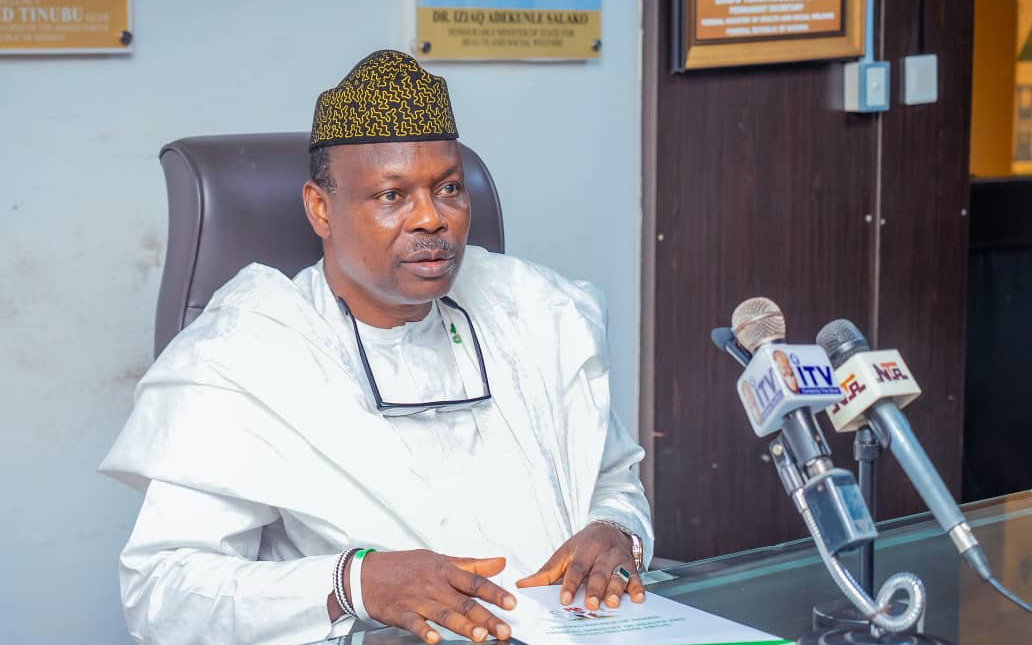
The federal government says it has disbursed N249.6 billion to the Basic Health Care Provision Fund (BHCPF) in the past three years, representing 77.1 per cent of the N323.6 billion disbursed since the fund was established in 2019.
The government also plans to expand direct financing to at least 17,600 primary healthcare facilities and provide health insurance coverage for about 90,000 Nigerians in correctional facilities.
The Minister of State for Health and Social Welfare, Iziaq Salako, disclosed this on Wednesday in Abuja during a ministerial briefing on three years of implementation of the fund under President Bola Tinubu’s administration.
Established under the National Health Act 2014, the BHCPF is designed to improve access to essential healthcare, particularly for poor and vulnerable Nigerians.
Mr Salako said the fund had become a key instrument for implementing the Nigeria Health Sector Renewal Investment Initiative, launched in December 2023 to strengthen healthcare delivery and financing.
Disbursements and allocations
According to Mr Salako, total releases to the fund stood at N422.3 billion as of September 2026, with N323.6 billion disbursed.


He said the Ministerial Oversight Committee approved an additional N40.76 billion at its meeting on 14 October. The approval is expected to raise cumulative disbursements to N364.3 billion, including N290.2 billion under the Tinubu administration, according to the statement.
Speaking on the latest allocation, Mr Salako said N19.87 billion would go to the National Health Insurance Authority, N18.34 billion to the National Primary Health Care Development Agency, N2.04 billion to emergency medical treatment and N509.48 million to the Nigeria Centre for Disease Control and Prevention.
He said the allocations would support health insurance, primary healthcare services, emergency medical response and disease surveillance.
Mr Salako added that the government was working with the National Assembly to increase the fund’s statutory allocation from one per cent to two per cent of the Consolidated Revenue Fund.
Health insurance and primary healthcare
On financial protection, Mr Salako said national health insurance enrolment increased from about 16.2 million people in 2023 to 23.06 million by the third quarter of 2026.
He said the BHCPF had supported insurance coverage for 3,182,943 vulnerable Nigerians with National Identification Numbers.
The fund, he added, had also supported free surgeries and rehabilitation for women with vesicovaginal fistula, emergency caesarean sections and other emergency obstetric and newborn care interventions for 96,068 women and babies.
Mr Salako said the oversight committee had also approved health insurance coverage for approximately 90,000 Nigerians in correctional facilities, with implementation expected to expand access to essential healthcare for inmates.
On primary healthcare delivery, he said direct facility financing currently supports 8,309 PHCs across the 36 states and the Federal Capital Territory.
He said the government planned to include a further 5,212 facilities, bringing the projected total to 13,521. However, the government’s broader target is to expand direct financing to at least 17,600 facilities.
Mr Salako added that the number of facilities attaining Level 2 readiness increased from 1,748 in 2024 to 3,202 in the third quarter of 2026.
He also said PHC attendance rose from 34.55 million in 2023 to 43.06 million by the second quarter of 2026.
Emergency services and health workers
On emergency medical services, Mr Salako said operational structures had been established in all 36 states and the FCT.
Through the Rural Emergency Service and Maternal Transport arrangements, emergency transport services had been established in 171 of the 172 local government areas covered by the Maternal and Newborn Mortality Reduction Innovation Initiative. The government plans to extend the initiative to 200 local government areas by December 2026.
He said the emergency response system had recorded 168,571 ambulance service episodes since 2023, covering obstetric emergencies, neonatal and under-five emergencies, road traffic injuries, snakebites, burns and other urgent medical conditions.
Mr Salako said 78,054 frontline health workers had been trained towards a national target of 120,000.
He also said the oversight committee approved phased salary support for 13,800 community-based health workers and skilled birth attendants. Under the arrangement, the federal government would cover eligible salary costs in full in the first year, 67 per cent in the second year and 33 per cent in the third year, before state governments assume full responsibility.
READ ALSO: FG partners US foundation to mobilise $1bn to tackle child malnutrition
He said the committee had also approved the operationalisation of MEDIPOOL, a pooled procurement mechanism intended to improve access to essential medicines and health commodities, subject to quality assurance and accountability safeguards.
Accountability and next steps
Mr Salako urged state governments to fulfil their counterpart financing obligations and ensure sustainable funding for primary healthcare services. He commended Katsina State for releasing N240.79 million to its State Health Insurance Agency to support expanded coverage.
He said the Ministry of Health and Social Welfare was strengthening financial accountability through the implementation of the updated BHCPF Guidelines 2.0 and collaboration with the Independent Corrupt Practices and Other Related Offences Commission to track the use of public funds.
He emphasised that timely reporting, transparent payments, and expenditure verification were necessary to ensure funds reached healthcare facilities and translated into services for patients.
Mr Salako said the government remained committed to increasing domestic health financing and improving access to essential healthcare, particularly for vulnerable Nigerians.
Discover more from Premium Times Nigeria
Subscribe to get the latest posts sent to your email.

The vice-presidential candidate of the Nigeria Democratic Congress, NDC, Rabiu Kwankwaso, has demanded an independent investigation into suspected AI-generated photographs and questionable records in the preliminary voter register released by the Independent National Electoral Commission, INEC, ahead of the 2027 general elections.
Kwankwaso questioned how the suspicious images entered the register and whether the identities linked to the records were properly verified.
In a statement shared on X, Kwankwaso said INEC’s decision to investigate the matter was welcome but insisted that the probe must be transparent and conducted independently of the commission.
“The investigation must be thorough, transparent and independent,” he said, demanding that the findings be made public and anyone found culpable be held accountable under the law.
He also called for an independent audit of the preliminary register, including checks for questionable entries, duplicate records and artificial identities.
Kwankwaso demands independent probe into suspected AI photos in INEC voter register
-
Business4 days ago
REA Ends 16 Years of Darkness in Two Kano Communities
-

 Business3 days ago
CBD COP17: Nigeria, France Push for Faster Action on 30×30 Biodiversity Target
-
News3 days ago
AI delivers ‘zero financial payoff’ to most companies, Apollo economist says
-
News2 days ago
Poor AI data pipelines could fuel cyber exploitation in Nigeria, regulator warns – Technology Times