Business
CPPE backs FG reforms, urges shift from economic stability to productivity



The Centre for the Promotion of Private Enterprise (CPPE) has backed the Federal Government’s economic reform programme, saying the measures have produced measurable improvements in Nigeria’s fiscal and macroeconomic position.
The group, however, said the gains would have limited meaning unless they translate into higher productivity, increased investment, more jobs and improved living standards for Nigerians.
The CPPE made the position known in a statement issued by its Chief Executive Officer, Muda Yusuf, on Sunday, five days after the Minister of Finance and Coordinating Minister of the Economy, Taiwo Oyedele, presented the Federal Government’s economic reform scorecard.
The scorecard, presented on 19 August in Abuja, assessed the benefits, costs and potential harms prevented by the reforms introduced by President Bola Tinubu’s administration.
The reforms, which include the removal of the petrol subsidy and changes to the foreign exchange market, have significantly altered Nigeria’s fiscal and economic landscape since June 2023.

While the government said the measures have strengthened public finances, improved foreign exchange stability, and restored investor confidence, they have also increased the cost of living and of doing business, with Nigerians continuing to contend with high food, energy, and financing costs.
Mr Yusuf said the government’s disclosure of the reform outcomes was important because transparency was necessary to build public confidence in the measures.
“Such transparency is critical to reform credibility,” he said, while welcoming what he described as the minister’s balanced acknowledgement of both the gains and adjustment costs of the reforms.
‘Stability must translate to better lives’
According to the CPPE, the reforms have delivered improvements in government revenue, foreign exchange market stability, external reserves, trade balance and investor confidence.
It noted that Nigeria’s real Gross Domestic Product growth strengthened to 3.89 per cent in the first quarter of 2026, from 3.13 per cent in the corresponding quarter of 2025.
However, Mr Yusuf said improved economic indicators should not become the ultimate measure of the reforms.
“Macroeconomic stability is a means, not an end.”
“The real test is whether stability translates into higher productivity, stronger investment, more jobs, lower poverty and improved living standards.”
He added that the transition remained incomplete, noting that households continued to face pressure on their purchasing power while businesses were dealing with high energy, financing, logistics and regulatory costs.
The CPPE therefore urged the government to make productivity and competitiveness the focus of the next phase of its reform programme.
The call comes against the background of the government’s own admission that household welfare remains an unfinished aspect of the reforms.
At the presentation of the scorecard, the minister acknowledged that the reforms had imposed high costs on Nigerians, including higher petrol prices and interest rates.
He said the Monetary Policy Rate had risen from 18.5 per cent in May 2023 to 26.5 per cent, while petrol prices increased from about N185 per litre before subsidy removal to between N1,100 and N1,400.
He also noted that poverty and household welfare recovery remained areas where the government could not yet claim victory.
States must show what higher revenues are achieving
The CPPE also raised concerns about how the increased fiscal resources available to state governments are being utilised.
It said the reforms had substantially expanded the fiscal space of state governments through increased statutory allocations and, in some cases, stronger internally generated revenue.
Mr Yusuf noted that the additional resources should result in visible improvements in public services.
“Citizens should demand measurable outcomes in roads, healthcare, public transportation, education, agricultural infrastructure, security, power and enterprise support,” he said.
He warned that higher revenues should not simply finance increased recurrent expenditure and prestige projects.
“Higher revenues must produce a visible development and welfare dividend.”
In its reform scorecard, the Federal Government said N15.8 trillion in subsidy savings accrued to the Federation between June 2023 and December 2025.
Of that amount, N5.4 trillion went to the Federal Government, while state and local governments shared N10.4 trillion.
The CPPE said the increased fiscal space should therefore be reflected in better development outcomes at the subnational level.
Electricity, logistics, and financing remain major obstacles
Mr Yusuf said the government’s next reform priority should be the supply side of the economy, particularly the structural constraints that continue to make production expensive in Nigeria.
He identified electricity, logistics, insecurity, agricultural productivity, infrastructure, regulatory costs and access to affordable capital as major constraints to businesses.
The CPPE pointed to the contraction of the electricity sector by 15.3 per cent in the first quarter of 2026, compared with growth of 3.29 per cent in manufacturing and 3.15 per cent in agriculture.
It said stronger growth in the productive sectors would require a deliberate reduction in the cost of these critical inputs.
The group also called for a trade policy that protects industries and agricultural producers with genuine local capacity from unfair import competition, while ensuring that producers can access critical inputs that are not sufficiently available locally.
Mr Yusuf also raised concerns about the prevailing high-interest-rate environment.
He said that as inflation moderates, stronger coordination between fiscal and monetary authorities should create room for a gradual reduction in financing costs without undermining macroeconomic stability.
CPPE warns against reversing reforms
Despite its concerns about the costs and implementation of the reforms, the CPPE said reversing them would be damaging to the economy.
READ ALSO: Tinubu’s reforms yielding results, GDP rises to $375bn — Yilwatda
Mr Yusuf said abandoning the reform trajectory could undermine investor confidence, weaken fiscal stability and destabilise the foreign exchange market.
“Reversing the reforms would be profoundly damaging to the economy.”
He, however, called for the government to continuously adjust the reform instruments based on evidence, implementation experience and their impact on businesses and households.
“The reform trajectory should therefore be sustained, while implementation is continuously refined in response to emerging realities,” he said.
According to the CPPE, the next phase of the reforms should move decisively from economic stabilisation to productivity, while ensuring that higher government revenues translate into better development outcomes and that improving macroeconomic indicators eventually result in higher incomes, more jobs and better living standards.
Discover more from Premium Times Nigeria
Subscribe to get the latest posts sent to your email.



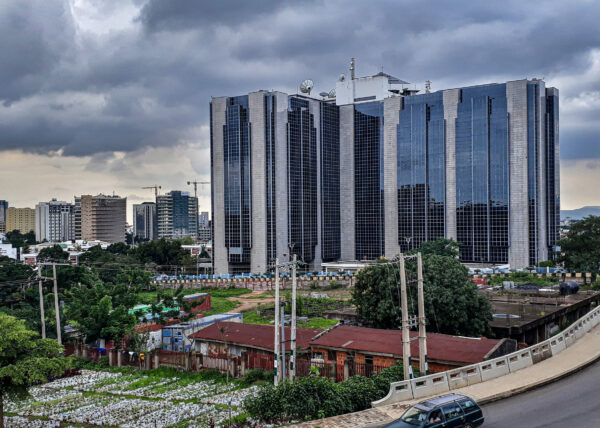
Nigeria’s business activity strengthened in September 2026, but households became more pessimistic about economic conditions, finances and prices, according to new reports by the Central Bank of Nigeria (CBN).
The CBN’s September Purchasing Managers’ Index (PMI) showed that overall economic activity expanded for the fourth consecutive month, with the Composite PMI rising to 53.0 points from 52.7 points in August.
The survey, conducted between 7 and 11 September among 1,900 purchasing and supply executives across the Industry, Services and Agriculture sectors, showed that 23 of the 32 subsectors surveyed recorded expansion, while nine declined.
The improvement was supported by stronger industrial activity, with the Industry PMI rising to 52.0 points in September from 50.6 points in August, marking a second consecutive month of expansion.
The sector’s Output Index also rose to 53.2 points, supported by increases in new orders and employment, while the Raw Materials Inventory Index returned to expansion at 51.1 points from 49.4 points in August.
The Services sector remained in expansion at 53.2 points, compared with 53.3 points in August, while the Agriculture PMI eased slightly to 53.1 points from 53.4 points.

The regulatory body said agriculture had now recorded 26 consecutive months of expansion.
However, the improvement in business activity was accompanied by renewed pressure on input prices.
The Composite input price index increased by 0.8 points in September, while the output price index declined by 0.5 points.
CBN said the September PMI pointed to a “broadening recovery” in economic activity, although the renewed increase in input price pressures warranted close monitoring.
Household expectations
Meanwhile, the picture was less positive among households. In a separate report, CBN’s September Household Expectations Survey, it was revealed that the Overall Consumer Sentiments Index fell sharply to -18.7 points from -9.9 points in August, indicating increased pessimism about the economy.
The Economic Conditions Index stood at -21.5 points, while the Family Financial Situation Index was -23.9 points and the Family Income Sentiments Index stood at -10.5 points.
This indicates a pessimistic outlook on current economic conditions among households and regarding their family financial situation.
Also, the report showed that Nigerian households also reported stronger concerns about prices.
The average price sentiment index rose to 33.5 points from 23.0 points in August, indicating that respondents perceived prices as remaining high. Among the selected items, households reported the lowest perceptions of price changes for food and telecommunication services.
The Central Bank said households expected price pressures to remain elevated over the next three and six months, with the price outlook indices standing at 29.7 and 28.4 points, respectively.
Meanwhile, Nigeria’s headline inflation eased marginally to 15.39 per cent in August 2026 from 15.43 per cent in July, according to the National Bureau of Statistics (NBS), while month-on-month inflation fell more sharply to 0.71 per cent from 1.57 per cent.
CBN said the respondents’ cautious mood was also reflected in household spending intentions, with food remaining the dominant expenditure priority, followed by transportation, other household goods, education, and electricity and water.
It said households remained particularly reluctant to make major purchases. The sentiment indices for house purchases, motor vehicles, investments and consumer durables were all negative, at -68.2, -67.3, -50.7 and -49.5 points, respectively.
Buying conditions also remained weak, with the index for consumer durables at 24.8 points and that for motor vehicles and buildings and landed properties at 24.2 points, all below the 50-point threshold.
The survey further showed that 61.1 per cent of respondents believed faster price increases would weaken the Nigerian economy, while 62.2 per cent preferred lower lending rates.
However, 45.1 per cent favoured higher interest rates when they were presented as a means of containing inflation, while 44.8% preferred lower interest rates, even at the cost of rising inflation.
READ ALSO: CBN urges Nigerians to handle Naira with care
Despite the weak September sentiment, households expected confidence to improve gradually, with the Overall Consumer Sentiments Index projected at -8.7 points next month, -0.4 points over the next three months and 7.1 points over the next six months.
The contrasting findings suggest that while business conditions continued to improve in September, households remained under pressure from high prices, interest rates and concerns about their finances.
The regulatory body said households remained cautious during the month, with subdued buying conditions and purchase intentions pointing to persistent concerns about household finances and economic conditions.
Discover more from Premium Times Nigeria
Subscribe to get the latest posts sent to your email.
-

 Health2 days ago
Plateau: Medical Women Association of Nigeria Marks Older Persons Day with Free Outreach
-
News3 days ago
PLASU Opens Doors to Global Investors at 2nd Inaugural Lecture
-
News4 days ago
Nigeria At 66: Rotjimwa Yilyok Salutes President Tinubu, APC Leadership and Plateau Government
-
News4 days ago
Plateau Specialist Hospital Celebrates Nigeria at 66, Salutes Mutfwang’s Health Initiatives