Health
FG inaugurates committees for 67th National Council on Health, demands result-oriented recommendations


The Federal Ministry of Health and Social Welfare has inaugurated sub-committees ahead of the 67th Regular National Council on Health (NCH), urging members to ensure that their recommendations are evidence-based, practical and focused on improving healthcare delivery in Nigeria.
The ministry said this on Thursday during the inaugural meeting of the sub-committees in Abuja.
The 67th NCH is scheduled to hold from 16 to 20 November in Lafia, Nasarawa State.
The council, which will bring together key stakeholders across the federal and state health sectors, will be held under the theme, “From Commitment to Results: Delivering Quality and Equitable Healthcare for All Nigerians.”
Representing the Permanent Secretary of the ministry, Kachollom Daju, at the meeting, the Director of Health Planning, Research and Statistics, John Ovuoraye, described the NCH as a critical platform for policy dialogue, coordination and decision-making in Nigeria’s health sector.

Daju said the Technical Committee and its subcommittees play an important role in preparing recommendations for the council’s consideration.
“The quality of the work produced by these sub-committees will have a direct bearing on the effectiveness of the recommendations that will be presented to the National Council on Health,” she said.
She urged members to carry out their responsibilities with diligence, integrity, professionalism and objectivity.
Daju also called for an open-minded approach to the assignments and constructive engagement between the Federal Ministry of Health and Social Welfare and the Nasarawa State Local Organising Committee.
According to her, members’ participation reflects a shared commitment to strengthening Nigeria’s health system and improving Nigerians’ health and well-being.
Nasarawa promises collaboration
The Nasarawa State Commissioner for Health, Shekwonugaza Gwamna, represented by the Permanent Secretary of the state Ministry of Health, Ibrahim Hassan, welcomed participants to the meeting.
Mr Hassan reaffirmed the state’s readiness to work with the Federal Ministry of Health and Social Welfare to ensure a successful 67th NCH.
He said the inaugural meeting provided an opportunity for the state’s Local Organising Committee to present the progress made so far, receive guidance from the federal ministry and strengthen preparations for the council.
He thanked members for their commitment and wished them productive deliberations as preparations for the event continue.
Key areas of preparation
The meeting considered several issues relating to preparations for the council, including the formal inauguration of the sub-committees and clarification of the roles and responsibilities of their chairmen and members.
Members also reviewed and worked towards finalising the logo for the 67th NCH, as well as the format and timely submission of memoranda by states.
READ ALSO: PT Health Watch: Why parents should not overlook children’s vision problems
The meeting was attended physically by officials of the Federal Ministry of Health and Social Welfare, while members of the Nasarawa State Local Organising Committee participated virtually.
The 67th NCH is expected to deliberate on major health priorities and develop actionable recommendations to improve the quality, equity, and responsiveness of healthcare delivery across Nigeria.
Discover more from Premium Times Nigeria
Subscribe to get the latest posts sent to your email.






Colorectal cancer, which affects the colon and rectum, is one of the most common cancers globally, yet it can remain unnoticed for a long time because some people have no symptoms in the early stages.
The World Health Organisation (WHO) estimates that 1.9 million new cases of colorectal cancer and more than 900,000 deaths occurred globally in 2022.
The agency said symptoms, when they occur, may include blood in the stool, persistent changes in bowel habits, abdominal pain, unexplained weight loss and fatigue.
Because some people may not notice any warning signs, screening can provide an opportunity to identify possible abnormalities before the disease becomes advanced.
What happens before a diagnosis is confirmed?
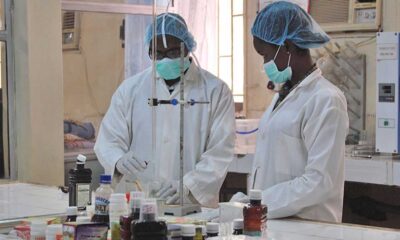
Laboratory investigations are an important part of that process, as medical laboratory scientists examine samples that can provide clues about what is happening in a patient’s body.
Speaking with PT HEALTH WATCH, Adedoye David, a medical laboratory scientist, said laboratory testing contributes to the investigation of colorectal cancer through the examination of biological samples, including stool, blood and tissue.
One of the investigations is the Faecal Occult Blood Test (FOBT), which detects blood in stool that may not be visible to the naked eye.
Another is the Faecal Immunochemical Test (FIT), which uses antibodies to detect human haemoglobin in stool.
These tests can help identify people who may require further assessment, but Mr David stressed that detecting blood in stool is not the same as diagnosing cancer.
“Stool-based tests are very important for detecting hidden blood in stool. It could be reliable if the test investigation is carried out using the right and standard operating procedures.
“But as much as it can be reliable in detecting hidden blood, it might not be totally reliable in the diagnosis of colorectal cancer,”he said.
Where further investigation is necessary, Mr David said a patient may be referred for procedures such as colonoscopy, during which abnormal areas can be identified and tissue samples taken for laboratory examination.
A biopsy can then help determine whether the abnormal tissue is cancerous.
Why symptoms should not be ignored
The distinction between screening and diagnosis is important because colorectal cancer does not always announce itself with obvious symptoms.
A person who feels healthy may therefore not consider testing necessary, while another may receive a negative stool test and conclude that further medical attention is unnecessary.
Mr David said both assumptions could be misleading.
He urged people to seek medical advice when they experience persistent symptoms rather than waiting for them to become severe.
He also advised people with a family history of colorectal cancer or long-term inflammatory bowel disease to discuss their risk with healthcare professionals and determine whether they require earlier or more frequent screening.
WHO identifies family history of colorectal cancer and certain inflammatory bowel diseases among factors that can increase a person’s risk of developing the disease.
Although colorectal cancer is more common with increasing age, it is not exclusively a disease of older people. WHO has also reported a rising incidence among younger adults in several countries.
Screening is only useful when people can complete it
The challenge, however, is not simply persuading people to undergo screening. The health system must also be able to support them when a test produces an abnormal result.
Evidence from Nigeria illustrates this point.
A Nigerian community-based study involving more than 2,000 adults found that FIT screening was feasible. However, the researchers also highlighted challenges with follow-up colonoscopy after positive results.
This means that detecting a possible problem is only one part of the process. Patients must be able to access the additional investigations required to establish what the abnormal result means and, where necessary, begin treatment.
Mr David identified limited facilities capable of carrying out some key investigations and the cost of available services as major challenges facing colorectal cancer testing in Nigeria.
For people who may already be hesitant about testing, the cost and availability of diagnostic services can make early detection even more difficult.
READ ALSO: Hot tea, coffee linked to higher risk of oesophageal cancer — Study
Mr David also urged Nigerians to overcome the embarrassment that may come with providing stool samples for laboratory examination.
“There is nothing to be ashamed of producing a stool sample. It is just like any other medical sample and it is needed for us to carry out informed diagnosis,” he said.
Ultimately, a stool test is not a verdict on whether a person has cancer. Rather, it can be one step in a process that helps health professionals decide who may need further investigation.
For Mr David, improving colorectal cancer outcomes therefore requires both public awareness and access to appropriate laboratory and diagnostic services, so that people can seek help early and abnormal findings can be properly investigated.
Discover more from Premium Times Nigeria
Subscribe to get the latest posts sent to your email.
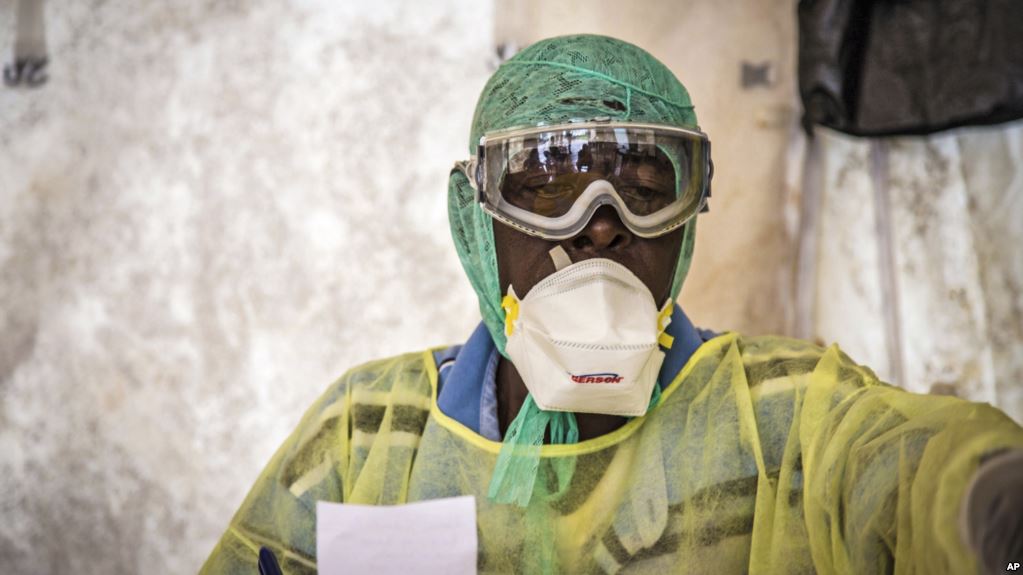
The Ebola outbreak in the Democratic Republic of the Congo (DRC) has continued to spread geographically, with the World Health Organisation (WHO) reporting cases across 61 health zones in six provinces.
The WHO disclosed this in its latest outbreak situation update issued on Thursday, saying the outbreak had expanded to Kayna Health Zone in North Kivu.
The affected provinces are Bas-Uélé, Haut-Uélé, Ituri, North Kivu, South Kivu and Tshopo.
Transmission remains a concern
According to the latest WHO update, transmission patterns remain variable, with evidence of continued geographical expansion and sustained increases in cases across some affected health zones despite ongoing response efforts.
The agency said delayed detection remained a major concern, increasing the risk of further transmission within households, communities and healthcare facilities.
It said limited access to early treatment and difficulties in interrupting transmission were also contributing to the challenges faced by the response.
In addition, the WHO said these challenges required strengthened surveillance, rapid response measures and early treatment to help interrupt transmission.
As of 7 September, the DRC had recorded 6,757 confirmed Ebola cases caused by the Bundibugyo virus, including 3,267 deaths.
The figures represent a crude case fatality ratio of 48.3 per cent, according to the WHO.
Outbreak challenges
The latest development comes less than a month after the WHO described the outbreak as the second-largest Ebola outbreak on record.
At the time, 4,449 confirmed cases had been recorded across 53 health zones in five provinces.
The WHO had also warned that the outbreak was spreading faster than previous Ebola outbreaks at the same stage and was on course to potentially surpass the 2014–2016 West African outbreak, which remains the largest recorded Ebola outbreak.
The outbreak is caused by the rare Bundibugyo species of Ebola virus.
READ ALSO: UK increases Ebola response funding to £78.7m
Unlike the Zaire species, which has caused several previous Ebola outbreaks and for which the Ervebo vaccine is used, there is currently no licensed vaccine specifically approved for Bundibugyo virus disease.
In August, the WHO said a high proportion of cases were being detected in communities rather than treatment centres and outside known contact lists, suggesting that some chains of transmission remained unidentified.
The agency had said response measures included contact tracing, treatment centres, safe burial teams, laboratories and community engagement activities.
The WHO said the continued geographical expansion of the outbreak highlights the need to strengthen surveillance and ensure early detection and treatment, particularly in affected communities and healthcare facilities.
Discover more from Premium Times Nigeria
Subscribe to get the latest posts sent to your email.
-

 Featured2 days ago
Children Are Suffering in Silence: Plateau Child Protection Network Rates Abuse Crisis 9/10
-
Business4 days ago
Tinubu urges banks to turn recapitalisation into jobs, production
-
News4 days ago
Hackers are stealing Claude tokens from subscribers
-
News3 days ago
Africa’s U20 Women’s World Cup Campaign Under Pressure as Benin, Tanzania Suffer Heavy Defeats