Connect with us

News

2027: Omo-Agege lacks campaign ideas — Delta commissioner

info

Published

on

Omo Agege.jpg

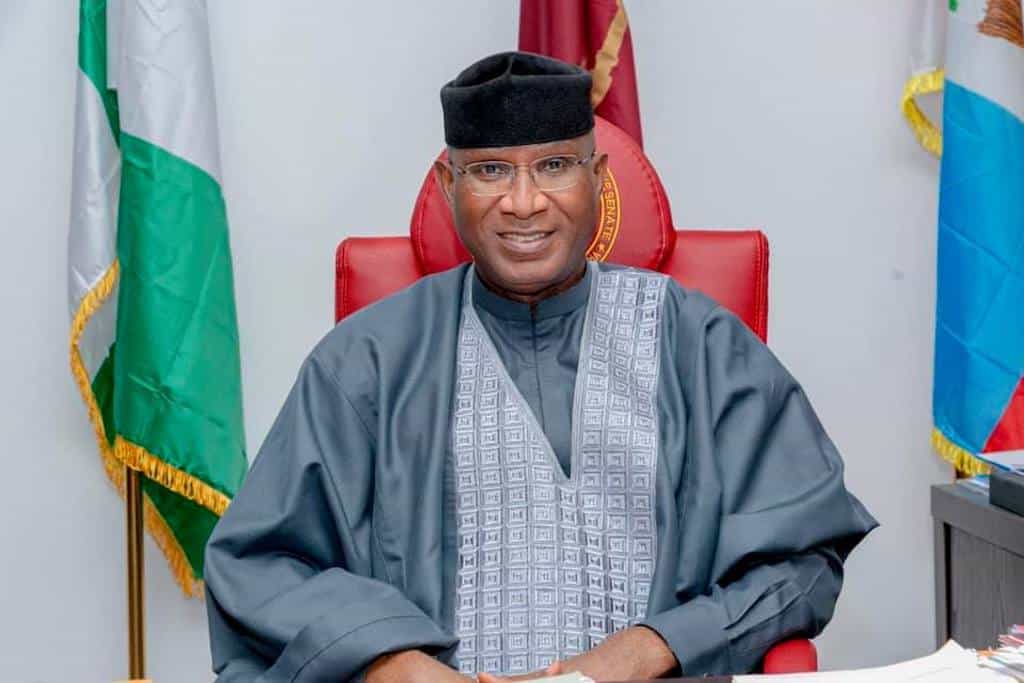
Delta State Commissioner for Works and Public Information, Charles Aniagwu, has said that former Deputy Senate President, Ovie Omo-Agege, lacks campaign ideas.

Aniagwu made this assertion on Sunday when he featured in an interview on Arise Television.

According to him, on Omo-Agege’s first day of campaigning, instead of telling the people his plans to be able to win the Delta Central senatorial seat, he left that agenda to allege that Governor Sheriff Oborevwori was threatening to eliminate him.

Omo-Agege had said that there was a threat to his life and members of his family from the Delta State Government House in Asaba.

He asked the Nigerian public, the international community, civil society organisations, the media and security agencies to take note of the alleged threats.

“I note with grave concern the disturbing and increasingly credible threats to my life and my family members in Delta State emanating from the Delta State Government House, Asaba,” the ex-deputy Senate President had said.

Reacting to the allegation, the commissioner, Aniagwu, said, “Omo-Agege is trying to mention our names so that he can have a cheap way to come to the media.

“What we have observed is that a number of these persons like himself lacks campaign ideas against Governor Oborevwori. They’re not even on the same ballot.

“Our governor doesn’t go around making threats. Looking at the last three and half years, you can see the amount of safety and tranquility we have in Delta.”

Continue Reading
Click to comment

Leave a Reply

Your email address will not be published. Required fields are marked *

News

SSA Adeboye: National Intermediate Games Will Give Nigeria’s Young Talents the Platform to Shine

info

Published

on

By

IMG 20260823 WA0080.jpg

The Senior Special Assistant to the President on Grassroots Sports Development, Hon. Adeyinka Anthony Adeboye, has reaffirmed the Federal Government’s commitment to delivering a successful maiden National Intermediate Games, describing the competition as a major step in building a stronger and more deliberate pathway from grassroots sport to elite competition.

Adeboye made the remarks on Saturday during another round of facility inspections in Lagos ahead of the Games, scheduled for October 1 to 15, 2026.

Read Also: EKO 2026: National Sports Commission Inspects Facilities Ahead of 1st National Intermediate Game

Representing the Director General of the National Sports Commission at the inspection, the SSA joined the Head of Grassroots Development, Niyi Beyioku, members of the Main Organising Committee (MOC), Local Organising Committee (LOC) and other officials to assess facilities and strengthen preparations for the historic competition.

The inspection began at the Teslim Balogun Stadium, Surulere, where the team examined the stadium turf, indoor sports hall and other facilities earmarked for the Games.

The delegation subsequently inspected the National Stadium Complex, National Institute for Sports (NIS), Rowe Park Sports Centre, Yaba College of Technology, University of Lagos sports facilities and hostels, Elegbata Sports Centre, the Cricket Oval at Tafawa Balewa Square, and Mobolaji Johnson Arena, which is being considered for the Opening and Closing Ceremonies.

For Adeboye, the inspection was not merely about checking venues ahead of a competition. He said it was part of the broader responsibility of ensuring that Nigeria begins to build a credible sporting pathway for young athletes.

“The National Intermediate Games is not just another competition. It is about the future of Nigerian sports. We are creating a platform where young talents can be identified, properly assessed, developed and given the opportunity to progress to the next level.”

He stressed that grassroots sports development must be supported by proper infrastructure, effective organisation and regular opportunities for young athletes to compete.

“Talent is everywhere in Nigeria. What has been missing in many cases is the structure and opportunity to take that talent from discovery to development. This is why the Intermediate Games are very important to us.”

The SSA commended the MOC and LOC for the work being done across the various venues and expressed confidence that continued collaboration between the National Sports Commission, Lagos State Government, sporting institutions and other stakeholders would produce a successful Games.

Following the facility tour, the MOC and LOC held a technical meeting to review operational, technical and logistical matters and identify areas requiring further attention before the arrival of athletes.

A total of 28 sports have been pencilled down for the maiden edition, with athletes expected to arrive from October 1, ahead of the Opening Ceremony on October 5.

The Games are designed for athletes in the Under-19 category, providing a crucial competitive platform for young athletes at a formative stage of their sporting careers.

Participants will come from all 36 states of the Federation and the Federal Capital Territory, while Nigerian athletes in the diaspora will also participate as a single contingent.

Adeboye said the inclusion of athletes from across the country would make the Games an important national talent pool and provide the opportunity to discover athletes who could eventually represent Nigeria at continental and global competitions.

“We want the boy or girl competing in a community today to know that there is a pathway. From grassroots competitions, to the Intermediate Games, to the National Sports Festival and ultimately to the national teams — that pathway must be clear.”

He added that the success of the Games would depend not only on the medals won but also on what happens to the young athletes after the competition.

“The real measure of success will be what we do with the talents we discover. We must not discover them and leave them behind. We have to develop them, support them and create the next stage of their journey.”

The SSA therefore called for continued cooperation among governments, sports federations, schools, clubs, private-sector partners and other stakeholders to ensure that the Games become a sustainable component of Nigeria’s long-term sports development strategy.

The inspection and subsequent technical meeting underline the determination of the organisers to ensure that the inaugural National Intermediate Games are delivered to a high standard, with athlete welfare, facility readiness, safety and effective competition management given priority.

Continue Reading

Business

CPPE backs FG reforms, urges shift from economic stability to productivity

info

Published

on

By

468939862 570688608903404 8583644854384931658 n.jpg

MTN ADVERT

The Centre for the Promotion of Private Enterprise (CPPE) has backed the Federal Government’s economic reform programme, saying the measures have produced measurable improvements in Nigeria’s fiscal and macroeconomic position.

The group, however, said the gains would have limited meaning unless they translate into higher productivity, increased investment, more jobs and improved living standards for Nigerians.

The CPPE made the position known in a statement issued by its Chief Executive Officer, Muda Yusuf, on Sunday, five days after the Minister of Finance and Coordinating Minister of the Economy, Taiwo Oyedele, presented the Federal Government’s economic reform scorecard.

The scorecard, presented on 19 August in Abuja, assessed the benefits, costs and potential harms prevented by the reforms introduced by President Bola Tinubu’s administration.

The reforms, which include the removal of the petrol subsidy and changes to the foreign exchange market, have significantly altered Nigeria’s fiscal and economic landscape since June 2023.

PT WHATSAPP CHANNEL

While the government said the measures have strengthened public finances, improved foreign exchange stability, and restored investor confidence, they have also increased the cost of living and of doing business, with Nigerians continuing to contend with high food, energy, and financing costs.

Mr Yusuf said the government’s disclosure of the reform outcomes was important because transparency was necessary to build public confidence in the measures.

“Such transparency is critical to reform credibility,” he said, while welcoming what he described as the minister’s balanced acknowledgement of both the gains and adjustment costs of the reforms.

‘Stability must translate to better lives’

According to the CPPE, the reforms have delivered improvements in government revenue, foreign exchange market stability, external reserves, trade balance and investor confidence.

It noted that Nigeria’s real Gross Domestic Product growth strengthened to 3.89 per cent in the first quarter of 2026, from 3.13 per cent in the corresponding quarter of 2025.

However, Mr Yusuf said improved economic indicators should not become the ultimate measure of the reforms.

“Macroeconomic stability is a means, not an end.”

“The real test is whether stability translates into higher productivity, stronger investment, more jobs, lower poverty and improved living standards.”

He added that the transition remained incomplete, noting that households continued to face pressure on their purchasing power while businesses were dealing with high energy, financing, logistics and regulatory costs.

The CPPE therefore urged the government to make productivity and competitiveness the focus of the next phase of its reform programme.

The call comes against the background of the government’s own admission that household welfare remains an unfinished aspect of the reforms.

At the presentation of the scorecard, the minister acknowledged that the reforms had imposed high costs on Nigerians, including higher petrol prices and interest rates.

He said the Monetary Policy Rate had risen from 18.5 per cent in May 2023 to 26.5 per cent, while petrol prices increased from about N185 per litre before subsidy removal to between N1,100 and N1,400.

He also noted that poverty and household welfare recovery remained areas where the government could not yet claim victory.

States must show what higher revenues are achieving

The CPPE also raised concerns about how the increased fiscal resources available to state governments are being utilised.

It said the reforms had substantially expanded the fiscal space of state governments through increased statutory allocations and, in some cases, stronger internally generated revenue.

Mr Yusuf noted that the additional resources should result in visible improvements in public services.

“Citizens should demand measurable outcomes in roads, healthcare, public transportation, education, agricultural infrastructure, security, power and enterprise support,” he said.

He warned that higher revenues should not simply finance increased recurrent expenditure and prestige projects.

“Higher revenues must produce a visible development and welfare dividend.”

In its reform scorecard, the Federal Government said N15.8 trillion in subsidy savings accrued to the Federation between June 2023 and December 2025.

Of that amount, N5.4 trillion went to the Federal Government, while state and local governments shared N10.4 trillion.

The CPPE said the increased fiscal space should therefore be reflected in better development outcomes at the subnational level.

Electricity, logistics, and financing remain major obstacles

Mr Yusuf said the government’s next reform priority should be the supply side of the economy, particularly the structural constraints that continue to make production expensive in Nigeria.

He identified electricity, logistics, insecurity, agricultural productivity, infrastructure, regulatory costs and access to affordable capital as major constraints to businesses.

The CPPE pointed to the contraction of the electricity sector by 15.3 per cent in the first quarter of 2026, compared with growth of 3.29 per cent in manufacturing and 3.15 per cent in agriculture.

It said stronger growth in the productive sectors would require a deliberate reduction in the cost of these critical inputs.

The group also called for a trade policy that protects industries and agricultural producers with genuine local capacity from unfair import competition, while ensuring that producers can access critical inputs that are not sufficiently available locally.

Mr Yusuf also raised concerns about the prevailing high-interest-rate environment.

He said that as inflation moderates, stronger coordination between fiscal and monetary authorities should create room for a gradual reduction in financing costs without undermining macroeconomic stability.

CPPE warns against reversing reforms

Despite its concerns about the costs and implementation of the reforms, the CPPE said reversing them would be damaging to the economy.

READ ALSO: Tinubu’s reforms yielding results, GDP rises to $375bn — Yilwatda

Mr Yusuf said abandoning the reform trajectory could undermine investor confidence, weaken fiscal stability and destabilise the foreign exchange market.

“Reversing the reforms would be profoundly damaging to the economy.”

He, however, called for the government to continuously adjust the reform instruments based on evidence, implementation experience and their impact on businesses and households.

“The reform trajectory should therefore be sustained, while implementation is continuously refined in response to emerging realities,” he said.

According to the CPPE, the next phase of the reforms should move decisively from economic stabilisation to productivity, while ensuring that higher government revenues translate into better development outcomes and that improving macroeconomic indicators eventually result in higher incomes, more jobs and better living standards.


Discover more from Premium Times Nigeria

Subscribe to get the latest posts sent to your email.

Continue Reading

Trending