News
High Voter Turnout Marks Plateau LG Elections, PSIRS Chairman Jim Pam Wayas Applauds Civic Participation


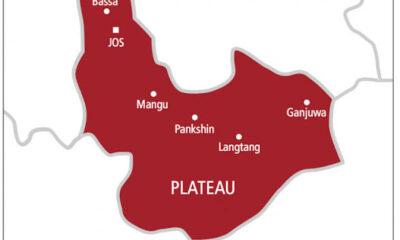
The Plateau State local government elections witnessed a remarkable voter turnout, with residents of Barkin Ladi showing strong support for the electoral process. Among the voters was Mr. Jim Pam Wayas, Executive Chairman of the Plateau State Internal Revenue Service (PSIRS), who expressed his satisfaction after casting his vote at Zabot Mai Idon Toro 2 in Girring Ward.
Wayas highlighted the significance of local government elections, noting the active political engagement of the people. “There’s a massive turnout. The people here are politically oriented and know exactly who they want to represent them,” he said.
He further shared his confidence in the People’s Democratic Party (PDP), citing the party’s stronghold in Barkin Ladi due to successful campaigns and solid community support. “The people here are predominantly PDP supporters,” he added, emphasizing the area’s loyalty to PDP policies and leadership.


The Gwom Fo, Gyang Rwang Pam, the Traditional Head of the Foron community, also praised the peaceful nature of the elections and the high voter participation, expressing optimism that the election would yield leaders committed to solving pressing community issues.
Wayas lauded Governor Caleb Mutfwang’s dedication to a fair and inclusive election, recalling that previous elections had excluded some communities. “This is one of the freest and fairest local elections we’ve seen,” he noted, appreciating the governor for ensuring every community’s participation.
Touching on local infrastructure, Wayas stressed the urgent need for better roads and improved water access in Foron. “Our road network is in poor shape, and water scarcity is a major challenge. We’re pushing for the development that Foron deserves,” he remarked.
With high voter engagement and the smooth conduct of the elections, both Wayas and the Gwom Fo expressed optimism that the process would empower local communities with effective, representative leadership.
“In democracy, every election is determined by the people who show up.” – Larry J. Sabato










Rivers United are counting down to their next Nigeria Premier Football League challenge as they prepare to travel to Aba for their upcoming fixture.
The Pride of Rivers have five days to prepare for the encounter and have already made their intentions clear, with the club sending a confident message to supporters ahead of the trip.
In a post shared on their social media platforms, Rivers United wrote: “The Pride of Rivers is heading to Aba and we’re not going there to make up the numbers. Unbeaten. Solid at the back. Hungry for the 3 points.”
The message underlines the team’s confidence as they look to continue their strong start to the 2026/27 NPFL campaign.
Rivers United have impressed with their consistency so far this season, particularly with their ability to avoid defeat. The club’s reference to being “Unbeaten” shows the importance they place on maintaining that record as they head into another difficult away fixture.
The trip to Aba will provide another opportunity for the Pride of Rivers to prove their strength away from home. With three points at stake, the team will be hoping to combine their defensive organisation with enough attacking quality to secure a positive result.
Sports247 will be keeping a close eye on Rivers United as the countdown to the fixture continues. The team’s recent run of games has already tested their squad, making their ability to maintain consistency an important part of their campaign.
For Rivers United, the objective is straightforward: arrive in Aba with confidence, compete for the full 90 minutes and return home with maximum points.
With five days left before kick-off, the Pride of Rivers have started the countdown. Their message is clear — they are not travelling to Aba simply to participate.
They are going there hungry for three points and determined to keep their unbeaten run alive.
-

 Health4 days ago
Plateau: Medical Women Association of Nigeria Marks Older Persons Day with Free Outreach
-
News4 days ago
MTN, Gates Foundation drive $25m AI digital health plan in Nigeria – Technology Times
-
Health4 days ago
Drug-resistant bacterial infections kill one million people annually – WHO
-
 News3 days ago
Troops rescue 15 kidnap victims, nab two suspects in nationwide operations