Business
CCTV Footage: Keyamo demands apology, N25,000 fine from Peter Obi over airport parking claim


The Minister of Aviation and Aerospace Development, Festus Keyamo, has demanded a public apology from the presidential candidate of the Nigeria Democratic Congress (NDC), Peter Obi, over claims that his vehicle was “unjustly” clamped at the Nnamdi Azikiwe International Airport, Abuja, describing the allegation as false.
Mr Keyamo, in a statement posted on his X page on Friday, also asked Mr Obi to pay the N25,000 fine prescribed for violating airport parking regulations, warning that failure to do so within one week could lead to further action by the Federal Airports Authority of Nigeria (FAAN).
The minister said he ordered an internal investigation after Mr Obi alleged that the incident formed part of a broader campaign of political persecution against him.
According to Mr Keyamo, CCTV footage from the airport showed that Mr Obi’s vehicle was parked unattended for about 30 minutes in a designated drop-off zone, contrary to airport regulations.
“Politics aside, every Nigerian is entitled to fair treatment under the law,” the minister said.

He added that, “I therefore instituted an internal inquiry over the issue.”
Minister disputes Obi’s account
Mr Keyamo said the footage showed that Mr Obi arrived at the airport on 4 July at about 8:28 p.m. and entered the terminal with two other occupants after alighting from the vehicle, which was being driven by a police officer.
According to him, the police officer also left the vehicle unattended after briefly returning to collect an item, prompting airport security personnel to clamp its tyres.
He said the officials were unaware the vehicle belonged to Mr Obi when they carried out the enforcement action.
The minister further alleged that after discovering the vehicle had been clamped, the police officer contacted Mr Obi by telephone and handed the phone to an airport manager.
Mr Keyamo claimed Mr Obi identified himself and requested the release of the vehicle, which was eventually released without payment of the prescribed fine.
He argued that leaving a vehicle unattended in a drop-off zone constitutes a security risk, particularly at an international airport.
“What has emerged from this is a clear case of an opposition candidate trying to whip up unnecessary sentiments for a wrong he committed with his driver,” Mr Keyamo said.
He dismissed Mr Obi’s claim that other improperly parked vehicles were ignored, describing the allegation as false.
Demands
The minister said Mr Obi should publicly apologise to airport personnel whom he accused of persecuting him while carrying out their lawful duties.
He also asked the former Anambra governor to return to the airport voluntarily and pay the N25,000 penalty for wrongful parking.
“If these demands are not met within one week, I will be giving the necessary directives to the Federal Airports Authority of Nigeria (FAAN) to take the next steps against him,” Mr Keyamo said.
Background
Earlier, Mr Obi, during an appearance on the With Chude podcast last week, alleged that he might not survive to contest the 2027 presidential election, citing what he described as a pattern of harassment against him and his associates.
Among the incidents he referenced was the airport episode, where he claimed his vehicle was clamped while other vehicles parked in the same area were left untouched. He also alleged that some of his associates had become reluctant to publicly associate with him for fear of government reprisal.
READ ALSO: Presidency reacts to Peter Obis safety concerns
The Presidency rejected the allegations, with President Bola Tinubu’s Special Adviser on Information and Strategy, Bayo Onanuga, saying the airport incident stemmed from a breach of parking regulations rather than any act of political persecution.
Mr Obi, a former governor of Anambra State and the Labour Party’s presidential candidate in the 2023 general election, defected to the Nigeria Democratic Congress in December 2025 and is now the party’s presidential candidate for the 2027 election.
As of the time of filing this report, Mr Obi had not publicly responded to Mr Keyamo’s demands.





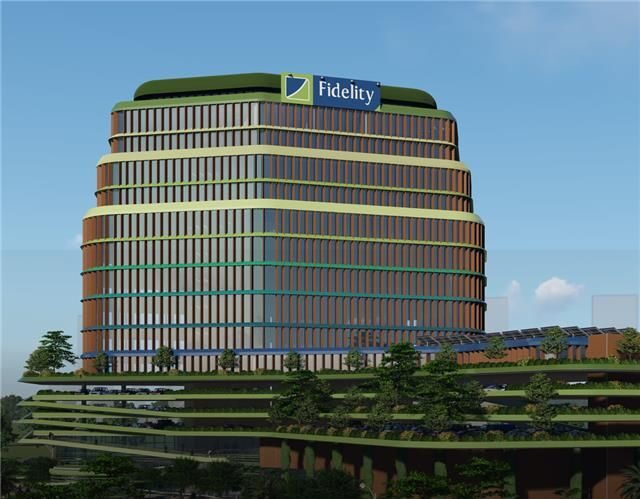
Fidelity Bank Plc has redeemed its 5-year $400 million Senior Unsecured Notes at maturity, reaffirming its commitment to meeting investor obligations and reinforcing its track record in the international debt capital markets.
Issued on 28 October 2021, the 5-year Eurobond matured on 28 October 2026 and carried an annual coupon of 7.625 per cent, payable semi-annually. Fidelity Bank met all scheduled coupon payments throughout the life of the instrument and has now fulfilled its final repayment obligation in full, covering both principal and accrued interest.
The redemption was funded from internally generated liquidity as part of the bank’s forward-looking liquidity management strategy. Through a dedicated sinking fund, Fidelity Bank progressively provided for the maturing obligation, enabling the bank to meet its commitment while maintaining business-as-usual operations and compliance with applicable regulatory liquidity requirements.
Commenting on the development, Fidelity Bank Plc’s Managing Director and Chief Executive Officer, Nneka Onyeali-Ikpe, said the successful redemption reflected the bank’s disciplined approach to financial management and its commitment to delivering on its obligations.
“This successful redemption demonstrates the strength of our franchise, the discipline of our balance sheet management and our commitment to honouring our obligations to investors and other stakeholders. We anticipated this maturity from the outset and planned accordingly, which reflects our commitment to responsible financial management,” Mrs Onyeali-Ikpe said.
The redemption further strengthens Fidelity Bank’s record in the international debt capital markets. The 2021 issuance marked the bank’s third Eurobond transaction, following earlier issuances in 2013 and 2017, in which the bank raised $300 million and $400 million, respectively. The 2021 offer attracted investor orders exceeding US$700 million, reflecting strong demand for the bank’s international debt offering.

READ ALSO: World Bank projects 23% rise in global commodity prices in 2026
The successful Eurobond redemption follows the completion of Fidelity Bank’s recapitalisation programme ahead of the regulatory deadline. The bank’s capital-raising efforts increased its eligible regulatory capital to approximately N533 billion, exceeding the N500 billion minimum capital requirement for banks with international authorisation.
The completion of these milestones underscores Fidelity Bank’s strong capital position, prudent liquidity management and disciplined approach to financial execution. It also reinforces the Bank’s capacity to meet its financial obligations while pursuing its strategic growth objectives across domestic and international markets.
Discover more from Premium Times Nigeria
Subscribe to get the latest posts sent to your email.
-

 Business3 days ago
CBD COP17: Nigeria, France Push for Faster Action on 30×30 Biodiversity Target
-
News2 days ago
Poor AI data pipelines could fuel cyber exploitation in Nigeria, regulator warns – Technology Times
-
Health2 days ago
Ebola: ₦100,000 weekly allowance for quarantined contacts was unplanned
-
News3 days ago
AI delivers ‘zero financial payoff’ to most companies, Apollo economist says