Health
How poverty affects childhood development in Nigerian capital


Eight-year-old Marvellous gripped a worn pencil tightly as she wrote on a single sheet of paper, kneeling on the bare concrete floor of an unfinished compound in Karshi, a satellite community on the outskirts of Abuja, Nigeria’s capital city.
Around her, four younger siblings sat barefoot, watching every movement of the pencil. Among them was a two-year-old toddler with mucus running from her nose.
The children barely noticed the visitor.
Because she is a minor, this reporter did not interview Marvellous directly. When asked if her parents were around, she quietly disappeared into the unfinished building behind her and returned moments later with her mother, Joy Kelvin.


Mrs Kelvin offered this reporter a wooden chair before settling on a stone beside the children. Behind her stood the family’s home, an unfinished three-bedroom building with exposed concrete walls and sections of roofing already beginning to deteriorate.

The structure does not belong to the family.
The owner allowed them to stay temporarily after they could no longer afford rent at their previous residence. The arrangement, however, comes with uncertainty.
“If the man decides to sell this house, we have no choice but to move again,” Mrs Kelvin told PREMIUM TIMES.
For many families, relocation is largely a housing challenge. For young children, particularly during their formative years, it can also disrupt the stability that underpins healthy development.
Frequent moves disrupt routines, friendships, schooling, and a child’s sense of security, all factors that child development experts say are essential during the early years of life.
Mrs Kelvin and her husband are raising five children on irregular incomes. She works as a domestic help while her husband is a tailor. Together, they navigate fluctuating earnings that force difficult choices about what can be paid for immediately and what must wait.
Food is often one of those choices. On some days, the family manages two meals. On other days, everyone eats only once.
Their meals consist largely of corn-based staples served with soup and whatever other food they can afford. Like many low-income households, they base their diet less on nutritional planning than on household income.
Despite these challenges, Mrs Kelvin remains determined to keep her children in school.
They attend a nearby private school, largely because the proprietor allows flexible payment arrangements.
“The owner of the school understands our condition, so she allows us to pay whatever we have, whenever we have it,” she said.
Without that flexibility, keeping the children in school would be difficult.
The family’s circumstances reflect a broader reality confronting many Nigerian households, where poverty shapes not only living conditions but also children’s opportunities to learn, play and thrive during the years experts describe as the most important period of development.
The years that shape a child’s future
Early childhood development refers to the period during which children experience rapid physical, cognitive, emotional and social growth.
Although the World Health Organisation (WHO) defines early childhood as the period from birth to age eight, child development specialists consistently identify the first five years as the most critical.

During this period, the brain develops at an extraordinary pace.
According to the United Nations Children’s Fund (UNICEF), more than one million new neural connections form every second during a child’s early years. These connections are shaped not only by genetics but also by the environments in which children grow, including the quality of nutrition they receive, the care they experience, opportunities for play and learning, housing conditions, exposure to stress and access to healthcare.
In practical terms, the environments children grow up in help shape how they learn, interact, communicate and adapt to the world around them.
For children like Marvellous and her siblings, those formative years are unfolding amid unstable housing, financial hardship and persistent uncertainty.
Inyang Ekan, a family physician working with Nigeria’s Sector-Wide Approach (SWAp) programme, said stability is especially important during early childhood because young children depend heavily on predictable environments to build emotional security and healthy social relationships.
Mr Ekan noted that stability extends beyond having a roof over a child’s head. It includes consistent relationships, familiar surroundings and routines that help children feel secure as they grow.
For families already struggling to meet basic needs, however, achieving such stability can be difficult.
When survival takes priority over stimulation
Inside Mrs Kelvin’s home, poverty influences more than where the family lives. It also shapes how every available naira is spent.
Feeding the children comes first. Other needs are considered only if money remains.

That reality became clear when Mrs Kelvin was asked whether she bought toys for her children.
“Toys?” she repeated, pausing briefly before responding.
“I can’t remember when last I got them toys. It is someone who has eaten that can buy toys.”
The response was neither dismissive nor indifferent. Rather, it reflected the practical calculations common in low-income households where every available naira is directed towards immediate necessities.
Beyond the paper in Marvellous’s hands, little suggested the kind of environment often associated with early childhood learning. Mrs Kelvin explained that the children often entertained themselves with sticks, improvised games and what she described as “children’s drama”, creating their own forms of play within the limits of what was available.
Mr Ekan says that childhood development depends on more than just food and schooling.
He noted that play, interaction, storytelling and exploration are all important components of early learning. Through play, children develop language, problem-solving abilities, creativity and social skills.
He added that developmental opportunities do not necessarily require expensive toys, but they do require stimulation and interaction.
Mr Ekan noted that siblings often play an important role in supporting early learning.
“Children can learn through teaching, guiding and playing with siblings. Simple games, storytelling, drawing and everyday objects can also support development.”
In many ways, Marvellous appeared to be performing that role. As she worked with her pencil and paper, her younger siblings watched closely, learning through observation and imitation.
However, developmental opportunities are also shaped by health and access to care.
Mrs Kelvin said she often relies on herbal remedies popularly known as “agbo” whenever her children fall ill. Formal healthcare is usually considered only when home treatment fails.
The nearest health facility, Karshi General Hospital, is geographically accessible. Financially, however, accessing healthcare is often more complicated.
Food insecurity and its developmental consequences
For Mrs Kelvin’s family, food insecurity is not simply about whether there is something to eat. It is also about whether the children consistently receive the variety of nutrients they need during the most important years of their development.
Orewole Fisayo, a paediatric nursing specialist at Mercy University Teaching Hospital in Osun State, described the first five years of life as a critical “window of opportunity” for child development.
“By age three, a child’s brain has already reached about 80 per cent of its adult size. Every nutrient a child takes in during this period is helping to build the architecture of the brain, immune system and physical body,” she said.
Ms Fisayo explained that inadequate nutrition affects far more than physical growth.
“These children do not underperform because they are less intelligent. Their brains are simply underfuelled.”
Research supports these concerns.
According to a World Bank report on Nigeria’s early childhood development outcomes, only 24.1 per cent of children aged four to six can write a simple word beyond their own name.
Just 39 per cent can correctly identify the larger of two single-digit numbers, while only 20.4 per cent demonstrate basic planning skills.
Broader indicators also reveal significant disparities in children’s access to adequate nutrition.
Data from the Nigeria Multidimensional Poverty Index show that food insecurity affects 24.1 per cent of children in Lagos, 34 per cent in Abuja, 49.5 per cent in Enugu, and 38.1 per cent in Kebbi.
Nutrition deprivation presents an equally troubling picture. While 11 per cent of children in Lagos experience nutrition deprivation, the figure rises to 12.1 per cent in Enugu, 31.5 per cent in Abuja and 54.4 per cent in Kebbi.
For households such as Mrs Kelvin’s, these statistics are reflected in everyday decisions about what food to purchase and how meals are distributed among family members.
According to Ms Fisayo, dietary diversity remains essential because no single food contains all the nutrients children require for healthy development.
Another childhood shaped by housing conditions
A few kilometres away, another family was confronting a different kind of hardship.
The first time this reporter passed through the area in Karshi, it was already evening.
Beneath a streetlight beside a row of shop compartments sat a small figure, motionless in the fading light.
From a distance, it was difficult to tell exactly what it was—a child, a shadow or simply another passing scene in a busy neighbourhood.
There was little reason to stop.
But on another evening, the figure appeared again in exactly the same place. Still beneath the same streetlight. Still alone.
Days later, on a Sunday morning, the mystery finally gave way to an answer.
People were coming out of the same row of shop compartments, moving in and out as if it were a lived-in space rather than a commercial structure. Among them were children.

The shops were not merely shops; people were living inside them.
That discovery raised a question this reporter could no longer ignore: What is it like for children to spend their earliest years growing up in a place never designed to be a home?
Living in two of the shop’s compartments was Loryoosu Ignatius, a farmer, occasional construction worker, and father of five.
When this reporter arrived, two of his sons were playing barefoot on a heap of stones beside a small corn farm behind the shops.
The older boy had just returned after calling his father from inside one of the compartments. He is eight years old. His younger brother is six.
Their three sisters, Mr Ignatius said, are in senior secondary school.
Mr Ignatius explained that his family previously lived in a rented three-bedroom apartment. Their circumstances changed after repeated thefts at his employer’s property. To protect the site, someone needed to remain there permanently.

He volunteered.
The arrangement eliminated rent but required that he relocate his family into the shop structures, where they have remained for the past three years.
“The man said he was going to come and build a standard space for my family and me, but to date, he has not come,” he said.
Inside, the family occupies two compartments. One serves as a sleeping space for the parents, while the other houses the children.
Neither room has windows.
At night, pieces of cloth are spread directly across the floor to create makeshift sleeping areas. During periods of intense heat, the family often sleeps outdoors.
“Sometimes the heat is too much, so we come outside to sleep,” he said.
For Mr Ignatius’ six-year-old son, these conditions have shaped much of his early childhood. Having spent three of his six years living in the shop compartments, he has grown up in a space never intended for family life.
His daily routine revolves around Government Primary School, Karshi, the surrounding open spaces and improvised forms of play.
Behind the shop structures, he and his brother use stones, sand, and discarded objects to create their own games, transforming the surrounding environment into makeshift playgrounds.
Despite these challenges, the family has developed ways of adapting.
Unlike Mrs Kelvin’s household, food insecurity is not their primary concern.
As a farmer, Mr Ignatius grows rice, beans, yams, and other crops. Much of what the family eats comes directly from the farm.
“We eat fruits very well. The children eat what we harvest.”
The health risks hidden within inadequate housing
The shop compartments present challenges that extend beyond overcrowding.
Poor ventilation, exposure to mosquitoes and environmental hazards all shape the children’s daily experiences.

“I have killed many snakes here,” Mr Ignatius said.
The same open spaces where the children play during the day become sources of concern at night.
Health issues have also emerged within the household. Mr Ignatius described recurring skin conditions affecting some of the children. Although he could not identify the condition by name, he demonstrated its appearance by drawing circles on his arm. He explained that he treats it at home using Ampiclox mixed with water.
While Mr Ignatius spoke about these conditions matter-of-factly, child development experts say the implications extend beyond day-to-day discomfort.
During the first five years of life, repeated exposure to illness, poor housing and environmental stressors can shape children’s physical, cognitive and emotional development in ways that may persist into later childhood.
Princess Olatubosun, a psychiatrist with the Ifedoyin and Friends Charity Organisation, said such living conditions can affect children’s health and development in multiple ways, often extending beyond the immediate risks that families notice.
Ms Olatubosun explained that poor ventilation and overcrowded living spaces can increase the risk of respiratory infections, including pneumonia and other illnesses that spread in poorly ventilated environments.
Sleeping outdoors, she added, exposes children to mosquito bites, increasing the risk of malaria and other vector-borne diseases.
According to her, prolonged exposure to excessive heat and inadequate shelter can also lead to dehydration, sleep disruption, heat stress and physical discomfort. While these conditions may appear temporary, they can affect children’s overall well-being and their ability to learn and concentrate.
She further noted that environmental conditions surrounding daily activities can create additional health risks. Children who spend significant time in outdoor environments may be exposed to smoke, environmental pollutants, contaminated water and poor hygiene conditions that can contribute to infections and other illnesses.
Frequent illness, she said, can have broader developmental consequences.
Children who are repeatedly unwell may experience reduced appetite, poor nutrient absorption and interruptions to normal growth and development.
Beyond physical health, she noted that inadequate sleeping conditions can affect sleep quality, concentration, learning ability and emotional regulation.
“Inadequate housing and lack of privacy can cause stress, anxiety and emotional insecurity in children,” she said.
She added that repeated exposure to unstable living conditions may also contribute to feelings of insecurity and social stigma, affecting children’s mental health, confidence and social development.
Learning beneath a streetlight
Each evening, the streetlight outside the shop compartments takes on a purpose beyond lighting the neighbourhood.
It becomes a classroom.
It was beneath that same light that this reporter repeatedly noticed the small figure sitting quietly in the evenings, long before discovering that families were living inside the shop structures.
READ ALSO: Nigeria’s security crisis rooted in governance failures, poverty, scholars say
Mr Ignatius explained that his employer installed the light outside the property. With limited electricity in the shop’s compartments, his children move outdoors after sunset, setting up a small table beneath the streetlight to complete their homework.
What appears to be resilience is also evidence of deprivation.
The children are learning, but under circumstances few would choose for them.
A different beginning
Within the same community, another household presents a contrasting picture.
When this reporter visited the home of Goodness Adaoyiche, signs of childhood were immediately visible.
Teddy bears rested on a chair inside the sitting room. Children’s books and educational materials were kept in designated spaces. The environment was organised, well-ventilated and clearly structured around the needs of young children.

Mrs Adaoyiche and her husband are raising two children aged six and four.
Unlike the previous households, concerns about housing insecurity and food scarcity were absent from the conversation.
Instead, discussions centred on learning, growth and development.
Mrs Adaoyiche explained that educational activities are intentionally encouraged at home. Her younger child, currently in Nursery One, can already read simple words. To demonstrate this, she produced certificates recognising academic performance and classroom participation.

Nutrition also receives deliberate attention.
“My children eat as much as they want, sometimes five times a day,” she said.
Although food is readily available, she explained that meals are carefully balanced and regularly include fruits and other nutritious foods.
The family also provides educational toys and learning materials, replacing them whenever necessary.
The children were not at home during this reporter’s visit, but the environment itself spoke volumes.
Unlike the uncertainty that surrounded Marvellous’ family or the cramped shop compartments where the Ignatius children were growing up, this home offered predictability, stability and space to learn and play.
The contrast was about more than material possessions.
It reflected the vastly different developmental opportunities available to children growing up within the same community.
Books, toys, balanced nutrition, structured learning and stable housing combine to create an environment that nurtures healthy development during the earliest years of life.
What the data reveals
The differences observed across the three households mirror broader national patterns.
According to the Nigeria General Household Survey-Panel (GHS-Panel) Wave 5 (2023/2024), approximately 74 per cent of children in urban areas are able to complete most developmental tasks assessed in the survey, compared with only 42 per cent of children in rural areas.
The gap is particularly evident in literacy-related skills, where urban children outperform rural children across reading, writing, and letter recognition indicators.
Researchers attribute these disparities to differences in access to educational resources, household learning environments, caregiver support and broader socio-economic conditions.
The contrast between Mrs Kelvin’s unfinished home, the Ignatius family’s shop compartments and Mrs Adaoyiche’s household demonstrates how these national disparities are experienced in everyday life.
While one child grows up amid housing uncertainty and food insecurity, another navigates environmental hazards and overcrowded living conditions, while others benefit from stable homes, learning materials and consistent nutrition.
Together, their experiences show how living conditions shape developmental opportunities long before formal schooling begins.
The findings suggest that childhood development is shaped not only by individual ability but also by the environments in which children grow.
Editor’s note: The names of the children used in this report have been changed to protect their identities.








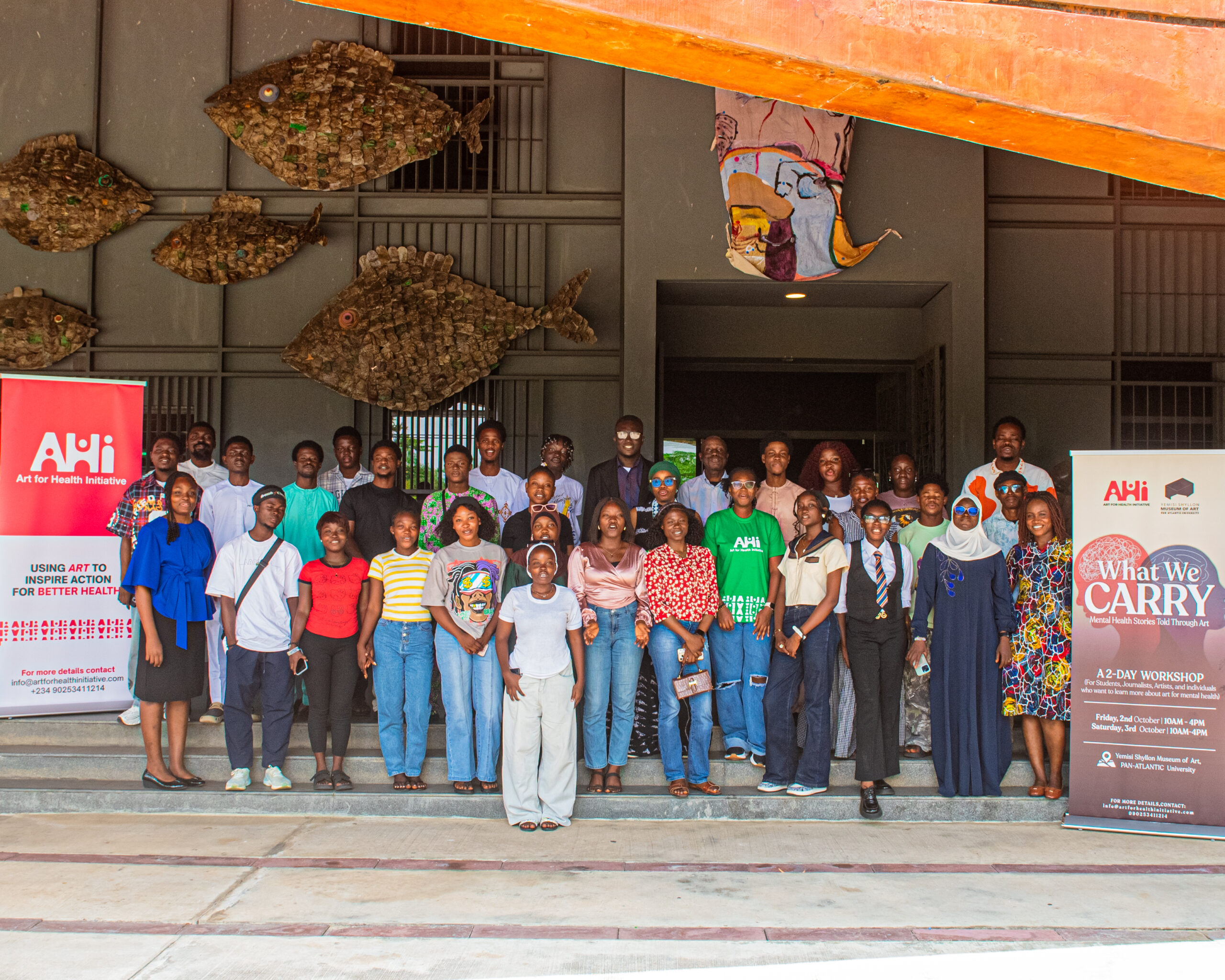
Twenty-five art students of the Yaba College of Technology (Yabatech), Lagos State, have explored mental health and emotional well-being through art in a workshop aimed at encouraging conversations around mental health.
The two-day Health Story Lab, organised by the Yemisi Shyllon Museum of Art (YSMA), Pan-Atlantic University, in collaboration with the Art for Health Initiative (AHI), was held on 2 and 3 October in Lagos.
The programme, titled “What We Carry: Stories of Mental Health and Resilience”, brought together art, public health, mental health and storytelling to help the students explore how creative expression can be used to communicate experiences that may be difficult to discuss openly.
The workshop was held ahead of World Mental Health Day (WMHD), marked annually on 10 October.
Using art to discuss mental health
The students participated in sessions on public health and art, mental health and resilience, creative expression and art for social change.
According to the organisers, the discussions gave the students an opportunity to reflect on issues such as stress, uncertainty, social pressure, family expectations, grief, fear and hope.


The students subsequently developed creative concepts and received feedback from facilitators and their peers.
The students also examined the role of art in health communication during a session led by Olayinka Badmus, a public health strategist. The session explored how creative expression can communicate public health issues and make health conversations more accessible.
Another session, led by psychiatrist and psychotherapist Emmanuel Abayomi, focused on mental health and resilience, while Art Project Lead Temitope Oladeji guided students to express their experiences and emotions through art. The programme also included a museum tour focused on art for social change, led by a museum educator, Charles Udeh.
Solomon Nkwagu, Head of Corporate Communication and Visitors’ Services at YSMA, said the programme showed the potential of art to encourage conversations around public and mental health.
“They began to see the possibility of using their creative voices to start conversations around public and mental health, to tell stories that people can recognise themselves in, and perhaps even to create moments of reflection and healing for others. That shift in perspective was one of the most rewarding parts of the programme,” Mr Nkwagu said.
In her remarks, Chidera Aneke, Founder of AHI, said the initiative was designed to make health communication more participatory, culturally relevant and emotionally engaging.
Ms Aneke said health information could be communicated not only through statistics and clinical information but also through stories, images, symbols, emotions and lived experiences.
“We wanted to create a space where young artists could understand that health is not only communicated through statistics, campaigns or clinical information. It can also be communicated through stories, images, symbols, emotions and lived experiences,” she said.
“Working with the students showed us the possibilities that emerge when artists are given the knowledge, language and space to think about health through their own creative practice.”
Mental health burden
Mental health remains a significant public health concern in Nigeria.
A 2026 systematic review and meta-analysis of 53 studies involving more than 132,000 people estimated that 7.9 per cent of the general population had experienced suicidal thoughts, while 1.9 per cent had made suicidal plans and 1.3 per cent had attempted suicide.

The researchers said suicidal behaviour was more common among some groups, including adolescents, young people, and pregnant women.
This year’s World Mental Health Day theme is “Lived experiences heard: real voices, real change.”
The World Health Organisation (WHO) is calling for people who have experienced mental health conditions to have a meaningful role in shaping policies, services and decisions that affect them.
“World Mental Health Day is an opportunity to meaningfully engage with people with lived experience (PWLE) of mental health conditions and to recognise their knowledge as a vital form of expertise,” it noted.
READ ALSO: PT Health Watch: Why some pregnant women develop gestational diabetes
“This year’s campaign calls for their voices to shape the policies, services and decisions that affect their lives.”
From workshop to exhibition
The Yabatech students will develop artworks based on the issues explored during the workshop.
The works are expected to form a micro-exhibition in Lagos in November, giving members of the public an opportunity to engage with mental health and resilience through the perspectives of young artists.
The organisers said the initiative is intended to demonstrate how partnerships between the creative sector, museums and public health practitioners can create new ways of discussing mental health.
Discover more from Premium Times Nigeria
Subscribe to get the latest posts sent to your email.
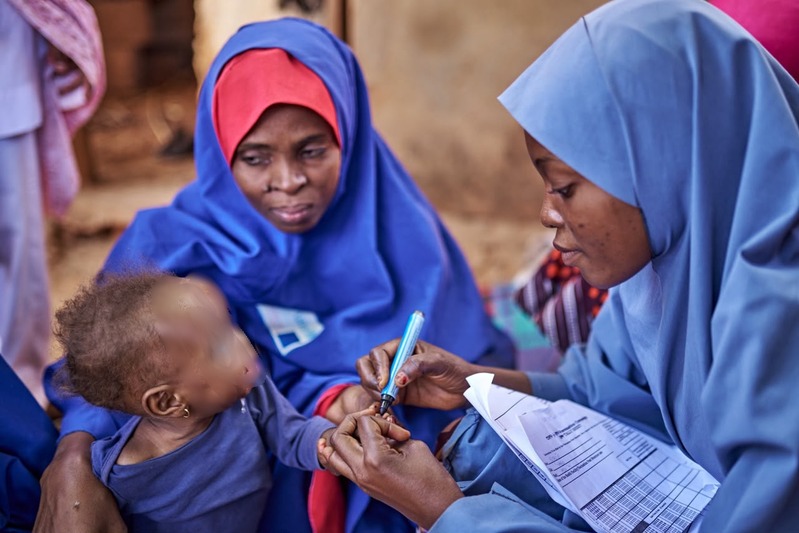
Gavi, the Vaccine Alliance, says 9.5 million children in 57 supported countries received no routine vaccine in 2025, despite gains in global immunisation.
The figure, described as the number of “zero-dose” children, was contained in Gavi’s 2025 Annual Progress Report, which reviewed the alliance’s 2021-2025 strategic period.
Gavi defines zero-dose children as infants who have not received the first dose of a diphtheria, tetanus and pertussis-containing vaccine by the end of their first year.
Number falls from 2021 peak
According to the report, the number of zero-dose children in 2025 was 600,000 lower than in 2024 and 25 per cent lower than the peak recorded in 2021 following disruptions to routine immunisation caused by the COVID-19 pandemic.
However, the figure remained four per cent above the 2019 baseline, partly because of continued growth in the number of children being born.
Gavi said children living in fragile, conflict-affected and humanitarian settings remain among those most likely to be missed by immunisation programmes.
Nigeria remains one of the countries with the highest number of zero-dose children. UNICEF estimated that about 2.2 million Nigerian children had never received a routine vaccine in 2025, the highest number in Africa.
Nigeria records gains in targeted areas
The report highlighted Nigeria, Ethiopia and Pakistan among countries where emerging data showed stronger immunisation coverage gains in sub-national areas that received greater Gavi focus and investment during the 2021-2025 period.
Gavi said the findings underscored the value of targeted, equity-focused investments in reaching communities that are being missed by routine immunisation.
The report also identified Nigeria among countries covered by Gavi’s Zero-Dose Learning Hubs, which examined what works and what does not in identifying and reaching zero-dose and under-immunised children.
The findings from Nigeria, Bangladesh, Mali and Uganda highlighted several issues, including gender-related barriers to immunisation.
73m children immunised in 2025
Despite the number of zero-dose children, Gavi said more than 73 million children were immunised through routine programmes with its support in 2025.
More than 351 million children were immunised during the 2021-2025 strategic period, “exceeding Gavi’s target of 300 million children.”
“By end 2025, Gavi-supported countries had immunised more than 1.3 billion unique children with Gavi support since 2000, exceeding our Investment Opportunity 2021-2025 commitment of more than 1.1 billion children immunised by 2025,” it noted.
Gavi said vaccination averted more than 2.2 million future deaths in 2025, bringing the total number of future deaths averted through its supported vaccination programmes to more than 7.8 million during the 2021-2025 period.
Generated economic benefits
The report said immunisation programmes generated more than $30 billion in economic benefits for Gavi-supported countries in 2025, the highest amount recorded in a single year.
The benefits were calculated from the costs of illness averted, including medical and associated costs, caretaker wages and productivity losses resulting from disability or death.
Gavi said the programmes generated more than $104 billion in economic benefits between 2021 and 2025 and more than $308 billion between 2000 and 2025.
Countries also contributed a record $301 million towards the co-financing of Gavi-supported vaccines in 2025, an 18 per cent increase from 2024.
About 80 per cent of the contribution came from domestic resources, while “approximately 20 per cent from low-interest loans from the World Bank.”
Gavi said countries had contributed a total of $2.2 billion towards vaccine co-financing since the policy was introduced in 2008.
More children
For its 2026 to 2030 strategic period, Gavi said it aims to protect another 500 million children through immunisation and avert between eight million and nine million future deaths.
READ ALSO:New TB vaccines could save 7.3m lives by 2050 – Gavi
The Alliance also targets more than $100 billion in economic benefits during the period. Gavi said it would place greater emphasis on reaching zero-dose and under-immunised children while strengthening the sustainability of national immunisation programmes.
In her comments, Gavi Chief Executive Officer, Sania Nishtar, said the results showed that immunisation generates benefits beyond preventing disease. “However, when it comes to immunisation we know that the return on investment extends far beyond health to supporting sustainable, inclusive economic growth,” Ms Nishtar said.
WHO Director-General, Tedros Ghebreyesus, also said immunisation delivers massive gains in lives saved and diseases prevented, but also in terms of economic benefits.
“Countries understand that the cost of failing to vaccinate is far too great, while the benefits extend across families, communities, economies and future generations,” Mr Ghebreyesus was quoted to have said.
Discover more from Premium Times Nigeria
Subscribe to get the latest posts sent to your email.
-

 News4 days ago
Robot data startup Mecka AI nabs $60M from Sequoia
-
Business2 days ago
Communications Ministry made ₦345.5 million duplicate payment for Abuja ICT Park project
-
Business3 days ago
Fuel subsidy would cost Nigeria over N20trn yearly — Minister
-
News2 days ago
LumenUs helps automate tedious paperwork in times of grief