Health
Delayed containment of Ebola could cost DRC and Uganda billions


The Bundibugyo Ebola outbreak in the Democratic Republic of the Congo (DRC) and Uganda presents an urgent public health and development challenge for the Great Lakes region. Although smaller so far than the 2014-2016 West Africa Ebola epidemic, history shows how quickly localised outbreaks can escalate when containment is delayed, and health systems are strained.
The immediate policy priority is containment. Failure to control transmission would not only increase mortality but also impose high economic costs through reduced productivity, heightened fiscal burdens and disruptions to trade, investment and development.
As of 7 July, the DRC had reported 1 759 confirmed cases and 600 confirmed Ebolarelated deaths, while Uganda reported 20 confirmed cases and two deaths.
Mortality figures should be interpreted cautiously due to possible under-reporting in remote areas.
No confirmed cases have been reported in neighbouring Rwanda or Burundi. Both countries have, nevertheless, heightened surveillance and preparedness given the extended connections with eastern DRC, especially through the Goma-Rubavu border crossing.

Ebola outbreaks can disrupt healthcare services and weaken health systems’ capacity. As resources are redirected towards emergency responses, the handling of other communicable diseases may suffer, leading to higher overall incidence and mortality rates. This can reverse hard-won gains and strain already struggling health systems, underscoring the importance of swift containment.
In June, the Institute for Security Studies African Futures and Innovation (AFI) programme modelled the impact of a ‘Containment’ scenario against the ‘Current
Path’ (business-as-usual) forecast. The International Futures modelling platform’s ‘other communicable diseases’ category includes Ebola and was used to model the associated effect.
AFI analysis indicates that on the Current Path, fatalities could reach 3,360 in the DRC and 520 in Uganda by the end of 2026, compared to 490 in DRC and 30 in
Uganda under the Containment forecast. (Actual Ebola deaths are already higher than the Containment forecast, indicating the gravity of the situation.) The outcome may worsen in 2027, rising to about 4,340 additional deaths in the DRC and 750 in Uganda.
 These figures are well below the 2014-2016 West Africa Ebola epidemic, which resulted in about 11,325 deaths, but they underscore the risks of delayed
intervention.
Containing the outbreak will require a significant increase in public health expenditure to enable better disease surveillance, laboratory testing, treatment
facilities, community outreach and emergency response systems. These interventions would not only limit transmission but restore public confidence and maintain economic activity.
AFI’s Containment scenario indicates that government health expenditure in 2026 would need to rise to at least US$1.82 billion in the DRC and US$1.17 billion in Uganda. This represents an increase of over US$540 million above the Current Path forecast in the DRC and US$170 million in Uganda. Taken together, at least US$710 million in additional health financing would be required to effectively contain the outbreak.
 The benefits of early intervention would be substantial in terms of lives saved. Rapid containment is also significantly less costly than responding to a larger, more entrenched epidemic later.
The estimated financing requirement is broadly consistent with the US$518 million emergency appeal the United Nations and humanitarian partners launched on 5 June. Several governments and development partners have already pledged support, but crisis financing is often reactive and temporary.
The current outbreak highlights the need for more systematic investment in epidemic preparedness, surveillance systems, laboratory infrastructure, community
health workers and rapid-response capacity.
However, additional health spending should not come at the expense of other development priorities. African governments are often forced to divert resources
from education, social protection, food security and infrastructure during crises. This risks undermining long-term development outcomes and shifting the burden of the emergency onto vulnerable populations.
The challenge is not only to mobilise emergency financing, but to secure additional, flexible resources that allow governments to respond without compromising broader development objectives.
Ebola can also discourage market participation due to uncertainty and fear of infection. Border restrictions, reduced travel and disruptions to transport networks constrain trade, services and agricultural activity. These effects are particularly significant in the Great Lakes region, where communities rely on cross-border economic and social ties. If containment is further delayed, the region could face rising communicable disease fatalities alongside slower economic growth.
Often, economic activity does not disappear entirely but shifts into informal, unmonitored channels as households try to preserve their incomes and livelihoods.
As informality increases, governments collect less revenue from customs duties, corporate taxes and other domestic sources.
AFI modelling shows that in 2026, the DRC and Uganda could lose around US$70 million and US$60 million in government revenue, respectively, due to reduced formal economic activity, increased informality and the fiscal strain of financing the outbreak response. Both governments are already under pressure to finance emergency health interventions while sustaining critical development spending.
Four key policy implications emerge from these findings.
First, early containment would be far less costly than the burden of uncontrolled escalation. Rapid intervention saves lives, reduces economic disruption and lowers long-term fiscal costs. Second, emergency health financing must be mobilised quickly and should be additional to existing development resources.
Third, responses should protect livelihoods and formal economic activity wherever possible, particularly in border communities relying on trade and mobility.
Finally, the outbreak reinforces the importance of investing in resilient health systems before crises occur. Strong surveillance networks, laboratory systems, community health workers and cross-border preparedness mechanisms are the most effective safeguards against future epidemics.
The African Development Bank and other development partners can mobilise rapidresponse financing, support health-system resilience and strengthen regional preparedness. Epidemic preparedness must be recognised not just as a health priority, but as a development, fiscal stability and regional resilience imperative.
Marvellous Ngundu is a Research Consultant, Blessing Chipanda is a Senior Research Consultant, and Jakkie Cilliers is Head of African Futures and Innovation at the Institute for Security Studies (ISS) Pretoria.
(This article was first published by ISS Today, a Premium Times syndication partner. We have their permission to republish).

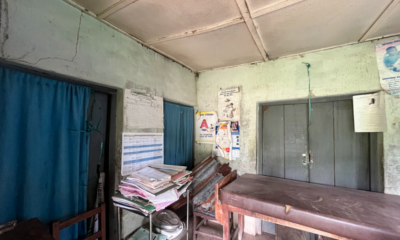




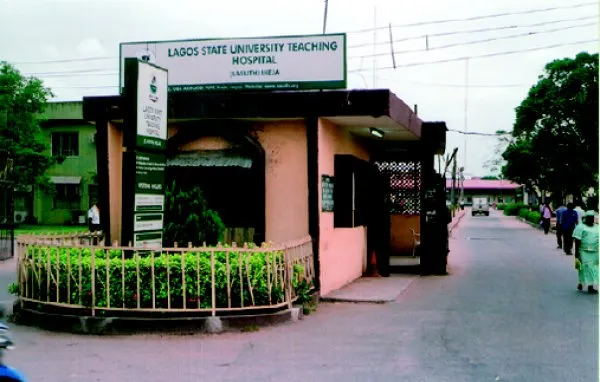
The Nigerian Association of Resident Doctors (NARD) has backed the ongoing strike by resident doctors at the Lagos State University Teaching Hospital (LASUTH).
NARD in a press release issued on 12 September and signed by its President, Mohammad Suleiman, called on Governor Babajide Sanwo-Olu and the Lagos State Ministry of Health to intervene.
NARD said it is in “full solidarity” with the Association of Resident Doctors, Lagos State University Teaching Hospital (LASUTH-ARD), and supported its demands.
It noted that the unresolved welfare concerns had disrupted medical services at the tertiary hospital.
It called on the state government to address the doctors’ grievances and “avert a prolonged crisis” that could affect healthcare delivery in Lagos.
Doctors’ demands
According to NARD, the unresolved issues include the non-payment of specialist allowance for Grade Level 14 resident doctors, also known as Senior Registrars 1 (SR1).
The association also cited outstanding salary shortfalls and advancement arrears, as well as 25 months of arrears arising from the delayed implementation of the revised Professional Allowance Table.
NARD further raised concerns about discrepancies in recent salary payments, calling for the immediate release of full salary breakdowns to ensure transparency.
The association said, the concerns persisted despite previous acknowledgements and agreements with the state government.
“Our colleagues at LASUTH have shown immense patience and dedication, but the persistent failure to honour agreements leaves them with no choice,” NARD said.
It urged the government to meet the demands and restore normal medical operations.
Background
The latest strike followed earlier disagreements between LASUTH resident doctors and the Lagos State government over welfare and remuneration.
LASUTH-ARD had embarked on a three-day warning strike from 15 to 17 June 2026, citing concerns including the implementation of the Professional Allowance Table, payment of specialist allowance to Grade Level 14 resident doctors, salary shortfalls and advancement arrears.
The doctors also demanded the resumption of construction of resident doctors’ quarters within LASUTH.
Following the warning strike, the doctors said several meetings were held with government officials, with assurances that the specialist allowance for SR1 doctors would be incorporated into the Professional Allowance Table.
LASUTH-ARD also said the issue was discussed with Governor Sanwo-Olu during a meeting on 17 July.
However, the doctors later said the specialist allowance was not reflected in the August salaries of affected members, prompting further disagreement with the government.
In August, LASUTH-ARD gave the Lagos State government a seven-day ultimatum to resolve the issues, warning that failure to do so could lead to further industrial action.
ALSO READ: NMA warns of wider health crisis as LASUTH doctors’ strike enters second day
The association demanded the implementation and payment of the specialist allowance, payment of outstanding arrears and settlement of salary shortfalls and advancement arrears.
NARD warns against escalation
NARD said the Lagos State government must treat the industrial action with urgency to prevent further escalation.
The association called on Governor Sanwo-Olu and the state Ministry of Health to intervene directly and resolve the outstanding issues.
It said continued delays could threaten patient care and stability in the state’s health system.
“NARD stands shoulder-to-shoulder with LASUTH-ARD until the issue is fully resolved,” the association said.
The doctors’ association urged the government to address the grievances and restore normal medical operations across the health system.
Discover more from Premium Times Nigeria
Subscribe to get the latest posts sent to your email.

A total of 10,494 Nigerians are listed among staff in the United Kingdom’s National Health Service (NHS), according to data shared by NHS Million, a UK campaign organisation focused on NHS staff.
Nigeria ranked sixth overall on the list, behind the UK/British, India, the Philippines, Ireland and Poland, making Nigeria the largest African nationality represented in the breakdown.
The data shared by NHS Million showed that more than 1.1 million NHS workers identified as British or UK nationals, while Indians accounted for 32,117 staff and Filipinos 25,423.
It also showed that Zimbabwe had the second-highest number of African nationals working in the NHS, with 4,780, followed by Ghana with 3,395, Egypt with 2,895 and South Africa with 1,829.
The figures highlight the significant contribution of Nigerian professionals to the UK health system, but also come amid persistent concerns over the shortage of health workers in the country.
Nigeria loses thousands of health workers
The 2025 State of Health of the Nation Report, released by the Federal Ministry of Health and Social Welfare, showed that over 20,000 Nigerian health workers relocated abroad within one year.
The figure included 3,919 doctors, 7,487 nurses and midwives, 6,861 medical laboratory professionals, 702 pharmacists, 658 physiotherapists and 274 dentists, among other health professionals. The report also showed that Nigeria has 95,456 registered doctors, but only 60,551 currently hold active practising licences.
The workforce shortage is further worsened by the uneven distribution of health professionals across the country, with several northern states recording particularly low doctor densities.
UK remains major destination
The United Kingdom is one of the major destinations for Nigerian health professionals.
Data from the UK’s General Medical Council showed that 4,691 Nigerian-trained doctors joined the UK medical register between May 2023 and April 2026, according to a Punch report.
The data also showed that 15,896 Nigerian-trained doctors were licensed to practise in the UK.
READ ALSO: PT Health Watch: How laboratory tests can help detect colorectal cancer early – Expert
The 2025 State of Health of the Nation Report identified external migration as one of the factors affecting the availability of health professionals in Nigeria.
Migration policy yet to be fully implemented
The federal government has introduced several measures aimed at increasing the health workforce and addressing migration.
Nigeria also approved a National Policy on Health Workforce Migration in August 2024, aimed at managing health worker migration, improving retention and strengthening workforce planning.
However, the 2025 State of Health of the Nation Report said that although the implementation plan had been finalised, full implementation had not commenced.
The report said an additional 23,000 frontline health workers were trained in 2025, bringing the number trained between 2024 and 2025 to 78,146, or about 65 per cent of the national target of 120,000.
The policy is intended to improve working conditions, support career progression and establish a more coordinated approach to health worker migration and retention.
Discover more from Premium Times Nigeria
Subscribe to get the latest posts sent to your email.
-

 Featured4 days ago
Children Are Suffering in Silence: Plateau Child Protection Network Rates Abuse Crisis 9/10
-
Business4 days ago
CBN disowns purported $46 billion grant approval
-
Business2 days ago
FG settles severance benefits for 2,100 former Nigeria Airways workers after two decades
-
News3 days ago
Mecka AI nears $500M valuation in Sequoia-led deal amid rush for robot training data