Health
Lassa Fever: Death toll hits 221 as fatality rate rises above 2025 level

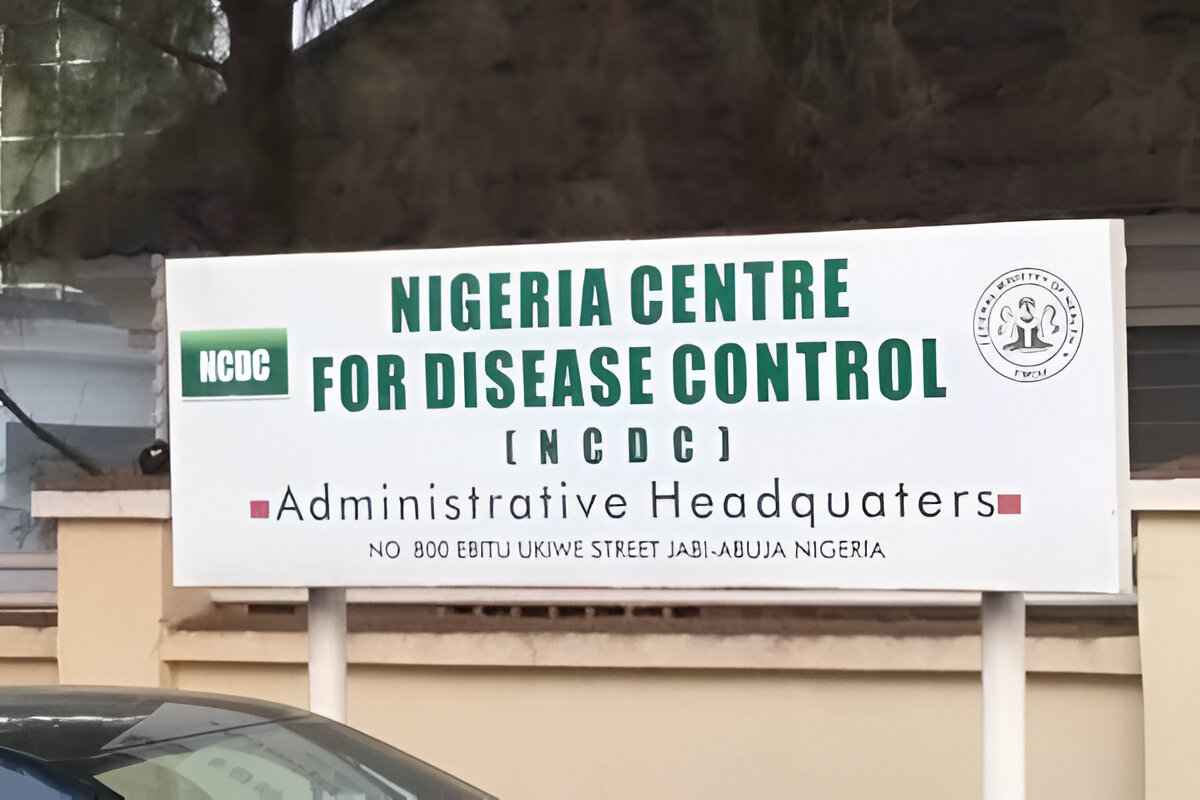

The Nigeria Centre for Disease Control and Prevention (NCDC) has said the country’s Lassa fever outbreak has become deadlier this year, with 221 deaths recorded and the case fatality rate rising to 24 per cent, compared with 18.7 per cent during the corresponding period in 2025.
The agency disclosed this in its Lassa fever situation report for epidemiological week 26, released on Friday.
The report also showed that confirmed infections increased during the week, with 31 new cases recorded, up from 22 in the previous reporting week.
A total of 23 states have recorded at least one confirmed case across 111 local government areas this year, highlighting the continued spread of the disease across the country.
Five states account for most infections
The NCDC reported that 85 per cent of all confirmed cases originated from Ondo, Bauchi, Taraba, Edo and Benue states, while the remaining 15 per cent were reported elsewhere.

Ondo accounted for the largest share of confirmed infections at 30 per cent, followed by Bauchi (26 per cent), Taraba (14 per cent), Edo (nine per cent) and Benue (six per cent).
People aged 21 to 30 years remained the most affected group, although confirmed cases ranged from one to 93 years.
The male-to-female ratio among confirmed cases stood at 1:0.9, indicating nearly equal infection rates between men and women.
Why deaths remain high
The NCDC attributed the elevated fatality rate to several persistent challenges, including late presentation of cases, poor health-seeking behaviour driven by the high cost of treatment, inadequate environmental sanitation in high-burden communities, low public awareness, and infections among healthcare workers.
The agency disclosed that one healthcare worker was infected during week 26.
Response efforts intensified
To contain the outbreak, the NCDC said the National Lassa Fever multi-partner, multi-sectoral Incident Management System remains activated to coordinate surveillance, case management, risk communication and response activities nationwide.
During the reporting week, the agency and its partners supported case management training for healthcare workers, active case search and contact tracing, infection prevention and control (IPC) training, community engagement activities, distribution of personal protective equipment, laboratory testing, and high-level field missions to affected states.
The NCDC urged state governments to sustain year-round community engagement on Lassa fever prevention, while healthcare workers were advised to maintain a high index of suspicion for the disease, initiate timely referral and treatment, and adhere strictly to infection prevention and control procedures.
READ ALSO: NCDC updates Lassa fever death rate to 19.3% as outbreak reaches 23 states
Lassa fever
Lassa fever is an acute viral haemorrhagic illness caused by the Lassa virus, which is transmitted to humans primarily through contact with food or household items contaminated by the urine or faeces of infected rats.
It can also spread from person to person through contact with bodily fluids.
The disease often begins with fever, weakness, and headache, and may progress to more severe symptoms such as bleeding, difficulty breathing, swelling, and organ failure.
Early diagnosis and prompt treatment with Ribavirin are critical for improving survival.







The World Health Organisation (WHO) has expressed hope that the Ebola outbreak in the Democratic Republic of the Congo (DRC) can be contained, despite confirmed cases of Bundibugyo virus disease surpassing 10,000.
The optimism comes as data released by the DRC’s Ministry of Public Health on Tuesday put confirmed cases at 10,060, with 4,887 deaths, according to a report by Al Jazeera.
The outbreak, declared on 15 May, is the largest and deadliest Ebola epidemic recorded in the DRC.
It is also the second-largest and second-deadliest Ebola outbreak globally, behind the 2014–2016 West African epidemic, which recorded about 28,600 cases and more than 11,000 deaths.
Reasons for hope
In a post on his official X account on Tuesday, Mohammed Janabi, the WHO Regional Director for Africa, said the rising figures reflected the toll the outbreak had taken on families and communities but noted that progress in recovery, research and response efforts offered reasons for hope.
Mr Janabi said more than 2,600 people had recovered, while new vaccine and treatment candidates were advancing through clinical trials.

He added that laboratory testing, treatment capacity, infection prevention and control, community engagement and surveillance were being strengthened to help contain the outbreak.
“Our teams are on the ground, working side by side with the government and partners to stop transmission and save lives,” he said, calling for sustained commitment, community trust and solidarity, as well as safe access to affected communities.
Spread beyond the DRC
The rising figures come amid growing concerns about the spread of the virus beyond the DRC, with Kenya and Nigeria reporting infections linked to the wider outbreak.
PREMIUM TIMES reported last week that Kenya had recorded nine confirmed cases, including two deaths, after the virus was introduced by a traveller who arrived from the DRC through Uganda.
Nigeria also confirmed its first Ebola case in more than a decade on 20 October, after a woman who had travelled from Uganda tested positive in the Federal Capital Territory (FCT).
In a subsequent report, PREMIUM TIMES reported that the Africa Centres for Disease Control and Prevention (Africa CDC) was investigating a possible link between the Nigerian case and the infection recorded in Kenya.
Both patients travelled through Entebbe International Airport in Uganda on 3 October, prompting investigations into whether they had shared equipment or had other contact. However, health officials have stressed that a direct connection between the infections has not been established.
Nigeria’s health minister, Muhammad Pate, later said genomic sequencing showed that the viruses detected in Nigeria and Kenya differed by only one mutation. He cautioned, however, that the finding did not establish where the Nigerian patient contracted the virus.
Contact tracing challenges
According to the Al Jazeera report, about 80 per cent of new cases in the DRC are occurring outside the known chains of transmission being monitored by health authorities.
This means many infections are being detected among people whose exposure to previously confirmed cases has not been established, complicating efforts to identify contacts and interrupt further transmission.
The Africa CDC has said at least 95 per cent of cases must be linked to known contacts of infected people for an outbreak to be considered under control.
Vaccine research underway
The absence of an approved vaccine against the Bundibugyo strain remains another major challenge in the response.
PREMIUM TIMES reported on Friday that the World Health Organisation (WHO) had announced the commencement of the Tumaini clinical trial in Bunia, eastern DRC, to assess potential vaccines against the strain.
READ ALSO: Ebola: Nigeria has no active case after patient’s evacuation — WHO
The trial began with the vaccination of its first participants on 23 October and is expected to evaluate several vaccine candidates, including Ervebo, which is licensed against a different Ebola virus species, as well as experimental candidates being developed by Moderna and the University of Oxford in collaboration with the Serum Institute of India.
The trial is intended to establish whether the candidates can safely generate an immune response and protect against the Bundibugyo virus. Their effectiveness against the strain has not yet been established.
The development follows an earlier WHO recommendation, reported by PREMIUM TIMES in August, that Ervebo be prioritised for a clinical trial after preliminary animal studies suggested it might offer some cross-protection against Bundibugyo virus disease.
Discover more from Premium Times Nigeria
Subscribe to get the latest posts sent to your email.

The Nigeria Centre for Disease Control and Prevention (NCDC) has revealed that its decision to pay ₦100,000 weekly to people quarantined over possible exposure to Ebola was an unplanned, temporary measure introduced on compassionate grounds after some threatened to leave the facilities.
The NCDC Director-General, Jide Idris, disclosed this on Monday during an appearance on Channels Television’s Politics Today, explaining that the agency introduced the payments to address concerns raised by quarantined contacts who said their absence from home was affecting their families and businesses.
Mr Idris said the authorities had taken affected people out of their normal environments for public health reasons, making it necessary to consider their welfare while ensuring they complied with quarantine measures.
“Those people who were in the quarantine area, there are people who never planned to be there. We took them out of their comfort zones to put them there for public health reasons,” he said.
Mr Idris said the agency had taken responsibility for their feeding and accommodation but faced complaints from some quarantined contacts who said they had families to support and businesses to run.
He said some threatened to leave the facilities because of the disruption to their daily lives, a development he described as a potential public health concern.
“If you allow them to leave the place, it’s a public health issue because you don’t know whether they will turn positive or who is ill,” he said.
Mr Idris explained that the financial support was introduced to ease tensions and encourage affected people to remain in quarantine for the period health authorities require.
He said the arrangement was temporary and had not been part of the agency’s original budget.
“It’s a temporary thing because it’s not something we’ve done,” he said, adding that the government had to intervene because the expected support from state governments was not forthcoming.
State governments’ responsibilities
Mr Idris said state governments were responsible for providing quarantine facilities and the resources needed to manage people placed under public health restrictions.
He said the NCDC stepped in to address the immediate welfare concerns of the quarantined contacts because the necessary support had not been provided.
The agency’s intervention, he explained, was intended to prevent people from leaving designated facilities before completing the required monitoring period.
Nigeria’s Ebola response
PREMIUM TIMES earlier reported that the NCDC approved a weekly allowance of N100,000 for each person quarantined following possible exposure to Nigeria’s confirmed Ebola patient in the Federal Capital Territory (FCT).
Speaking on Channels Television on Monday, Mr Idris said the number of identified contacts had increased to 54 after authorities traced an Uber driver who transported the patient to the first hospital where she sought treatment.
The contacts include healthcare workers, the patient’s husband, domestic staff and personnel involved in collecting samples.
They are being monitored for 21 days after their last possible exposure, in line with Ebola’s incubation period.
Nigeria confirmed the imported Ebola case on 20 October, its first since the 2014 outbreak. The patient, a 42-year-old Ugandan-born woman living in Abuja, was subsequently evacuated to Switzerland alongside her husband.
The woman is receiving treatment in Geneva, while her husband, who had shown no symptoms, remains in isolation in Zurich.
Following their evacuation, the World Health Organisation said Nigeria had no remaining confirmed Ebola cases, noting that contact monitoring and other public health measures continue.
Discover more from Premium Times Nigeria
Subscribe to get the latest posts sent to your email.
-

 News3 days ago
Troops rescued 70 abductees, recovered N10 million ransom: DHQ
-
News3 days ago
Plateau Activates Ebola Preparedness Measures, Urges Residents to Observe Safety Guidelines
-
Business3 days ago
CBN grants JP Morgan approval-in-principle to set up merchant bank
-
Business3 days ago
REA Ends 16 Years of Darkness in Two Kano Communities