Founders building in the healthcare space can’t just build fast and break things. Timelines stretch longer, stakes are higher, and success depends on navigating systems that reward rigor over speed.
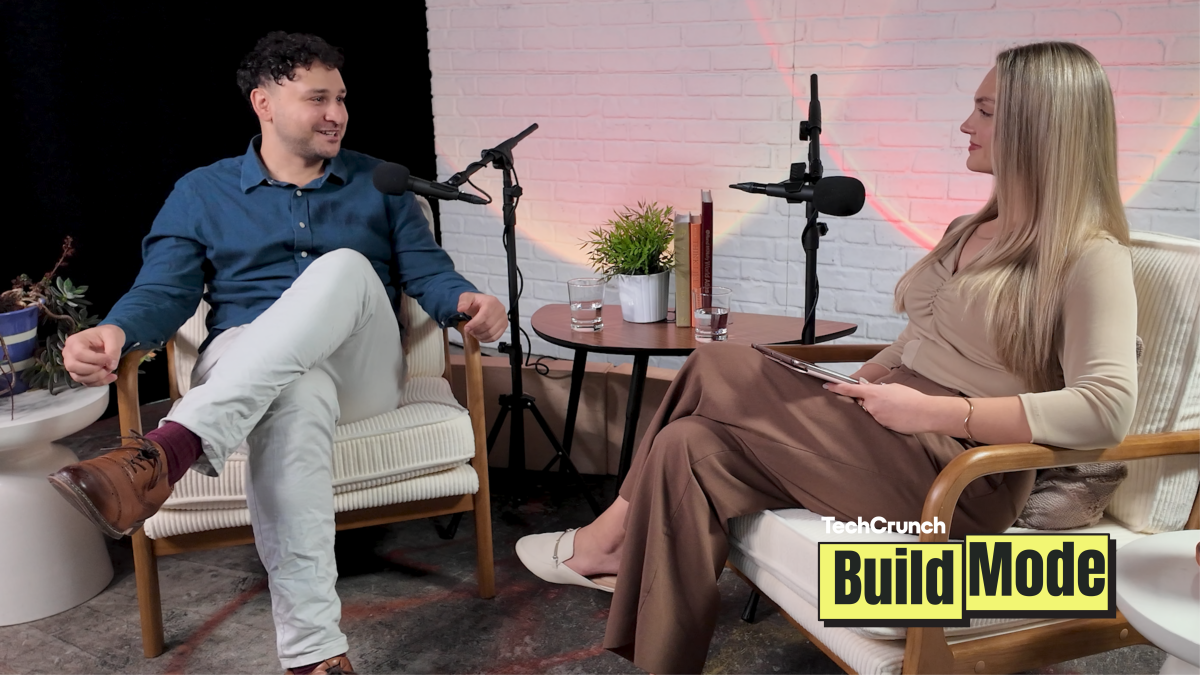
That’s exactly the reality Robhy Bustami, co-founder and CEO of BioticsAI, has been building in. His company is developing an AI copilot for ultrasound that helps detect fetal abnormalities, an area where misdiagnosis rates remain surprisingly high. Bustami joined Isabelle Johannessen on Build Mode to discuss how the company has navigated a highly regulated space and kept the team motivated while cutting through all the red tape.
BioticsAI started scrappy. The team built an early, functioning version of the product for under $100,000, an almost unheard-of milestone in the medical device world. That prototype helped them win TechCrunch Startup Battlefield in 2023, bringing early visibility and credibility. In January, they gained FDA approval, which means they can begin launching in hospitals and growing the business at a new rate.
From day one, the team approached product development with FDA approval in mind. Instead of building first and figuring out regulation later, they integrated clinical validation, regulatory strategy, and product development into a single process. That meant working closely with clinicians, collecting large-scale datasets, and running structured clinical studies before ever reaching the submission stage.
The FDA process itself is often viewed as a black box, but Bustami emphasizes that founders don’t have to navigate it blindly. Early engagement with regulators, through pre-submission meetings, helped the team align on study design and expectations. Still, risk never fully disappears. For many investors, the biggest question is simple: What if the FDA says no?
Internally, those long timelines create a different kind of challenge: keeping a team motivated when the biggest milestone is years away. At BioticsAI, that meant building a culture of alignment across engineers, clinicians, and researchers, ensuring everyone got to see the wins that were happening.
“Making sure everyone is completely aligned, even if it’s outside of their technical scope,” Bustami said, “constantly seeing wins on the R&D side,” from clinical studies to new healthcare partnerships.
Techcrunch event
San Francisco, CA | October 13-15, 2026
Now, with FDA clearance secured, BioticsAI is entering a new phase: deployment. The company is beginning to roll out its technology in hospitals, with plans to expand beyond obstetrics into broader areas of reproductive health.
Building in healthcare is a long game. It requires patience, discipline, and a willingness to operate in uncertainty. For founders willing to take that path, the reward isn’t just a successful company — it’s the chance to build something that genuinely changes how care is delivered.
Subscribe to Build Mode on Apple Podcasts, Spotify, or wherever you like to listen. Watch the full videos on YouTube. Isabelle Johannessen is our host. Build Mode is produced and edited by Maggie Nye. Audience Development is led by Morgan Little. And a special thanks to the Foundry and Cheddar video teams.
Apply to Startup Battlefield: We are looking for early-stage companies that have an MVP. So nominate a founder (or yourself). Be sure to say you heard about Startup Battlefield from the Build Mode podcast. Apply here.
TechCrunch Disrupt 2026: We’re back for TechCrunch Disrupt on October 13 to 15 in San Francisco, where the Startup Battlefield 200 takes the stage. So if you want to cheer them on, or just network with thousands of founders, VCs, and tech enthusiasts, then grab your tickets.
Use codebuildmode15 for 15% off any ticket type.
When you purchase through links in our articles, we may earn a small commission. This doesn’t affect our editorial independence.
The Plateau State High Court sitting in Jos has resumed hearing in the trial of suspects linked to the Anguwan Rukuba killings, with one of the defendants, Adamu Alhassan, pleading not guilty to a six-count charge.
At the resumed proceedings before Justice Jacob Longden, the charges were read to the defendant with translation into Hausa to aid his understanding.
The Plateau State Attorney-General and Commissioner for Justice, Philemon Daffi, informed the court that the charge, dated April 17, 2026, was supported by a list of exhibits and witness statements, and urged the court to formally take the defendant’s plea.
The court heard that Alhassan, alongside others still at large, allegedly participated in attacks on communities in Bachit, Riyom Local Government Area, and Vom in Jos South Local Government Area between 2025 and January 2026, resulting in multiple deaths.
The defendant pleaded not guilty to all six counts, which include criminal conspiracy, culpable homicide, terrorism, illegal possession of firearms, and unlawful dealing in arms and ammunition.
Counsel to the defendant, Mustapha Ibrahim, SAN, requested time to confer with his client and file necessary responses, and opposed the prosecution’s application for his continued detention by the Department of State Services, DSS.
He argued that remanding the defendant in a correctional facility would better guarantee his constitutional rights and access to legal representation.
The prosecution, however, maintained that ongoing investigations and the involvement of other suspects still at large justified his continued detention by the DSS.
In his ruling, Justice Longden adjourned the case to May 8, 2026, for a case management conference and ordered that the defendant remain in DSS custody pending the commencement of trial.
Uber’s forthcoming luxury robotaxi service with Lucid Motors and Nuro is getting a fourth partner: Hertz.
The companies announced Thursday that Hertz will provide “day-to-day vehicle asset management, including charging, maintenance, repairs, cleaning, and depot staffing.” The service, announced last year, is supposed to launch by the end of 2026 in the San Francisco Bay Area, using Lucid’s Gravity SUVs and Nuro’s self-driving tech.
Hertz is handling this work through a newly-established affiliate it’s calling Oro Mobility, which the rental company says will “provide integrated fleet management solutions across a range of mobility segments.”
“As the industry transitions from personally owned vehicles to commercially operated driver-led and autonomous fleets, Oro aims to fill a critical orchestration and operations gap,” the Hertz press release reads.
This is not the first time Hertz, which went through a bankruptcy restructuring process in 2020, has followed new mobility trends.
The company made a big splash in 2021 when it announced it was buying 100,000 EVs from Tesla, news that helped Elon Musk’s car company reach a $1 trillion valuation for the first time (and helped Hertz’s image as it emerged from bankruptcy). Hertz also announced plans in 2022 to buy up to 175,000 EVs from General Motors, and another 65,000 from Polestar.
None of those deals were ever fully realized, and Hertz started a fire sale of the EVs it had bought in early 2024. It did that in part because of higher-than-expected maintenance costs due to Uber drivers renting the EVs, and because Tesla slashed prices to stave off competition and boost sales.
Techcrunch event
San Francisco, CA | October 13-15, 2026
Starting up a fleet management and operations arm, though, should be closer to Hertz’s core competencies as a rental car giant. Competitors like Avis are already doing this kind of work for Waymo. And with robotaxi companies seemingly keen to use third parties to manage this piece of the puzzle, Hertz could build a decent business with Oro.
To wit, Hertz and Uber said Thursday that they will “explore expansion opportunities in 2027.” Uber has deals with dozens of autonomous vehicle companies around the world, and has plans to order at least 35,000 robotaxi-ready vehicles from Lucid Motors alone in the coming years. It’s starting with 10,000 Gravity SUVs, and recently announced plans to order another 25,000 EVs from Lucid Motors that will be based on its upcoming mid-sized platform. (Uber also now owns more than 11% of Lucid Motors as part of investments it has made alongside the vehicle orders.)
When you purchase through links in our articles, we may earn a small commission. This doesn’t affect our editorial independence.