Connect with us

Business

Average price of petrol rises to ₦1,532.93 per litre in April, up 18.97% — NBS

info

Published

on

National Bureau of Statistics.jpg

MTN ADVERT

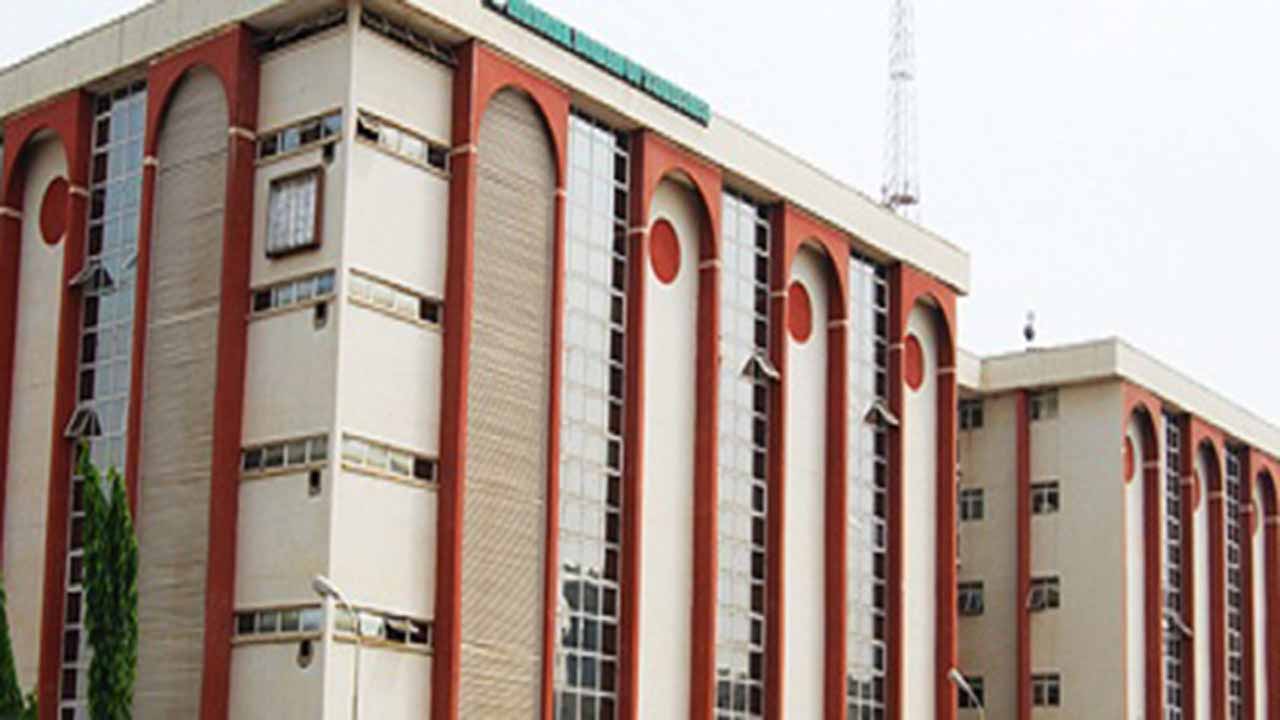
The average retail price of Premium Motor Spirit (petrol) rose to ₦1,532.93 per litre in April 2026, up from ₦1,288.54 recorded in March, according to data released by the National Bureau of Statistics (NBS) on Friday.

The latest Premium Motor Spirit (Petrol) Price Watch shows that the April price represents an 18.97 per cent increase on a month-on-month basis.

The report also indicates that on a year-on-year basis, the average retail price rose from ₦1,239.33 in April 2025 to ₦1,532.93 in April 2026, representing a 23.69 per cent increase.

According to the NBS data, Yobe recorded the highest average retail price at ₦1,599.05 per litre, followed by Edo at ₦ 1,595.74 and Bauchi at ₦ 1,589.07.

On the other hand, Niger recorded the lowest average price at ₦1,403.89 per litre, followed by Sokoto at ₦1,404.16 and Katsina at ₦1,406.28.

PT WHATSAPP CHANNEL

The South-South recorded the highest average retail price at ₦1,566.76 per litre, while the North-West recorded the lowest at the ₦1,508.81 per litre.

Diesel price increases

The National Bureau of Statistics also said the average retail price of Automotive Gas Oil (diesel) rose by 50.16 per cent on a month-on-month basis in April 2026.

The price increased from N1,648.06 per litre in March to N2,474.69 per litre in April.

On a year-on-year basis, diesel price increased by 43.67 per cent from ₦1,722.45 per litre in April 2025 to N2,474.69 per litre in April 2026.

READ ALSO: Nigeria’s GDP grows by 3.89% in Q1 2026 — NBS

Nasarawa recorded the highest average diesel price at ₦2,818.94 per litre, followed by Ebonyi at ₦2,754.06 and Taraba at ₦2,704.76.

Kebbi recorded the lowest price at ₦2,180.28 per litre, followed by Kogi at ₦2,192.70 and Katsina at ₦2,269.14.

The North-East recorded the highest average diesel price at ₦2,603 per litre, while the North-West recorded the lowest at ₦2,409.34 per litre.

The report highlights continued variation in petrol and diesel prices across states and geopolitical zones during the period under review.



Continue Reading
Click to comment

Leave a Reply

Your email address will not be published. Required fields are marked *

Business

How Systems-Driven Education Interventions Can Rebuild Nigeria’s Workforce

info

Published

on

By

PRESS  RELEASE—Nigeria’s most damaging infrastructure deficit may not be roads, power or ports, but a weak education system producing too few work-ready citizens for an economy seeking to industrialise, digitalise and compete. With about 10.5 million primary-school-age children out of school and only about one in four children aged 7 to 14 able to read a simple sentence or handle basic numeracy, education can no longer be treated as a peripheral social concern. It is core national infrastructure.

This is why Nigeria must move beyond the old model of corporate philanthropy in education — the one-off donation, ceremonial scholarship or isolated classroom block — and encourage interventions that strengthen the full learning pipeline. The NNPC/Seplat Energy Joint Venture’s education model offers a useful example because it spans teacher development, student competition, school infrastructure, scholarships and entrepreneurship support. Its value lies not only in scale, but in structure: it treats education as a system, not a photo opportunity.

Host Community Impact at a Glance

  • 34% of Seplat’s 780 undergraduate scholarships have gone to students from host communities.
  • The Seplat JV PEARLs Quiz is open to secondary schools in Delta, Edo and Imo States, with more states to follow.
  • Since 2012, PEARLs Quiz has impacted 61,035 teachers and students.
  • ₦101 million in prize funding has supported school projects such as libraries, classroom blocks and buses.
  • STEP has recorded 1,334 educators trained, including 1,232 secondary-school teachers and 102 Ministry of Education staff.

Too often, companies still approach education through isolated gestures that create goodwill but little systemic change. Nigeria now needs a more disciplined and ambitious full value-chain approach that addresses teachers, students, learning environments, progression pathways and employability as linked parts of one ecosystem.

What distinguishes the Seplat model is that it works across several pressure points at once. Teacher quality is improved through structured capacity building. Student motivation is reinforced through academic competition and recognition. Schools receive infrastructure support. Scholarships widen access to tertiary education, while entrepreneurship training connects learning to economic independence. The logic is simple: if a system is broken at several points, meaningful intervention cannot occur at only one.

The same systems thinking is visible in host communities and host states. PEARLs Quiz rewards academic excellence while leaving behind assets that strengthen schools long after the competition ends. STEP focuses on the teacher as the multiplier: a scholarship may transform one student, but a strong teacher can influence hundreds over time. The undergraduate scholarship allocation also shows a balance between national reach and local responsibility, recognising the special obligation companies have to communities closest to their operations.

The policy lesson is clear. Every serious sector in Nigeria depends on education for its future workforce: energy needs engineers and technicians; healthcare needs skilled professionals; agriculture and manufacturing need technical competence; and the digital economy needs software, design and analytical talent. Poor education today becomes poor productivity tomorrow. Private-sector participation in education should therefore be recognised not as optional benevolence, but as enlightened self-interest and national economic strategy.

For government, the task is to mobilise private-sector capital and execution capacity through intentional partnerships with federal and state education authorities. For companies, the challenge is to move from random acts of generosity to structured interventions that improve learning quality, teacher capability, school infrastructure and access pathways. For the media, the responsibility is to distinguish interventions that genuinely move systems from those that merely generate headlines.

Seplat Energy’s model is worthy of attention because it goes beyond the one-off gesture. It links teachers to students, students to facilities, facilities to opportunity, and opportunity to long-term development. Nigeria does not need just more corporate interventions in education; it needs better-designed ones

The post How Systems-Driven Education Interventions Can Rebuild Nigeria’s Workforce appeared first on Business Today NG.

Continue Reading

Business

State electricity markets risk losing investors without harmonised regulations – FCCPC

info

Published

on

By

FCCPC e1765608578182.gif

MTN ADVERT

The Federal Competition and Consumer Protection Commission (FCCPC) has warned that Nigeria’s emerging state electricity markets could struggle to attract investment if states adopt different regulatory frameworks, stressing the need for stronger cooperation among electricity regulators to protect consumers and provide certainty for investors.

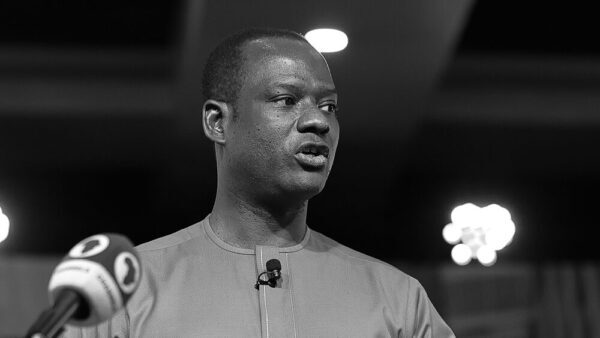
The Executive Vice Chairman and Chief Executive Officer of the FCCPC, Tunji Bello, gave the warning on Thursday at a stakeholders’ engagement on consumer protection and regulatory cooperation in Nigeria’s electricity sector in Abuja.

The meeting brought together officials of the Nigerian Electricity Regulatory Commission (NERC), the Nigerian Electricity Management Services Agency (NEMSA) and several state electricity regulatory commissions following the decentralisation of electricity regulation under the Electricity Act 2023.

The electricity act, signed in 2023, ended decades of exclusive federal control of Nigeria’s electricity sector by empowering states to establish and regulate their own electricity markets once they meet constitutional and regulatory requirements. Since then, several states, including Lagos, Enugu, Plateau and Anambra, have established electricity regulatory commissions as part of efforts to improve electricity supply and attract private investment.

However, stakeholders have repeatedly warned that inconsistent regulations across states could discourage investment, increase compliance costs for operators and create uneven levels of consumer protection.

PT WHATSAPP CHANNEL

Consumer confidence

Mr Bello described the Electricity Act as one of the most significant reforms of Nigeria’s electricity sector, saying its success would depend largely on effective collaboration among federal and state regulators.

“The Electricity Act of 2023 represents one of the most significant reforms of Nigeria’s electricity sector in recent years,” he said.

“Beyond creating new opportunities for investment and improved service delivery, it has fundamentally reshaped our regulatory architecture,” he added.

According to him, while states now have greater flexibility to regulate their electricity markets in line with local realities, consumers should enjoy the same level of protection regardless of where they live.

He noted that electricity users are primarily concerned about reliable service and fair treatment rather than the agency responsible for resolving their complaints.

“Consumers experience electricity as one system. When supply is interrupted, or a bill appears incorrect, they are not concerned about which regulator has jurisdiction. They simply expect protection, ensuring that our institutions work seamlessly together in our responsibility and not theirs.”

Mr Bello explained that although NERC regulates the electricity industry, NEMSA enforces technical standards, state commissions oversee intrastate electricity markets, while the FCCPC provides economy-wide consumer protection and competition oversight.

According to him, these responsibilities should complement rather than compete with one another.

“Our objective is to consult, exchange information, support one another’s lawful actions, and ensure consumers receive timely and effective protection,” he said.

The FCCPC boss cited the suspension of the proposed replacement of obsolete Unistar prepaid meters in 2024 as an example of effective collaboration among regulators.

PREMIUM TIMES previously reported that consumer groups raised concerns over plans to replace obsolete prepaid meters amid fears that electricity customers could be forced to bear the cost or be subjected to estimated billing during the process.

Mr Bello said the FCCPC convened discussions involving NERC, NEMSA and electricity distribution companies after the concerns emerged.

The replacement exercise was subsequently suspended pending compliance with regulatory requirements before NERC later issued an order providing a structured framework for replacing faulty and obsolete meters.

“The order guaranteed that consumers would not bear the cost of replacing obsolete meters, would not experience interruption of electricity supply during the replacement exercise, and would not be subjected to estimated billing because of delays in implementation,” he said.

He added: “Those safeguards reflected the principle that consumers should never be disadvantaged because infrastructure has reached the end of its useful life through no fault of their own.”

He noted that the effectiveness of regulation should be measured not only by complaints resolved but also by the number of disputes prevented.

“Strong regulation is not built on institutional rivalry. It is built on cooperation, mutual respect, and a shared commitment to the public interest,” he said.

Investors need certainty

Also speaking, NERC’s Assistant Director and Head of Consumer Protection Department, Anthony Essien, said harmonised regulations would become increasingly important as more states establish independent electricity markets.

He warned that differing regulations across states could complicate investment decisions and discourage investors operating across multiple jurisdictions.

“It would not be easy, especially looking at investors coming in and having different standards across 36 states. But if we come together and foster a unified and well-thought-out effort to bring forward laws, it would further strengthen our mandates across the different states.”

He said the FCCPC has become an important partner in NERC’s consumer complaints mechanism and now participates in the commission’s Consumer Complaints Forum.

READ ALSO: FCCPC, Lagos consumer agency warn businesses on price tags, refunds, product labelling

The Chairman of the Enugu State Electricity Regulatory Commission, Chijioke Okonkwo, described the engagement as timely, saying collaboration with federal regulators would help state commissions strengthen consumer protection.

Similarly, the Chairman of the Anambra State Electricity Regulatory Commission, Frank Nwoye Okafor, cautioned that fragmented regulations could become a major obstacle to investment.

“The biggest nightmare for an investor is trying to figure out 36 different rules. But if we have this sort of coordination, then we start singing from the same hymn sheet,” Mr Okafor said.

The Electricity Act 2023 is regarded as Nigeria’s most far-reaching electricity reform since the power sector was privatised in 2013. By allowing states to regulate intrastate electricity markets, the law seeks to expand electricity access, attract private investment and improve service delivery.

However, as more states establish independent electricity markets, regulators and industry stakeholders say harmonised regulations and coordinated oversight will be critical to maintaining investor confidence, avoiding regulatory fragmentation and ensuring consumers receive the same level of protection regardless of where they live.


Discover more from Premium Times Nigeria

Subscribe to get the latest posts sent to your email.

Continue Reading

Trending