
Health
Resident doctors threaten nationwide strike over unpaid arrears, welfare concerns


The Nigerian Association of Resident Doctors (NARD) has threatened to embark on a nationwide indefinite strike from 10 August if the federal government fails to address outstanding salary arrears, welfare concerns and other longstanding issues affecting its members.
The association announced the decision in a communiqué issued after its National Executive Council (NEC) meeting in Gombe State, where it reviewed the implementation of previous agreements reached with the government.
NARD said the proposed Total and Comprehensive Industrial Strike (TICS) would commence at 8 a.m. on 10 August unless its demands are met before the deadline.
“The NEC reaffirmed its commitment to constructive engagement and dialogue but reiterated that the welfare of resident doctors and the survival of Nigeria’s healthcare system remain non-negotiable,” the communiqué stated.
Unpaid arrears
Among its demands, the association called for the immediate payment of outstanding arrears arising from the 25 and 35 per cent Consolidated Medical Salary Structure (CONMESS) review, 19 months of unpaid professional allowance arrears, as well as outstanding salary and promotion arrears owed to doctors in several federal health institutions.

It also urged the government to ensure that all eligible resident doctors omitted from the 2026 Medical Residency Training Fund (MRTF) disbursement are paid without further delay.
While acknowledging the federal government’s recent disbursement of the residency training fund to eligible beneficiaries, NARD said many financial obligations to resident doctors remain unresolved.
LUTH crisis
The association also raised concerns over what it described as the continued intimidation of resident doctors at the Lagos University Teaching Hospital (LUTH).
It accused the hospital management of refusing to provide call duty meals despite repeated engagements and called on the federal government to intervene.
NARD warned that failure to resolve the issues at LUTH before 10 August would leave it with no option but to proceed with industrial action.
Assaults on doctors, broader healthcare challenges
NARD condemned what it described as persistent assaults, harassment and intimidation of doctors across the country, saying such incidents threaten an already fragile healthcare system.
It called for a national protocol to prevent violence against healthcare workers and urged lawmakers to criminalise assaults on health personnel.
The association expressed concern over deteriorating infrastructure in public hospitals, citing inadequate medical equipment, unreliable electricity supply and poor maintenance of health facilities.
It also highlighted chronic underfunding of the health sector, shortages of healthcare workers and high out-of-pocket healthcare costs, saying these continue to limit access to quality healthcare for millions of Nigerians.
NARD urged federal and state governments to increase investment in healthcare, strengthen primary healthcare services, improve health financing and recruit more health workers to advance universal health coverage.
READ ALSO: NARD renews call to protect health workers following assault on doctor in Kwara
The association further called for the speedy conclusion and implementation of the Medical and Health Workers’ Collective Bargaining Agreement and the recommendations of the ministerial committee reviewing excessive workloads, prolonged call duty hours, casualisation of doctors and the abuse of locum appointments.
It also demanded urgent action to address salary delays, unpaid arrears and internship placement challenges affecting house officers.
Nigeria has experienced several industrial actions by resident doctors in recent years, with disputes largely centred on unpaid salaries and allowances, poor working conditions, residency training funding and the implementation of agreements reached with the government.
Health experts have repeatedly warned that prolonged strikes disrupt access to healthcare, delay surgeries and worsen pressure on an already overstretched health system, particularly for patients who rely on public hospitals.
Discover more from Premium Times Nigeria
Subscribe to get the latest posts sent to your email.


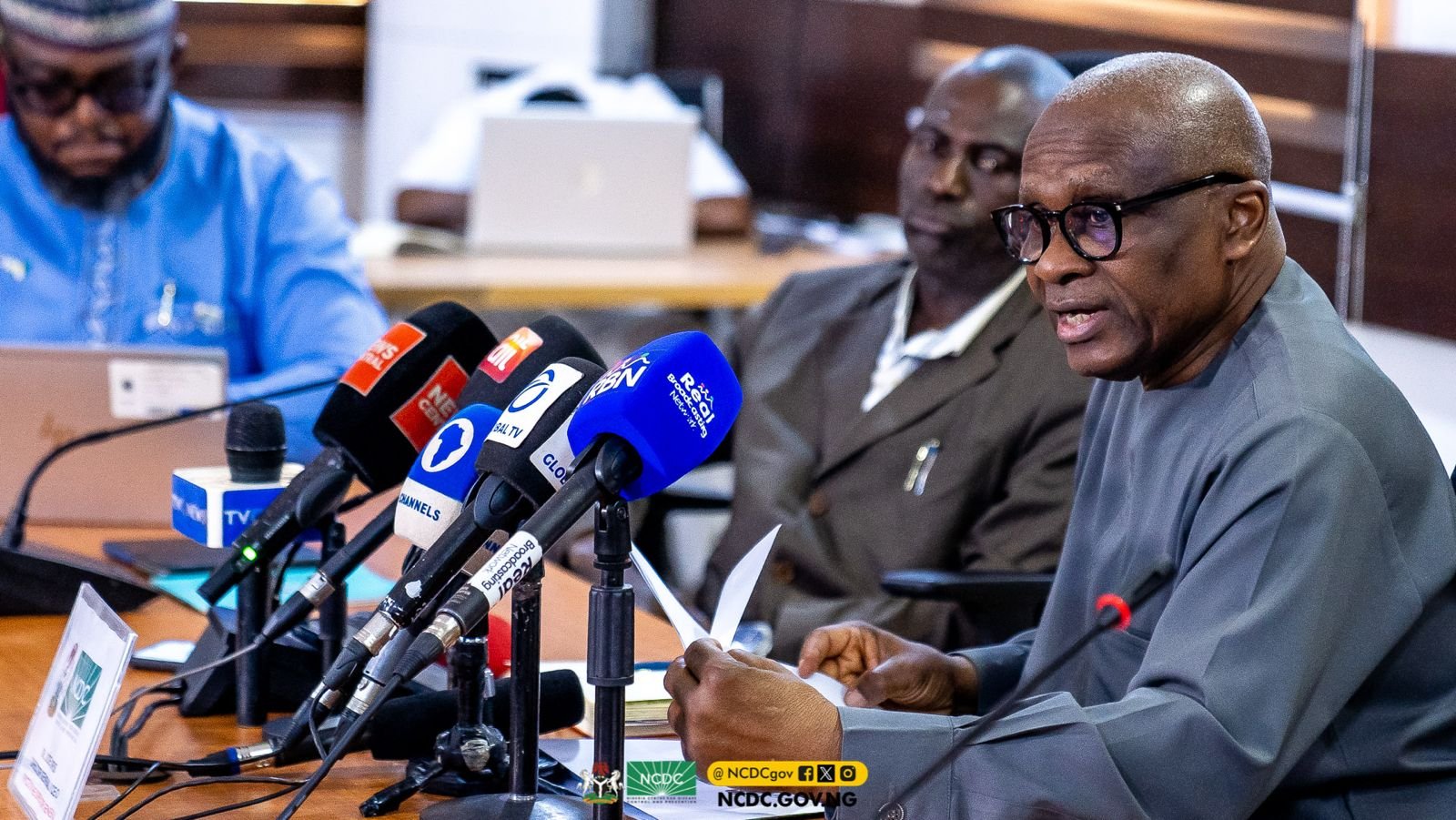
The Nigeria Centre for Disease Control and Prevention (NCDC) has expanded its health declaration requirement for international travellers after confirming an Ebola case in the Federal Capital Territory (FCT).
The agency’s Director-General, Jide Idris, announced the decision during a media briefing in Abuja on Sunday.
Mr Idris said the requirement initially applied to international travellers but was later restricted to passengers arriving from selected countries linked to the Ebola outbreak, including the Democratic Republic of the Congo (DRC) and Uganda.
“But with this case, we have reversed that directive,” he said.
He said the NCDC had sent advisories to the Federal Airports Authority of Nigeria (FAAN) and the Nigerian Civil Aviation Authority (NCAA), and expected further instructions to guide implementation in collaboration with airlines.
Airport screening
Mr Idris said Nigeria’s preparedness measures had focused on five international airports: Lagos, Abuja, Enugu, Kano and Port Harcourt.

He said Port Health Services was working with aviation personnel, immigration and customs officials to strengthen preparedness and screening at the country’s points of entry.
According to Mr Idris, the NCDC needs to coordinate with aviation authorities because it does not independently control airport operations.
He said agencies were working together to implement the required measures, while immigration and customs officials were involved at land borders.
Mr Idris also acknowledged operational challenges at Lagos airport, where ongoing construction had created difficulties. He said the NCDC would engage FAAN and the NCAA to address issues affecting Port Health Services’ work.
He added that access to restricted airport areas must follow established security procedures.
Ebola response
The revised screening measures form part of Nigeria’s response to a confirmed case of Ebola disease caused by the Bundibugyo virus in the FCT on 20 October.
As PREMIUM TIMES reported, the patient is a 42-year-old Ugandan woman who travelled to Nigeria from Uganda on 3 October. She developed symptoms on 6 October and sought medical attention before her infection was confirmed.
At Sunday’s briefing, Mr Idris said health authorities had identified 53 primary contacts linked to the patient. These comprise 44 people associated with the health facility where she received treatment and nine additional contacts, including household members. They attended to her at another facility and were members of the FCT team that collected samples.
He said contact tracing was ongoing and that officials were monitoring the identified contacts.
ALSO READ: Ebola: NCDC urges hospitals to act before laboratory confirmation
Health officials are following up with contacts for 21 days, the maximum incubation period for Ebola, to identify any symptoms that might indicate infection.
Mr Idris appealed to Nigerians identified as contacts to cooperate with public health officials, stressing that being identified as a contact does not mean a person has Ebola.
The NCDC is also strengthening infection prevention and control measures in healthcare facilities, supporting laboratory capacity and providing public health information to counter rumours and misinformation.
The agency urged Nigerians to rely on verified information from authorised public health sources and cooperate with response measures as investigations continue.
Discover more from Premium Times Nigeria
Subscribe to get the latest posts sent to your email.
The Nigeria Centre for Disease Control and Prevention (NCDC) says it has identified 53 contacts linked to Nigeria’s confirmed case of Ebola disease in the Federal Capital Territory (FCT).
The Director-General of the NCDC, Jide Idris, disclosed this on Sunday during a media briefing in Abuja, where he provided an update on the country’s response to the outbreak.
Mr Idris said the contacts include healthcare workers, the confirmed patient’s domestic staff and spouse, as well as health personnel involved in collecting samples from the patient.
“As of now, we have 53 primary contacts. These comprise 44 people from the health facility where the patient was treated and nine additional contacts,” he said.
“Of the nine additional contacts, three are household members of the patient, her driver, chef and husband. Three others attended to her at Julius Berger Clinic before she got to the other facility, while the remaining three are members of the team who went to collect samples.”
He said the contacts had been listed and categorised according to their level of exposure, with public health teams continuing to monitor them.
According to him, none of the identified contacts had tested positive for Ebola or developed symptoms as of the time of the briefing.
Mr Idris also clarified that the agency had investigated two cases, including the confirmed case in the FCT and a suspected case in Rivers State, which tested negative for Ebola.
He disclosed that the confirmed patient had returned positive results from three samples collected for testing, while her husband tested negative for the disease.
Contact tracing continues
Mr Idris said contact tracing was ongoing, with public health teams working to identify people who may have been exposed to the confirmed patient and assess their level of risk.
He said identified contacts would be monitored for 21 days after their last possible exposure, in line with Ebola’s incubation period.
He explained that the number of contacts could change as investigations progressed and more information became available.
He said that being identified as a contact does not mean a person has Ebola, but allows health authorities to monitor their health and detect possible infections early.
Mr Idris urged Nigerians contacted by public health officials to cooperate with monitoring teams and provide accurate information about their movements, contacts and any symptoms they might experience.
Nigeria strengthens Ebola preparedness
The NCDC boss said the agency is strengthening laboratory capacity and infection prevention measures across the country as part of efforts to prevent further transmission of the disease.
Mr Idris said about 12 laboratories had been identified as having the capacity to test for Ebola, while efforts were ongoing to ensure the availability of reagents and other essential supplies.
He said testing for the confirmed case was being conducted at the National Reference Laboratory, with other facilities being supported to ensure suspected cases could be investigated promptly.
He added that the agency is also working with health authorities to train healthcare workers on infection prevention and control measures, including the proper use of personal protective equipment, hand hygiene and safe disposal of potentially infectious materials.
Mr Idris said preparedness and response activities were being strengthened in states considered at higher risk, while the NCDC was finalising an incident action plan with partners to coordinate the national response.
He commended healthcare workers for their vigilance in detecting the confirmed case. He also urged Nigerians to rely on information from public health authorities and avoid spreading rumours.
Nigeria’s Ebola case and possible link with Kenya
Nigeria confirmed an imported Ebola case in the FCT on Tuesday, 20 October, marking the country’s first confirmed case since the 2014 outbreak.
READ ALSO: Ebola: Lagos is prepared to respond — Commissioner
The patient is a 42-year-old Ugandan-born woman resident in Abuja who recently returned from a holiday in Kampala, Uganda.
According to the Africa Centres for Disease Control and Prevention (Africa CDC), the woman returned to Nigeria on 3 October and developed symptoms three days later.
On Friday, Nigerian authorities announced that genomic analysis showed a high degree of similarity between the virus detected in the Nigerian patient and that found in Kenya’s first imported case.
The Coordinating Minister of Health and Social Welfare, Muhammad Pate, said the finding did not establish that the Nigerian patient was infected in Kenya, as there was no evidence that she had travelled there.
The Africa CDC had earlier said it was investigating a possible link between the Nigerian and Kenyan cases because both patients travelled through Uganda’s Entebbe International Airport on 3 October.
Kenya’s first case was imported from the Democratic Republic of the Congo (DRC) through Uganda. The country has since recorded nine confirmed cases, including two deaths, with the eight additional infections linked to the first patient.
Discover more from Premium Times Nigeria
Subscribe to get the latest posts sent to your email.
-

 News3 days ago
Obi, Kwankwaso to hold Middle Belt Youth, Village Hall Meeting in Jos
-
News4 days ago
Handball President Jibril Saidu Ojih Explains Reasons Behind Introduction Of Transfer Fees For Nigerian Players
-
News4 days ago
Lotus Bank flags dta privacy risks from unapproved workplace AI tools – Technology Times
-
Entertainment3 days ago
FOGMMON PLATEAU CONGRATULATES EJIDIKE UGOCHUKWU (𝙈𝙞𝙣𝙨𝙩𝙧𝙚𝙡 𝙅𝙞𝙙) ON HIS APPOINTMENT AS NATIONAL PRESIDENT


