News
Prophet El-Buba Boosts Peace Ambassadors JTF with Security Outposts, CCTV and Patrol Bikes


The Peace Ambassadors Joint Task Force (JTF) has taken a significant step towards strengthening community security in Plateau State with the commissioning of several security outposts, deployment of patrol motorcycles, and installation of Closed-Circuit Television (CCTV) cameras across flashpoints in Jos North Local Government Area.
The security initiative, spearheaded by the Founder of Evangelical Biblical Outreach Ministries International (EBOMI), Prophet Isa El-Buba, is designed to reinforce community policing, improve intelligence gathering, and support conventional security agencies in tackling crime and maintaining peace.
The commissioning ceremony, held on Thursday, July 30, 2026, attracted representatives of the Nigeria Police Force, other security agencies, traditional and religious leaders, as well as residents from different communities.

Peace Ambassadors JTF: A Community-Based Security Network
The Peace Ambassadors Joint Task Force is a volunteer-based community security network established to complement the work of Nigeria’s conventional security agencies through intelligence gathering, surveillance, rapid response, and community engagement.
The initiative brings together trained volunteers who work closely with security agencies to safeguard lives and property, monitor vulnerable communities, and provide early warning information capable of preventing criminal activities before they escalate.
Unlike conventional security formations, the Peace Ambassadors JTF focuses on grassroots participation, encouraging residents to take ownership of the security of their communities while operating within the framework of the law and in collaboration with the Nigeria Police Force and other relevant agencies.
Security Outposts Commissioned
During the exercise, Prophet El-Buba commissioned security outposts located at Bauchi Junction, Gondola, TT&T Junction, and several other strategic locations identified as security flashpoints within Jos North.
He disclosed that the newly commissioned facilities would serve as operational bases for the volunteer guards recently deployed after successfully completing their passing-out parade.
“As I commission these security posts today, I am pleased to announce that we have built over 20 security posts across Jos North and other locations where these men and women will operate from to secure our streets and neighbourhoods,” El-Buba said.
According to him, the outposts are expected to improve visibility, enhance rapid response to distress calls, and strengthen coordination between volunteers and security agencies.

CCTV Surveillance and Patrol Motorcycles
In addition to the security outposts, the initiative also introduced CCTV surveillance across parts of Jos North to improve intelligence gathering and assist law enforcement agencies in monitoring criminal activities.
Branded security motorcycles were also deployed to enhance mobility, enabling volunteer personnel to respond quickly to emergencies and patrol communities that are difficult to access with vehicles.
The combination of surveillance technology and increased mobility is expected to improve crime prevention and provide faster intervention during security incidents.
Addressing the newly deployed volunteers, Prophet El-Buba urged them to remain disciplined, professional, and committed to the mandate of protecting their communities.
He warned against misconduct, abuse of authority, or any compromise capable of undermining public confidence in the initiative.
“Anyone who is part of this volunteer network and compromises the standards we have set will be dealt with accordingly. Such a person will become the first example because we cannot afford to endanger the lives of these great volunteers,” he warned.
Security Is a Collective Responsibility
Prophet El-Buba stressed that addressing insecurity requires collective effort and cannot be left solely to the military or the police.
He applauded members of the Peace Ambassadors JTF for volunteering their time and energy to protect their communities and urged Nigerians to support security institutions through lawful contributions and logistics where possible.
“The police alone cannot get this job done. The military and our armed forces, who are paying the supreme price, cannot do it alone either. Every one of you who has volunteered your time, energy and everything about yourselves to secure our communities deserves our deepest appreciation,” he said.
He further challenged well-meaning Nigerians to contribute towards strengthening the Nigeria Police Force and other security agencies.
“Today, I challenge every Nigerian whom God has blessed with resources to contribute to the Nigeria Police Force and to the security of our nation. What I have done is to provide a little support so that people from different formations can come together as one united force.”

Police Commend Peace Ambassadors Initiative
Speaking on behalf of the Plateau State Commissioner of Police, the Divisional Police Officer of Nasarawa Gwom Division, Malam Saidu Ventim, described the initiative as timely and highly commendable.
He said the security outposts and CCTV infrastructure would significantly improve intelligence gathering, early warning mechanisms, and collaboration between the Peace Ambassadors Joint Task Force and the Nigeria Police Force.
Ventim assured residents that the police would continue to work closely with the volunteer security network in addressing emerging security threats across the state.
Community Applauds Intervention
Residents also welcomed the initiative, describing it as a practical solution to improving security at the grassroots.
Speaking at Bauchi Road Junction, community leader Yahaya Mohammed Garba said the security outposts would help reduce petty theft, street crime, and other criminal activities affecting the area.
He called on other public-spirited individuals and organisations to invest in similar community-driven security initiatives that promote peace and protect lives.
Expansion Planned Across Plateau and Southern Kaduna
Prophet El-Buba disclosed that the Peace Ambassadors Joint Task Force would not be limited to Jos North.
He revealed plans to establish similar volunteer security structures in other insecurity-prone local government areas across Plateau State as well as parts of Southern Kaduna, with the aim of supporting ongoing efforts to restore peace, improve community resilience, and strengthen collaboration between citizens and security agencies.
As security challenges continue to evolve, the Peace Ambassadors Joint Task Force is positioning itself as a grassroots partner in community policing, providing trained volunteers, surveillance infrastructure, and operational support to complement the work of conventional security agencies while promoting safer communities through collective responsibility.


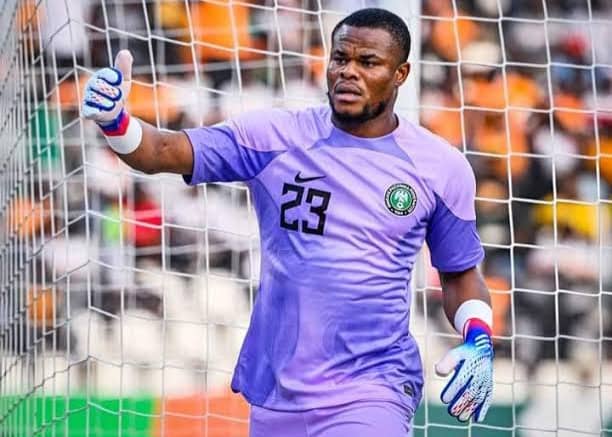
Back-to-form Chippa United of South Africa goalkeeper, Stanley Nwabali appears good enough to start for Nigeria against Russia in Tuesday’s international friendly match between both nations.
Sports247 gathered that, although many Nigerian football fans slammed Nwabali for letting in three goals during last Tuesday’s 2027 Africa Cup of Nations qualifier defeat away to Guinea-Bissau, Eagles’ coach, Eric Chelle is keeping faith with him.
A strong hint in this direction emerged from reports citing Nwabali in training with the Eagles on arrival in Moscow ahead of Tuesday’s game, which comes exactly a week after the Nigerian team’s ignominious 3-0 loss to Guinea-Bissau, who now top their qualifying group with six points.
The friendly with Russia was initially meant to help Chelle test new players ahead of the resumption of AFCON 2027 qualifiers in November, but the report from the team’s camp in Moscow indicates that the Franco-Malian tactician will now count on some of his established regulars for Tuesday’s game.
Information provided by the communications department of Nigeria Football Federation (NFF) revealed that Nwabali was one of prominent Eagles’ players who were involved in the team’s first training session ahead of Tuesday’s game.
The report disclosed, “The Super Eagles have had their first training session in Nizhny Novgorod, as they prepare for Tuesday’s international friendly match against Russia’s senior men national team.
“The group of 17 players that trained on Saturday included 101-cap Moses Simon, goalkeeper Stanley Nwabali, defenders Benjamin Fredricks and Emmanuel Fernandez, as well as forwards Kelechi Iheanacho and Akor Adams.
“The team will have two more training sessions on Sunday and Monday before the encounter (which is scheduled to take place) at the Nizhny Novgorod Stadium on Tuesday evening.
“On 6 June last year, Russia and Nigeria played to a 1-1 draw at Moscow’s Luzhniki Stadium, with the Russians going in front through an own goal by defender Semi Ajayi, before Tolu Arokodare levelled for the Super Eagles.”
Sports247 gathered further that, while Nwabali appears set to start the game on Tuesday, he will likely bow at half time and give way to Charlton Athletic of England’s new signing, Arthur Okonkwo, who is the preferred first choice of many Nigerian football fans.
-

 News3 days ago
PLASU Opens Doors to Global Investors at 2nd Inaugural Lecture
-
Health2 days ago
Plateau: Medical Women Association of Nigeria Marks Older Persons Day with Free Outreach
-
News3 days ago
Plateau Specialist Hospital Celebrates Nigeria at 66, Salutes Mutfwang’s Health Initiatives
-
News3 days ago
Nigeria At 66: Rotjimwa Yilyok Salutes President Tinubu, APC Leadership and Plateau Government