Health
Rising tobacco farming exposes African workers to health risks – WHO



A new analysis by the World Health Organisation (WHO) has revealed that tobacco-leaf production in Africa increased by almost nine per cent between 2012 and 2024, despite a nearly 19 per cent decline in global production.
The increase, according to the findings, is raising concerns about the health risks faced by tobacco farmers and workers, as well as the wider environmental and social consequences of tobacco cultivation.
Africa produced more than 639,000 tonnes of tobacco leaf in 2024, representing about 11 per cent of global tobacco-leaf production, the analysis noted.
The findings showed that tobacco production is highly concentrated in five countries: Zimbabwe, Malawi, Tanzania, Mozambique and Uganda.
East Africa alone accounts for nearly 90 per cent of tobacco-leaf production on the continent.

Health risks
Vinayak Prasad, head of the Tobacco Free Initiative at WHO, said tobacco farming exposes workers and their families to serious health risks, while also damaging the environment and potentially trapping farmers in cycles of debt.
Mr Prasad said the issue extends beyond tobacco control and should also be viewed through the lens of health, trade, development and environmental sustainability.
“This is not just a tobacco-control issue. It is a health, trade, development and environmental issue,” he said.
The analysis identified green tobacco sickness as one of the direct health risks faced by tobacco farmers.
The condition occurs when nicotine from wet tobacco leaves is absorbed through the skin during handling.
Farmers and other workers may also be exposed to pesticides and tobacco dust during cultivation and processing, the report noted.
Beyond direct exposure, tobacco farming also consumes large amounts of land, water and other natural resources that could otherwise support food production and sustainable livelihoods.
The practice is also associated with soil degradation, deforestation and greenhouse gas emissions from the curing of tobacco leaves.
Children at risk
WHO also raised concerns about children from poor households being involved in tobacco farming.
According to the organisation, children in some low and middle-income countries miss school to work on tobacco farms and supplement their family income.
The report said this could further expose children to the health and social risks associated with tobacco cultivation while affecting their education.
Tobacco’s economic burden
The health concerns come alongside an increase in Africa’s cigarette imports.
According to the analysis, the continent’s cigarette import bill more than doubled between 2012 and 2024, rising from $833 million to $1.77 billion.
The findings also challenged the argument that tobacco is economically indispensable to most countries.
Tobacco-leaf exports account for more than one per cent of gross domestic product in only a small number of economies, including Malawi and Zimbabwe.
For most countries, the economic contribution of tobacco production and trade is limited, while the health, social and environmental costs remain substantial, WHO said.
Mr Prasad said countries needed support to move away from economic dependence on tobacco and provide alternative livelihoods for farmers and workers.
“Countries need support to move away from economic dependence on a product that harms health, farmers and the environment,” he said.
He said the findings showed why trade and development policies needed to be aligned with public health and sustainable development goals.
READ ALSO: FG begins nationwide distribution of ambulances to strengthen emergency care
Alternative livelihoods
Under Articles 17 and 18 of the WHO Framework Convention on Tobacco Control, countries are encouraged to promote economically viable alternatives for tobacco workers and growers.
The provisions also call on countries to protect the environment and human health from the effects of tobacco cultivation.
WHO called for stronger support for countries seeking to diversify away from tobacco production, protect farming communities and strengthen tobacco-control policies.
The organisation also urged countries to reduce the economic burden associated with tobacco use and trade.
Discover more from Premium Times Nigeria
Subscribe to get the latest posts sent to your email.




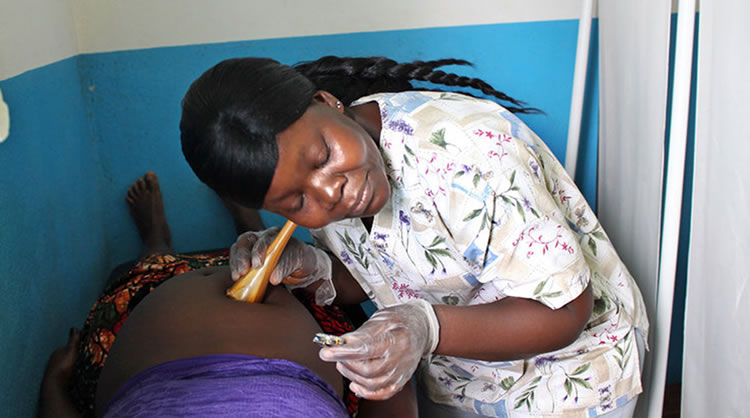
The MTN Group Foundation and the Gates Foundation have launched an artificial intelligence (AI) initiative in Nigeria to help frontline health workers identify pregnancy and childbirth complications earlier and give women access to maternal health guidance.
The Nigeria Maternal Health Multiplier, according to a press release on Tuesday, aims to reach 500,000 women by 2030, equip 5,000 frontline health workers with digital tools and support 500 health facilities to provide more consistent maternal healthcare.
The initiative will use AI, mobile technology and improved connectivity to support pregnant women, health workers and primary healthcare facilities.
The MTN Group noted that it will receive an initial investment of about $25 million between 2026 and 2030, comprising direct and in-kind contributions from MTN and the Gates Foundation.
According to the statement, the four-year partnership was announced at Semafor’s Next three billion event, on the sidelines of the 81st session of the United Nations General Assembly in New York.
Maternal Health in Nigeria
According to the statement, Nigeria has made progress in reducing maternal deaths over the past decade, but significant challenges remain.

Globally, maternal deaths have fallen by 40 per cent since 2000, but progress has stalled, while the risk of maternal death in sub-Saharan Africa remains about 250 times higher than in Western Europe.
“While Nigeria has made real progress in reducing maternal deaths over the past decade, a large burden remains to be addressed: The country accounts for nearly 30 per cent of all maternal deaths worldwide.”
Many of these deaths are preventable, but with only 59 per cent of women completing four or more antenatal care visits, warning signs often go undetected until it’s too late, it noted.
It added that “both the scale of that challenge and the urgency it represents are why Nigeria was selected as the first market for implementation of the Maternal Health Multiplier.”
How the programme will work
The initiative will combine three main interventions: include AI-enabled, phone-based decision-support tools for pregnant women and frontline health workers, affordable smartphones and mobile data for women, and improved internet connectivity at primary healthcare facilities.
The tools are expected to help health workers identify warning signs earlier and provide timely guidance, while giving pregnant women access to trusted health information throughout pregnancy, childbirth and the postnatal period.
MTN noted that the programme will build on the federal government’s Maternal and Neonatal Mortality Reduction Innovation Initiative (MAMII), which is being implemented under the Ministry of Health and Social Welfare’s Sector-Wide Approach.
The Coordinating Minister of Health and Social Welfare, Muhammad Pate, said the partnership would support existing health system reforms.
“Partnerships that work with our existing health systems, rather than around them, are exactly what’s needed to reach mothers who are still falling through the cracks,” Mr Pate was quoted to have said.
READ ALSO: SPECIAL REPORT: Shut clinic deepens healthcare crisis in Benue IDP camp
The Minister of Communications, Innovation and Digital Economy, Bosun Tijani, said the initiative reflects the type of collaboration needed to apply digital transformation to public services.
“For too long, the biggest barrier to improving service delivery in Nigeria, whether in health, agriculture, or education, has not been a lack of innovations, but a lack of focus on the foundational systems necessary to drive adoption,” Mr Tijani said.
Beyond technology
MTN Group President and Chief Executive Officer, Ralph Mupita, said the programme would seek to put locally relevant health information directly in the hands of women and health professionals.
“As artificial intelligence evolves, we can put trusted, locally relevant health insights directly into the hands of mothers and healthcare professionals, tailored to their unique needs and languages,” Mr Mupita said.
Gates Foundation Chief Executive Officer, Mark Suzman, however, stressed that the benefits of AI would depend on reaching people who might otherwise be excluded from such technology.
“AI has enormous potential to improve health, but only if its benefits reach the people who stand to gain the most,” Mr Suzman said.
Discover more from Premium Times Nigeria
Subscribe to get the latest posts sent to your email.
The Lagos State government has disputed claims that only one dialysis machine is functional at the Alimosho General Hospital, Igando.
Lagos State Commissioner for Health, Akin Abayomi, made the clarification in a post on X on Sunday, saying all eight dialysis machines at the hospital’s dialysis centre are functional.
PREMIUM TIMES traced the claim to a video posted by Nigerian skit maker and social media influencer Akewusola Oladipupo, popularly known as MC Always, on 17 September.
In the video posted on his Facebook and Instagram accounts, Mr Oladipupo raised concerns about the condition of the dialysis centre, describing it as “in shambles” and “in a state of comatose”.
He said only one dialysis machine was working at the facility and questioned how patients could be adequately attended to with the limited equipment.
Mr Oladipupo also said the hospital’s generator operates from 9 a.m. to 4 p.m., while a dialysis session takes at least four hours. He questioned how the centre could serve patients if only one machine was functioning out of what he estimated to be 10 to 15 machines.
“So all the people that have kidney problems in Lagos are in serious problem,” he said. What does it take to fix these machines?” Mr Oladipupo asked, adding that the centre was not accepting new patients and was only attending to existing ones.
Government responds
In his post, Mr Abayomi said the claim that the hospital had only one functional dialysis machine was false.
The post was accompanied by a video showing different sections of the dialysis centre and its machines. Mr Abayomi said the centre has eight dialysis machines and that all eight are working.
According to him, six of the machines serve general dialysis patients, while two are dedicated to patients living with HIV or hepatitis, in line with infection prevention and control measures.
He said dialysis sessions begin as early as 6 a.m. and continue until the last patient is attended to, sometimes until midnight.
READ ALSO: Lagos APC orders candidates to stay in Nigeria until 2027 polls
“We run up to 200 dialysis sessions every month,” Mr Abayomi said, adding that the centre has a dedicated standby generator.
The commissioner also listed other public hospitals offering dialysis services in Lagos, including Lagos State University Teaching Hospital (LASUTH), General Hospital Lagos, General Hospital Gbagada, Infectious Diseases Hospital (IDH), Yaba, and Federal Medical Centre (FMC), Ebute Metta.
Healthcare advocacy
Mr Oladipupo has continued to use his social media platforms to speak about challenges in Nigeria’s healthcare system following the death of his wife from Stage 4 cancer.
During an appearance on TVC in August, he spoke about his wife’s illness and the difficulties his family encountered while seeking care for her.
Since her death, he has used his platform to raise concerns about access to healthcare, the availability of functional medical equipment and the financial burden on patients and their families.
He urged patients and caregivers to speak about their experiences and called for improvements in the country’s healthcare system.
Discover more from Premium Times Nigeria
Subscribe to get the latest posts sent to your email.
-

 Business3 days ago
Lingzhi Global, NACOFTAN Announce 2026 Coffee Festival in Cross River
-
Events3 days ago
Peace Walk: WOPPI Urges Plateau Citizens to Invest in Peace Every Day
-
 Health3 days ago
Nigerian hospitals collaborate to perform tele-robotic surgery
-
News3 days ago
INEC declares APM’s Adamu Yakubu winner of Sakwa bye-election in Bauchi